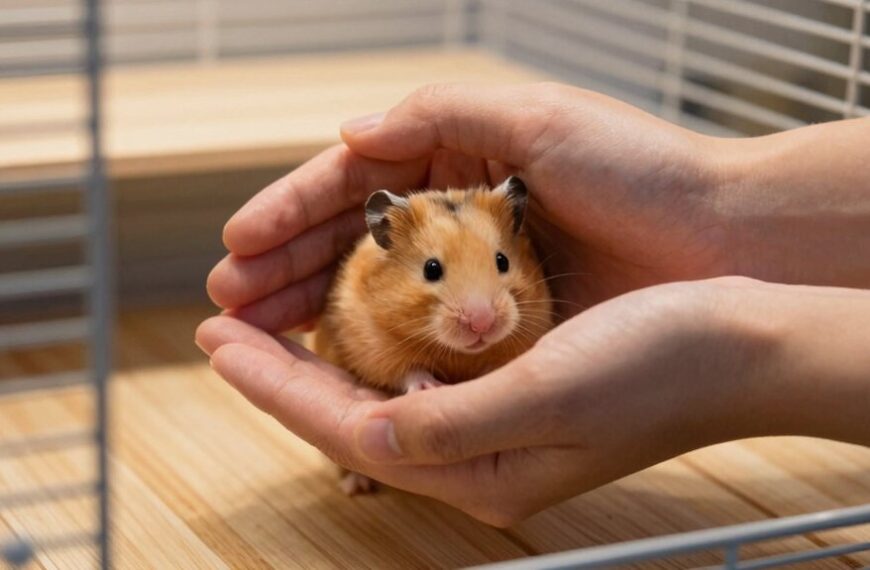
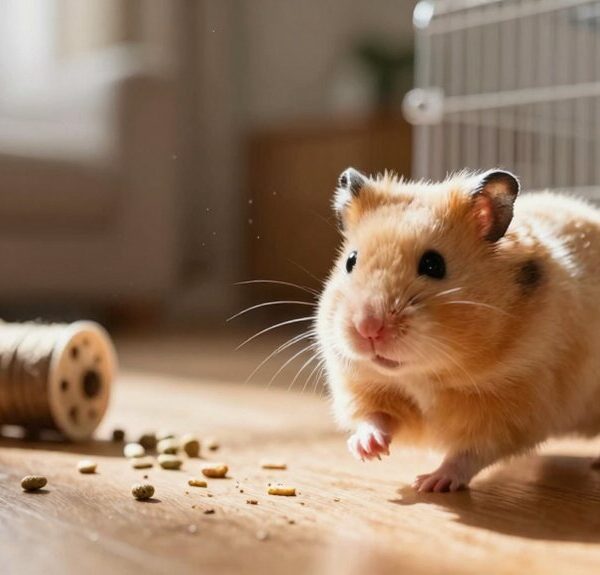
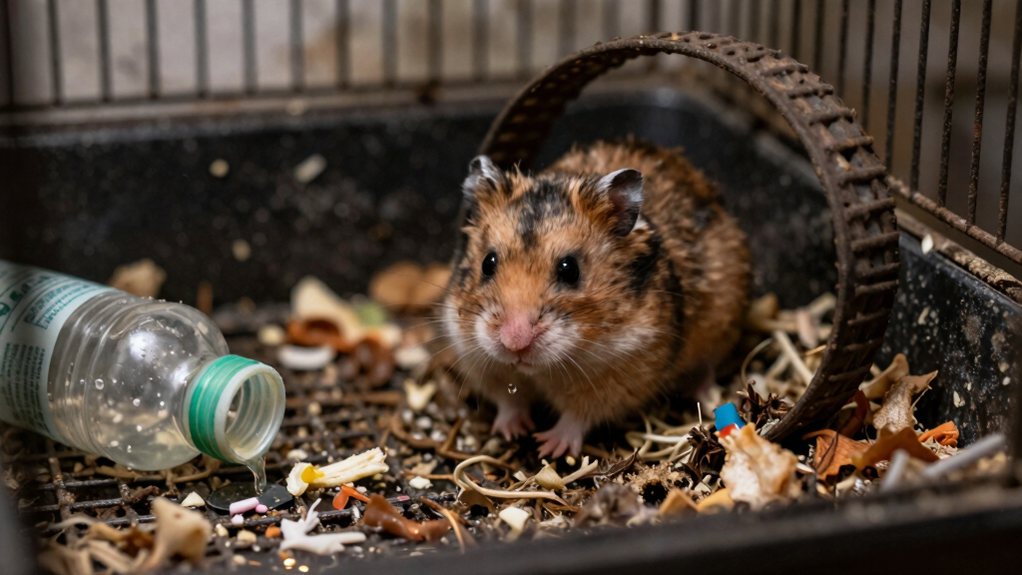
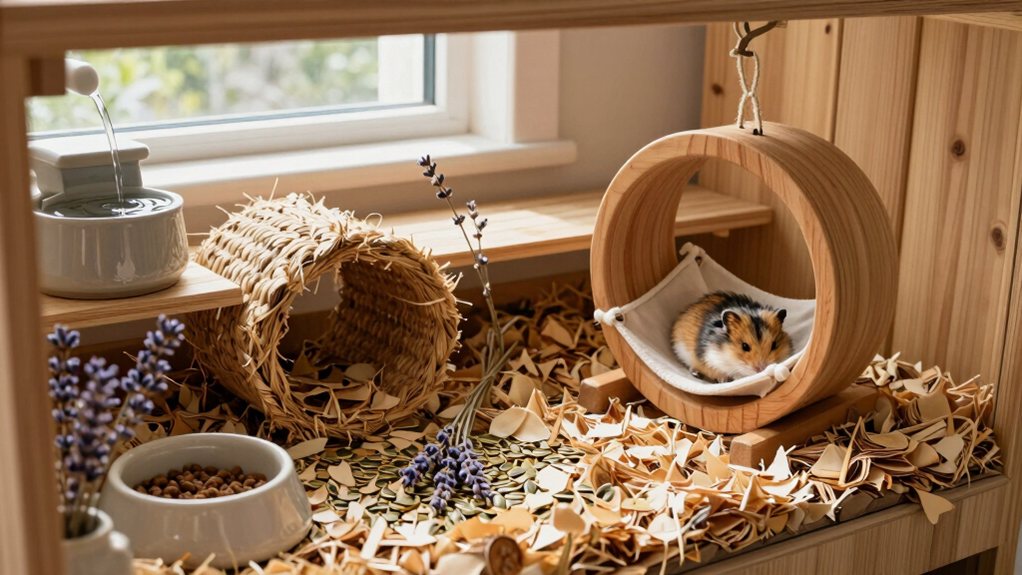
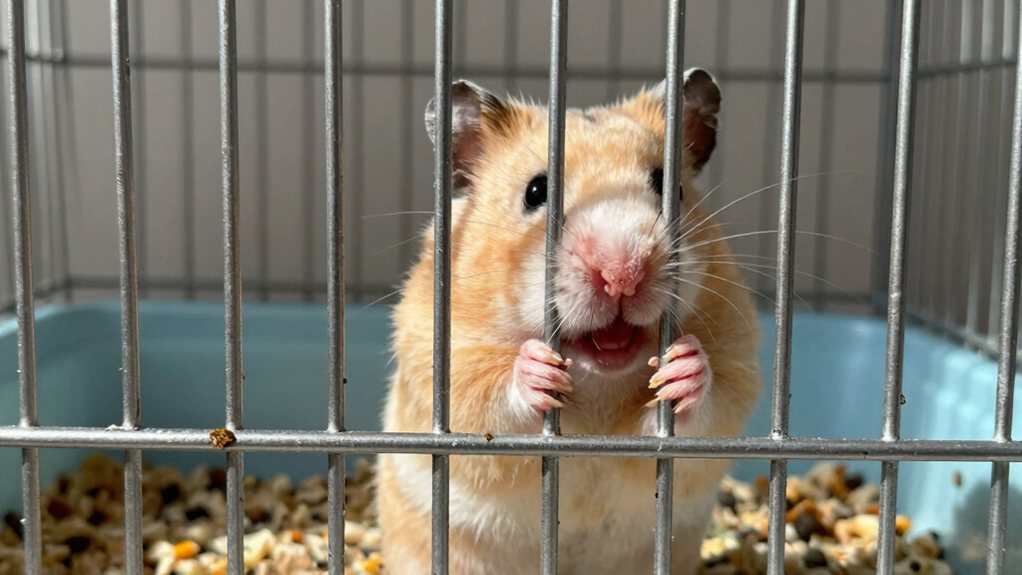
Your hamster won’t settle into one long snooze like you do, instead, they nap off and on all day and night, typically in 2- to 4-hour chunks. They’re crepuscular, so they’re most active at dawn and dusk.
This means you’ll likely catch them running their wheel or snacking at twilight or midnight. They need a cozy, dark spot to rest undisturbed. Keep lights low and noise down during their downtime, and you’ll see them thrive.
Stick around to uncover the secrets of their sleepy little world.
Why Are Hamsters Crepuscular and How Does It Affect Sleep?

Ever wonder why your hamster seems to be wide awake when you’re trying to wind down for bed? That’s because hamsters are crepuscular, meaning they’re most active at dawn and dusk. In the wild, this timing helps them avoid natural predators who hunt during full daylight or deep night.
Their survival instincts kick in, keeping them alert when shadows are long and visibility is low.
So while you’re sipping tea at sunset or yawning at sunrise, your little buddy is busy running, foraging, and exploring. This rhythm affects their sleep by creating short naps throughout the day and night instead of one long stretch.
Don’t worry—they’re not trying to annoy you with their midnight wheel sessions! It’s just their way of staying safe.
Welcome their quirky schedule, and maybe enjoy a quiet moment together during their active hours.

🐻 HAMSTER IDEAL HABITAT✔:Provide your hamster with the perfect hamster sand bath. Having a hamster bath like this is a great way to relieve stress, increase activity, and cleanse your pet's fur! Rodents love to burrow, sand bath for hamsters perfect for a great way to entertain!

Multifunctional: The snuggle sack is very suitable for small animals to sleep, play and hide. The printed design looks super cute. Fun and creative pet cage decorations.
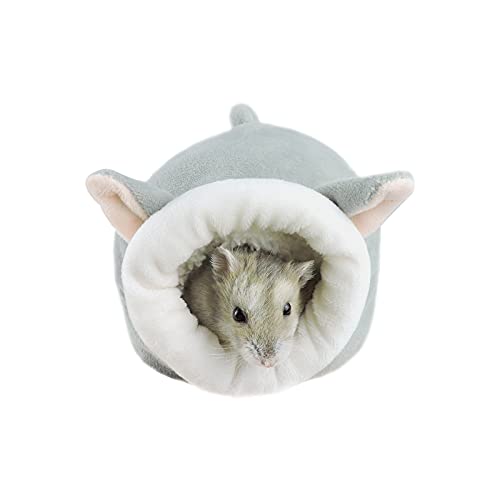
【Warm and Cozy Design】: With a delicate hand feeling, abrasion resistance, the fabric of the hamster bed is made of high-quality short velvet material, which is not easy to pilling. The inner lining is filled with soft sponge, which is soft and comfortable, and has good warmth retention.
When Do Hamsters Sleep During the Day and Night?
You might catch your hamster snoozing in a cozy corner during the day, and that’s totally normal, they’re not big fans of the 9-to-5 life.
While you’re winding down at night, they’re just waking up, stretching, and ready to snack and sprint on their wheel.
Think of them as tiny roommates who party while you sleep, then crash hard when the sun comes up.
Nocturnal Sleep Patterns
So, when do hamsters actually catch their z’s, while you’re sipping morning coffee or after you’ve called it a night? Well, your little buddy is likely snoozing during the day and wide awake when you’re hitting the hay.
Hamsters are nocturnal, meaning they spring to life at night. No hibernation cycles here, just solid nighttime hustle.
Their internal clock is heavily influenced by environmental lighting. Dim or dark surroundings signal it’s time to explore, snack, and run on their wheel like tiny fitness fanatics.
So if you’re yawning by 9 p.m., your hamster’s just starting their workday.
While you dream of vacations, they’re busy tunneling through bedding or stuffing their cheeks like furry grocery shoppers. It’s a different rhythm, sure, but totally normal for them.
Just remember: a quiet daytime nap for them means a lively, adorable nighttime show for you.
Daytime Resting Habits
Why do hamsters seem to vanish into their bedding just as you’re starting your morning?
Because they’re catching Z’s after a busy night!
While you’re sipping coffee, your hamster is deep in daytime rest, relying on a quiet environment to recharge.
Here’s how their rest works:
They nap in short bursts, totaling 12–14 hours a day.
Sunlight exposure helps regulate their internal clock, even when they’re snoozing.
They prefer cozy, dark spots, think tunnels or buried nests.
Sudden noises or bright lights can startle them awake, not cool, by the way.
Your hamster isn’t ignoring you.
They’re just living their best sleepy life.
Keep their space calm and dim during daylight hours, and you’ll support their natural rhythm.
Think of it as giving them a peaceful vacation right in their cage.
Sweet dreams, little buddy!
How Long Do Hamsters Sleep at Once?
While you’re probably settling in for a long stretch of sleep at night, your hamster’s snooze schedule looks a whole lot different.
Hamsters don’t sleep for hours on end like we do. Instead, they take short naps throughout the day and night.
Hamsters don’t do marathon sleep—just quick naps scattered through day and night. Tiny bursts of rest, big bursts of energy!
On average, your little buddy sleeps about 6 to 8 hours total, but in chunks of 2 to 4 hours at a time. That’s what we mean by sleep duration and nap frequency.
Yep, your hamster might wake up, snack, run on its wheel, then crash again—all in one evening!
It’s not laziness; it’s biology. These bursts of rest help them stay alert in the wild.
So if you catch your hamster snoozing mid-afternoon or zooming at midnight, don’t worry.
It’s just living its best and slightly confusing life. Cute, right?
What Disrupts Hamster Sleep?
Ever wonder why your hamster sometimes seems wide awake when you’re ready for bed,
or fast asleep during playtime?
A few everyday things might be throwing off their sleep schedule.
Here’s what commonly disrupts your little buddy’s rest:
1. Light exposure – Hamsters are sensitive to brightness.
Leaving lights on at night confuses their internal clock.
2. Noise levels – Loud TVs, music, or foot traffic can startle them.
Even if they’re napping in their cozy hideout, they can be easily disturbed.
3. Sudden movements – Waking them up to play?
That’s like someone yanking the covers off you at 3 a.m.!
4. Cage placement – Keeping their home in a busy hallway or near appliances means constant disturbances.
Keep their space calm, dim, and quiet.
Your hamster will snooze better, and you’ll both be happier.
After all, nobody likes a grumpy roommate, especially one with tiny teeth and a big attitude.
Can You Adjust a Hamster’s Sleep Schedule?

Think you can train your hamster to stay up late and hang out with you? Sorry, but you’re up against nature. Hamsters are hardwired to be crepuscular, most active at dawn and dusk. Trying to change their schedule goes against their instincts.
While you might adjust their routine slightly with consistent lighting and quiet playtime, don’t expect full control.
Forcing them awake during rest hours can stress them out and mess with their hamster dreams. Yes, they dream too.
And forget sleep myths like “hamsters adapt easily to human schedules.” That’s just not true.
Pushing too hard could harm their health.
Instead, meet them during their natural active times.
Respect their rhythm, and you’ll both be happier.
A well-rested hamster is a happy hamster. And honestly, who doesn’t love a pet that keeps their own quirky hours?

WHAT'S INCLUDED?: Our Hamsters in the Garden Sticker Book contains 300+ stickers to place on 8 unique scenes, and 8 coloring book pages all hand-drawn by our artists! Perfect for kids 3-5, the hamster sticker book includes scenes with different hamsters on all sorts of exciting adventures around the garden that will ignite the imagination of boys and girls!
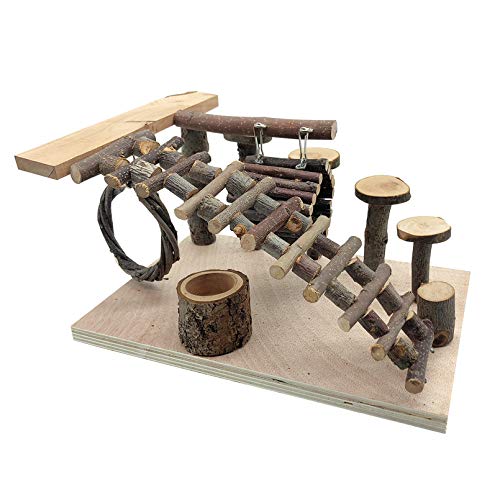
Fruit Wood Material: Made of quality fruit wood, through careful selection, high temperature drying, safe. Our hamster playground is filled of wood fragrance, closer to the habits of your pets, provide them with a comfortable exercising place, wholeheartedly care for your dear little family members

【You will get】Please assemble patiently! There may be a little imbalance after installation, which can be adjusted by yourself without affecting the use. Please pay attention before purchase! You will get: 5 supporting rods (1 is a short rod connecting 2 platforms), 2 platforms, 2 fences, 1 round ladder, 1 ladder connected by apple tree branches and balls, and other small accessories such as screws. The fence needs to make a hole by yourself!
Signs Your Hamster Isn’t Getting Enough Sleep
If your hamster’s acting sluggish when they should be zooming around, it might be a sign they’re not catching enough Z’s.
You might notice they’re grumpier than usual, maybe even giving you a little nip when you try to pet them, or skipping meals like they’re on a protest hunger strike.
Keep an eye out, changes in energy, mood, or eating habits can mean your tiny buddy’s overdue for some solid shut-eye.
Lethargic During Active Hours
Wondering why your usually lively hamster is moving slower than a sloth on a Sunday afternoon?
If your little buddy seems off during their prime playtime, it might be a sign they’re not catching enough Z’s. Check these common culprits:
- Playtime frequency too high, overstimulation can tire them out even when they should be active.
- Poor toy rotation, boredom from the same setup might zap their energy.
- Noise or light during rest hours, disrupting their sleep cycle.
- An uncomfortable or drafty cage location stressing them out.
You know your hamster best. If they’re dragging during their usual zoomies, it’s time to tweak their routine. A well-rested hamster is a happy, hyper one!
With a few small changes, you’ll have your furball back to flipping wheels and stuffing cheeks in no time. Sweet dreams—and happy hopping!
Irritable Or Aggressive Behavior
Ever notice your usually sweet hamster turning into a tiny grump who’d rather nip than snuggle? That grouchiness could be more than just a bad day. It might mean your little buddy isn’t getting enough sleep.
Hamsters with poor rest often show mood swings, going from chill to feisty in seconds.
When sleep-deprived, even small stress triggers like loud noises or sudden handling can set them off.
You might see them hissing, biting, or darting away instead of greeting you.
It’s like they’re running on empty, and honestly, we’ve all been there.
But unlike us, they can’t chug coffee and power through.
Keeping their environment calm and dark during rest hours helps them recharge.
So if your hamster seems extra irritable or aggressive, check their sleep routine.
A well-rested hamster is a happy, cuddly (well, as cuddly as they get) companion.
Changes In Eating Patterns
What’s on your hamster’s dinner menu these days, snacks, seeds, or just straight-up ignoring the food bowl?
If your little buddy’s sleep is off, their eating habits might be sending you SOS signals.
When hamsters don’t get enough rest, their food preferences can shift, and meal frequency often drops.
Keep an eye out for these signs:
- Skipping meals they used to love
- Eating way more at odd times, like midday
- Hoarding food but not actually eating it
- Showing zero interest in treats (which is *very* un-hamster-like!)
You know your pet’s normal groove—so trust your gut if something feels off.
Changes in eating patterns aren’t just about hunger; they’re clues.
A well-rested hamster munches happily on a steady schedule.
Help them catch those Z’s, and you’ll likely see their appetite bounce back.
After all, even tiny tummies thrive on routine!
Best Bedding for Hamster Sleep
A good night’s sleep isn’t just for people, your hamster counts on it too, and the right bedding makes all the difference.
Choosing the best bedding material isn’t just about fluff, it directly affects your pet’s sleep comfort. You’ll want something soft, absorbent, and dust-free. Paper-based or aspen shavings work great.
Avoid cedar or pine. They might smell nice to you, but they can irritate your hamster’s lungs.
Think of it like picking the perfect pillow, cozy matters!
A thick layer lets your hammy burrow, which they *love*. It’s like their version of tucking in under a fluffy blanket.
Plus, clean bedding means fewer yucky smells and a happier, healthier pet.
Final Thoughts
So, now you know, your hamster’s weird sleep schedule makes sense! They’re most active at dawn and dusk, catching z’s in between.
Keep their space quiet and cozy during the day, and don’t panic if they’re up when you’re not. A comfy bed of soft bedding helps them rest better. Sure, you can’t turn your hamster into a 9-to-5 pet, but you can work with their rhythm. Sweet dreams, little buddy!

【Mini Size for Your Pets】 This is S size for small furry animals, about 6.1x3.74x7 inch(15.5x9.5x18 cm). Highly recommended for dwarf hamsters, small gerbil, mice, and other similar-sized pets, fits for them when run without bending their backs.

✔ SUPER SILENT HAMSTER WHEEL:Silent Hamster wheel designed with Ball bearings, it brings your little hamster endless running happiness. rat wheel also brings you a quiet night even.

🐻 HAPPY FITNESS✔:hamster wheel 7 inch, brings your little hamster endless running happiness, Hamsters love the silent wheel like a runner, help them to enrich their nighttime, also keep them to exercise for maintaining their strength.