Most new hamster owners make the same critical mistake: they try to hold their hamster within hours of bringing it home. That single error can set back trust-building by weeks and create a defensive, bite-prone pet. Learning how to bond with a hamster properly starts with understanding that these prey animals need time to adjust before they’ll accept human interaction, and rushing the process damages the relationship you’re trying to build.
This guide walks through the exact timeline and techniques for bonding with a new hamster, whether you’ve brought home a Syrian, Winter White, Roborovski, or other species. The approach differs slightly based on temperament and age, but the core principle remains: trust is earned through consistency, patience, and respecting your hamster’s natural behaviour patterns.
Key Takeaways
- Wait 3-7 days before attempting any handling, hamsters need undisturbed time to settle into their new environment and establish scent marking
- Cage setup directly impacts bonding success,proper wheel size, bedding depth (6+ inches), and enrichment reduce stress and create a confident hamster
- Hand-feeding is the foundation of trust-building, starting with treats offered through cage bars before progressing to palm feeding
- Species differences matter,Syrian hamsters typically tame faster than Roborovskis, which may never enjoy handling but can still bond through observation and enrichment
- Bonding takes 2-6 weeks on average, with younger hamsters (6-8 weeks) adapting faster than adults from pet stores
Understanding Why Hamsters Need Time to Adjust
Hamsters are solitary, territorial prey animals. In the wild, they live alone in underground burrow systems and spend most daylight hours hidden from predators. When you bring a hamster home, especially from a pet store with bright lights, constant noise, and frequent handling by strangers, that animal is already stressed.
The first 72 hours determine whether your hamster perceives its new cage as a safe territory or a trap. During this period, the hamster needs to:
- Establish scent marking throughout the cage by rubbing scent glands on surfaces
- Build burrows in the bedding to create secure hiding spots
- Locate food and water sources without competition or threat
- Adjust to the new environment’s sounds, smells, and light patterns
Interrupting this process by reaching into the cage, rearranging items, or attempting to hold the hamster triggers defensive behaviour. The hamster hasn’t yet learned that your hand isn’t a predator. Understanding signs of stress in hamsters helps you recognize when you’re moving too fast.
Species-Specific Bonding Timelines
Syrian hamsters (also called teddy bear or golden hamsters) are typically the easiest to bond with. They’re larger, slower-moving, and more tolerant of handling once trust is established. Expect 2-4 weeks for a young Syrian to become comfortable with regular handling.
Winter White and Campbell’s dwarf hamsters are faster and more skittish but can become quite tame with consistent work. Bonding with a Winter White hamster usually takes 3-5 weeks, with some individuals remaining more independent.
Roborovski hamsters are the smallest and fastest species. Many Roborovskis never enjoy being held, though they can bond through hand-feeding and observation. Bonding with a Roborovski focuses more on trust-building than physical handling.
Chinese hamsters fall between Syrians and dwarf species in temperament, they can be nervous initially but often become quite handleable with patience.
Days 1-3: The Critical Settling Period
The first three days are hands-off. Resist the urge to interact beyond essential care tasks.
What to Do
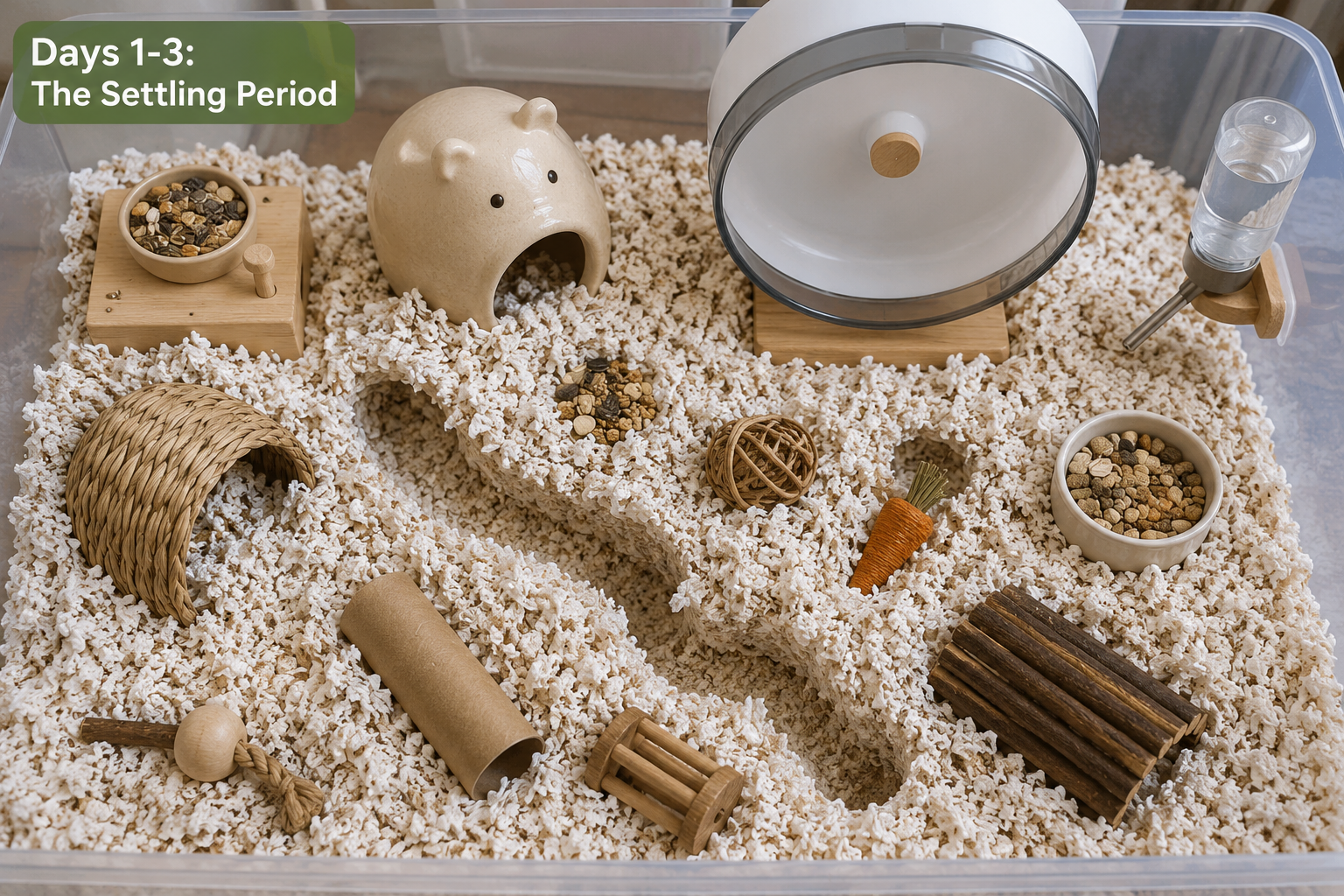
Set up the cage properly before bringing your hamster home. This includes:
- Bedding depth: Minimum 6 inches of paper-based bedding for burrowing behaviour (8-10 inches is better)
- Wheel size: 8-inch minimum for Syrians, 6.5-inch for dwarf species, too small causes back problems and stress
- Multiple hides: At least two enclosed spaces (ceramic, wood, or cardboard) so the hamster can choose where to rest
- Scatter feeding: Spread food throughout the cage rather than using a single bowl, this encourages natural foraging
- Water access: Bottle or bowl positioned away from bedding to prevent contamination
Place the cage in a quiet room away from direct sunlight, drafts, and loud noises. Hamsters are crepuscular (most active at dawn and dusk), so expect minimal activity during the day.
Maintain a consistent routine. Feed at the same time each evening. Speak softly when entering the room so your hamster learns to associate your voice with safety, not threat.
Observe without touching. Watch how your hamster explores, where it builds its nest, and which areas it uses for food storage versus elimination. This information helps you avoid disturbing important spaces later.
What NOT to Do
Don’t reach into the cage to pet or hold your hamster. Don’t rearrange cage items “to help” with nest-building. Don’t introduce new toys or foods yet. Don’t allow other pets near the cage. Don’t use strong-smelling cleaning products in the room.
What you should never do with a hamster includes these common mistakes that destroy early trust.
Days 4-7: Introduction to Your Presence
After three days of undisturbed settling, begin passive interaction.
Hand Presence Without Touching
Sit near the cage during your hamster’s active hours (typically evening). Read aloud, talk softly, or simply be present so your hamster becomes accustomed to your scent and voice.
Place your hand flat against the outside of the cage bars (if you have a barred cage) or rest it on top of a glass tank. Let your hamster approach and sniff through the barrier. Don’t move your hand suddenly if the hamster startles.
First Treat Offerings
On day 4 or 5, offer a high-value treat through the cage bars:
- Small piece of unsalted sunflower seed
- Tiny bit of plain cooked chicken (size of a pea)
- Small piece of cucumber or carrot
Hold the treat between your fingers at the bars. Let your hamster approach at its own pace. If it takes the treat, excellent. If it ignores you, leave the treat near the bars and try again the next day.
Never chase your hamster with the treat or reach into the cage yet. The hamster must choose to approach you.
Week 2: Building Trust Through Hand-Feeding
Once your hamster consistently takes treats through the bars, progress to hand-feeding inside the cage.
The Flat-Hand Technique
Wash your hands with unscented soap before each interaction, food smells can trigger biting.
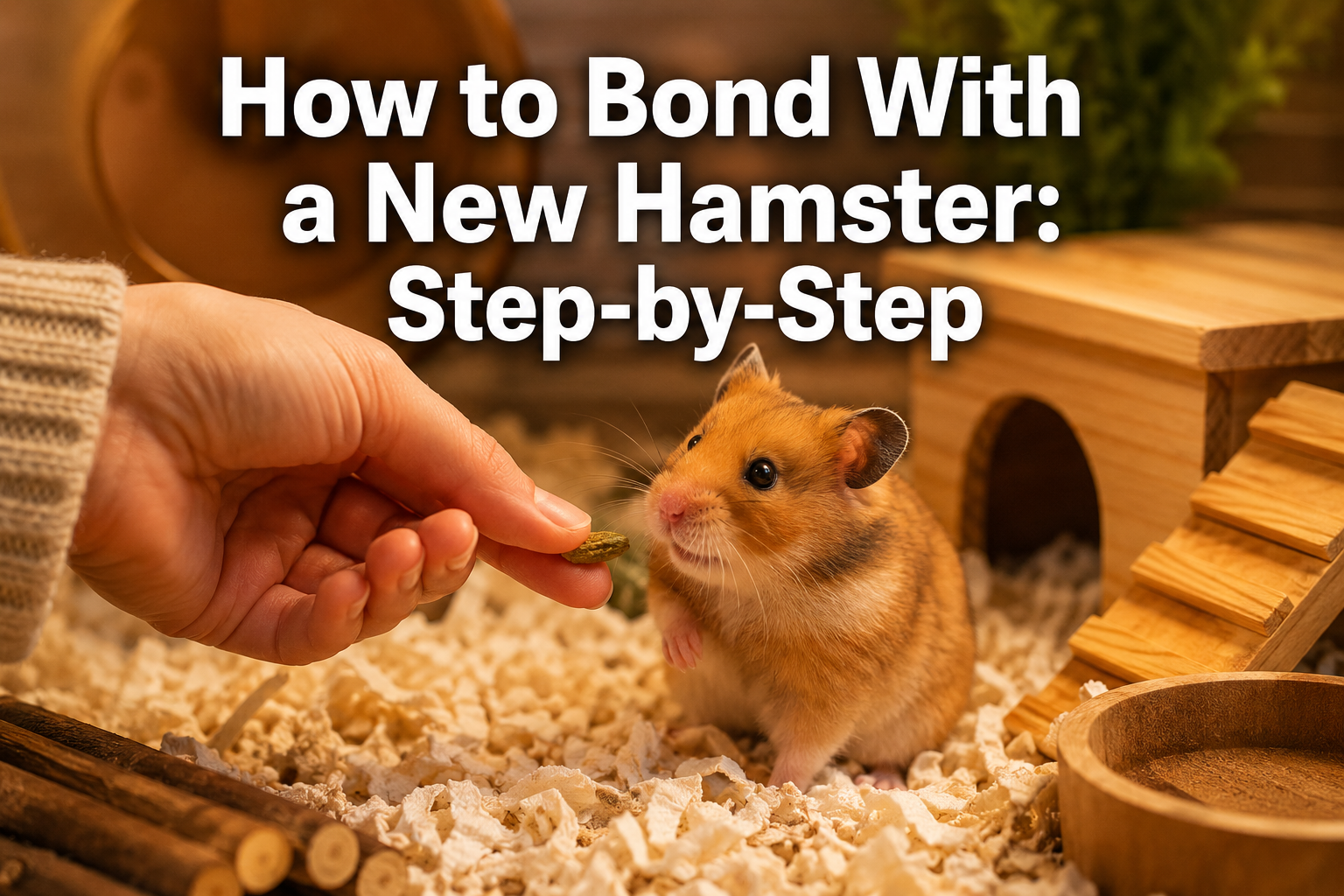
Open the cage slowly. Place your flat hand (palm up) on the cage floor with a treat in the center of your palm. Don’t move. Let your hamster approach.
The first few times, your hamster may grab the treat and run. That’s normal. Over several days, it will linger longer on your hand while eating.
Key principle: Your hand is a stationary platform, not a grabbing tool. The hamster controls the interaction.
Increasing Duration
Once your hamster comfortably eats from your palm, place the treat farther back on your hand so it must step fully onto your palm to reach it. Then try placing treats on both hands, encouraging your hamster to walk from one palm to the other.
This teaches your hamster that your hands are safe surfaces, not threats. How hamsters see humans explains why movement and positioning matter, hamsters have poor depth perception but excellent motion detection.
Week 3: First Handling Attempts
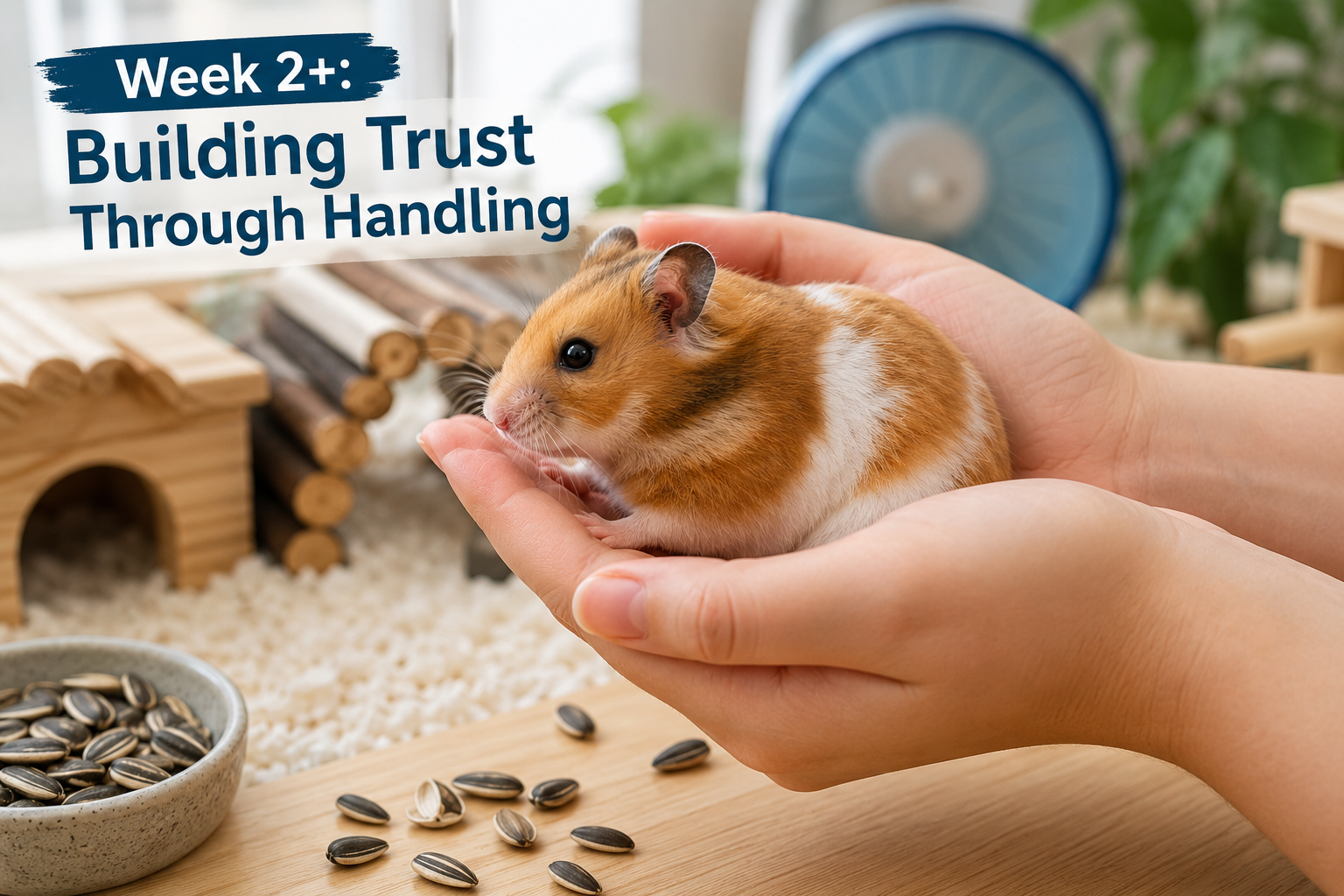
By week three, if your hamster willingly climbs onto your hand for treats, you can attempt brief handling sessions.
The Scoop Method
Place both hands in the cage, palms up, forming a platform. Let your hamster climb on. Slowly lift your hands a few inches off the cage floor. If your hamster stays calm, lift higher. If it jumps or shows stress (flattened ears, frozen posture), lower your hands immediately.
Never grab or close your hands around your hamster. Use the two-handed scoop where your hamster sits on one palm while your other hand gently cups over its back to prevent jumping, but not squeezing.
Safe Handling Zones
For the first handling sessions, stay inside or directly over the cage. If your hamster jumps, it lands in bedding rather than on a hard floor.
After several successful cage-level handling sessions, progress to holding your hamster over a secure playpen or bathtub (empty, with a towel on the bottom). Sit on the floor so falls are minimal.
Session length: Start with 30 seconds to 1 minute. Gradually increase to 5-10 minutes as your hamster becomes comfortable. Always end sessions before your hamster shows stress.
Reading Body Language
A relaxed hamster has:
- Forward-facing ears
- Smooth, unhurried movements
- Willingness to explore your hands
- Normal breathing (not rapid or frozen)
A stressed hamster shows:
- Flattened ears
- Frozen posture or frantic escape attempts
- Squeaking or teeth chattering
- Biting or nipping
If you see stress signals, return your hamster to its cage and try again the next day. Pushing through stress damages trust. Recognizing stress signs prevents setbacks.
Week 4+: Strengthening the Bond
After a month of consistent work, most hamsters accept regular handling. Now focus on deepening the relationship.
Daily Interaction Routine
Evening handling sessions: 10-15 minutes of supervised time outside the cage in a secure area. Let your hamster explore while you remain present.
Enrichment activities: Playing with your hamster includes scatter feeding in a playpen, offering cardboard tubes to explore, or creating obstacle courses with safe household items.
Hand-feeding variety: Rotate treats to maintain interest, small pieces of different vegetables, occasional mealworms (protein), or hamster-safe herbs.
Recognizing Bonding Progress
Signs your hamster trusts you include:
- Approaching the cage front when you enter the room rather than hiding
- Taking treats gently without snatching or biting
- Grooming while sitting on your hand,a sign of comfort and security
- Sleeping in your presence during handling sessions
- Responding to your voice by emerging from hides
Whether hamsters bond with humans depends partly on species and individual temperament, but consistent positive interactions create clear attachment behaviours.
Common Bonding Mistakes and How to Fix Them
Mistake 1: Waking Your Hamster During the Day
Hamsters are crepuscular. Waking a sleeping hamster for handling creates a grumpy, defensive animal. Schedule interactions during natural active periods (early morning or evening).
If you accidentally wake your hamster, give it 10-15 minutes to fully wake before attempting interaction.
Mistake 2: Inconsistent Handling
Bonding requires daily interaction. Handling your hamster intensively for three days, then ignoring it for a week, resets progress. Even 5 minutes daily is better than sporadic long sessions.
Mistake 3: Forcing Interaction
If your hamster hides when you approach, don’t dig it out of its burrow or hide. This teaches your hamster that nowhere is safe. Instead, lure it out with treats and wait for voluntary approach.
Mistake 4: Ignoring Cage Setup
A stressed hamster in an inadequate cage won’t bond effectively. What hamsters need includes proper wheel size, sufficient bedding depth for burrowing behaviour, and solitary housing (hamsters are not social animals and become aggressive when housed together).
Bar spacing matters too, dwarf hamsters can escape through bars wider than 0.4 inches, creating stress and escape attempts.
Mistake 5: Strong Scents on Hands
Perfume, lotion, food smells, or scents from other pets trigger defensive biting. Always wash hands with unscented soap before handling. What scents calm hamsters focuses on environmental scents, but hand scent is equally important.
Bonding With Specific Age Groups
Young Hamsters (6-8 Weeks)
Hamsters from reputable breeders are typically weaned at 4 weeks and ready for new homes at 6-8 weeks. These young hamsters adapt fastest to handling, their fear responses aren’t as ingrained.
Start the settling period immediately but expect faster progress. Many young hamsters become handleable within 2-3 weeks.
Adult Hamsters from Pet Stores
Pet store hamsters are often 3-6 months old and have experienced inconsistent handling, bright lights, and crowded conditions. They require more patience.
Expect 4-6 weeks minimum for bonding. Some adult hamsters never become cuddly but will accept handling without stress. That’s a successful outcome, not all hamsters are naturally affectionate.
Rescue or Rehomed Hamsters
Hamsters with unknown histories may have negative associations with human hands. These animals need the longest settling periods (up to 2 weeks) and slowest progression.
Focus on building positive associations through treat-giving before attempting any handling. Some rescue hamsters make remarkable progress; others remain defensive. Respect individual temperament limits.
Maintaining the Bond Long-Term
Bonding isn’t a one-time achievement. Hamsters need consistent interaction to maintain trust.
Weekly Cage Maintenance Without Breaking Trust
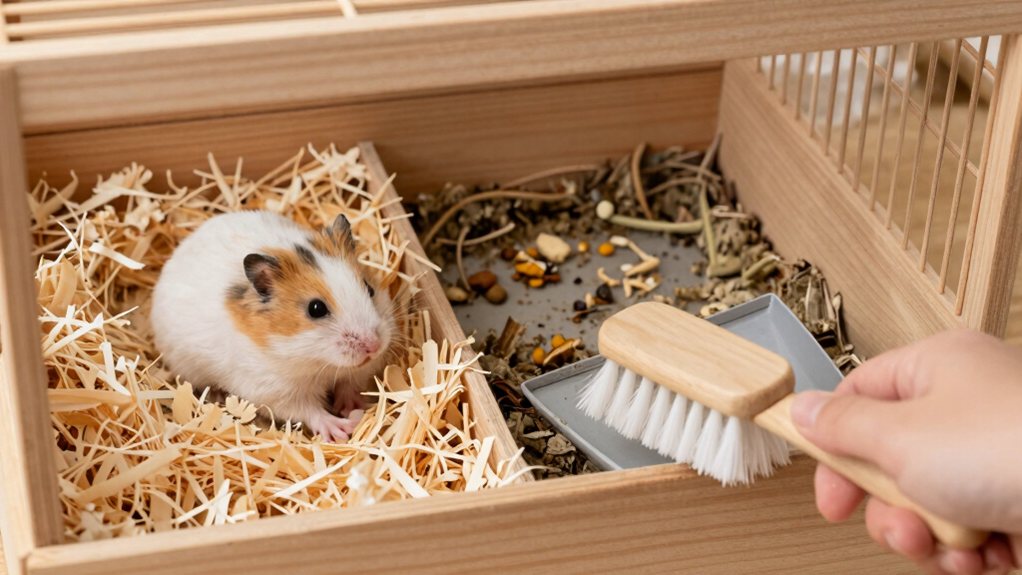
When cleaning your hamster’s cage, preserve some used bedding (about 1/3) to maintain familiar scent. Don’t rearrange the entire cage layout, keep hides and the wheel in consistent positions.
How long hamsters can go without cage cleaning depends on cage size, but spot-clean soiled areas 2-3 times weekly and do full bedding changes every 2-3 weeks.
Remove your hamster to a secure carrier during cleaning rather than chasing it around the cage with your hands.
Handling During Health Checks
Regular health checks are essential, weekly weight monitoring, checking teeth for overgrowth, examining feet for bumblefoot, and watching for wet tail symptoms (diarrhea, lethargy, wet rear end).
A well-bonded hamster tolerates brief health examinations. If your hamster becomes defensive during checks, you’re either handling too roughly or the hamster is in pain. Sudden behaviour changes warrant a vet visit.
Respecting Individual Boundaries
Some hamsters never enjoy prolonged handling. A Roborovski that takes treats from your hand but won’t sit still for petting has still bonded, it trusts you enough to eat in your presence.
What not to do with a hamster includes forcing physical affection on an animal that prefers observation-based interaction.
Troubleshooting Bonding Setbacks
Your Hamster Suddenly Bites After Weeks of Good Behaviour
Check for:
- Illness or injury: Pain causes defensive biting
- Food smells on hands: Did you handle something aromatic before interaction?
- Breeding season aggression: Female hamsters can become territorial during estrus cycles (every 4 days)
- Cage territory issues: Are you reaching into the cage during the day when your hamster is sleeping?
Progress Has Stalled
If your hamster isn’t progressing after 3-4 weeks of consistent work:
- Reduce session frequency: You may be overwhelming a particularly shy individual. Try every other day instead of daily.
- Change treat types: Your current treat may not be high-value enough. Try mealworms or tiny pieces of cooked egg.
- Adjust timing: Experiment with different times during the active period, some hamsters are friendlier at dawn versus dusk.
- Check cage setup: Inadequate enrichment creates chronic stress that prevents bonding.
Your Hamster Seems Depressed or Lethargic
Lethargy isn’t shyness, it’s a health red flag. Hamsters are prey animals that hide illness until it’s severe. Wet tail, respiratory infections, and tumors all cause behaviour changes.
A hamster that suddenly stops interacting, loses interest in treats, or stays in its hide constantly needs veterinary attention, not more bonding attempts.
FAQ
How long does it take to bond with a new hamster?
Most hamsters require 2-6 weeks of consistent daily interaction to become comfortable with handling. Young hamsters (6-8 weeks) typically bond faster than adults. Species matters too, Syrians usually tame within 2-4 weeks, while Roborovskis may take 6+ weeks and never enjoy prolonged handling. Rescue hamsters with unknown histories need the longest bonding periods.
Can you bond with a hamster that bites?
Yes, but you must identify why it’s biting. Fear-based biting improves with slower progression and more treat-based trust-building. Pain-based biting requires veterinary care. Territorial biting (defending cage space) improves by handling your hamster outside the cage rather than reaching in. Never punish a biting hamster, it increases fear and worsens the behaviour.
Should I bond with my hamster during the day or night?
Always interact during your hamster’s natural active periods, early morning or evening. Hamsters are crepuscular and sleep during midday. Waking a hamster for handling creates a stressed, defensive animal that won’t bond effectively. If your schedule only allows daytime interaction, wait until your hamster naturally wakes and emerges from its hide.
Do hamsters recognize their owners?
Hamsters have poor eyesight but excellent senses of smell and hearing. They recognize their owner’s scent, voice, and the vibration pattern of their footsteps. A bonded hamster will approach the cage front when it recognizes you, even before seeing you clearly. This recognition develops over 3-4 weeks of consistent interaction.
What if my hamster never wants to be held?
Some hamsters, particularly Roborovskis and certain individual dwarf hamsters, never enjoy being held but can still bond through hand-feeding and observation. A hamster that takes treats from your hand, doesn’t hide when you approach, and explores near you has bonded, it simply has boundaries about physical contact. Respect those limits rather than forcing handling.
How do I know if I’m bonding too fast?
Signs you’re moving too quickly include: your hamster freezing when you approach, consistent hiding during your active hours, stress behaviours like bar-chewing or frantic running, biting or nipping during handling attempts, or refusing treats. If you see these signs, return to an earlier bonding stage and progress more slowly.
Conclusion
Learning how to bond with a hamster requires patience, consistency, and respect for prey animal behaviour. The process isn’t complicated, but it can’t be rushed. Start with a proper cage setup that reduces stress, wait 3-7 days before attempting interaction, build trust through hand-feeding, and progress to handling only when your hamster voluntarily approaches you.
Species differences matter, Syrian hamsters typically bond faster than dwarf species, and Roborovskis may never enjoy prolonged handling. Age affects timeline too, with young hamsters adapting more quickly than adults from pet stores or rescue situations.
The most common bonding mistakes are starting too soon, inconsistent interaction, forcing handling before trust is established, and inadequate cage setup that creates chronic stress. Avoid these errors and most hamsters become comfortable with regular handling within 4-6 weeks.
A successfully bonded hamster approaches you willingly, takes treats gently, tolerates handling without stress signals, and may even groom or sleep in your presence. That relationship requires ongoing maintenance through daily interaction, proper care, and respect for individual boundaries. Some hamsters become cuddly pets; others prefer observation-based relationships. Both outcomes represent successful bonding when the hamster shows trust and comfort in your presence.