You probably shouldn’t vacuum right next to your hamster, they hear way more than you do, and that motor might sound like a roaring monster to them. Loud noises over 85 decibels can stress them out fast, even if you don’t notice.
If you see your hamster freezing, hiding, or darting around, it’s definitely too loud. Move the cage to a quiet room or use a soft broom instead.
Keep it chill, and your tiny buddy will stay calm. You’ll both breathe easier. There’s a quieter, safer way to clean that works for both of you.
Can Vacuum Noise Harm Your Hamster?

Ever wonder if that loud *whoosh* of your vacuum is stressing out your tiny furball? Well, you’re not alone.
Hamsters have a super-sensitive hearing range, way beyond ours, picking up high-pitched sounds we can’t even detect.
Hamsters hear things we can’t—high-pitched, intense, and everywhere. Their ears are always on high alert, making everyday noises feel like sonic storms.
That vacuum? It’s more than loud. Its motor hums at a sound frequency sensitivity level that can really rattle your little buddy.
Imagine someone blasting a whistle right in your ear. Yeah, not fun.
While it won’t cause permanent damage if it’s brief, the stress isn’t worth it.
Hamsters are prey animals, so sudden, loud noises make them jittery or even freeze up.
You’d probably bolt too if a monster roared every time you napped!
So, here’s the scoop: turn off the vacuum and let your hamster chill in a quiet room.
A few minutes of peace for them—and less guilt for you. Win-win, right?
Prolonged exposure to such intense noise can lead to long-term health issues, especially since their hearing is so finely tuned to detect danger.
How Loud Is Too Loud for Hamsters?
How loud is too loud when your hamster’s just trying to enjoy a quiet afternoon of snack hoarding and wheel sprinting?
Well, hamsters have serious sound sensitivity, way more than we do. Their little ears pick up high-pitched noises easily, and loud sounds can stress them out fast.
Experts say anything over 85 decibels (like a vacuum or blender) is too much for safe noise exposure. That’s like having a rock concert in your living room!
If your hamster freezes, hides, or runs in panic when you turn on the vacuum, it’s a clear sign it’s too loud.
So, while you can’t mute life, you can help by moving their cage to a quieter room or vacuuming when they’re less active.
A little thought goes a long way in keeping your tiny buddy calm, happy, and snack-focused.
What Are the Signs Your Hamster Is Stressed?
What’s going on when your usually peppy hamster suddenly acts like a tiny, furry ghost?
If your hamster is hiding more than usual or darting under bedding like it’s playing hide-and-seek forever, stress might be the culprit.
You might also notice rapid breathing, even when they’re not moving, kind of like they just ran a hamster marathon.
Other signs? They might freeze up, nibble their cage, or over-groom until they look a bit patchy.
Loud noises, like vacuuming nearby, can definitely trigger this.
Think of it like you trying to nap during a thunderstorm, annoying, right?
While they won’t break down crying, their little behaviors speak volumes.
Keep an eye out, give them quiet time, and maybe vacuum when they’re less active.
A calm hamster is a happy hamster, no drama, just snack breaks and wheel runs.
Prolonged exposure to stressors like noise and confinement can contribute to a condition known as cage rage, where hamsters display compulsive behaviors due to unmet mental and physical needs.
How to Protect Your Hamster While Vacuuming
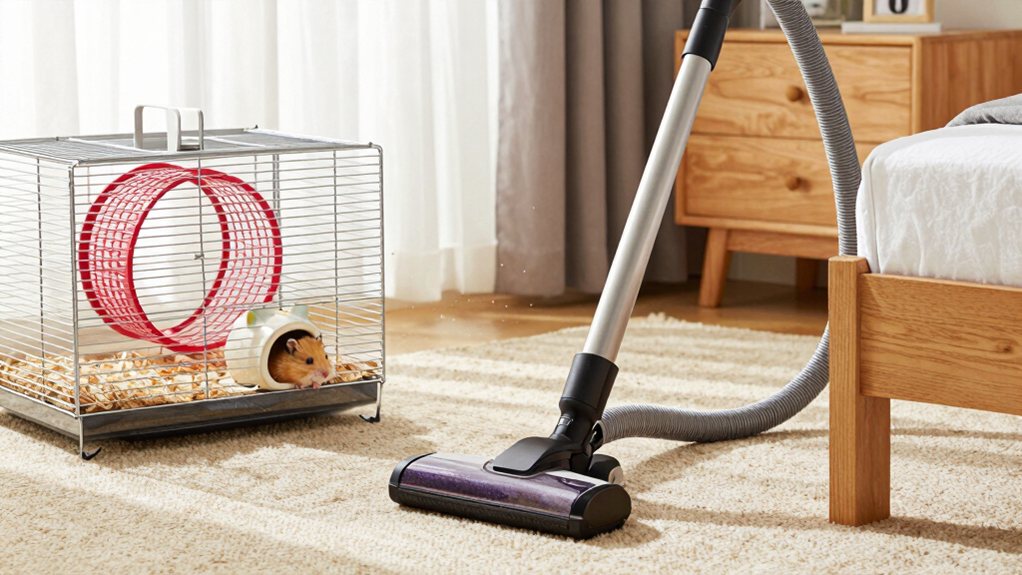
While your hamster mightn’t file a noise complaint, that vacuum is basically a roaring monster in their world, so it’s smart to take a few simple steps to keep them calm and safe.
First, check your hamster behavior. Pacing, freezing, or hiding means they’re stressed.
To help, move their cage to a quiet room before you start.
If that’s not possible, place a blanket over part of the cage to muffle sound and create a cozy hideaway.
Keep vacuum placement as far from them as possible. Distance really helps.
Never vacuum right next to their home. Even a few extra feet reduce the scare factor.
Turn off the vacuum when your hamster seems overwhelmed.
And hey, offer a treat after. It’s like a peace offering for the noise invasion. You’ll both feel better.
Should You Move the Cage Before Vacuuming?
You might think moving the cage is overkill, but it’s a smart move to keep your hamster safe and sane during vacuuming.
Give your little buddy a break by shifting the cage to a quieter spot, trust me, they’ll thank you for dodging the noise overload.
Plus, it’s way easier than explaining to a stressed-out hamster why the floor is suddenly a war zone.
Cage Safety During Cleaning
Even if your hamster’s cage seems perfectly safe right where it is, giving it a little thought before you start vacuuming can save you both a world of stress. Make sure the cage ventilation isn’t blocked, your little buddy needs fresh air, especially with all that dust the vacuum kicks up.
If the cage is too close to the action, consider moving it just a few feet away. It’s like giving your hamster a front-row seat to a rock concert nobody asked for.
Also, think about cleaning frequency, regular wipe-downs mean less chaos during vacuum day.
A quick check for loose bedding or toys keeps everything secure. You don’t want your hamster staging a great escape mid-suck.
A little prep keeps your pet calm and the space safe. Trust us, both of you’ll breathe easier, literally and figuratively.
For added safety, consider using a chew-proof cage cover to prevent your hamster from gnawing on exposed bars during or after cleaning.
Minimizing Noise Stress
What if the real rockstar in your home is actually the one in the cage? Hamsters may not headbang, but they do have serious sound sensitivity. That vacuum? It’s like a thunderstorm in their tiny world.
You don’t need to panic, but moving the cage to a quieter room before vacuuming can make a big difference.
It’s more than about comfort, it’s environmental enrichment. A calm space helps your little buddy feel safe and stress-free.
If you can’t move the cage, try vacuuming when your hamster’s less active, like during the day.
Close the door, play some soft music, or just keep it brief. You’re not being overprotective, you’re being a good pet parent.
After all, even small stars need peace to shine. Keep it quiet, keep it kind, and your hamster will thank you in snuffles.
Are There Hamster-Friendly Vacuums?
You’ve probably noticed your hamster jumps at the sound of the vacuum, so picking a quieter model might save both of you some stress.
Some vacuums run soft enough that your little buddy might just twitch his nose instead of diving into his bedding like it’s the apocalypse.
And if you care about air quality too, low-emission options help keep his tiny lungs as healthy as yours.
Quiet Operation Models
Ever wonder if your vacuum has to sound like a jet engine taking off? Good news—you don’t have to scare your hamster silly! Some vacuums come with silent motors and high-quality noise insulation, making them way friendlier for tiny, sensitive ears.
These quiet operation models hum along instead of roaring, so your little buddy won’t panic every time you clean.
Think of it like switching from a rock concert to a cozy coffee shop playlist. Much better for everyone. You’ll still get strong suction without the drama.
Brands like Miele and Dyson offer options that balance power and peace.
Just because it’s quiet doesn’t mean it’s weak. These models pack a punch where it counts.
Low-Emission Vacuum Options
While your hamster mightn’t file a formal noise complaint, they definitely feel the stress when dust and fumes float through the air during cleaning.
You can make things easier on your tiny roommate by choosing vacuums with low emission filters and eco friendly suction. These models trap more dust and allergens instead of blasting them back into the air your hamster breathes.
Think of it as giving your pet a cleaner, cozier bubble to live in.
- Vacuums with HEPA filters capture 99.97% of tiny particles.
- Low emission filters reduce airborne irritants markedly.
- Eco friendly suction uses less energy without sacrificing power.
- Some models are even labeled “allergy-friendly” or “green certified”.
Your hamster may not thank you in words, but their calm whiskers will say it all.
What Are the Quietest Cleaning Habits for Hamsters?
How do you keep your hamster’s home clean without turning their quiet little world upside down? You don’t need to blast your vacuum every day. Gentle sweeping works wonders. A small, soft-bristled broom can tidy up messes without the roar of machinery.
Try silent mopping for sticky spots. A damp cloth does the job quietly and safely. Clean during your hamster’s active times, usually dusk or dawn, so they’re already moving and less startled.
For sticky spots, go for silent mopping with a damp cloth—quiet, safe, and best done at dusk or dawn when your hamster’s naturally active and less likely to be startled.
Spot-clean daily instead of deep-cleaning weekly. It’s easier on both of you. Skip the vacuum near their cage, or move them to a calmer room if you must. Think of it like sneaking around a sleeping baby. Quiet moves win.
Your hamster will thank you with happy wheel runs and fewer stress naps. Keep it simple, keep it soft, and you’ll both enjoy a cleaner, quieter home. For disinfecting without harsh fumes, use a non-toxic, enzyme-based cleaner that’s safe for small animals and effective against common pathogens.
Final Thoughts
You’ve got a tiny roommate who’s way more sensitive than you think! Vacuuming near your hamster? Not the best idea. Those loud noises can really stress them out. Keep your little buddy safe by moving their cage or waiting until they’re not around.
Quieter vacuums help, but let’s be real, your hamster would probably vote for “silent treatment.” A little extra care keeps your fuzzy pal happy, calm, and less likely to judge your cleaning schedule.