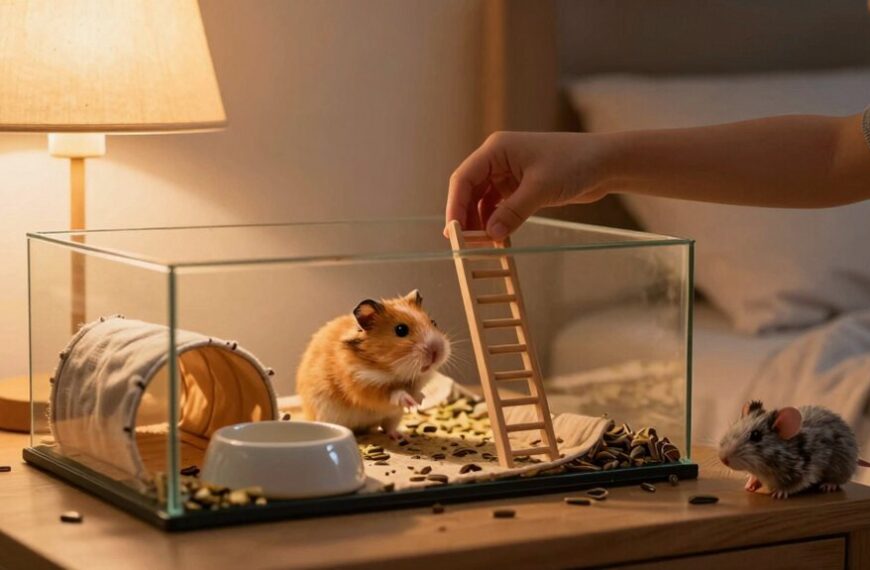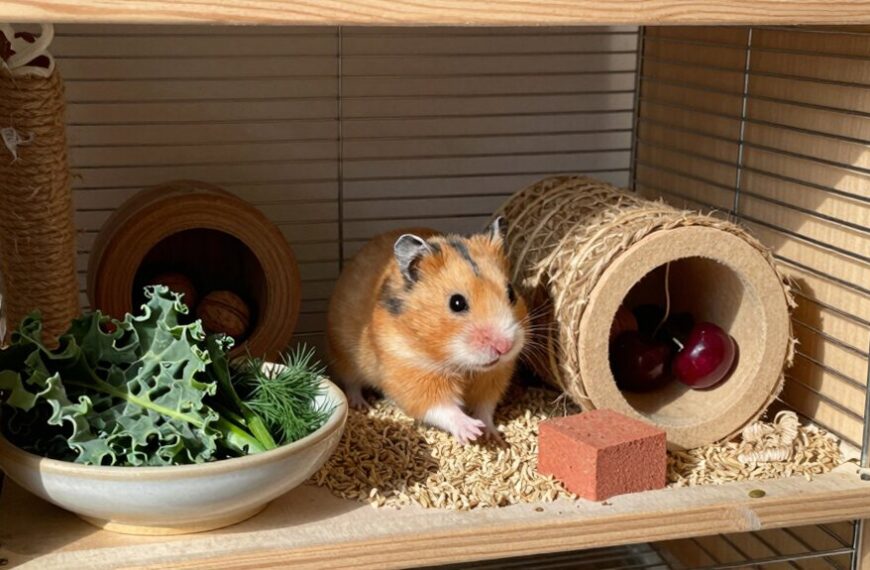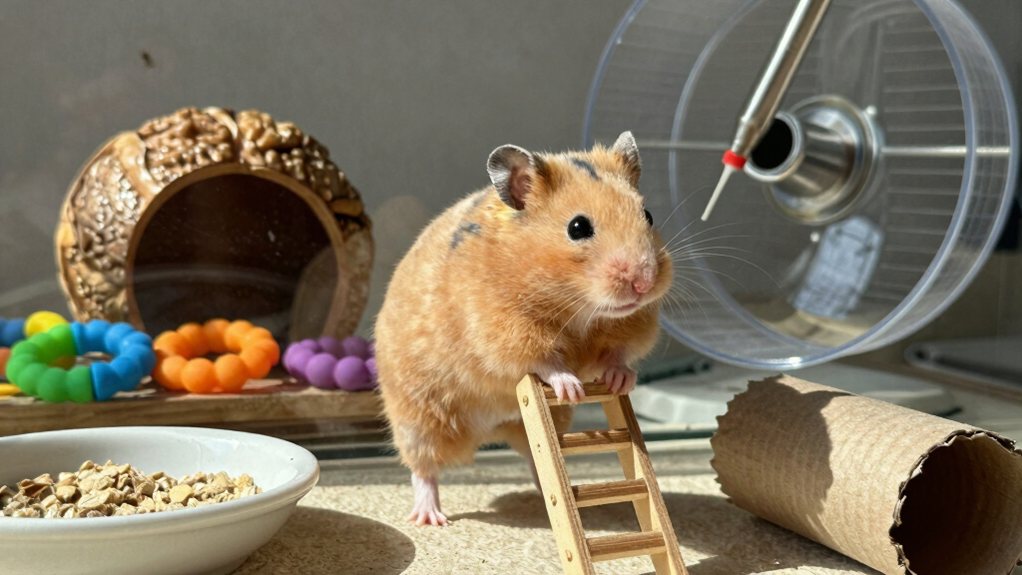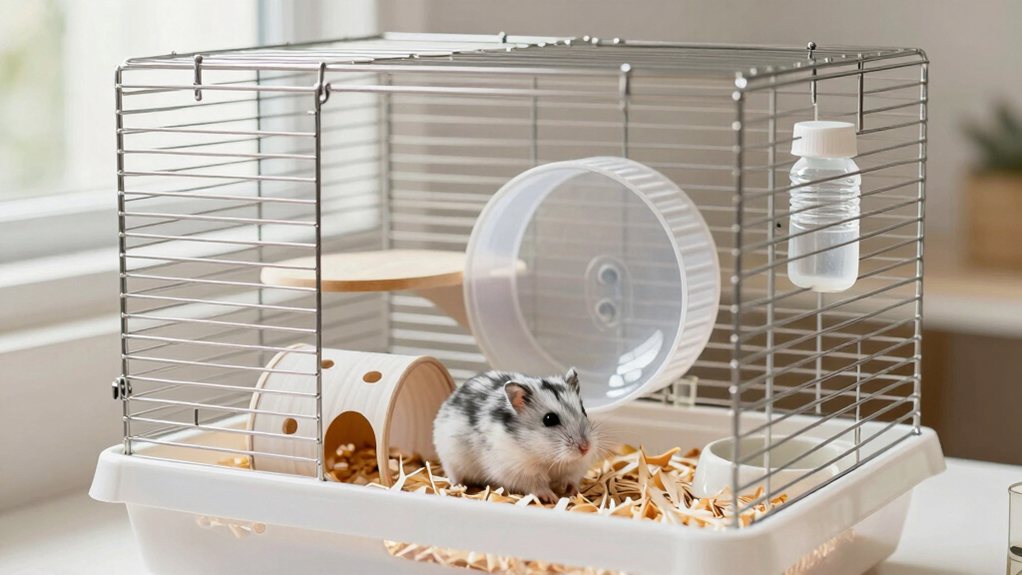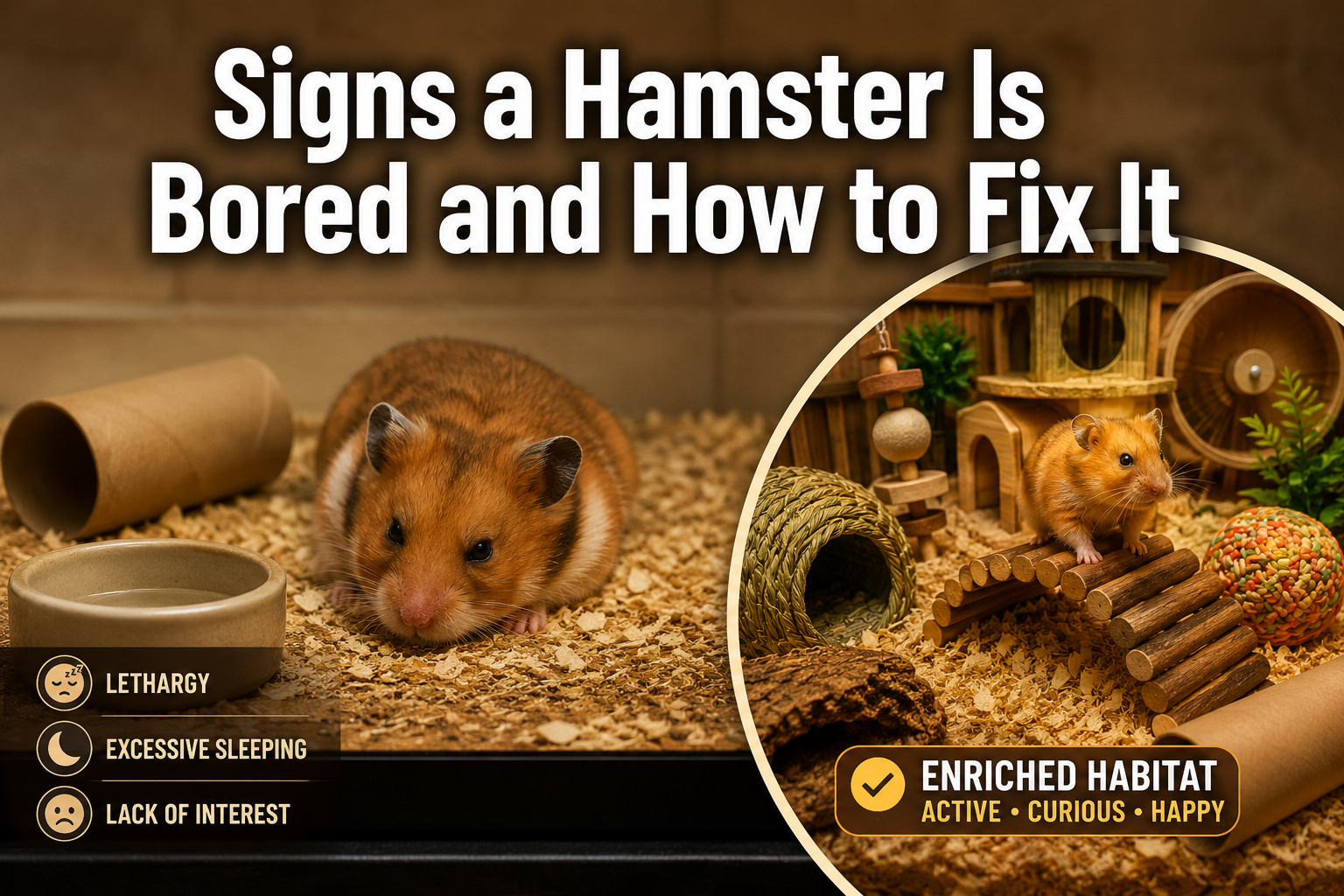
A bored hamster doesn’t just sit quietly, it develops repetitive, destructive behaviors that can escalate into serious health problems. Bar biting wears down teeth, over-grooming creates bald patches, and chronic stress from inadequate enrichment shortens lifespan. Recognizing the signs of bored hamster behavior early means the difference between a thriving pet and one developing cage rage or stereotypic behaviors that are difficult to reverse.
Boredom in hamsters stems from environments that fail to meet their instinctive needs. In the wild, hamsters travel several miles nightly, forage constantly, and dig complex burrow systems. A bare cage with a wheel and water bottle leaves these drives unmet, creating frustration that manifests as behavioral problems owners often mistake for personality quirks.
Key Takeaways
- Bar biting, excessive climbing, and over-grooming are primary signs of bored hamster behavior requiring immediate habitat changes
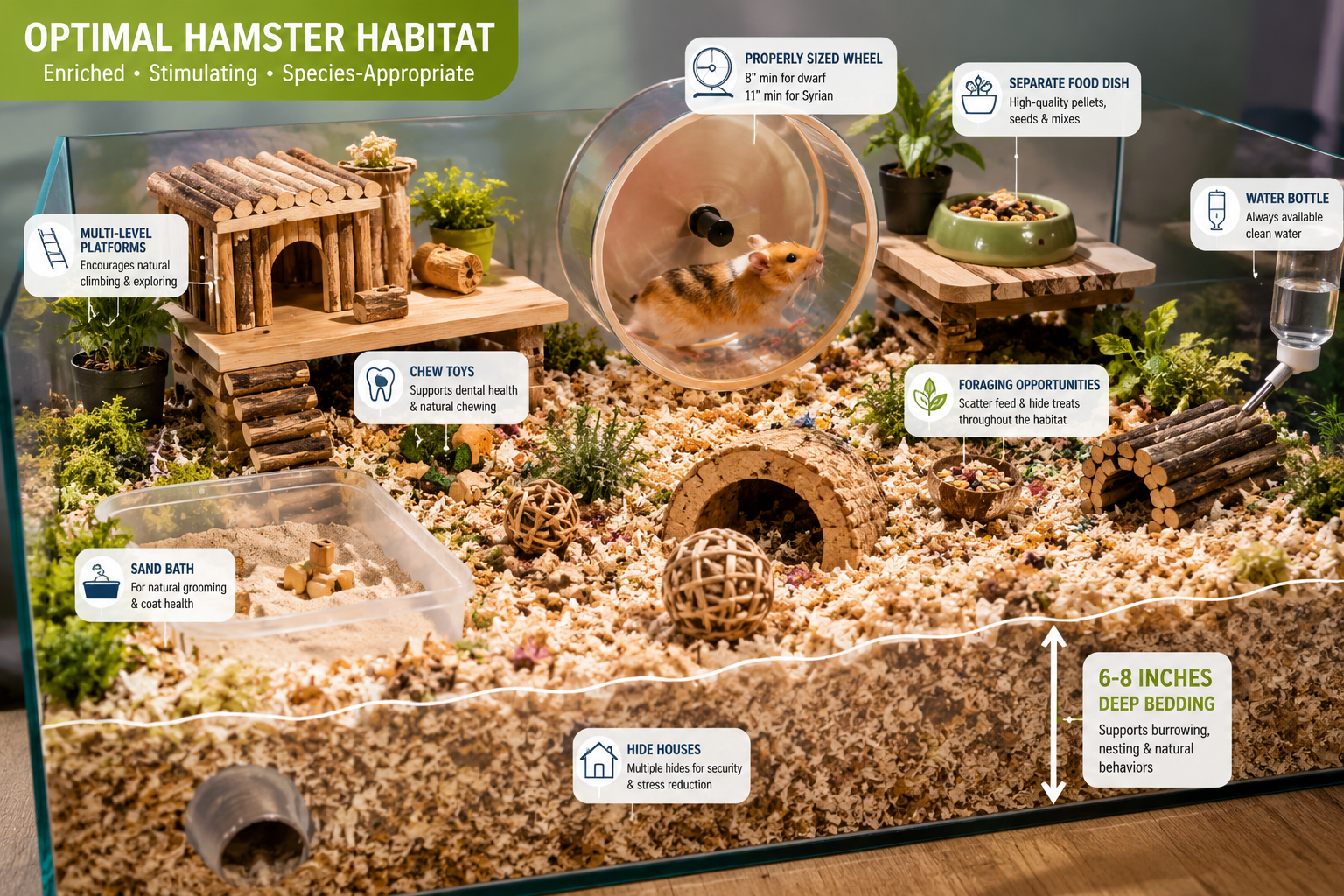
- Minimum 450 square inches of floor space (600+ for Syrians) with 6-8 inches of bedding depth enables natural burrowing behavior
- Wheel size matters: 8-inch minimum for dwarf species, 11-12 inches for Syrians to prevent back injury and provide adequate exercise
- Daily enrichment rotation prevents habituation, swap toys, hide treats in different locations, and introduce new textures weekly
- Species-specific needs differ: Syrian hamsters require solitary housing and larger territories; dwarf species need tighter bar spacing (under 0.4 inches)
Recognizing the Signs of Bored Hamster Behavior
Bar Biting and Cage Climbing
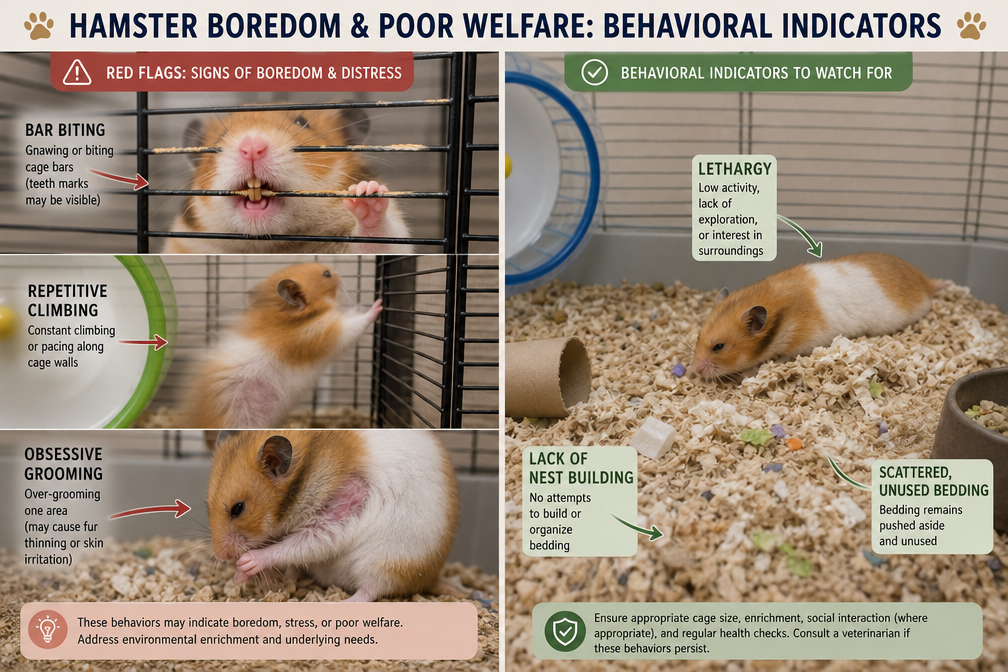
Persistent bar biting creates a distinctive metallic sound and leaves visible wear marks on cage bars. This isn’t exploratory behavior, it’s a stress response indicating insufficient mental stimulation. Hamsters that climb cage walls repeatedly, often falling or hanging upside down, are displaying stereotypic behavior patterns.
The behavior typically worsens at dusk when hamsters naturally become active. If your hamster immediately runs to the bars when you approach rather than exploring their habitat, the cage setup likely lacks adequate enrichment.
Bar biting can cause:
- Tooth damage: Misalignment, chips, or excessive wear requiring veterinary intervention
- Nose injuries: Raw, bleeding skin from repeated rubbing against bars
- Stress-related illness: Weakened immune system making hamsters susceptible to wet tail and respiratory infections
This behavior overlaps with signs of stress in hamsters, but boredom-driven bar biting occurs even when the hamster isn’t startled or threatened, it’s a constant, compulsive action.
Over-Grooming and Fur Loss
Hamsters groom naturally, but bored hamsters obsessively lick or scratch the same spot until fur thins or disappears entirely. Check for symmetrical bald patches on flanks, legs, or belly, these indicate behavioral over-grooming rather than mites or fungal infection (which create asymmetrical, flaky patches).
Over-grooming often accompanies other boredom signs. A hamster with nothing to do redirects energy inward, creating a self-soothing behavior that becomes compulsive. The skin underneath may appear pink and irritated from constant moisture and friction.
Lethargy and Reduced Activity
A bored hamster paradoxically becomes less active. When the environment offers no novelty, hamsters stop exploring and spend excessive time sleeping, even during their active evening hours. This differs from normal daytime rest; a healthy hamster should be alert and active within an hour of dusk.
Watch for:
- Minimal wheel use: Running less than 30 minutes nightly (healthy hamsters often run 5+ miles)
- No nest building: Using provided bedding without rearranging or creating burrows
- Ignoring food: Eating only when hungry rather than foraging and hoarding
Chronic boredom-induced lethargy can mask developing health issues. If environmental enrichment doesn’t restore activity within a week, consult a vet to rule out illness.
Escape Attempts and Aggression
Hamsters that constantly search for cage openings, chew plastic corners, or become defensive when handled are expressing frustration with their environment. This is particularly common in undersized cages where hamsters feel trapped.
Syrian hamsters, being naturally solitary and territorial, show more pronounced escape behaviors when bored. Dwarf species may become nippy or refuse handling, behaviors that seem like personality traits but actually reflect inadequate cage setup.
Understanding what you should never do with a hamster helps prevent situations that compound boredom with stress.
Why Hamsters Get Bored: Common Cage Setup Mistakes
Insufficient Floor Space
The minimum 450 square inches often cited is barely adequate for dwarf hamsters and completely insufficient for Syrians. A 40-gallon breeder tank (36″ × 18″ = 648 sq in) represents the practical minimum for Syrian hamsters, while 600-800+ square inches allows proper enrichment placement without overcrowding.
Small cages force owners to choose between a wheel, hide house, or enrichment, hamsters need all three simultaneously. Vertical space doesn’t compensate; hamsters are ground-dwelling and need horizontal territory for their natural ranging behavior.
Inadequate Bedding Depth
Hamsters are fossorial, they dig. Providing 1-2 inches of bedding prevents this instinctive behavior entirely. Aim for:
- 6-8 inches minimum across most of the cage
- 10-12 inches in one section for deep burrow construction
- Paper-based or aspen bedding that holds tunnel shape (avoid cedar and pine)
Deep bedding transforms a cage into a habitat. Hamsters create multi-chamber burrow systems with separate sleeping, hoarding, and toilet areas. This complexity provides mental stimulation and allows natural scent marking behavior.
Wrong Wheel Size
An undersized wheel forces hamsters to arch their backs unnaturally, causing spinal damage over time. This isn’t just uncomfortable, it’s painful and discourages exercise, worsening boredom.
Minimum wheel sizes:
- Dwarf hamsters (Roborovski, Campbell’s, Winter White): 8 inches
- Chinese hamsters: 8-10 inches (longer body length)
- Syrian hamsters: 11-12 inches
The wheel should allow the hamster to run with a flat back. Mesh or barred wheels cause bumblefoot; use solid running surfaces only. If you’re wondering whether dwarf hamsters need a wheel, the answer is absolutely, it’s not optional enrichment but essential exercise equipment.
Lack of Enrichment Variety
A wheel alone doesn’t prevent boredom. Hamsters need:
Foraging opportunities: Scatter feeding rather than bowl feeding encourages natural searching behavior. Hide treats in paper tubes, under hay, or in dig boxes.
Chewing materials: Wooden chews, untreated applewood branches, and cardboard prevent tooth overgrowth and provide texture variety. Learn about must-haves for hamsters to ensure you’re covering basics.
Hiding spaces: Multiple hide houses (not just one) let hamsters choose sleeping locations and create security. Ceramic, wooden, and cork bark hides offer different textures and temperatures.
Climbing structures: Wooden platforms, bendy bridges, and grapevine branches add vertical interest without replacing necessary floor space.
Texture zones: Sand bath areas (chinchilla sand, not dust) for grooming, different bedding types in sections, smooth stones for cooling.
How to Fix Hamster Boredom: Practical Solutions
Upgrade Cage Size and Setup
If your current cage is under 600 square inches, upgrading is the single most effective intervention. Options include:
- 40-gallon breeder tanks: Affordable, escape-proof, excellent visibility
- Large bin cages: DIY from 110+ quart storage bins with ventilation holes (bar spacing equivalent under 0.4 inches for dwarf species)
- Modular cages: IKEA Detolf (horizontal setup), custom-built enclosures
When setting up, zone the cage:
- Exercise zone: Wheel, open running space
- Foraging zone: Scattered food, dig box, treat hides
- Rest zone: Multiple hides, deepest bedding for burrows
- Sanitation zone: Sand bath (doubles as toilet area)
Proper cage setup addresses boredom at its source rather than treating symptoms.
Implement Daily Enrichment Rotation
Hamsters habituate to static environments within days. Prevent this by:
Weekly toy rotation: Keep 6-8 enrichment items, display 3-4 at a time, swap every 5-7 days. This makes “old” toys novel again.
Daily foraging changes: Hide food in different locations each evening. Use toilet paper tubes stuffed with hay and treats, paper bags with holes, or sprinkle seeds throughout bedding.
Texture introduction: Offer safe, new materials weekly, different wood types, dried herbs (chamomile, dandelion), crinkle paper, or coconut fiber.
Seasonal adjustments: In 2026, many owners are incorporating temperature-appropriate enrichment, cooling ceramic tiles in summer, extra nesting material in winter (though avoid temperature extremes).
Provide Species-Appropriate Exercise
Beyond the wheel, hamsters need:
Free-roam time: 20-30 minutes nightly in a hamster-proofed playpen or bathroom. Use this for bonding and exploration, not as a substitute for adequate cage size.
Obstacle courses: Create temporary setups with cardboard boxes, tunnels, and treat stations. Change the layout each session.
Digging boxes: Large plastic bins filled with 6+ inches of safe substrate (coco coir, paper bedding, shredded paper) for dedicated excavation.
Syrian hamsters and dwarf species have different exercise needs. Syrians require more territory and longer running distances. Dwarf species, particularly Roborovskis, are more active and need especially large wheels relative to body size.
Address Behavioral Issues Properly
If boredom behaviors persist after environmental improvements:
Bar biting: Cover problem areas with cardboard temporarily while the hamster adjusts to new enrichment. Never punish, this worsens stress.
Over-grooming: Ensure no parasites or skin conditions exist first. Increase foraging complexity to redirect obsessive behavior.
Aggression: Give the hamster 3-5 days to adjust to changes without handling. Forced interaction during this period increases stress.
Escape attempts: Check for gaps, weak points, or areas where the hamster feels exposed. Add more hides and ensure the cage is in a quiet location away from loud noises and predator pets.
Some behaviors take weeks to fade even after proper enrichment is provided. Stereotypic behaviors become self-reinforcing, requiring patience and consistency to break the pattern.
Monitor and Adjust
Track your hamster’s behavior for 2-3 weeks after changes:
- Activity level: Should increase, with more wheel running and exploration
- Nest building: Complex, multi-chamber nests indicate engagement
- Weight stability: Bored hamsters may overeat or undereat
- Interaction quality: Should become more curious, less defensive
If improvements plateau, reassess. Sometimes what seems like boredom is actually stress from other sources or early illness. A hamster that remains lethargic despite excellent enrichment needs veterinary evaluation.
Species-Specific Boredom Considerations
Syrian Hamsters
The largest and most territorial species, Syrians need:
- Minimum 600 square inches (800+ ideal)
- Solitary housing (cohabitation causes severe stress, not boredom relief)
- Larger enrichment items: 11-12 inch wheels, bigger hides, substantial chew toys
- More complex burrow systems: They’re the most dedicated diggers
Syrian hamsters show boredom through more pronounced aggression and escape attempts than dwarf species. Their size and strength mean they can damage inadequate cages, chewing through plastic bins or bending cage bars.
Dwarf Hamsters (Campbell’s, Winter White, Roborovski)
Smaller but equally active, dwarf hamsters require:
- Bar spacing under 0.4 inches to prevent escapes
- 8-inch minimum wheels (many commercial “dwarf” wheels are too small)
- Multiple enrichment items: Their speed and energy demand variety
- Tighter spaces: They feel more secure with appropriately sized hides
Roborovski hamsters are particularly prone to boredom, they’re the most active species and need extensive floor space despite their tiny size. Winter White and Campbell’s hamsters may show boredom through increased territorial scent marking.
Understanding whether dwarf hamsters like toys helps tailor enrichment to species preferences.
Chinese Hamsters
Often overlooked, Chinese hamsters have unique needs:
- Semi-arboreal tendencies: Appreciate more climbing opportunities than other species
- Longer body length: Need larger wheels (8-10 inches) despite small size
- Solitary housing: Despite being less aggressive than Syrians, they still require individual caging
- Tail considerations: Their longer tails can catch in inappropriate wheel designs
Chinese hamsters may express boredom through excessive climbing rather than bar biting, making their distress less obvious to new owners.
Creating a Boredom-Prevention Maintenance Schedule
Preventing boredom requires ongoing effort, not one-time setup:
Daily Tasks
- Scatter fresh food in different locations
- Spot-clean soiled bedding (but leave most scent markers intact)
- Rotate one enrichment item or hide treats in new spots
- Observe behavior for 5-10 minutes during active hours
Weekly Tasks
- Swap 2-3 enrichment items from storage
- Deep clean one section of cage (not entire habitat, preserve scent)
- Introduce new foraging challenge or texture
- Weigh hamster to monitor health
Monthly Tasks
- Full cage clean with vinegar and water solution
- Replace worn enrichment items
- Reassess cage layout, move zones around
- Evaluate wheel condition and replace if showing wear
Quarterly Tasks
- Audit entire cage setup against current best practices
- Introduce major new enrichment piece (new hide style, different wheel, large tunnel system)
- Review hamster’s weight, coat condition, and behavior patterns
- Consider whether cage size still meets needs (growing juveniles may need upgrades)
This schedule prevents the static environment that causes boredom while maintaining enough consistency that hamsters feel secure.
When Boredom Signals Deeper Problems
Sometimes what appears as boredom actually indicates:
Pain or illness: Lethargy from dental disease, digestive issues, or injury mimics boredom. If enrichment changes don’t help within a week, see a vet.
Aging: Senior hamsters (18+ months) naturally slow down. Adjust expectations and provide easier-to-access enrichment rather than forcing activity.
Inadequate nutrition: Deficiencies in protein or vitamins can cause lethargy. Ensure a quality hamster mix with 16-20% protein, supplemented with small amounts of fresh vegetables and occasional protein sources.
Environmental stressors: Loud noises, predator pets, or frequent cage location changes create chronic stress that looks like boredom but requires different solutions.
Genetic factors: Some hamsters are naturally less active. If the hamster is healthy, eating well, and shows no stereotypic behaviors, they may simply have a calmer temperament.
Understanding how to tell if a hamster is happy versus bored versus ill requires observing multiple behavioral indicators together, not isolated symptoms.
FAQ
How long does it take to fix boredom behaviors in hamsters?
Most hamsters show improvement within 3-7 days of proper enrichment changes, but stereotypic behaviors like bar biting may take 2-4 weeks to fully resolve. Severe cases in hamsters kept in inadequate conditions for months may never completely eliminate learned behaviors, though frequency and intensity should decrease significantly.
Can I fix hamster boredom without buying a bigger cage?
Cage size is foundational, you can’t enrich your way out of insufficient space. If upgrading isn’t immediately possible, maximize current space by removing any non-essential items (decorative but non-functional objects), adding deep bedding in at least half the cage, and implementing intensive daily enrichment rotation. However, plan to upgrade within 1-2 months for long-term welfare.
Do hamsters get bored of the same toys?
Yes, habituation occurs within 5-7 days. Rotate toys rather than leaving everything available constantly. Keep 6-8 items total, display 3-4 at a time, and swap weekly. This makes familiar items novel again and costs less than constantly buying new enrichment.
Is bar biting always caused by boredom?
Bar biting primarily indicates inadequate cage size or enrichment, but can also signal stress from external factors (predator pets, loud noises), desire to escape for breeding purposes (intact hamsters), or learned behavior that persists even after conditions improve. Address environmental factors first; if behavior continues after 3-4 weeks of proper setup, consult a vet to rule out neurological issues.
Can hamsters die from boredom?
Boredom doesn’t directly kill hamsters, but chronic stress from inadequate enrichment weakens immune systems, making hamsters susceptible to wet tail, respiratory infections, and other illnesses. Stereotypic behaviors like bar biting can cause injuries. Additionally, bored hamsters may become obese from inactivity or develop self-harm behaviors. Proper enrichment is a welfare necessity, not a luxury.
How do I know if my hamster is bored or just tired?
Observe during peak activity hours (1-2 hours after dusk). A tired hamster rests during the day but becomes active at night, explores their habitat, uses their wheel, and forages. A bored hamster shows minimal activity even during natural active periods, displays repetitive behaviors, or sleeps excessively at night. Track activity patterns for 3-4 days to distinguish normal rest from boredom-induced lethargy.
Conclusion
Recognizing signs of bored hamster behavior, bar biting, over-grooming, lethargy, and escape attempts, allows you to intervene before temporary frustration becomes permanent stereotypic behavior. Boredom isn’t a personality quirk; it’s a welfare issue with clear solutions.
Start with the foundation: minimum 600 square inches of floor space for Syrians (450+ for dwarfs), 6-8 inches of bedding depth, and species-appropriate wheel size. Build from there with varied enrichment, daily foraging opportunities, and weekly rotation schedules that prevent habituation.
The difference between a bored hamster and a thriving one isn’t expensive, it’s about understanding species-specific needs and creating environments that allow natural behaviors. A hamster that burrows, forages, runs miles nightly, and explores with curiosity is demonstrating what proper care looks like.
If your hamster currently shows boredom signs, implement changes this week. Upgrade cage size if needed, add deep bedding immediately, and introduce three new enrichment items. Monitor behavior for 7-10 days and adjust based on response. Your hamster’s increased activity, nest building, and reduced stereotypic behaviors will confirm you’re on the right track.
For ongoing guidance on creating optimal hamster environments, explore our complete care resources covering everything from species-specific needs to health monitoring.