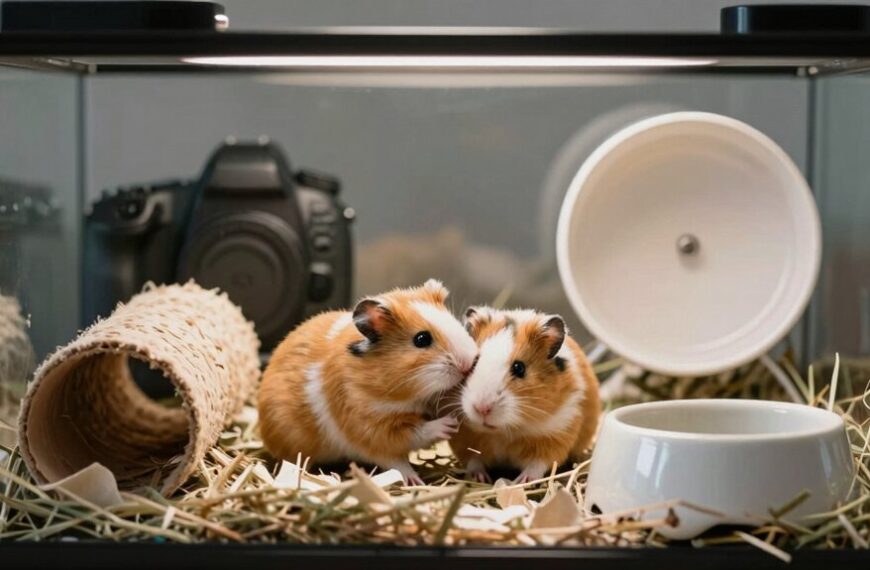
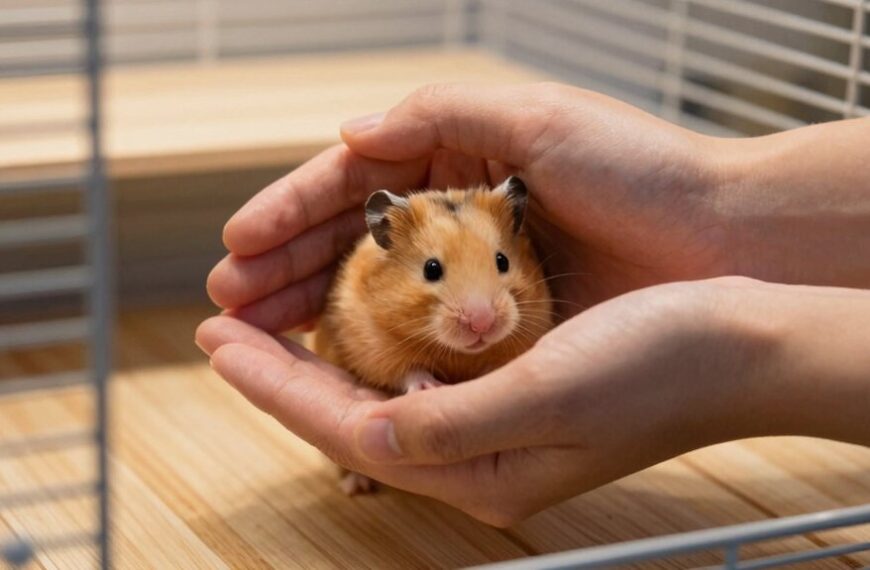
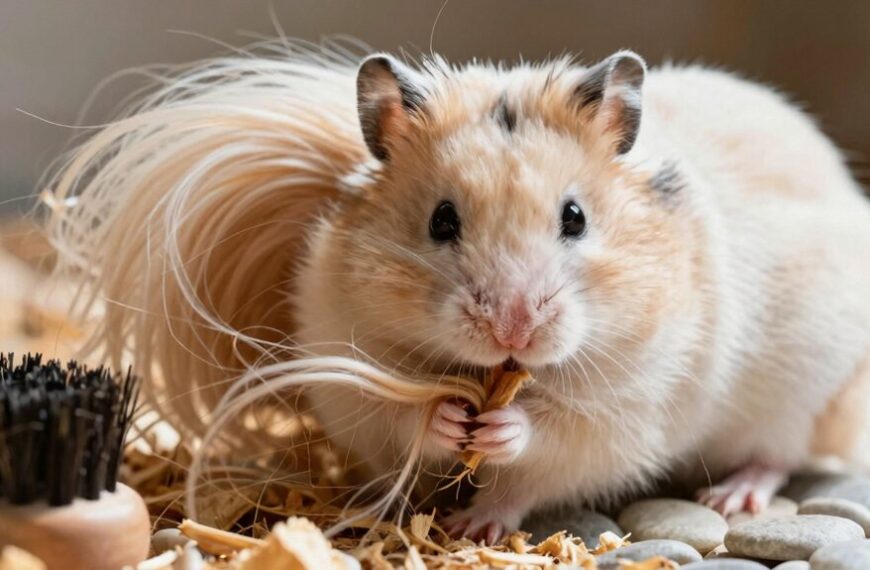
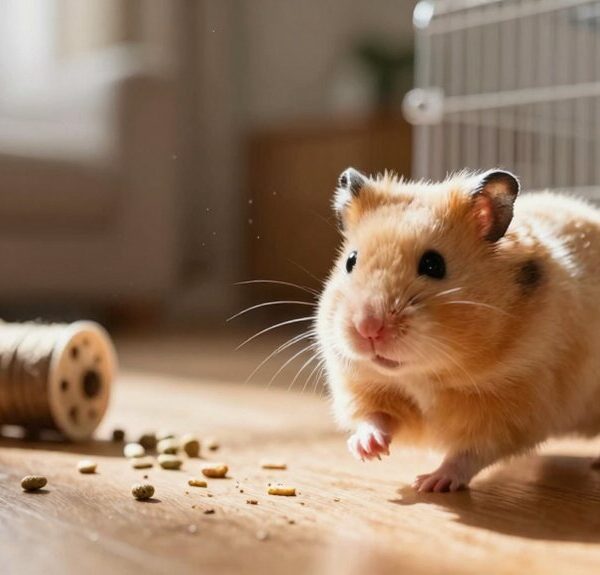
Your hamster definitely prefers the lights off, those beady little eyes are built for nighttime zoomies, not spotlight solos. Bright lights stress them out, mess with their sleep, and make them hide like they’ve seen a shadow monster.
They’re natural night owls, thanks to desert-dwelling ancestors who partied (and survived) after dark. Keep their world dark and cozy at night, and you’ll have a happy, active buddy. Stick around—you’ll discover how to make their tiny kingdom feel just right.
Why Hamsters Are Naturally Nocturnal

Even though you’re probably up sipping coffee by 7 a.m., your hamster is likely still curled up in a fluffy ball, catching some serious Z’s.
That’s because hamsters are naturally nocturnal, thanks to wild instincts and evolutionary traits shaped over generations.
In the wild, being active at night helps them avoid scorching desert heat and sneaky predators.
So while you’re binge-watching shows, your hamster’s just waking up, ready to snack, run, and explore in the quiet dark.
Their bodies are wired this way, no alarm clock needed.
Think of it as their built-in night shift schedule.
It’s not laziness, it’s survival smarts passed down from their ancestors.
So when your hamster ignores you at dinner but goes full gym rat at midnight, don’t take it personally.
They’re just honoring their inner wild side, one wheel spin at a time.
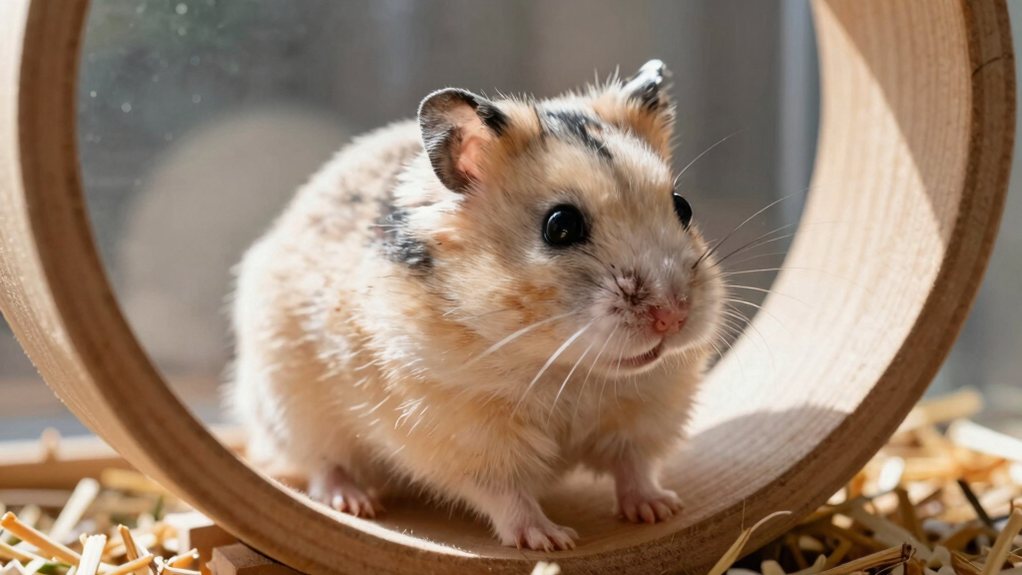
A new day for your hamster often begins with peak activity at dusk, aligning with their natural nocturnal behavior.
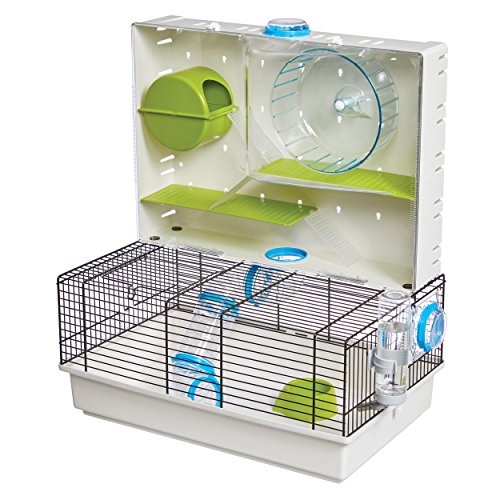
Fun Arcade Hamster Home features a cool multi-level play space to watch your hamster in action 18.11 length x 11.4 width x 21.5 height inches, 6.1 pounds

Rabbit light: Rabbit lighting is specially designed for rabbit cages, integrating daily lighting, night observation and environment creation. It is a necessary comfortable equipment for rabbit owners to keep pets.

【Hamster Cage with LED Lights】This hamster cage is equipped with adjustable LED lights with multiple modes, controllable via remote, that illuminate the interior, creating a colorful display.They not only add a cozy atmosphere but also make it easy to observe your pet's activities at night
How Light Affects Hamster Sleep Cycles
When the lights stay on late, your hamster’s internal clock can get as confused as a cat at a dog party. Your little buddy relies on a steady circadian rhythm to know when to sleep and when to snack.
Bright lights at night throw that rhythm off, like setting your alarm clock an hour forward for no reason. This messes with melatonin production, the sleepy-time hormone, making it harder for your hamster to wind down.
In the wild, hamsters wake at dusk and rest when it’s pitch black. So, keeping things dim and quiet at night helps them feel safe and sleepy.
Think of it like giving them a cozy bedtime story, minus the pages. A consistent light-dark cycle keeps their body clock ticking seamlessly.
Turn off those bright lamps after sunset, and your hamster will thank you with peaceful zzz’s instead of midnight wheel marathons. Sweet dreams, tiny friend.
Hamsters rely heavily on their tapetum lucidum to navigate and remain active in low-light conditions, enhancing their ability to detect movement even in near-darkness.
Do Hamsters Need Light at Night?
You might think your hamster needs a nightlight, but they actually thrive in the dark.
Their natural sleep cycle kicks in when it’s quiet and dim, so too much light at night can mess with their routine, kind of like how you’d feel if someone shone a flashlight in your face while trying to sleep.
Letting them enjoy a little nighttime darkness isn’t just helpful. It’s a cozy favor your furry friend will appreciate.
Natural Sleep Cycle
Though you might be a night owl who loves burning the midnight oil, your hamster definitely isn’t following your lead. Hamsters run on a natural sleep cycle tuned to twilight hours, active at dusk and dawn, then snoozing the rest of the time.
This rhythm isn’t random. It’s a diurnal adaptation that helps them avoid daytime predators and use moonlight navigation like tiny, furry explorers.
- They thrive in dim, quiet environments, especially at night
- Bright lights can stress them out and disrupt their internal clock
- A consistent dark period helps maintain healthy sleep patterns
- Using a color temperature range that mimics natural dawn and dusk can support their crepuscular rhythm without causing stress.
Light Exposure Effects
Ever wonder if your hamster needs a nightlight to find their way to the snack stash after dark? Good news—you can skip the nightlight. Hamsters don’t need light at night and actually prefer it pitch black. They’re nocturnal, so bright lights or constant light pollution can stress them out and mess with their natural rhythm.
Too much UV exposure isn’t good either. Unlike us, they don’t need it for vitamin D. In fact, artificial lights, especially blue or white ones, can confuse their internal clock. Think of it like trying to sleep with a disco ball in your room—not fun, right?
Keep their space dark and quiet at night, just like a cozy cave. That way, they’ll happily wheel away at 2 a.m. without any light pollution throwing off their groove. You’re not being stingy with light—you’re being a good roommate!
Nighttime Darkness Benefits
When the sun goes down, your hamster’s world should too. Keeping things dark at night isn’t just helpful, it’s a must for their well-being.
Darkness helps your little buddy sync with their natural rhythm, so they stay alert at night and rest easy during the day.
Hamsters don’t need night lights. Thanks to their amazing starlight adaptation, they move just fine in low light.
Bright lights at night stress them out, but with moonlight navigation skills, they happily explore their cage in near-darkness.
You’d probably hate a spotlight while trying to sleep, right? Same goes for your hamster. A dark, quiet space mimics their wild burrows and keeps them feeling safe.
Plus, watching them come alive under the soft glow of moonlight adaptation is kind of magical. So skip the night light. Your hamster prefers the stars, or at least the quiet dark that feels like them.
Best Lighting Schedules for Hamster Health
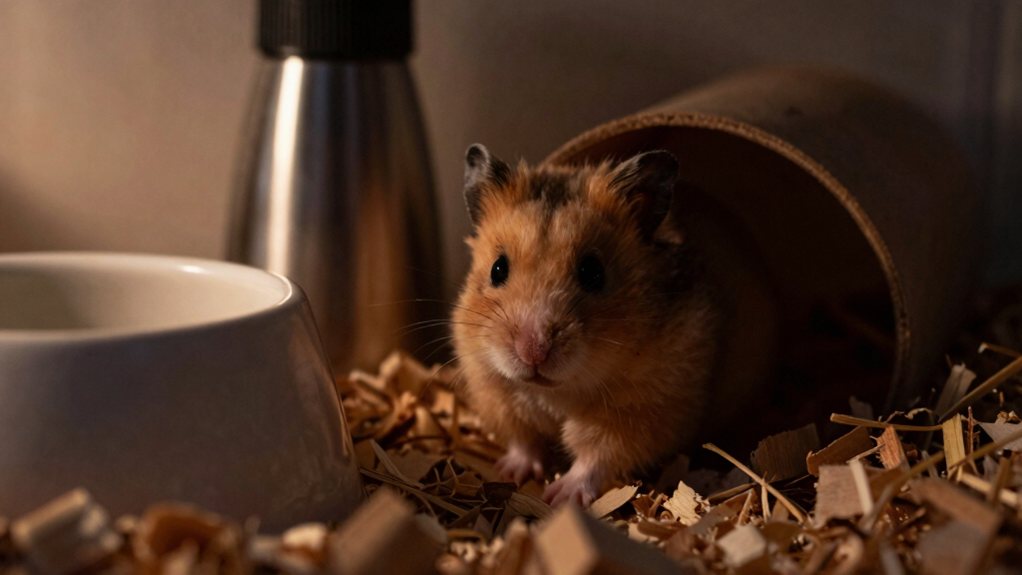
Since your hamster isn’t exactly going to clock in at a 9-to-5 job, you’ve got some flexibility in setting up a lighting routine, but getting it right still matters.
Aim for 12 hours of light and 12 of darkness daily to mimic a natural cycle.
12 hours of light, 12 of dark—keep it consistent to mirror nature and keep your hamster happy and healthy.
Skip the UV lighting, hamsters don’t need it and too much can stress them out.
Instead, use regular room lights or a simple lamp near their cage, not too close.
An artificial dawn feature on a timer can help ease changes, so your little buddy isn’t startled awake by sudden brightness.
Consistency beats perfection, your hamster will thrive when the schedule stays steady.
Think of it like bedtime for a toddler, same time, same routine.
And hey, if you forget once in a while, no worries.
Just reset and keep going.
Your furry pal will thank you with happy wheel runs and fewer grumpy nibbles.
Signs Your Hamster Is Stressed by Light
If your hamster’s acting jumpy or hiding more than usual, it might be stressed by too much light.
You’ll notice they start avoiding bright spots in their cage, like they’re playing a little game of “not it” with the sunlight.
Keep an eye out for changes in their routine, such as eating less or running in place like a tiny, furry protester.
These can be clues they’re not loving the brightness.

【Upgrade Installation & Air Ventilate】Compare with 1.0, we have simplified the installation steps of the front door in this version, which can be easily completed in only 2 steps. But it doesn't affect the large door on the front side and a roof vent to bring fresher air to the pet’s habitat or change bedding, set up new toys from the top, but also open the front door to feed hamsters or interact.

CLEAR ACRYLIC CONSTRUCTION: Transparent hamster habitat provides 360-degree visibility to observe your pet's activities from all angles while ensuring durability and easy cleaning

【Includes Accessories & Toys】This acrylic hamster cage encompasses everything needed for pet care.A wooden garden house that satisfies the hamster's instinct to dig. Inside the mice cage, you'll find a food bowl, stairs, an extra-large 18cm exercise wheel, a bridge toy, an external bathing area, and a water bottle with a steel ball to prevent leaks. This makes it an ideal gift choice, especially for children.
Signs Of Discomfort
Ever wonder why your hamster suddenly bolts for the corner of the cage like it just saw a ghost? Bright lights might be stressing your tiny buddy out. When your hamster’s not happy with the lighting, you’ll notice changes in feeding habits and social interactions. It’s more than being dramatic—your pet is trying to tell you something!
You catch your hamster shielding its eyes or freezing in place when the lamp clicks on.
It starts ignoring treats or eating way less than usual.
Your normally curious pal avoids coming out, even during evening playtime.
These signs mean it’s time to dim the lights and create a cozier space. Hamsters aren’t fans of constant brightness, think of them as little nocturnal roommates who prefer movie nights over spotlight solos. A calm, shaded hideout can make all the difference. You’ve got this!
Avoiding Bright Areas
Why do you always find your hamster tucked deep in the darkest corner of the cage, like it’s playing hide-and-seek every single day?
It’s more than a game, your little buddy is probably stressed by bright light. Hamsters are naturally wired for shadow seeking, avoiding harsh lighting just like they’d in the wild.
You’ll notice them darting away from sunlight. Avoidance isn’t optional, it’s instinct.
If your hamster’s acting jumpy, hiding more than usual, or refusing to come out during the day, bright areas might be overwhelming.
They’re not being dramatic, their eyes are super sensitive!
So, keep the cage out of direct sunlight and offer cozy hideouts on the darker side.
A dim, quiet space helps them feel safe and relaxed. Think of it as their personal cave of calm.
You’ve got this, just dim the lights, and let your furry friend enjoy life in the shadows.
Changes In Behavior
What’s with the midnight marathon when the sun’s still shining?
If your hamster’s acting off, light might be stressing them out.
Changes in behavior are big red flags, especially when their exercise patterns go haywire or social interactions drop.
You know your little buddy best, so watch for these signs:
- Running nonstop on their wheel during daylight hours, even when they used to nap
- Hiding more than usual or snapping during handling, meaning their social interactions suffer
- Eating less or ignoring toys they once loved, showing stress in their routine
It’s more than grumpiness.
It could be too much light messing with their internal clock.
Hamsters thrive in calm, dim environments.
So if your furry friend’s acting like a tiny, stressed-out CEO, maybe dim the lights and give them a break.
You’ll both sleep better.
How to Make a Dark, Cozy Hamster Habitat
How does your hamster like to spend most of their time? Probably snoozing in secret hideouts or darting through tunnels like a tiny ninja. To keep your little buddy happy, create a dark, cozy habitat they’ll love.
Start by placing a soft hammock in a quiet corner, away from bright lights and noise, so they can nap in peace.
When designing tunnels, use covered or opaque materials to block light and give that snug, secure feel. Think of it like building a mini cave fortress!
Add some shredded paper or fleece for bedding, and watch them burrow with joy.
Your hamster mightn’t throw you a thank-you party, but the happy zoomies at 2 a.m.? That’s their way of saying, “Nice job!”
Just remember: dark equals dreamland, and cozy equals content. You’ve got this!
Handling Your Hamster in Low Light: Tips
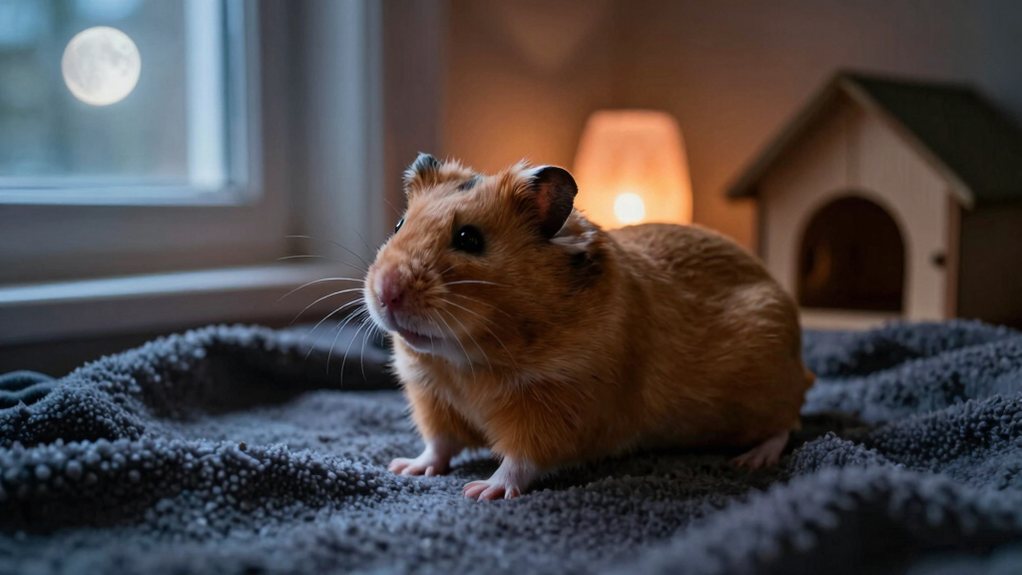
Now that you’ve built your hamster a dreamy, dim hideaway where they can nap and explore in peace, it’s time to think about how you interact with them, especially when the lights are low.
Hamsters are most active at dusk and dawn, so handling them during these times means you’ll need to be extra mindful.
Hamsters thrive in the twilight hours, so when dusk or dawn rolls around, slow down, stay calm, and let your furry friend lead the way.
Keep things calm and safe with these simple tips:
- Move slowly and use gentle handling to avoid startling your little buddy.
- Keep the room in a quiet environment, free from loud noises or sudden movements.
- Use a soft voice and let your hamster sniff your hand first. It builds trust and prevents nibbles.
You don’t need bright lights—just enough to see what you’re doing. Think cozy, not concert hall.
Your hamster will appreciate the chill vibe, and you’ll both enjoy more peaceful bonding time. After all, who doesn’t love a little low-light snuggle session?
Hamsters are naturally nocturnal animals and rely on darkness to regulate their activity cycles.
Final Thoughts
So, do hamsters prefer lights on or off? Yep, they definitely vote for darkness, these little night owls thrive when it’s dim and cozy. Keep their world quiet and dark at night, and they’ll stay happy, healthy, and ready for midnight wheel marathons.
Think of them as tiny roommates who *really* hate sleepovers with sunlight. Stick to a steady light schedule, and you’ll both rest easier—promise.

Made of durable plastic, igloos are easy to clean and stain resistant

The size of the large hamster cage platform is 9.84 * 5.9 * 4 inches. The size of the climbing hamster ladder is approximately 11.02x 4.65x2.76 inches, and the platform and tunnel ladder shelter are large enough for small animals to move freely, making it suitable for most hamster cages. The hamster hiding tunnel is very suitable for hamsters to hide, climb, and sleep. The hamster tunnel ladder is very suitable for connecting to hamster houses, hamster platforms, or hamster houses.

Hamster Bedding: Hamster bedding consists of a variety of natural floral and herbal materials that have been carefully selected. All of them are hand-picked and naturally air-dried without any added ingredients, providing a soft surface for hamsters to walk, sleep and play comfortably