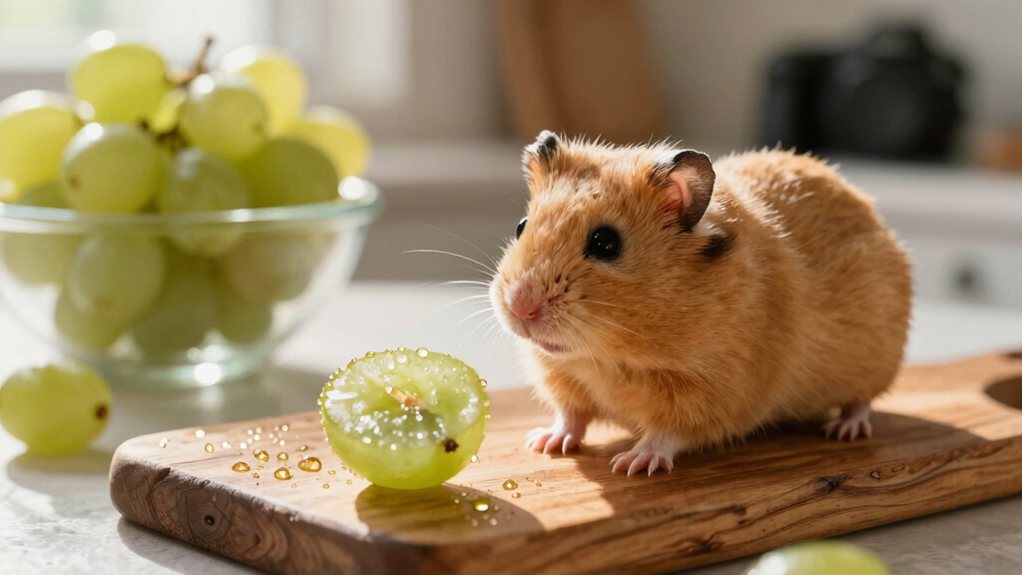
You can safely give your hamster a pea-sized piece of seed-free apple, it’s low in sugar, easy on their tiny tummy, and most hammies go nuts for it. Just remember to wash it, chop it small, and skip the seeds, they’re toxic!
Blueberries and pears are great too, but apple’s the all-around favorite. Offer fruit just 2–3 times a week to avoid tummy troubles.
Watch how your little buddy reacts, happy zoomies mean it’s a win. There’s a bit more to get just right, so keep going to make every treat a healthy win.
Are Fruits Safe for Hamsters?

So, can your little hamster buddy actually enjoy a juicy piece of fruit, or is that a one-way ticket to tummy troubles?
Good news, you can safely add fruit to your hamster’s feeding routines, but in small, thoughtful amounts.
Too much fruit can lead to upset tummies or even obesity, so think of it as an occasional treat, not a daily snack.
Watch for signs of fruit allergies, like itching or swelling, though they’re rare.
If your hamster acts odd after trying a new fruit, stop feeding it and check with your vet.
Stick to safe choices like apples (no seeds!) or blueberries, and always remove uneaten pieces to keep the cage clean.
You’re more than just feeding them, you’re sharing a sweet moment.
Just keep it balanced, fun, and safe.
Your furry friend will thank you with happy squeaks and cheek pouches full of joy.
Fruit should be offered no more than 2–3 times per week to prevent digestive issues and maintain a healthy diet.


Natural prebiotics and probiotics support healthy digestion

Tasty apple and honey treat sticks your hamsters will love
Best Low-Sugar Fruits for Hamsters
Wondering which fruits won’t send your hamster’s sugar levels soaring? You’re not alone. Keeping your tiny buddy healthy while treating them to something sweet can feel like walking a snack-time tightrope.
The good news is some low-sugar fruits are perfect in moderation. Try small bits of green apple, seeds removed, as those are a no-go.
You can also offer pear or even cucumber, which counts as a fruit and is super hydrating.
Always watch for fruit allergies, like itching or swelling, especially when trying something new. Just like us, hamsters can be picky or sensitive.
Also, consider seasonal availability, such as berries in summer and apples in fall, to keep things fresh and natural.
Rotate options so your hamster doesn’t get bored, yes, they get bored. A little variety goes a long way, as long as sugar stays low and fun stays high.
Dangerous Fruits Hamsters Should Never Eat
Now that you’ve got a handle on the safer, low-sugar treats, it’s time to talk about the fruits that are an absolute no-go for your little furball.
Some toxic fruits can seriously harm your hamster, so it’s best to avoid them completely.
Never feed your pet citrus fruits like oranges or lemons, they’re too acidic and can upset their tiny tummy.
Grapes and raisins might seem harmless, but they’ve been linked to kidney issues in small pets.
And steer clear of fruit seeds or pits, like those in apples or cherries, as they contain cyanide, which is dangerous.
Some hamsters may even have allergic reactions to certain fruits, showing signs like itching or swelling.
When in doubt, skip it.
Your hamster’s health is worth the extra caution.
Keep it simple, safe, and sweet, without the risk.
Even one or two apple seeds can lead to cyanide poisoning due to the release of amygdalin during digestion.
How Much Fruit Can a Hamster Have?

How much fruit should you actually be giving your hamster? Not as much as you might think! While fruit can be a sweet treat, too much leads to tummy troubles or even fruit allergies. Think of fruit as a dessert, not a meal.
Here’s what you need to remember:
- A teaspoon of fruit, 2–3 times a week, is plenty. Your hamster’s tiny tummy can’t handle more.
- Always watch for signs of fruit allergies, like itching or diarrhea. Better safe than sorry.
- Use small feeding tools, like mini tongs or a ceramic dish, to keep things clean and fun.
You’re doing more than feeding your pet. You’re bonding! Just don’t go overboard.
After all, your hamster doesn’t need a fruit salad every day. A little goes a long way in keeping them happy, healthy, and maybe even doing a happy hop after snack time!
How Often Should Hamsters Get Fruit?
You might be tempted to spoil your hamster with sweet treats every day, but too much fruit can upset their tiny tummy. Stick to small portions just a few times a week, and remember, younger hamsters need even less until they’re fully grown.
Balancing their main diet with just a bit of fruit keeps them happy, healthy, and bouncing around their cage like little furballs of joy.


✔ TREAT - Great treat for sugar gliders, squirrels, chinchillas, degus, prairie dogs, rats and other small mammals.

✔ HEALTHY Fruit-based jelly treat, with exotic fruit flavors & added calcium
How Much Fruit Is Safe
So, you’ve got your hamster eyeing that juicy slice of apple like it’s the treasure at the end of a snack rainbow, adorable, right?
But before you hand over the whole thing, let’s talk portion size. Too much fruit can lead to tummy troubles or even diabetes.
This is especially true since fruit storage and seasonal availability might tempt you to overfeed during peak times.
Keep it simple and safe with these tips:
- Offer just 1 teaspoon of fruit per serving—tiny, but mighty!
- Stick to 2–3 times a week max, so their little digestive systems stay happy.
- Rotate choices based on seasonal availability to keep meals fresh and exciting.
Your hamster will bounce with joy over a berry now and then.
But remember, moderation is key. You’re more than just feeding them. You’re caring for a tiny, whiskered friend who trusts you with every nibble.
Fruit Frequency By Age
Now that you’ve got the scoop on keeping fruit servings small and occasional, let’s talk about how your hamster’s age plays a big role in snack timing.
Young hamsters under 6 months can handle a tiny fruit treat once a week, think of it like dessert after growing pains.
Adults do best with fruit every 10–14 days. Their tummies are more sensitive, and too much sugar can lead to issues.
Senior hamsters may have fruit once every two weeks, and portions should be kept extra small.
Always check for spoilage, especially with fruit storage. Moldy snacks are a hard no.
And while seasonal availability might tempt you, hello, summer berries, stick to the schedule. Your hamster doesn’t need a holiday to enjoy a nibble.
Treat fruit like a special guest, welcome, but not overstaying its stay. Your little buddy will stay happy, healthy, and full of zoomies.
Balancing Diet With Fruit
How often should fruit actually show up in your hamster’s menu? Not as often as you might think. While fruit adds fun variety, it’s best served just 2–3 times a week in tiny portions. Too much can upset your little buddy’s tummy or lead to weight gain. Think of fruit as a treat, not a staple.
Here’s how to keep things balanced and heartwarming:
- Offer fruit in rotation based on seasonal availability—fresh is always tastier and more exciting!
- Practice smart fruit storage; a bit of mold can spoil the whole batch (and your hamster’s mood).
- Watch your hamster’s joy when they discover a new fruity surprise—it’s pure, tiny-faced bliss.
Mix in veggies and quality pellets daily, and your hamster will thrive. After all, a happy hamster is one who nibbles wisely and cutely.
How to Prep Fruit for Your Hamster
While your hamster might act like a tiny food critic eyeing a five-star meal, prepping fruit for their little paws is actually pretty simple, if you know the tricks. Start by washing the fruit well to remove any pesticides, then chop it into pea-sized pieces so it’s easy to chew and safe to eat.
Always remove seeds and pits, they’re choking hazards and can be toxic.
Skip the seeds and pits—they’re a choking risk and can be toxic. Safety first for your little nibbler’s fruity snack time.
For fruit storage, keep extras in an airtight container in the fridge for up to two days, but serve it at room temperature so it’s more tempting.
Use small feeding tools like a ceramic dish or a treat tong to keep things clean and fun.
Offer fruit just once or twice a week to avoid tummy troubles.
Your hamster will nibble happily, and you’ll feel good knowing you’re treating them right, sweet, safe, and simple.
Is Your Hamster Handling Fruit Well?

You’re doing great offering fruit to your hamster, but keep an eye on how their tummy handles it.
Happy digestion means normal, firm droppings and lots of zoomies.
If your little buddy seems gassy or sluggish, you might be serving too much, so scale back to a pea-sized piece once or twice a week.
Think of fruit as a fun treat, not a main course.
Your hamster’s tiny belly doesn’t need much to stay happy and healthy!
Signs Of Digestive Comfort
When your hamster happily nibbles on a tiny slice of apple or a bit of blueberry, you’re probably wondering if that fruity treat is sitting well in their little belly. Good news, you can tell they’re doing just fine by watching for a few key signs.
First, listen for gentle digestive noises, a quiet tummy usually means things are moving seamlessly. Second, check their stool consistency, firm, well-formed droppings are a green light. And third:
- They’re still zooming around the cage like tiny, furry racecars
- Their nose twitching with curiosity, not stress, after snack time
- No hunched posture or squeaky discomfort
If all three are true, you’ve nailed it. Your hamster’s digestion is on track, and that fruit is fueling their fun. Just keep portions small and sweet moments even sweeter.
Fruit Portion Guidelines
Seeing your hamster dart around with a burst of joy after a fruity snack is a sure sign those tiny bites are agreeing with them. Just because they act like they could eat a whole watermelon doesn’t mean they should.
Stick to a pea-sized piece once or twice a week. Too much fruit can upset their delicate tummy. Even healthy treats need balance.
Watch for signs of digestive comfort, like normal poops and playful energy. If things go sideways, scale back and try again later.
Consider seasonal availability when picking treats. Berries in summer, apples in fall. Your hamster will love the variety.
And don’t forget fruit storage. Keep it fresh in the fridge, but always serve it at room temperature to avoid shocking their little system.
A cool, crisp bite is a happy bite!
Final Thoughts
You’ve got this! Now that you know the scoop, you can treat your little buddy to safe, healthy fruits in moderation. Stick to low-sugar picks like apples or berries, skip the dangerous ones, and always serve small, prepped pieces.
Watch how your hamster reacts, happy tummies mean you’re on track. Think of fruit as a fun snack, not a main meal. You’re doing great by caring so much!

IRRESISTIBLE STRAWBERRY FLAVOR: Delight your hamster with delicious yogurt drops infused with natural strawberry taste, giving them the sweet reward they deserve during bonding and playtime.