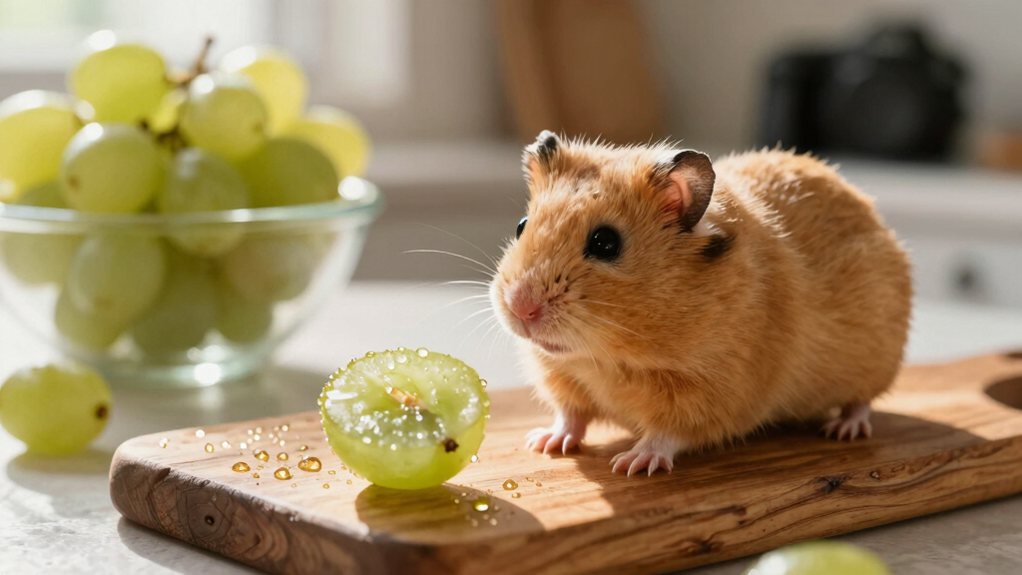
Yes, you can give your hamster a tiny piece of grape as a rare treat, but don’t go overboard. Those sweet little bursts are like candy to them, and too much sugar can upset their sensitive tummy.
Stick to just a pea-sized chunk once or twice a week, always cut it small, and watch for any digestive issues. Wash it well, skip the seeds, and remember: all grapes pack a sugary punch, seedless or not.
You’re doing great keeping treats fun and safe. There’s more helpful tips where that came from.
Can Hamsters Eat Grapes Safely?
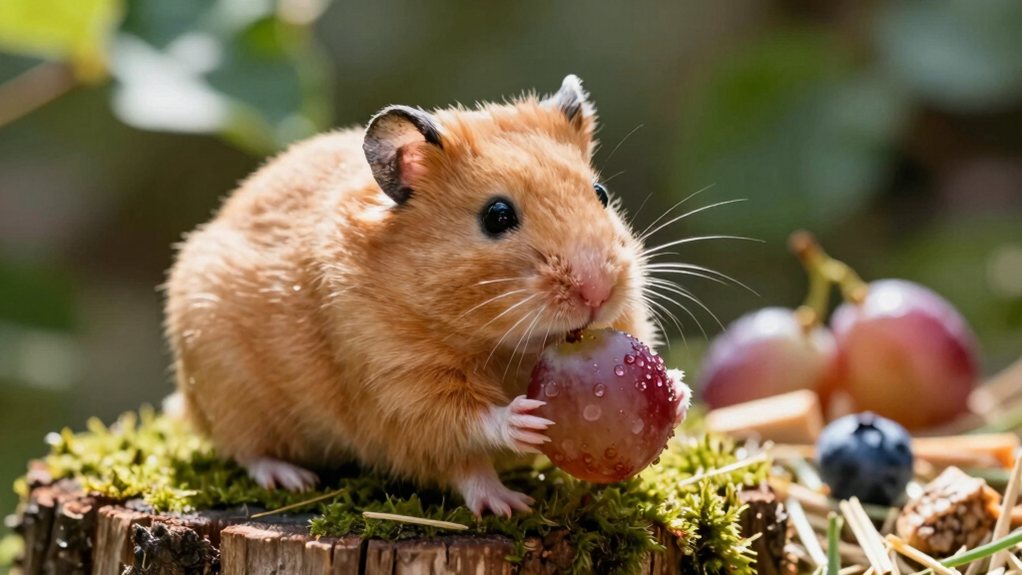
So, can your tiny, whiskered buddy safely nibble on a grape? Yes, but only in small amounts and occasionally. Grapes aren’t toxic to hamsters, but their high sugar content means you’ve got to play portion police. Think of it like giving your hamster a tiny treat, not a snack buffet.
Yes, hamsters can enjoy grapes—but only as an occasional treat. Keep portions tiny and infrequent to avoid sugar overload.
When you’re doing hamster taste testing, you might notice your pet prefers red over green grapes. Go figure, they’ve got grape color preferences too!
Just slice the grape into pea-sized bits to avoid choking. And always remove uneaten pieces. Damp fruit in a cage spells trouble.
You’re more than feeding them; you’re teaching them healthy habits. So yes, a little grape joy is fine, but keep it rare and responsible.
After all, you want your little furball bouncing on their wheel, not napping off a sugar crash!
Why Grapes Are High-Sugar Treats for Hamsters
You just gave your hamster a tiny piece of grape and watched them scurry off like they scored a gourmet snack, adorable, right?
But here’s the sweet truth: grapes are high-sugar treats, not daily meals.
Originally from grape origin regions in Europe and Asia, these juicy snacks pack natural sugars that can upset your hamster’s delicate digestion.
In the wild, hamsters in their natural habitat eat mostly seeds, grains, and occasional greens, not sugary fruits.
Too much sugar can lead to obesity or even diabetes, especially in smaller breeds like dwarfs.
So while one small grape piece once in a while is fine, don’t make it a habit.
Think of it like giving your kid candy, fun once in a blue moon, but not breakfast.
Your hamster will stay happy, healthy, and full of energy for all their midnight wheel runs.
How Much Grape Can a Hamster Eat?
You might be tempted to let your hamster go all out on grapes, but a little goes a long way, think tiny bite, not a full snack.
Offer just a small piece once or twice a week, because too many sweet treats can lead to a chubby cheeked (and unhealthy) buddy.
If you notice your hammy turning into a lazy lump or having tummy troubles, it’s probably time to cut back on the grape parties.
Grapes are considered high-sugar fruits and should be limited to prevent obesity and digestive issues.
Portion Size Guidelines
Just a tiny piece of grape, about the size of your hamster’s thumbnail, is all it needs for a safe, sweet treat.
You might wonder if your hamster has grape color preferences, but most don’t care if it’s green, red, or purple. They just love the juicy bite!
Always cut it into small bits to avoid choking.
Offer this treat once or twice a week during your usual feeding time routines, so your little buddy knows when to expect something special.
Too much grape can lead to tummy troubles or weight gain, so stick to that small portion.
Think of it like dessert: fun, but not a meal.
Your hamster will nibble happily, stash some away (classic move), and maybe even do a happy hop.
Keep it balanced, keep it fun, and you’ll both enjoy this sweet little ritual.
Frequency Of Treats
A tiny grape treat once or twice a week is plenty, think of it as a mini celebration, not a daily party. You wouldn’t eat cake every day, and your hamster doesn’t need grapes that often either.
Stick to a consistent feeding schedule to keep their diet balanced and their tummy happy.
Offering grapes too often can lead to tummy troubles or weight gain, and nobody wants a grumpy, chubby hamster on their hands.
Instead, mix things up with treat variety.
Try bits of apple, carrot, or cucumber to keep snack time exciting. Your little furball will appreciate the surprise!
Just remember: grapes are a special perk, not a staple.
Keep it fun, keep it occasional, and your hamster will stay healthy, active, and totally thrilled with their sweet, juicy reward.
Signs Of Overfeeding
Ever wonder how something as tiny as a grape could cause big trouble? Yeah, even that little bite can add up fast. Overfeeding grapes to your hamster might seem harmless, but watch for these signs:
Noticeable weight gain: if your hammy’s looking a bit rounder, it’s time to rethink treats.
Sluggish behavior: less zooming means something’s off.
Wet or sticky cheeks: leftover grape bits can lead to tooth decay.
Changes in droppings: soft or irregular poop signals digestive stress.
Grapes are sweet, sure, but that sugar hits hard for such a small body. You’re doing more than just sharing a snack. You’re managing their health.
Keep it to a pea-sized piece once a week, tops. Your little buddy will stay happy, healthy, and cavity-free. Think of it like dessert: fun in moderation, risky in excess. You’ve got this!
Are Seedless Grapes Safer Than Seeded Ones?
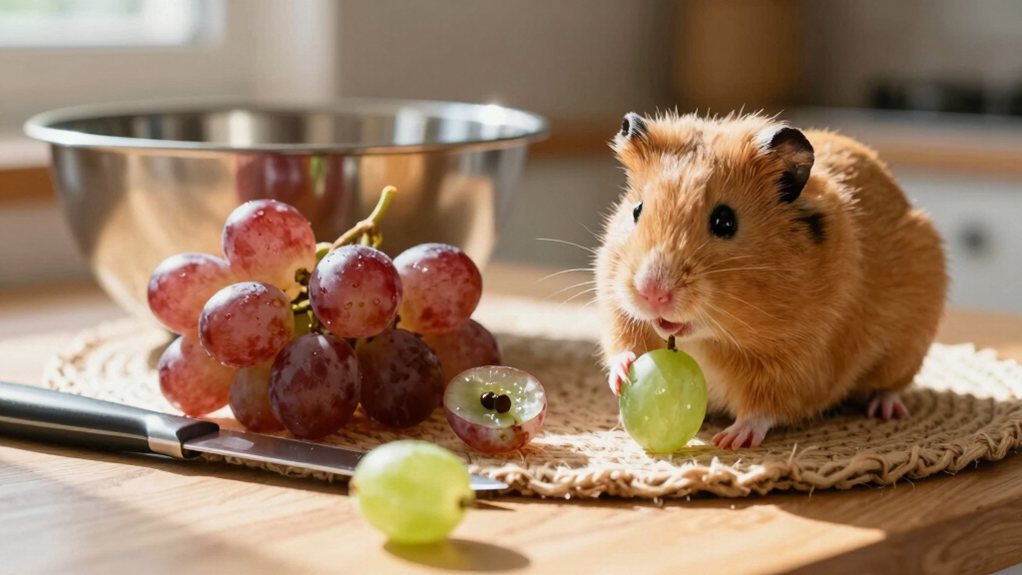
When it comes to feeding your hamster grapes, skipping the seeds doesn’t actually make things safer. So don’t toss that bag of seedless grapes thinking you’ve cracked the hamster snack code.
The real issue isn’t seeds. It’s sugar. Both seedless and seeded grapes pack a sweet punch that can lead to weight gain or diabetes in hamsters if overfed.
Whether you pick red, green, or purple grape color varieties, the sugar content stays high.
And while organic versus conventional might matter to you, your hamster won’t mind. But rinsing any grape helps remove pesticides.
Truth is, both types are fine in tiny amounts. Think of grapes as a once-in-a-while treat, not a staple.
So go ahead, share a small bite, but keep it rare and watch your little buddy’s waistline.
After all, even hamsters dream of snacks. But not the ones that cause problems.
Should You Wash Grapes Before Feeding Them?
You’ll want to give those grapes a good rinse before handing them over to your hamster, yes, even the ones labeled “organic.” Think of it like prepping your own snacks. A quick wash helps knock off dirt, pesticides, or any invisible junk you don’t want your tiny furball munching on.
Always rinse grapes—even organic ones—before giving them to your hamster. A quick wash removes dirt, pesticides, and hidden gunk, keeping your tiny friend safe and healthy.
Keeping grape freshness in check and reducing pesticide residue is super simple with these steps:
- Rinse grapes under cool, running water for about 30 seconds.
- Gently rub each grape to dislodge any stubborn residue.
- Pat them dry with a clean towel to prevent sogginess.
- Chop into tiny, bite-sized pieces—hamsters don’t need big snacks!
Your little buddy will appreciate the clean, crisp treat.
You’ll feel good knowing you’ve minimized any hidden nasties.
It’s a small step that makes a big difference in their health and happiness.
Can Grapes Cause Digestive Issues in Hamsters?
You know your hamster has a tummy that’s easily upset, so while grapes might seem like a fun treat, they can actually cause some digestive drama.
With their high sugar content, even a small grape can lead to bloating or diarrhea if you’re not careful with portions.
Think of it like giving your hamster a candy bar, sure, they’ll love it, but just a tiny bite is plenty!
Digestive Sensitivity In Hamsters
While your hamster might give you those big, pleading eyes every time you snack on grapes, it’s worth remembering their tiny tummies aren’t built for grape-filled feasts.
Hamsters have delicate digestive systems, and even small treats can throw off their gut flora balance or slow intestinal motility.
Here’s what you should keep in mind:
- Tiny tummies, big reactions – Their size means even a bite can cause bloating or diarrhea.
- Sugar overload – Grapes are sweet, and too much sugar upsets their sensitive digestion.
- Gut flora balance matters – Sudden food changes disrupt the good bacteria in their system.
- Watch motility – Sluggish intestinal motility can lead to serious discomfort or blockages.
A nibble now and then? Maybe.
But skip the grape party: your little buddy will thank you with fewer tummy troubles and more happy wheel runs.
High Sugar Impact
Grapes might seem like a harmless little snack, but that sweet taste comes with a sugary punch that can really shake up your hamster’s system.
Even though grapes originated in the Mediterranean, thanks to their grape origin story, they’re packed with sugar that tiny tummies aren’t built to handle.
Feeding your hamster too many grapes can lead to bloating, diarrhea, or even long-term issues like obesity and diabetes.
And since the average hamster lifespan is only 2–3 years, every bite counts toward their health.
Think of it like giving a toddler a soda: fun for a second, but not worth the crash.
A tiny nibble now and then? Maybe. But don’t make it a habit.
Your furry friend’s belly will thank you, and you’ll help keep their short, adorable life as happy and healthy as possible.
Sweet treats should stay rare—not regular!
Portion Size Importance
A single grape might look small to you, but for a hamster, it’s like finding a watermelon in your lunchbox, way too much of a good thing.
Getting portion size right keeps your little buddy happy and healthy. Here’s how to do it right:
- Slice it small – Offer just a quarter of a grape, no more.
- Watch the frequency – Stick to once or twice a week during regular feeding time routines.
- Check grape color preferences – Some hamsters go for red, others ignore green. Observe what your furry friend likes.
- Remove uneaten bits – Leftover fruit can rot in the cage and cause mess or mold.
Tiny tummies mean big care with small treats.
Even though grapes are fun to snack on, too much can lead to tummy troubles.
Keep it balanced, stay consistent, and your hamster will thank you with happy squeaks and cheeky cheek stuffing!
How to Safely Introduce Grapes to Your Hamster
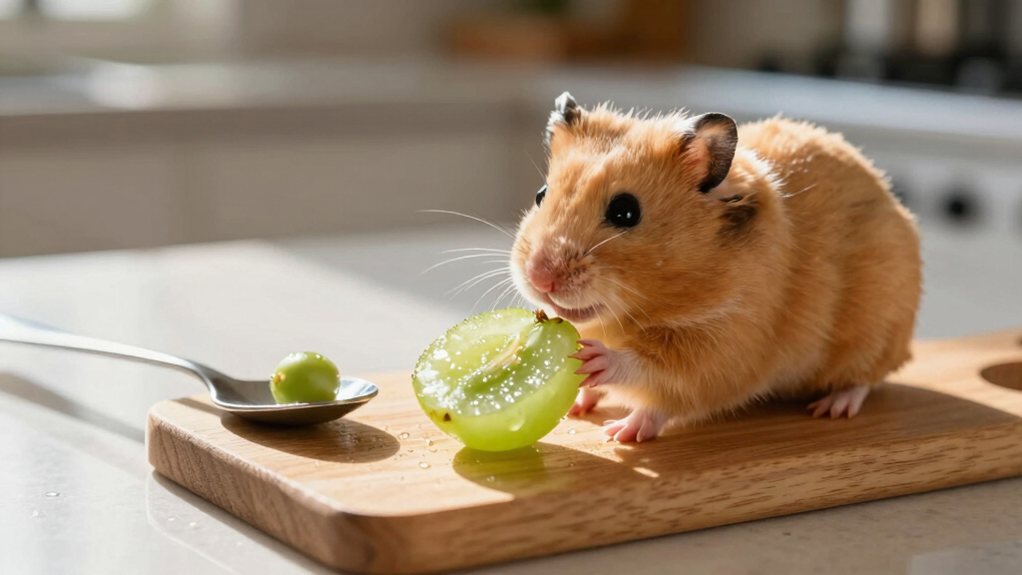
So, you’ve got a tiny furball at home and you’re wondering if those juicy grapes on the counter are a go or a no. Good news, they can. Just start small, offer a pea-sized piece to see how your hamster reacts.
Some seem to prefer red over green grapes, but grape color preferences vary, so try both and watch their little face light up.
Always wash the grape first, no pesticides, please. Remove seeds and cut it into bite-sized bits to avoid choking.
Wash grapes well to ditch pesticides, remove seeds, and chop into tiny pieces—safety first for your little nibbler’s snack time.
Offer it during your usual feeding time routines so it becomes part of their safe, predictable day.
Watch for any tummy troubles over the next 24 hours. If all’s well, you can treat them once or twice a week.
Symptoms of Grape Overfeeding in Hamsters
If you’ve given your hamster too many grapes, you might notice them getting a bit sluggish or plopped in a corner like they’ve had a long day at the office.
Watch out for tummy troubles too, loose stools or a bloated belly mean their tiny digestive system is waving a white flag.
Don’t panic, but maybe swap the grape snack for something lighter next time. They’ll bounce back in no time.
Digestive Issues
Ever wonder why your hamster suddenly turns into a tiny, wobbly drama queen after snack time? Grapes might seem harmless, but they can mess with your pet’s delicate digestive enzymes and even trigger grape allergies in some cases.
Too many grapes can lead to real tummy troubles. Keep an eye out for these signs:
- Bloated belly – your hammy looks puffy and uncomfortable
- Diarrhea – messy cage cleanups and sad little squeaks
- Lethargy – less zooming, more napping in odd spots
- Loss of appetite – ignoring food like it’s personal
If you spot these, ease up on the fruit and offer plain water and hay. While grapes aren’t toxic like in dogs, their sugar and moisture content can overwhelm your hamster’s tiny system.
Stick to pea-sized pieces once a week, and your furball should stay happy, healthy, and drama-free, well, mostly.
Lethargy And Weakness
You might’ve already noticed your hamster slowing down after a grape-heavy snack, and if bloating or diarrhea popped up, lethargy could be right behind it.
When your tiny buddy seems extra tired or wobbly, it might be more than just nap time. Overfeeding grapes can zap their energy fast.
Even though grapes offer hydration benefits in tiny amounts, too many can overwhelm their little system.
You might see them lying around more, barely moving, or not responding to your voice like they usually do.
While grape allergies are rare, they can contribute to weakness, too.
Don’t panic, but do act. Cut out the grapes and offer fresh water. Your hamster’s perkiness should bounce back soon.
Think of it like a sugar crash, but for hamsters.
Keep treats small and occasional, and your fuzzy friend will stay lively, curious, and full of zoomies.
5 Safer Fruits to Feed Your Hamster Instead
Wondering what fruity treats you can safely share with your tiny, nibble-happy buddy? Good news—you’ve got options. While grapes are a no-go, there are plenty of tasty and safe alternatives.
Just remember to serve them in small amounts to keep your hamster happy and healthy. Here are some top picks:
- Apple slices (seeds removed!) , a crunchy favorite that’s low in sugar.
- Banana alternatives like blueberries or strawberries , sweet, soft, and packed with flavor.
- Pears , juicy and gentle on tiny tummies when served plain and seed-free.
- Papaya chunks , a tropical bite rich in enzymes and fun to chew.
These fruits make snack time exciting without the risks.
Your little furball will chirp with joy. Just don’t overdo it. A little sweetness goes a long way in hamster land!
Even safe fruits should be given cautiously, as apple seeds contain amygdalin, a compound that releases cyanide and can be lethal to hamsters in tiny amounts.
When Not to Let Hamsters Eat Grapes
While your hamster might give you those big, pleading eyes every time you snack on grapes, it’s best to keep those juicy green or red orbs far away from their tiny paws.
Skip grapes if your hamster has known grape allergies, yes, those exist! Just like some people react badly to certain foods, your little buddy might too.
Watch for itching, swelling, or tummy troubles after tasting.
Also, steer clear if your pet already has dental problems.
Grapes are sugary and sticky, which can worsen tooth decay.
And let’s be real—those cheeks are cute, but they’re not meant for holding sweet snacks that rot.
You love your hamster, right? Then protect those whiskers and tiny chompers.
Stick to safer treats, and save the grapes for your own snack bowl.
Your hamster will survive the heartbreak—promise.
Final Thoughts
So, can you share a grape with your little buddy? Sure, just a tiny piece, once in a while. Too much sugar can cause tummy troubles or weight gain, and nobody wants a grumpy, chubby hamster.
Always go seedless, wash it well, and watch how they nibble it like it’s a gourmet snack. If they seem off afterward, ease up. And hey, apples or blueberries might be safer bets. Treat wisely, laugh at the cheek pouches, and keep snack time fun!