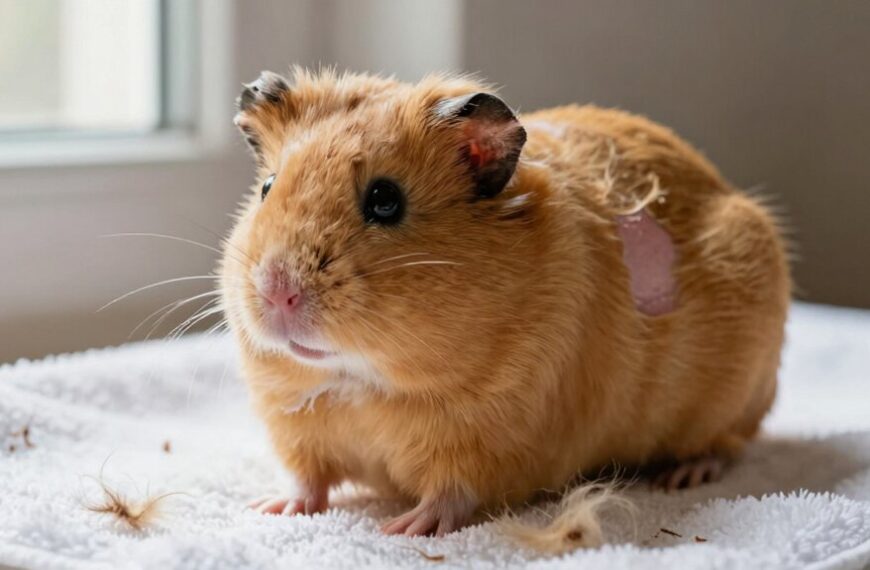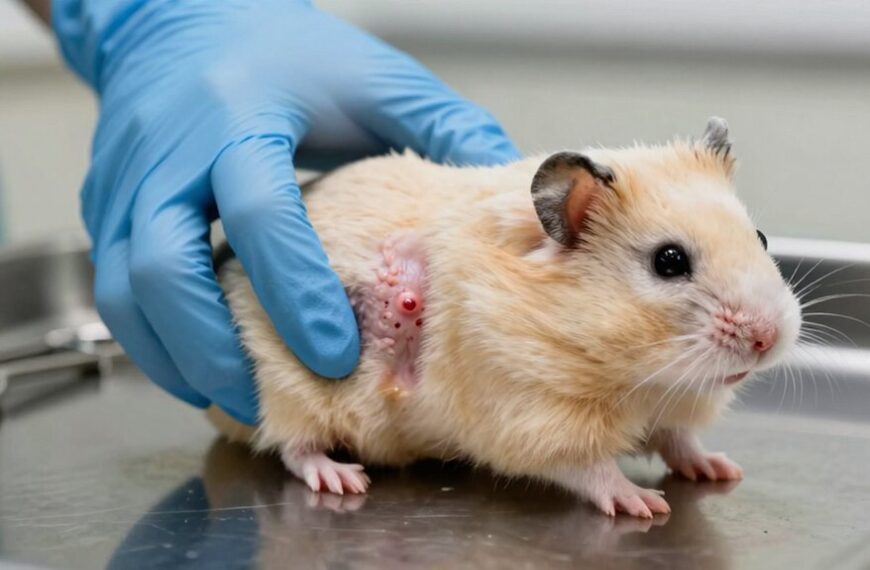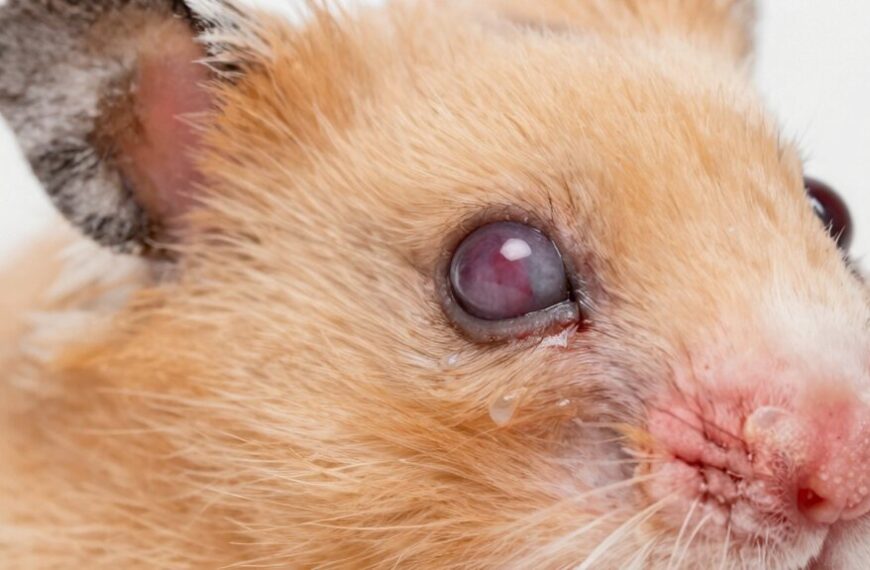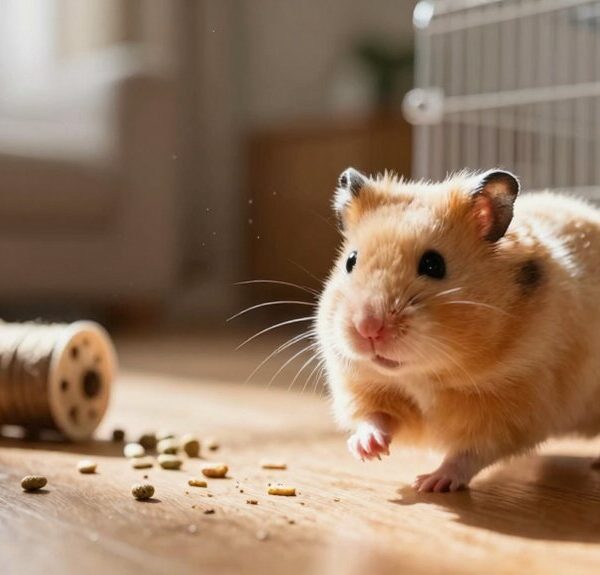
If your hamster has diarrhea, it could be a simple tummy upset from food changes or stress, but it’s essential you act fast.
True “wet tail” is a deadly emergency marked by a soaked, smelly rear, lethargy, and refusal to eat; it worsens within days, causing severe dehydration. Always see a vet immediately for proper diagnosis and antibiotics, and keep your pet warm and hydrated while you wait.
You’ll find more life-saving steps ahead.
Is It Wet Tail or Simple Diarrhea? Spot the Difference
When your hamster has a messy back end, the first question you’ll probably ask yourself is, “Is this wet tail, or just a simple case of diarrhea?” Spotting the difference is important, because one is a common, often mild tummy trouble, while the other is a severe and fast-moving illness.
With simple diarrhea, you might just see visible poop changes like softer droppings.
Simple diarrhea often presents as softer droppings and other visible changes to a hamster’s stool.
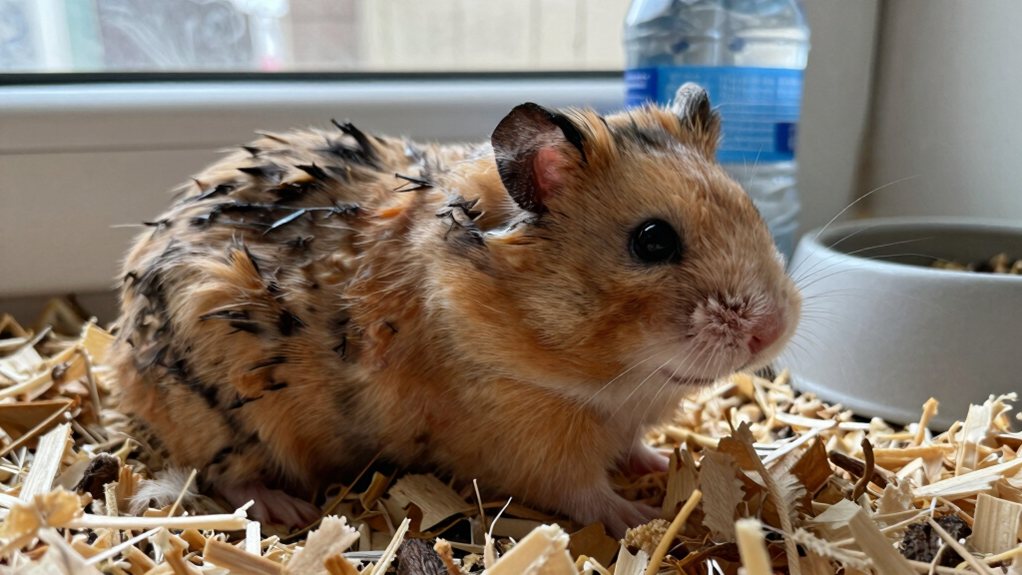
Wet tail is far more serious. Look for a consistently soaked tail area with a strong odor, and watch for sudden appetite loss and clear lethargy signs.
A hamster with wet tail will look profoundly unwell, often hunched and sleepy.
Don’t wait if you see these severe symptoms; you’ll need to contact your vet immediately for proper care. Monitoring your hamster’s bathroom frequency can offer critical insight into the severity of its condition.
Why Wet Tail Is a Deadly Emergency for Hamsters
You might be surprised by how fast wet tail hits your hamster, as it can go from a little messy to very serious in just a day or two.
This rapid decline isn’t just a messy inconvenience; it causes such severe dehydration that your tiny friend can’t afford to wait, even for a few hours, which is why immediate antibiotics and fluid therapy from a vet are essential.
Spotting those early signs and acting immediately truly is the difference between a scary story and a heartbreaking one.
Rapid Onset And Progression
Because wet tail moves with alarming speed, understanding its rapid onset is crucial for any hamster owner. You might see a perfectly happy pet one evening, only to find them lethargic with severe, watery diarrhea the very next morning. This symptom timeline is brutally fast. The disease progresses so quickly because the dehydration speed is extreme; your tiny friend can lose critical fluids in mere hours, leading to a rapid decline. It’s this shocking pace that makes wet tail so deadly, there’s simply no time to wait and see. A hamster’s weakened state from severe dehydration also increases the risk of secondary issues like bacterial infections from pathogens they may carry. You can’t treat this at home with simple fixes. Recognizing this urgency means you’ll act immediately, getting your hamster to a vet who can provide the intensive care needed to fight this emergency.
Critical Dehydration Risk
The real danger of wet tail isn’t just the messy symptom you see, it’s the invisible crisis happening inside: critical dehydration. Your hamster’s tiny body loses water and electrolytes far faster than it can replace them. This severe fluid loss weakens every organ.
You’ll notice their skin loses elasticity, their eyes look sunken, and they become lethally sluggish. Their normal hydration needs are immense for their size, and diarrhea overwhelms that system completely.
Even their diet impact turns negative, as they’ll refuse food and water, speeding the decline. It’s a vicious cycle where the cure, getting fluids back in, becomes nearly impossible at home. This rapid decline in food and water intake can mirror the sudden loss of appetite seen in end-of-life signs, accelerating the crisis.
This is why wet tail is a deadly emergency requiring immediate vet intervention to administer subcutaneous fluids and professional care.
Immediate Steps to Take Before the Vet Visit
While you’re waiting for the vet appointment, it’s important to move quickly but calmly to help your hamster feel more comfortable.
Stay calm and act quickly to comfort your hamster while you wait for the vet.
First, focus on water at home. Offer a small dish of water or a few drops from a syringe, encouraging tiny sips.
Next, perform a thorough cage sanitation change, replacing all bedding to remove germs. Always wear protective gloves during this cleaning to prevent the transfer of harmful bacteria.
Keep a close watch on temperature monitoring, ensuring their room is warm and draft-free, as sick hamsters chill easily.
If you have other pets, consider urgent separation in a quiet room to reduce stress.
Your actions now are a huge comfort. Stay observant but don’t panic, your steady care makes all the difference while you wait for professional help.
Common Causes of Diarrhea in Hamsters
Even though your hamster’s cage is now clean and they’re cozy, you might still be wondering what could’ve upset their little tummy in the first place.
Often, the culprit is something simple like sudden Dietary Changes. Introducing new veggies, fruits, or treats too quickly can overwhelm their sensitive digestion. Think of it like eating a giant, unfamiliar meal yourself!
Another major cause is Stress Triggers. Moving to a new cage, loud noises, or even a new pet in the house can seriously worry your tiny friend, leading to a messy situation.
Sometimes, a bacterial imbalance or a parasite is to blame, but diet and stress are very common starters. Figuring out the cause is your first step to getting them back to their happy, healthy self. A sudden change in their environment, like a cage rearrangement, can also be a significant source of stress that leads to digestive issues.
How Vets Diagnose and Treat Wet Tail
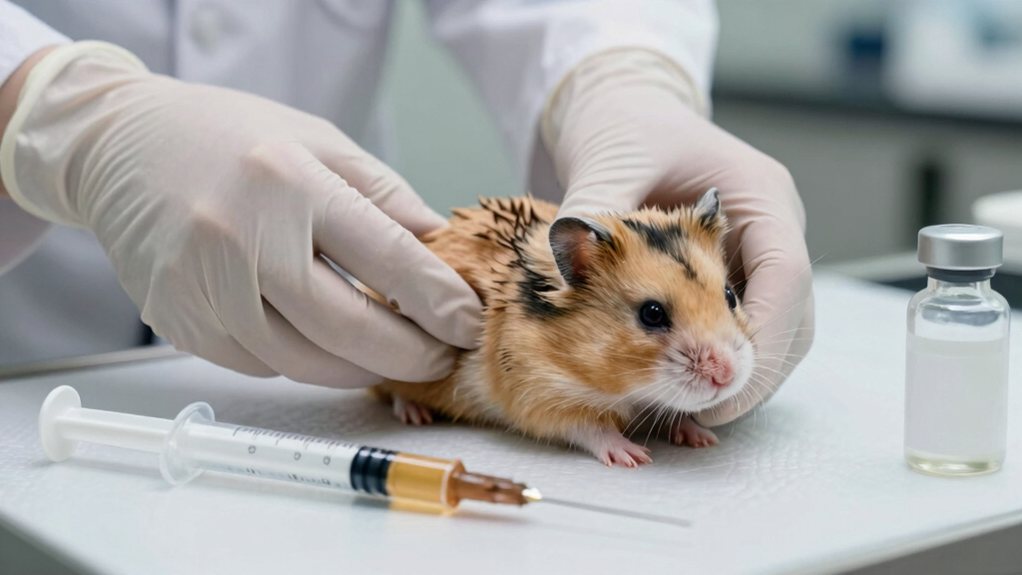
If your hamster’s diarrhea is persistent or severe, it might be time to think about a vet visit, as they could be dealing with a serious condition known as “wet tail.” Vets typically start by getting a full history from you, asking about your pet’s diet, recent changes, and environment, since that background info is super helpful.
The actual diagnosis, though, often involves a hands-on checkup and some specific tests.
Here’s a look at the typical process:
- Physical Exam: The vet will check for abdominal pain, lethargy, and a telltale wet, matted tail area.
- Dehydration Assessment: They’ll gently pinch the skin to see how quickly it snaps back, a key sign of how much fluid your little friend has lost.
- Fecal Sample Analysis: Examining a poop sample under a microscope helps rule out other culprits like parasites, and can also check for bacterial pathogens like Salmonella bacteria.
- Treatment Plan: This almost always includes antibiotics, critical fluid therapy (sometimes under the skin), and probiotics to restore gut balance. Your vet will also give you detailed home-care instructions to support the recovery.
How to Prevent Diarrhea and Wet Tail
Moving beyond treatment, the best way to deal with hamster diarrhea and the dreaded wet tail is to stop it from happening in the first place. Your first line of defense is a clean, stress-free home, because a happy hamster is a healthy one. Maintain this clean habitat by using a vet-approved disinfectant during routine cage cleaning to effectively eliminate pathogens like Salmonella. Stick to a consistent, high-quality pellet diet and introduce new foods, like veggies, in tiny amounts to avoid tummy trouble. You can also ask your vet about probiotic safety for adding good gut bacteria to their water or food. Be a detective with daily symptom tracking; noticing small changes early is key. Remember, prevention isn’t about perfection, it’s about providing steady, loving care that keeps your little friend bouncing around.
Final Thoughts
So, if your hamster gets diarrhea, you’re now equipped to act.
Remember, wet tail is super serious and needs a vet right away. For less severe tummy troubles, a clean cage, proper food, and a little stress relief can work wonders.
Your little friend’s health is in your hands, and staying observant is your best tool. With quick action and good care, you can help your hamster bounce back to its happy, energetic self.