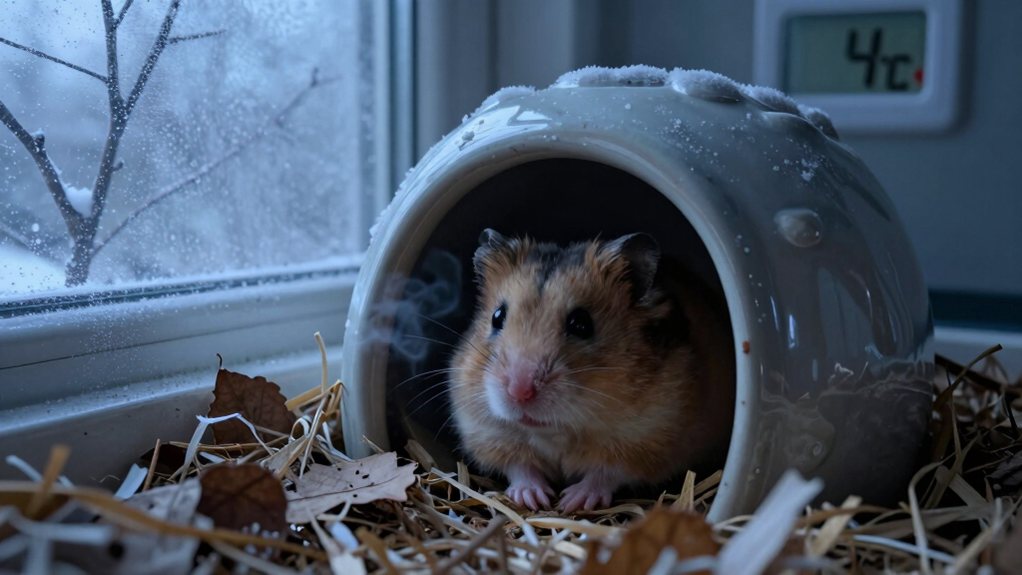
Cold temps below 65°F, dim lighting, and not enough food can flip your hamster’s hibernation switch—even in your cozy home. While they’re domesticated, your little buddy still carries wild instincts that react to chilly drafts, short winter days, or an empty snack bowl.
Their body slows way down, feeling cold and stiff, almost like they’ve snoozed too hard. Keep their space warm, light consistent, and snacks handy, because nobody wants their furball playing possum when they’re just trying to nap.
Stick around, and you’ll see how to keep them happily awake and zooming through tunnels like a pro.
What Is Hamster Hibernation? (And Is It Real?)
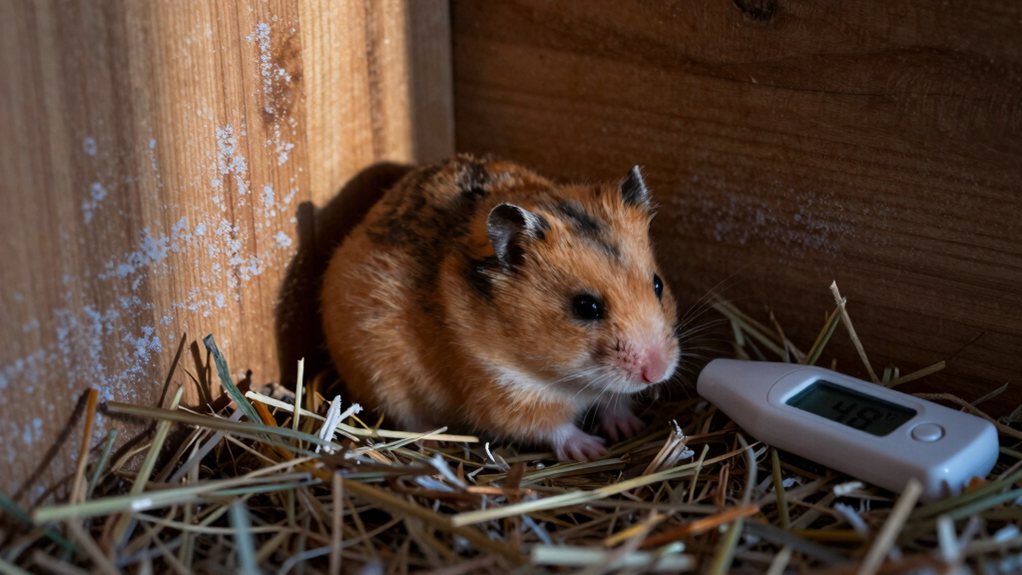
Ever wonder if your hamster’s long nap means they’ve turned into a tiny, furry bear preparing for winter? Good news: you’re not alone. But here’s the truth. Hamster hibernation isn’t quite what pop culture makes it out to be. Most pet hamsters, like Syrians or dwarfs, don’t hibernate when kept in warm, stable homes.
If your little buddy seems zonked out, it might be due to cold temps or low activity, not true hibernation. That said, some wild hamsters can enter a hibernation-like state, but it’s rare and risky.
Why Do Pet Hamsters Hibernate?
So, why do pet hamsters hibernate, if they even do at all?
Well, it’s not quite common, but it can happen when their bodies react to certain triggers.
While domestic hamsters have a genetic predisposition to hibernate, modern breeding has softened this trait.
Still, your cozy couch-potato hamster might surprise you thanks to an old survival instinct.
Here’s what could flip that switch:
- Cold temps, below 60°F (15°C), trick them into thinking it’s winter.
- Less daylight mimics shorter seasonal days, nudging seasonal adaptation.
- Limited food or water signals scarcity, like in the wild.
- Stress or illness can confuse their internal thermostat.
Keep their room warm and light, and they’ll stay active and adorable.
No need for a tiny hibernation onesie!
How Cold Is Too Cold for Hamster Hibernation?
How chilly is too chilly before your hamster starts dreaming of snow and curling up for a long nap?
Well, when the temperature dips below 60°F, you’re brushing up against critical temperature thresholds.
Below 60°F, your hamster may mistake cold for hibernation season—dangerous territory for a pet not built for winter naps.
That’s when your little buddy might see hibernation as a tempting option.
Most hamsters aren’t built for it, especially pets.
So you’ll want to keep their space between 65°F and 75°F.
Sudden cold snaps are sneaky environmental triggers, fooling your hamster into thinking it’s time for a winter snooze.
But unlike bears, hamsters can struggle to wake up safely.
Keep their cage away from drafty windows and chilly corners.
Think cozy, not cabin-in-the-woods.
A sweater for you? Sure.
A space heater for them? Nope.
Just steady, room-temperature comfort.
Stay warm, stay alert, and your hamster will stay happily awake, not hibernating.
To ensure accurate monitoring, consider using a digital hygrometer thermometer with a temperature range of at least 65°F to 75°F.
Can Starvation Trigger Hamster Hibernation?
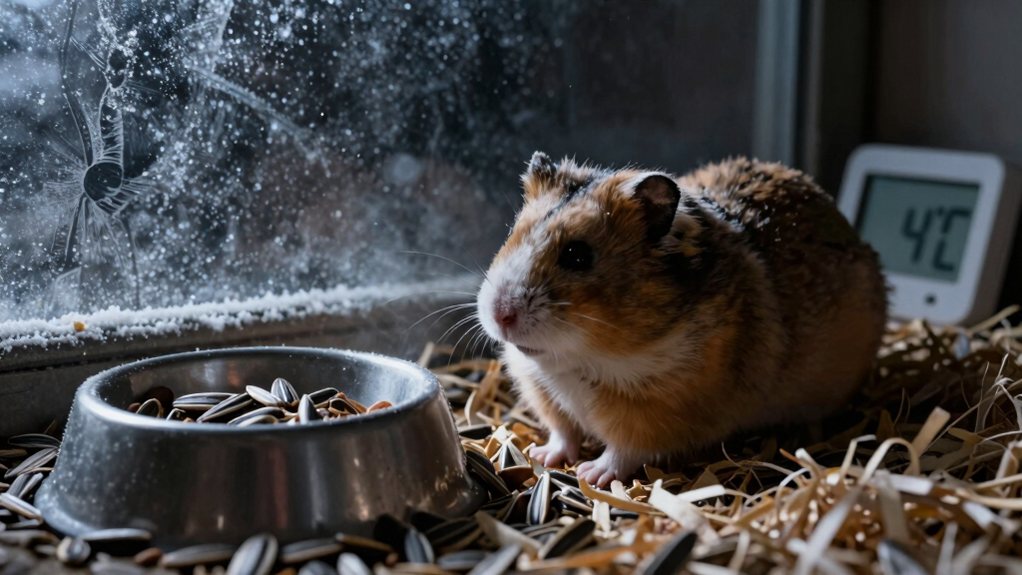
Could hunger ever fool your hamster into hitting the snooze button for months?
While cold temps are the main hibernation trigger, food scarcity can play a sneaky role too.
Here’s how it works:
When your hamster senses food scarcity, their body panics, like your phone switching to battery saver.
To survive, they start prepping for energy conservation, slowing their metabolism down.
Without enough fuel, their system might mimic hibernation, even if it’s not cold.
But here’s the kicker: true hibernation needs cold and low energy. Starvation alone isn’t enough to fully trigger it.
Does Light Affect Hamster Hibernation?
You mightn’t think your hamster’s room lighting matters much, but it actually plays a big role in whether they hibernate or stay active.
When natural light fades in winter, shorter days can trick your little buddy into thinking it’s time to snooze, kind of like hitting nature’s pause button.
And if you’re using artificial lights late into the night, you could accidentally confuse their internal clock, turning your pet into a sleepyhead when you’re just trying to set the mood.
Natural Light Cycles
Ever wonder why your hamster suddenly acts like a tiny, furry hermit during winter?
It’s all tied to natural light cycles and their built-in seasonal adaptation.
As days shorten, your hamster senses the change just like they’re reading nature’s calendar.
Here’s how it works:
- Decreasing daylight tricks their brain into thinking it’s time to slow down.
- Their body responds with a drop in temperature and metabolism.
- Without a sunrise simulation, they miss the morning light cue that says, “Hey, time to wake up!”
- This can trigger hibernation, even if your home is warm.
But don’t panic!
You’re not powerless.
Keep their room bright during winter mornings, open the blinds, or use a gentle lamp.
Your little buddy just needs a nudge from light to stay active and curious.
Think of it as their daily wake-up call, no snooze button allowed!
Artificial Lighting Impact
So, does flipping on a lamp actually stop your hamster from playing winter hibernation? Yep, it can! Artificial lighting plays a bigger role than you might think.
When your hamster gets consistent light exposure, especially from indoor lamps or room lights, it tricks their brain into thinking it’s still summer.
That steady schedule keeps their internal clock ticking and hibernation at bay.
Without long, dark stretches, they won’t feel the natural cue to slow down.
So, if you’re leaving lights on late, you’re basically throwing your hamster a 24/7 wake-up party.
While that sounds fun, it’s actually helpful for preventing unwanted hibernation.
Just keep their environment bright during the day and dim at night.
Mimic the sun, not a disco ball.
A little routine goes a long way.
Your hamster mightn’t thank you in words, but they’ll stay active, alert, and definitely not snoozing through winter.
Daylight Duration Changes
While artificial lighting helps keep your hamster’s world feeling sunny and active, it’s actually the length of daylight—not just the presence of light—that really influences their hibernation habits.
Changes in daylight trigger their natural seasonal behavior, just like how you might feel sleepier in winter.
Hamsters rely on these light shifts along with temperature cues to decide when it’s time to slow down. Here’s how it works:
- Shorter days signal winter is coming.
- Your hamster starts preparing, maybe nesting more.
- Without enough daylight, they may enter hibernation.
- Even warm temps won’t stop this if days stay short.
Hibernation or Illness: How to Tell the Difference?
How can you tell if your hamster’s playing possum or actually under the weather? When your hamster’s in hibernation, you’ll notice a metabolic slowdown and a body temperature drop. It’ll feel cool and stiff, like a tiny, sleepy noodle. But don’t panic just yet! A hibernating hamster usually still breathes slowly and might twitch now and then.
Illness, on the other hand, often comes with messy fur, labored breathing, or discharge. If your little buddy isn’t eating, looks bloated, or has wet tail, it’s time to call the vet.
Hibernation usually happens in cold, dark conditions, so check the room temp. Keep your hamster warm and cozy to avoid confusion.
How to Wake a Hibernating Hamster Safely?
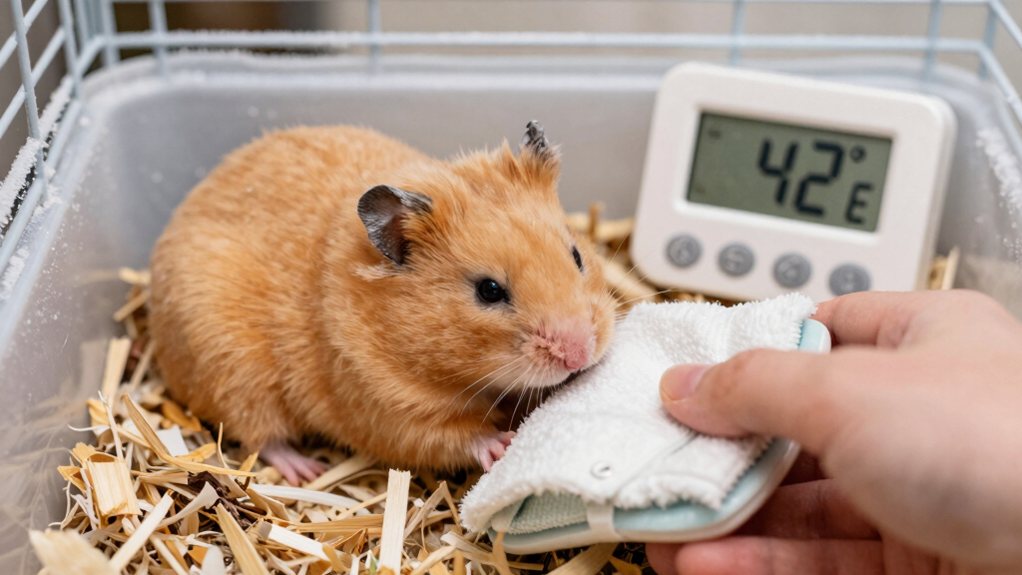
What’s the gentlest way to bring your chilly little noodle back to life without causing a ruckus?
Waking a hibernating hamster takes patience and care.
Waking a hibernating hamster takes patience and care—gentle warmth, quiet moments, and a soft hand go a long way.
No shaking or shouting, please!
Here’s how to do it right:
- Slowly warm the room to at least 68°F. Sudden heat spikes add stress factors.
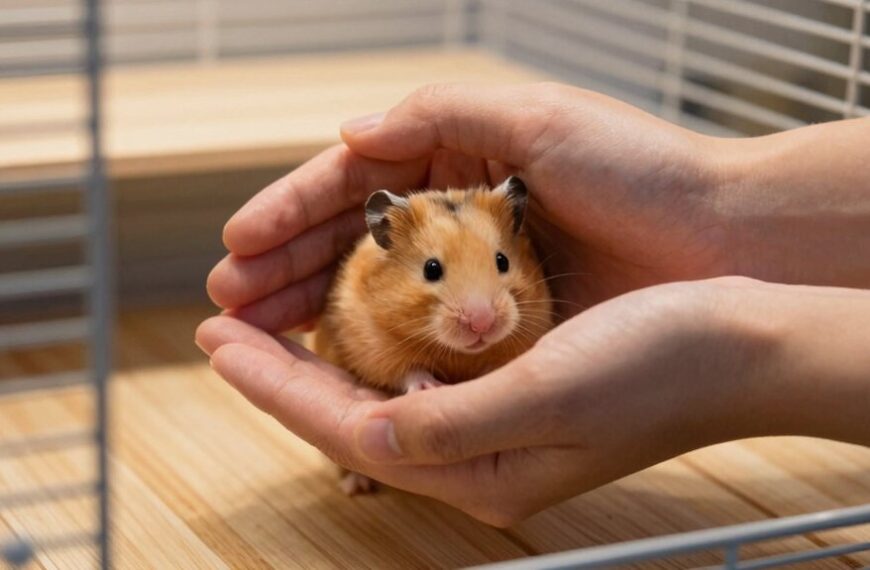
- Gently cup your hands around the hamster (don’t grab!) to transfer body heat.
- Offer fresh water and a tiny bite of food rich in hamster nutrition, like a sliver of apple or a seed.
- Stay calm and quiet. Let your fuzzy buddy wake up at their own pace.
Rushing leads to panic, and panic leads to sad, stressed hamsters.
Think cozy, not chaotic.
They’ll blink awake when ready.
Probably ready to judge your life choices like any good pet.
How to Prevent Hamster Hibernation Year-Round?
To keep your pint-sized pal from playing possum all winter, the key is creating a cozy, consistent environment they can’t resist staying awake in.
Keep the room temperature steady, above 65°F, so your hamster doesn’t get chilly and think it’s time for a long nap.
A snug hideout with high-quality bedding keeps them warm and comfy.
Think fluffy nests, not cardboard castles.
Good bedding quality means fewer cold spots and less hibernation temptation.
Offer a food variety they love, fresh veggies, tasty pellets, the occasional treat, so they stay active and interested.
Boredom and hunger won’t send them snoozing on your watch!
Spend time playing together daily.
Your attention keeps them alert and happy.
With warmth, fun, and snacks on deck, your hamster will skip hibernation and stay your lively little buddy all year round.
No more fake hibernation drama, just real cuteness!
Final Thoughts
You’ve got this! Keeping your hamster warm, fed, and cozy means hibernation won’t crash your cuddle time. Think of it like giving your tiny buddy a VIP pass to stay awake and playful year-round.
Sure, they *can* hibernate, but it’s no nap you want to encourage. Watch the temp, keep the snacks coming, and enjoy those cheeky, whisker-twitching moments, because life’s too short for sleepy hamsters!