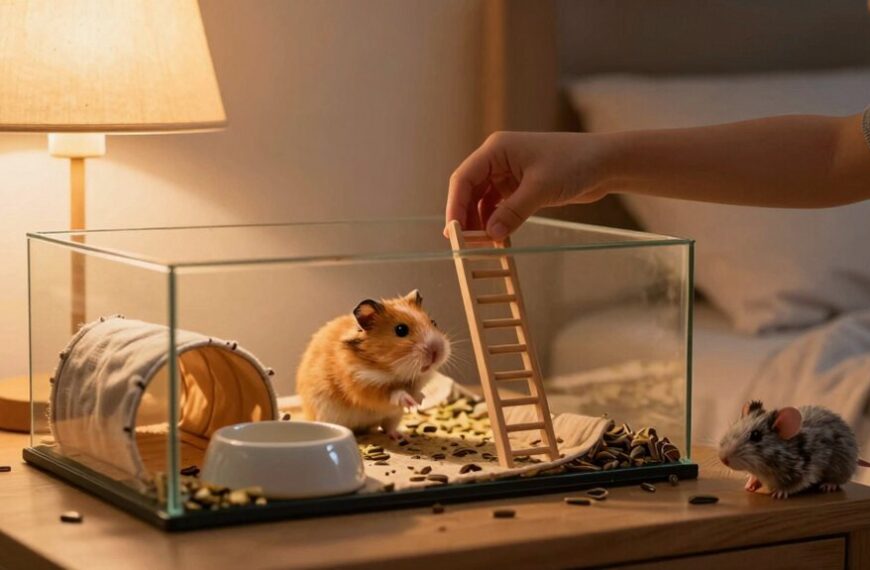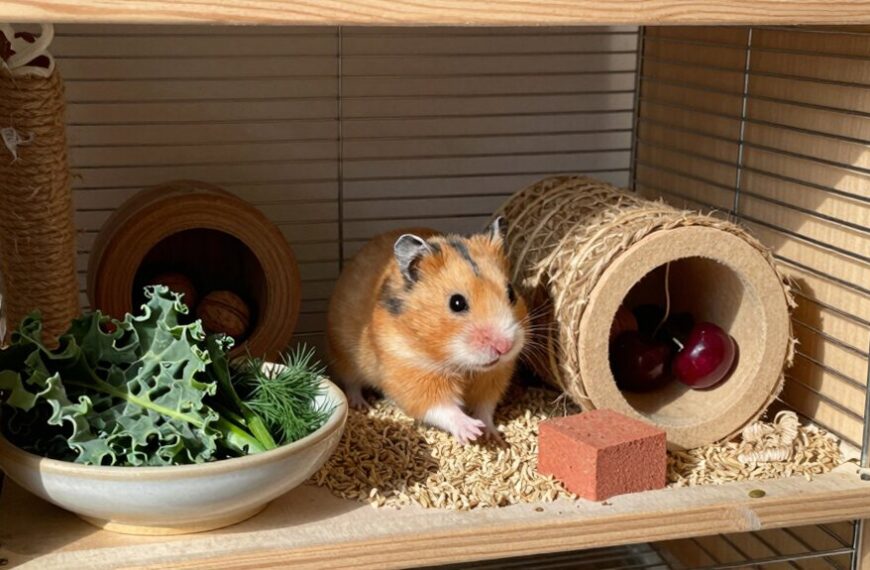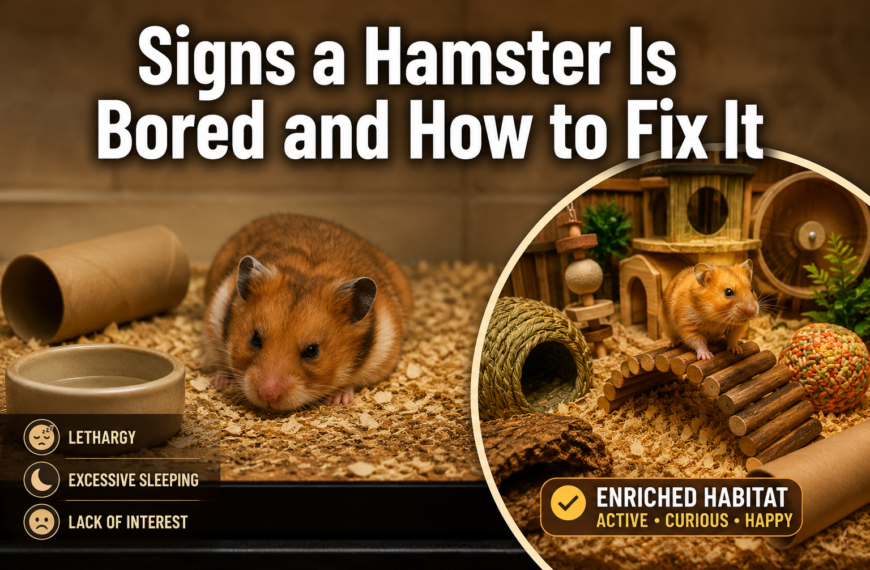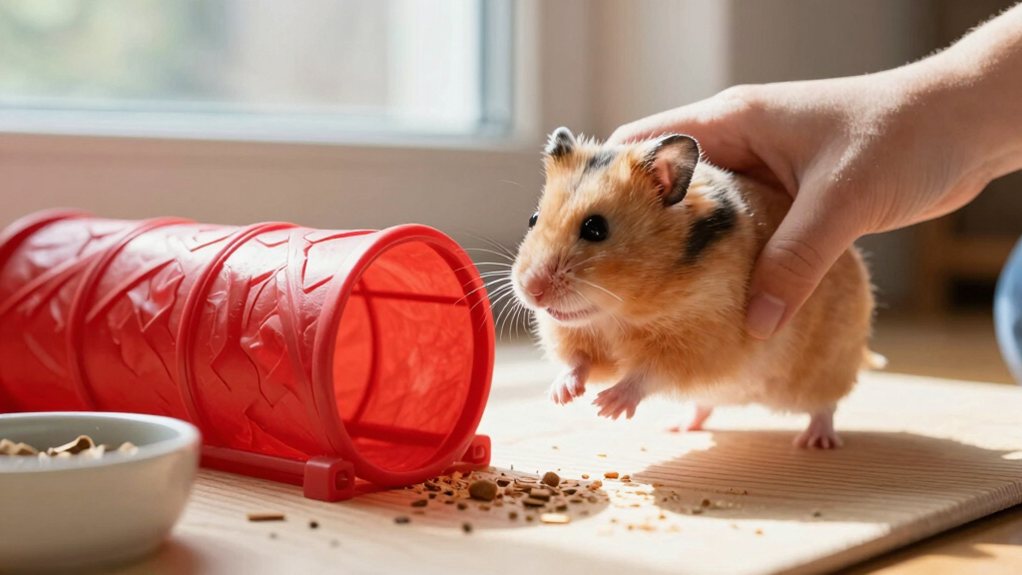
You play with your hamster by setting up a safe, enclosed space where it can sniff, dig, and scurry to its heart’s content. Let it explore tunnels, chew on cardboard, or solve a treat-filled maze. Just keep things calm and hands gentle.
Remember, your hamster’s a night owl, so evening playtime works best. Watch for signs it’s done, like yawning or hiding.
You’re more than just goofing around. You’re building trust, one tiny adventure at a time.
There’s a fun way to turn shoeboxes into a hamster highway, and you’ll want to hear this.
Set Up a Safe Out-of-Cage Play Zone
Before you let your hamster scurry free, take a minute to set up a safe play zone outside their cage, because letting them loose in your living room without a plan is basically a hide-and-seek challenge you didn’t sign up for.
Use a playpen or baby gate to create solid playpen boundaries that keep your little explorer contained.
Check for gaps, cords, or chewable hazards—escape prevention is key, since hamsters are tiny Houdinis with a passion for adventure.
Block off corners and furniture they might squeeze under.
Clear the area of toxic plants and small objects they could snack on or get stuck in.
Keep the space quiet and draft-free so your hamster feels calm.
Add a few toys or tunnels for fun, but don’t overcrowd it.
You want room to watch their zoomies without tripping.
A little prep means more play and less panic—everyone wins.
Choose a pop-up automatic setup playpen for quick, tool-free deployment and reliable containment during playtime.
Understand Your Hamster’s Natural Behavior
You know that burst of energy your hamster shows at night? That’s because they’re naturally nocturnal, so don’t be surprised if your little buddy’s partying while you’re trying to sleep.
They’re also loners by nature, no roommate drama, but they’d rather hang solo than share their space.
And yeah, if you see them digging like they’re on a treasure hunt, that’s just their instinct to burrow and build cozy nests.
Hamsters can even carry food in expandable cheek pouches to store for later, a trait from their wild hoarding instincts.
Nocturnal Activity Patterns
Ever wonder why your hamster starts sprinting on its wheel the second you’re trying to fall asleep?
That’s because hamsters are naturally nocturnal, they’re just getting started when you’re winding down.
While you’re dreaming, your little buddy is wide awake, busy with nocturnal exploration and nighttime foraging, sniffing around, digging, and stashing treats like a tiny, furry detective.
This isn’t mischief, it’s instinct.
In the wild, staying active at night helps them avoid predators.
So, if you hear rustling or see a blur of fluff at midnight, don’t be alarmed, that’s peak hamster happy hour.
To play with your hamster, try syncing your time together in the evening when they’re alert.
Gently interact during their prime hours, and you’ll both enjoy it more.
Just don’t expect a midnight cuddle, your hamster’s too busy being a night owl.
Solitary By Nature
While your hamster’s midnight zoomies show just how lively they can be, it’s also important to remember they’re not looking to share that adventure with a roommate.
Hamsters are solitary by nature, meaning their social structure doesn’t include roommates, even if it looks cute in cartoons.
In the wild, they live alone and mark their space with strong territorial behavior.
That means pairing hamsters usually ends in drama, not friendship.
Sharing a cage is a fast track to stress or even fights.
So, as much as your hamster might seem lonely, they’re actually happiest solo.
You’re their best buddy now.
Snuggles, playtime, and treats are all on you.
Just think of yourself as their personal entertainer.
Keep their space calm and private, and you’ll have a happy, healthy little pal who zooms for joy, all on their own terms.
Burrowing And Nesting Instincts
Because they’ve spent generations digging through dry burrows under the desert brush, your hamster comes hardwired to dig, tunnel, and build cozy hideaways. This natural digging behavior isn’t just cute—it’s vital to their well-being.
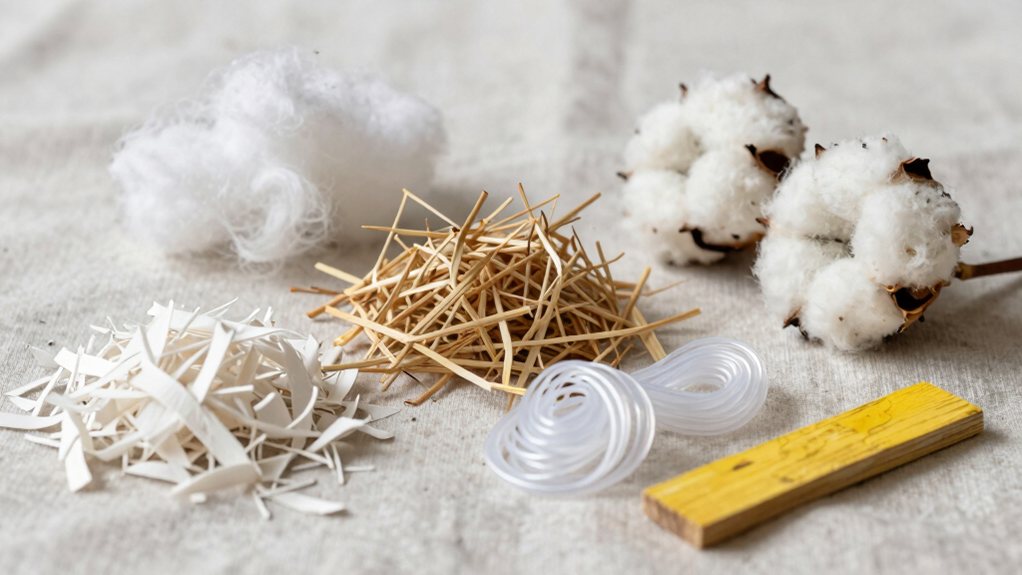
In the wild, they’d spend hours crafting underground networks to stay safe and warm. You can support this instinct by giving them plenty of nesting materials like shredded paper, soft hay, or unscented tissues.
Watch how they stuff their cheeks and scurry to stash supplies in their favorite corner. It’s like they’re playing interior designer, tiny paws, big dreams!
A deep layer of bedding in their habitat lets them dig to their heart’s content.
Beyond keeping them busy, it also helps reduce stress. So when you see your little buddy burrowing like a furry excavator, smile. You’re witnessing nature in action.
A safe and comfortable environment includes using dust-free materials to prevent respiratory issues and ensure healthy burrowing.
How to Hold Your Hamster Without Scaring It
Keep your hands calm and gentle. Hamsters spook easily, and sudden moves might make yours bolt like it just saw a vacuum cleaner.
Let your little buddy come to you first. Hold your palm flat and still, and it’ll likely sniff around before hopping on.
Once it’s comfy, scoop both hands under its belly to lift. And hey, no tight grips—it’s a snuggle, not a wrestling match.
Trust develops over time with patience, calm presence, and warmth, so allow your hamster to build confidence through consistent human interaction.
Gentle Hands Matter
Let’s be real, your hamster probably thinks you’re a giant when you reach into their cozy little world, so how you pick them up makes all the difference. Use gentle grooming and soft handling to build trust from the start.
Cup both hands around your hamster, letting them feel supported, not trapped. No sudden moves—slow and steady wins the race and keeps your hamster calm.
Talk softly, like you’re sharing a secret, so they recognize your voice and relax. If they freeze or wiggle, don’t panic; just wait. Rushing only backfires. Remember, you’re the giant here.
Over time, those gentle hands become familiar, even comforting. Think of it like petting a nervous kitten: patience pays off.
With consistent soft handling, your hamster might even climb into your palm on their own. It’s not magic—it’s respect, one tiny step at a time.
Let Your Hamster Approach
Why wait for your hamster to come to you, because rushing in scares them. Trust building starts with patience.
Let your hamster sniff your hand first. Maybe even nibble a treat from your palm. That’s positive reinforcement in action.
When you stay calm and still, you’re telling your hamster, “Hey, I’m safe.”
Over time, they’ll start crawling onto your hand on their own. It’s like a tiny victory dance every time it happens.
Don’t grab or chase them. No one likes that, not even small, furry escape artists.
Instead, cup your hands gently and let them explore.
It might take days, even weeks, but the bond you build is worth it.
Soon, holding your hamster will feel natural—for both of you.
Just remember: slow wins the race, especially when your teammate is the size of a banana.
A lack of mental stimulation can lead to stress-related behaviors like cage biting, so providing environmental enrichment is essential for a happy, healthy hamster.
Best Toys to Play With Your Hamster
A happy hamster is a busy hamster, and the right toys can turn your little furball’s cage into a playground full of adventure.
A happy hamster is a busy hamster—fill their world with toys and watch their tiny paws turn cage time into nonstop adventure.
Start with chew toys. Hamsters love to gnaw, and these keep their ever-growing teeth in check. Wooden blocks or cardboard tubes work great and won’t break the bank.
Next, never skip the exercise wheel. It’s a must-have. Your hamster will sprint on it nightly, so pick a solid, silent one to save your sanity.
Add tunnels for zipping through and hiding spots for nap time drama.
Puzzle feeders are also a hit. Stuff a treat inside and watch your hamster figure it out.
Rotate toys weekly to keep things fresh and exciting.
You’ll laugh watching your pet go from chew toy to wheel to tunnel like it’s training for hamster Olympics.
Playtime isn’t just fun. It’s crucial.
A happy hamster is a busy hamster, and the right toys can turn your little furball’s cage into a playground full of adventure.
Start with chew toys. Hamsters love to gnaw, and these keep their ever-growing teeth in check. Wooden blocks or cardboard tubes work great and won’t break the bank.
Next, never skip the exercise wheel. It’s a must-have. Your hamster will sprint on it nightly, so pick a solid, silent one to save your sanity.
Add tunnels for zipping through and hiding spots for nap time drama.
Puzzle feeders are also a hit. Stuff a treat inside and watch your hamster figure it out.
Rotate toys weekly to keep things fresh and exciting.
You’ll laugh watching your pet go from chew toy to wheel to tunnel like it’s training for hamster Olympics.
Playtime isn’t just fun. It’s crucial.
Choose chew toys made from 100% natural materials to ensure your hamster stays safe while satisfying their instinct to gnaw.
Make a Cardboard Maze or Toilet Roll Tunnel
You’ve stocked up on chew toys, added a silent wheel, and scattered tunnels and puzzle feeders around the cage.
Now it’s time to get creative with what’s already in your recycling bin.
Turn cardboard creativity into a fun adventure with a DIY maze or toilet roll tunnel. Your hamster will love the chance for tunnel exploration, and you’ll enjoy watching their curious little nose poke through each passage.
- Cut toilet paper rolls lengthwise and lay them flat to connect into winding paths.
- Use shoeboxes and cardboard tubes to build walls and bridges—tape only with non-toxic glue.
- Hide treats at dead ends to spark sniffing and problem-solving.
Just remember: no staples or glossy cardboard. Keep it safe, simple, and full of twists.
Watching your hamster zigzag through your handmade maze? Pure joy.
Plus, cleanup’s a breeze—just toss it when they’ve had enough.
Spot the Signs Your Hamster’s Done Playing
Ever wonder when your tiny tunnel explorer has had enough adventure for one day? Pay close attention. Your hamster will tell you, in its own quiet way, when playtime’s over.
If your little buddy starts hiding, freezing, or darting away, those are stress signals worth noting.
Yawning or moving slowly? That’s not boredom. It’s a polite request for a nap.
Keep an eye out for overheating symptoms too, like heavy breathing or feeling unusually warm.
Hamsters don’t sweat like we do, so overplaying in a warm room can be risky.
If your furball starts grooming excessively or ignores treats, classic signs of fatigue, wrap it up.
Return them gently to their cozy home and let them rest.
You’re doing great by watching closely.
After all, even the bravest explorers need downtime.
Prolonged stress during play can contribute to long-term issues like cage rage, especially if your hamster doesn’t have a stimulating environment to return to.
Play smart, care deeply, and your hamster will keep trusting you with every tiny adventure.
Final Thoughts
You’ve got this! Now that you know how to handle, play with, and read your hamster’s cues, you’re ready for some fun. Just keep things calm, safe, and full of little surprises, like tunnels and treats.
Remember, your tiny buddy might not give high-fives, but those happy zoomies? That’s hamster love. So enjoy the giggles, the nibbles, and the adorable chaos. Playtime’s more than fun. It’s bonding time.