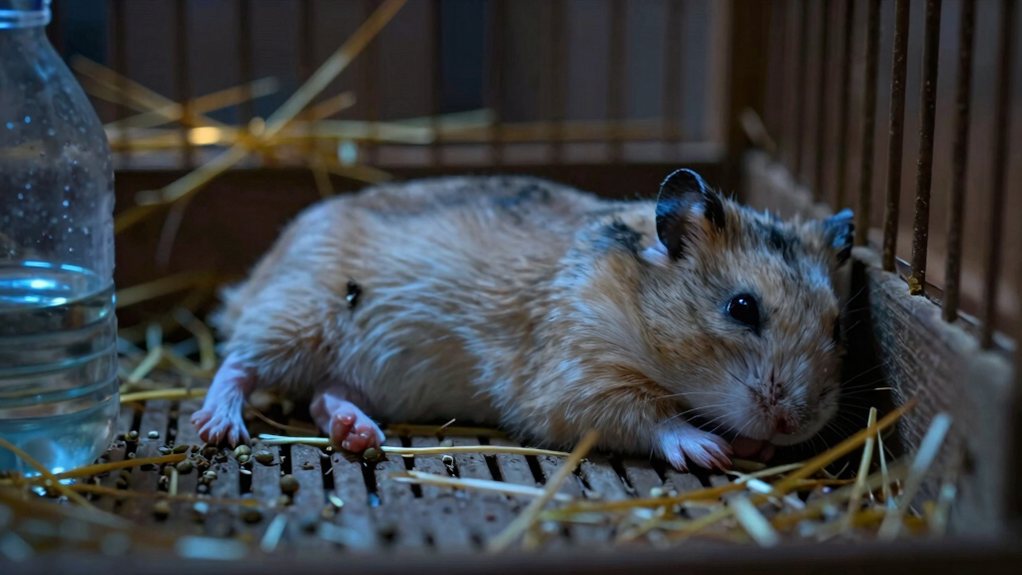
If your hamster’s lying still for hours, don’t assume it’s just napping. Pets this small can go downhill fast.
Check for steady breathing, warm paws, and a quick twitch when you whisper nearby. Cold skin, raspy breaths, or zero reaction to a treat? Those aren’t lazy-day moves.
Fluffed-up fur or a hunched back? Uh-oh. Something’s off.
And if you’re even a little worried, you’re already on the right track. There’s more to uncover.
Is Your Hamster Dying or Just Sleeping?
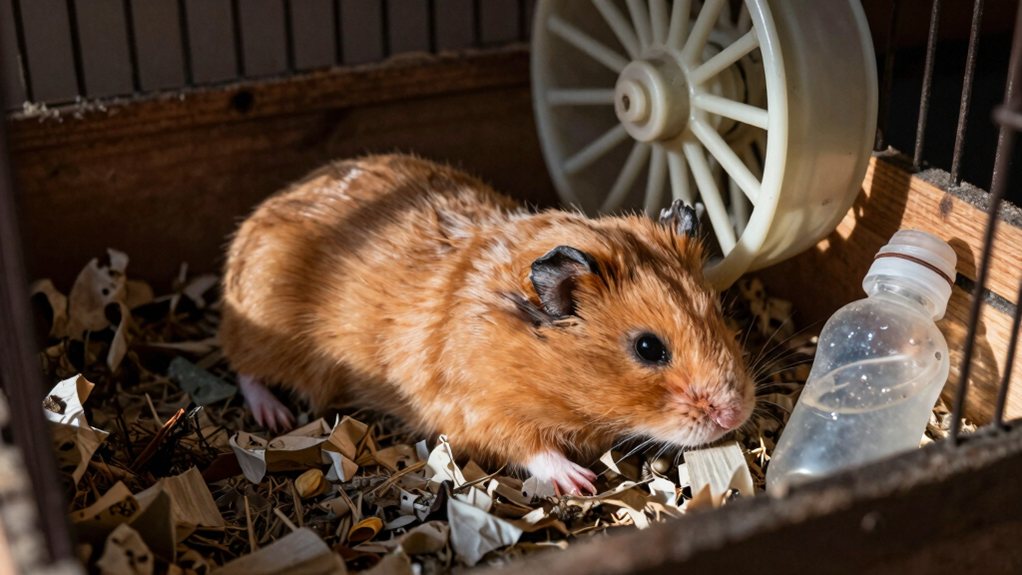
Ever wonder why your hamster isn’t moving and looks like it’s barely breathing?
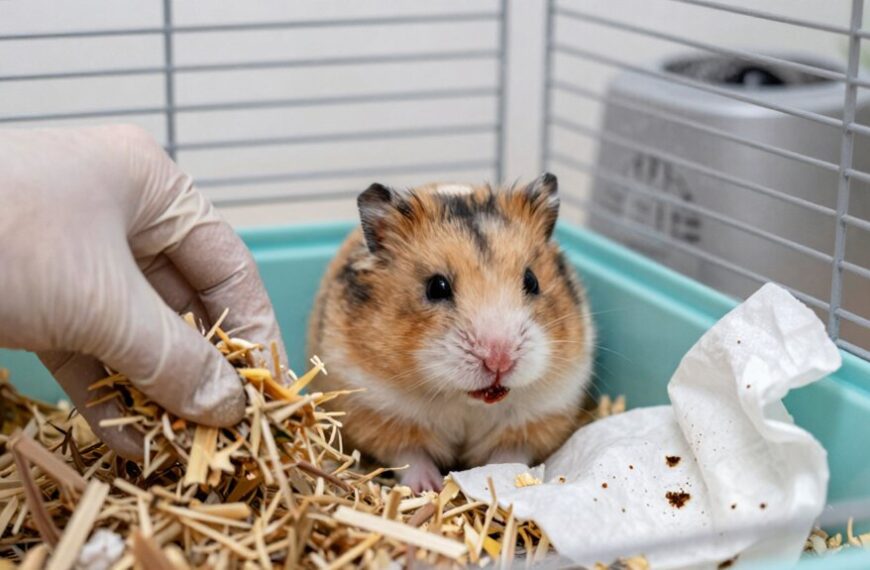
Don’t panic just yet! Hamsters are sneaky sleepers, often curling up so still you’d think they’ve checked out.
But chances are, they’re just deep in their sleep patterns.
These little furballs can nap up to 14 hours a day, sometimes in weird positions that make you do a double-take.
Normal hamster behavior includes short bursts of energy followed by long snoozes, totally normal!
But if your pet feels cold, isn’t responding to gentle sounds, or looks limp, it might be more than sleep.
Trust your gut, you know your hamster best.
You know your hamster better than anyone—trust your instincts when something feels off.
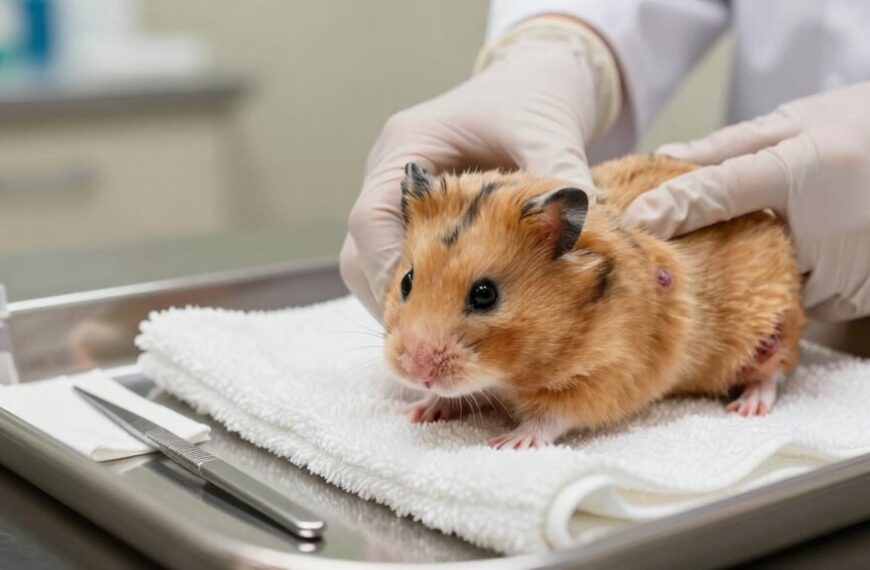
When in doubt, a quick vet call can ease your mind.
After all, better safe than sorry when it comes to your tiny, twitchy-nosed buddy.
A sudden change in behavior could signal underlying heart disease, a leading cause of death in aging hamsters.
7 Signs Your Hamster Is Seriously Ill
You might notice your hamster isn’t its usual busy self. Maybe it’s barely moving or looks too weak to grab its favorite treat.
If you see it struggling to breathe, with fast or noisy breaths, that’s more than merely a sleepy phase, my friend.
These signs can be scary, but catching them early means you can help your little buddy fast.
A drop in activity level may also signal a “low battery” effect, where your hamster shows significant energy and activity decline.
Lethargy And Weakness
Could your hamster just be in a long nap, or is something more serious going on? Lethargy and weakness aren’t normal, even for a sleepy little furball. If your hamster’s skipping its nightly wheel sprints or ignoring its favorite treats, pay attention. Changes in exercise habits or sudden dietary changes can be red flags.
A healthy hamster’s full of energy, even if they nap a lot. But if they’re dragging themselves around, wobbling, or can’t stand, it’s time to act. Maybe they’re not throwing a tiny pity party. Something could be wrong.
Don’t panic, but do check in with your vet. Early help could make all the difference.
Think of it like this: your hamster’s not lazy. They might just need a little backup. Keep calm, stay kind, and don’t wait too long.
Labored Breathing Observed
When your hamster’s more than merely sluggish but actually struggling to catch its breath, it’s a sign something’s off, way more serious than skipping a snack or a spin on the wheel. You might notice rapid, shallow breaths or even squeaky noises, clear signs of respiratory distress. That little chest heaving? It means your furball isn’t getting enough oxygen, which is no joke.
Unlike deep sleep, where breathing stays even and steady, labored breathing looks strained, like they’re running a tiny hamster marathon without moving. Keep calm, but act fast. This isn’t the time for “wait-and-see.”
Gently check for other red flags: fluffed-up fur, sneezing, or hunched posture.
While it’s sweet how they sometimes snore like tiny grizzlies, real trouble lacks the charm. If breathing stays rough, call your vet ASAP. Your quick eye could make all the difference.
Respiratory infections in hamsters can quickly escalate into life-threatening conditions, especially when environmental toxins like dusty bedding or cigarette smoke are present.
Check Breathing and Body Temperature
Take a close look at your hamster’s little belly to check their breathing, slow, steady breaths are a good sign, but if it’s too fast or uneven, it’s worth paying attention to.
Gently feel their body (not too hard, you’re not giving a massage!) to see if they’re warm, since a cold hamster might be in trouble.
It’s scary to think the worst, but staying calm and observant helps you figure out if they’re just snoozing like a champ or need a vet’s help.
Check Breathing Rate
Ever wonder how to tell if your hamster’s just catching some serious Z’s or needs help? Checking their breathing rate can clue you in on what’s really going on. Healthy hamsters have quick but steady breathing patterns, usually 30 to 150 breaths per minute. If you’re unsure, here’s what to do:
- Watch their tiny chest rise and fall for 15 seconds, then multiply by 4.
- Look for signs of respiratory distress, like wheezing, gasping, or flared nostrils.
- Compare their current breathing to their normal, relaxed state when awake.
If their breaths are too fast, too slow, or uneven, it could mean trouble. But don’t panic—sometimes they just nap deeply!
Still, when in doubt, a vet visit beats waiting. You’ve got this, and your little buddy’s lucky to have you watching so closely.
Feel For Warmth
Close your eyes for a sec and picture your hamster curled up like a fuzzy burrito, adorable, right? But now, gently touch its body. If it feels cold, that’s a red flag. A healthy hamster should feel warm, not icy.
Cold limbs or a chilly belly could mean trouble, especially if breathing is slow or shallow.
Check the hamster habitat. Did the temp drop too low? Poor bedding quality mightn’t hold heat well, leaving your little buddy chilled.
Make sure the cage isn’t near a drafty window or AC unit. Warmth matters, especially when you’re tiny and furry.
If your hamster feels cool and isn’t moving much, act fast. Wrap it gently in a soft cloth and bring it to a warm, not hot, spot.
Then call your vet. Better safe than sorry when snuggle warmth is missing.
To ensure accurate monitoring, consider using a digital hygrometer thermometer with high accuracy to maintain optimal cage conditions.
How to Gently Test Your Hamster’s Response
Wondering if your hamster’s just in a deep snooze or something more serious?
Try these gentle stimulation steps to check their response observation without causing stress.
- Softly nudge their back with your fingertip, like a tiny wake-up call.
- Whisper near their cage—yes, really! Some hammies react to familiar voices.
- Offer a treat close to their nose; a healthy hamster usually perks up at snack time.
If they stir, stretch, or even give you a grumpy side-eye, that’s a great sign!
But if there’s no movement or response, and they feel cool despite being warm earlier, it might be time to call the vet.
You’re doing great just by caring this much.
Hamsters are sneaky sleepers, but you’ve got the tools to tell the difference.
Now go be their tiny hero.
Dying Hamster vs. Deep Sleep: What’s Normal?
How can you tell if your hamster’s just catching some serious Z’s or in trouble? It’s easy to panic when your little buddy seems lifeless, but sometimes it’s just a false alarm.
If you notice your hamster curled up tight and barely moving, especially in cooler temps, it might be hamster hibernation, not a medical emergency.
But here’s the catch: true hibernation is rare in pet hamsters, especially in warm homes.
Gently warm the cage and nudge your pal. If they stir, stretch, or grumble, it’s likely just deep sleep.
No response? That’s when worry kicks in. Look for shallow breathing or cold paws.
When in doubt, call your vet. Better safe than sorry, because while snoring cutely is normal, playing dead isn’t.
Stay calm, stay kind, and trust your gut.
Common Illnesses That Look Like Sleep
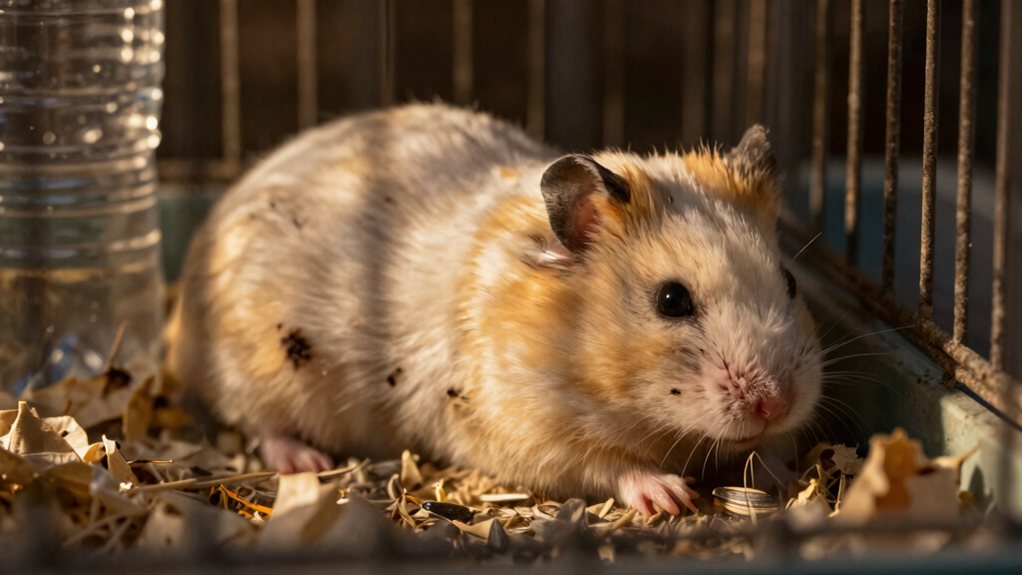
Sometimes your hamster might seem like they’re just snoozing like a tiny, furry log, and most of the time, that’s exactly what’s happening.
But other times, what looks like deep sleep could actually be a sign of something more serious. Here’s what to watch for:
Wet Tail – This nasty bacterial infection causes lethargy, diarrhea, and a messy rear end. Your hamster may lie still like they’re sleeping, but they’re actually in real trouble.
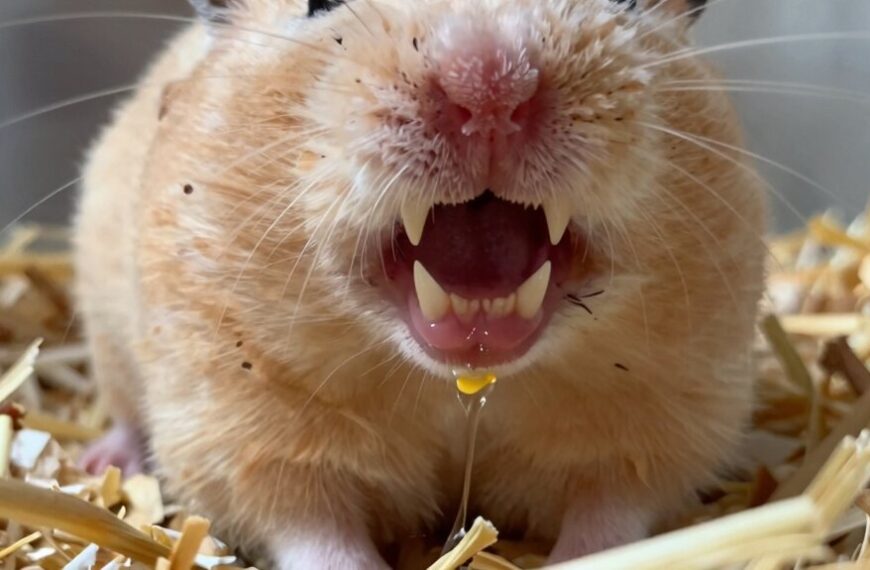
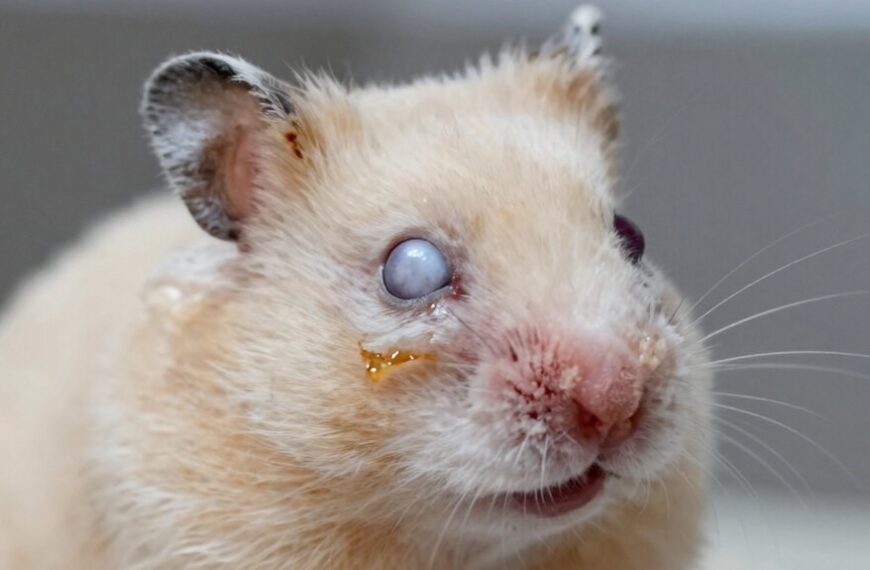
Respiratory Infection – Sneezing, wheezing, or labored breathing? That sluggishness isn’t nap time. It’s their body fighting off illness.
General Weakness From Dehydration Or Malnutrition – If they’re not eating or drinking, they’ll seem drowsy and unresponsive.
Don’t panic, but do act fast.
When in doubt, call your vet.
Better safe than sorry when it comes to your little dozer.
When to Call the Vet Immediately
What if that peaceful nap suddenly doesn’t feel quite right? Trust your gut, if something seems off, it probably is.
Call the vet immediately if your hamster has wet tail, a serious condition causing diarrhea, lethargy, and a messy bottom. It can turn deadly fast.
Also watch for signs of a respiratory infection, like sneezing, wheezing, or labored breathing.
Hamsters hide illness well, so by the time you notice, it might already be serious. Don’t wait days, act fast.
Think of it like calling 911 for your tiny, furry friend.
And hey, better a “false alarm” than a sad goodbye. Your quick call could save a life.
After all, you’re their hero, even if they’re too busy napping to say thanks.
What to Do While Waiting for Emergency Care
Okay, your hamster’s not quite right, and you’ve already called the vet, great job, by the way.
While you wait, stay calm and focus on emergency preparedness and supportive care. Here’s what helps:
- Keep them warm – Tuck a wrapped hot water bottle (not too hot!) near their cage or use a soft sock filled with microwaved rice.
- Stay quiet and cozy – Turn off loud noises and bright lights. Stress makes everything worse, and your hamster’s probably thinking, “Why is the world so loud?!”
- Don’t force food or water – If they’re too weak, you might accidentally hurt them. Just keep fresh water nearby.
You’re doing great.
Even small actions count.
Your little furball knows you’re there, and that’s half the battle.
Stay strong, hero.
Final Thoughts
You’ve got this. If your hamster’s just snoozing, no worries—they’re pros at napping.
But if breathing’s off or they’re cold and limp, act fast. Trust your gut. You know your tiny buddy best. Call the vet when something feels wrong. Better safe than sorry.
And hey, even if it’s scary, you’re being a great pet parent by paying attention. That little heartbeat? Totally worth the worry.