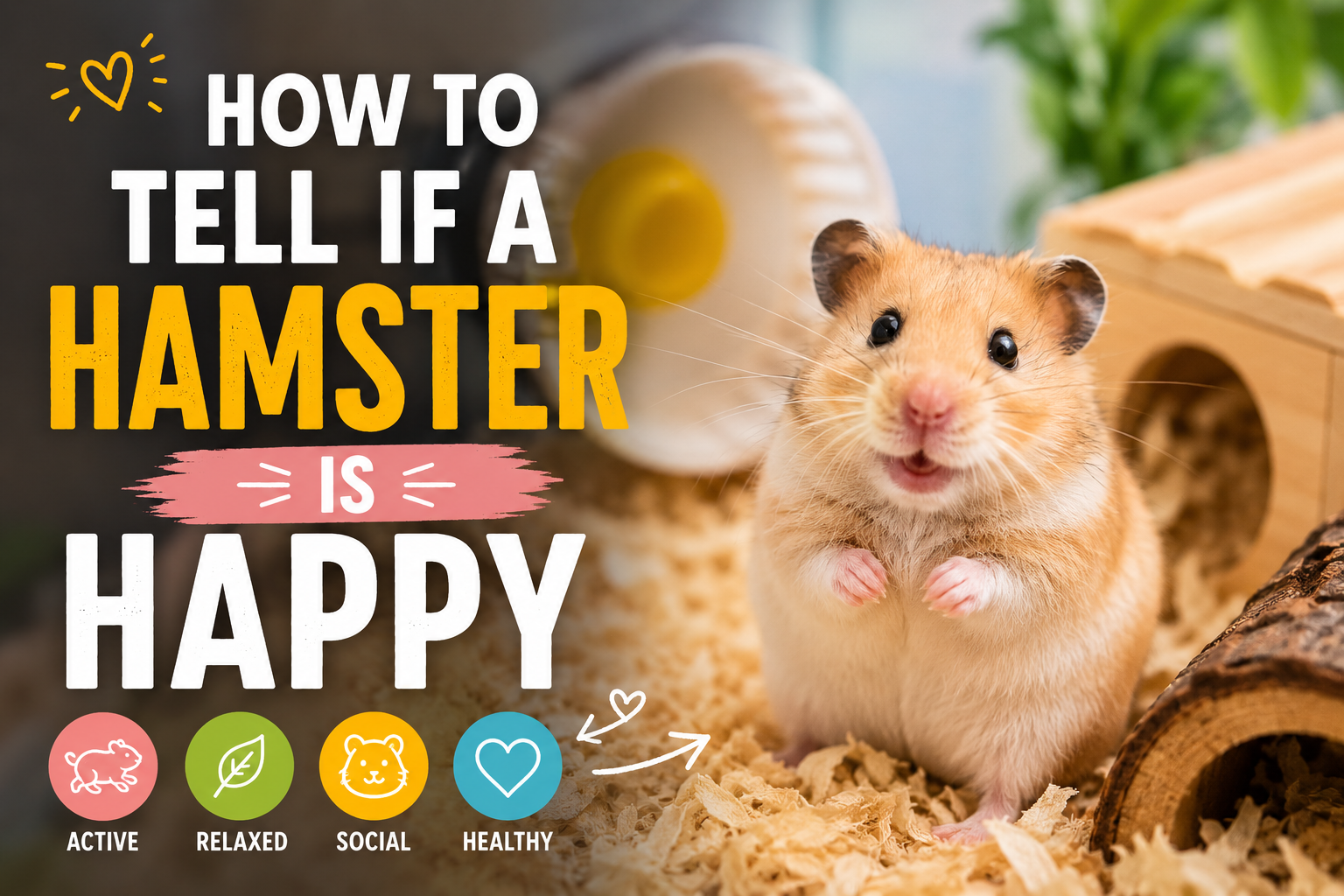
{“cover”:”Professional landscape format (1536×1024) hero image with bold text overlay ‘How to Tell If a Hamster Is Happy’ in extra large 72pt white sans-serif font with dark shadow effect, centered in upper third. Background shows a Syrian hamster actively exploring a well-equipped cage with deep bedding, running wheel, and enrichment toys, warm natural lighting creating inviting atmosphere. Color scheme: warm beige, soft brown, cream accents with high contrast text. Magazine cover quality, editorial pet care aesthetic, focus on active, engaged hamster behavior demonstrating contentment and wellbeing in proper habitat setup.”,”content”:[“Detailed landscape format (1536×1024) image showing close-up behavioral indicators of hamster happiness including a golden Syrian hamster with relaxed body posture, ears forward, grooming itself in deep paper-based bedding at least 6 inches deep. Scene includes visible scent marking behavior with hamster stretching along cage corner, natural burrowing tunnels visible in substrate, proper wheel size (8-inch minimum) in background. Warm overhead lighting, clean cage environment, educational pet care photography style with clear focus on positive body language signals and species-appropriate enrichment setup demonstrating contentment.”,”Detailed landscape format (1536×1024) image depicting hamster enrichment and activity patterns showing a dwarf hamster actively using a 6.5-inch wheel during evening hours, with visible food hoarding behavior as hamster carries bedding material and food to nest area. Scene includes multiple hide spots, chew toys, scatter-fed seeds across bedding surface, and hamster displaying confident exploration with tail up. Comparison visual showing active nighttime behavior versus daytime rest in burrow. Educational infographic style with annotations pointing to key happiness indicators: proper wheel usage, natural foraging, confident movement, and species-specific behavioral patterns in well-designed habitat.”]
A hamster’s happiness isn’t about squeaks or cuddles, it’s written in bedding depth, wheel usage, and whether they’re awake at 3 AM doing what evolution designed them for. Most new owners mistake a quiet, still hamster for a content one, when that same animal might be stressed, bored, or living in a cage setup that fails every welfare metric. Learning how to tell if a hamster is happy means reading species-specific behaviors, not projecting human emotions onto a prey animal that hides discomfort until it’s critical.
The difference between a thriving hamster and one that’s merely surviving often comes down to cage setup details: bedding depth for burrowing behaviour, wheel size that prevents back arching, bar spacing that stops escapes, and solitary housing that respects their territorial nature. Syrian vs Dwarf species show happiness differently, and what relaxes one might stress another. This guide covers the concrete behavioral signs, habitat requirements, and common mistakes that directly impact whether your hamster experiences genuine wellbeing or just exists in a box.
Key Takeaways
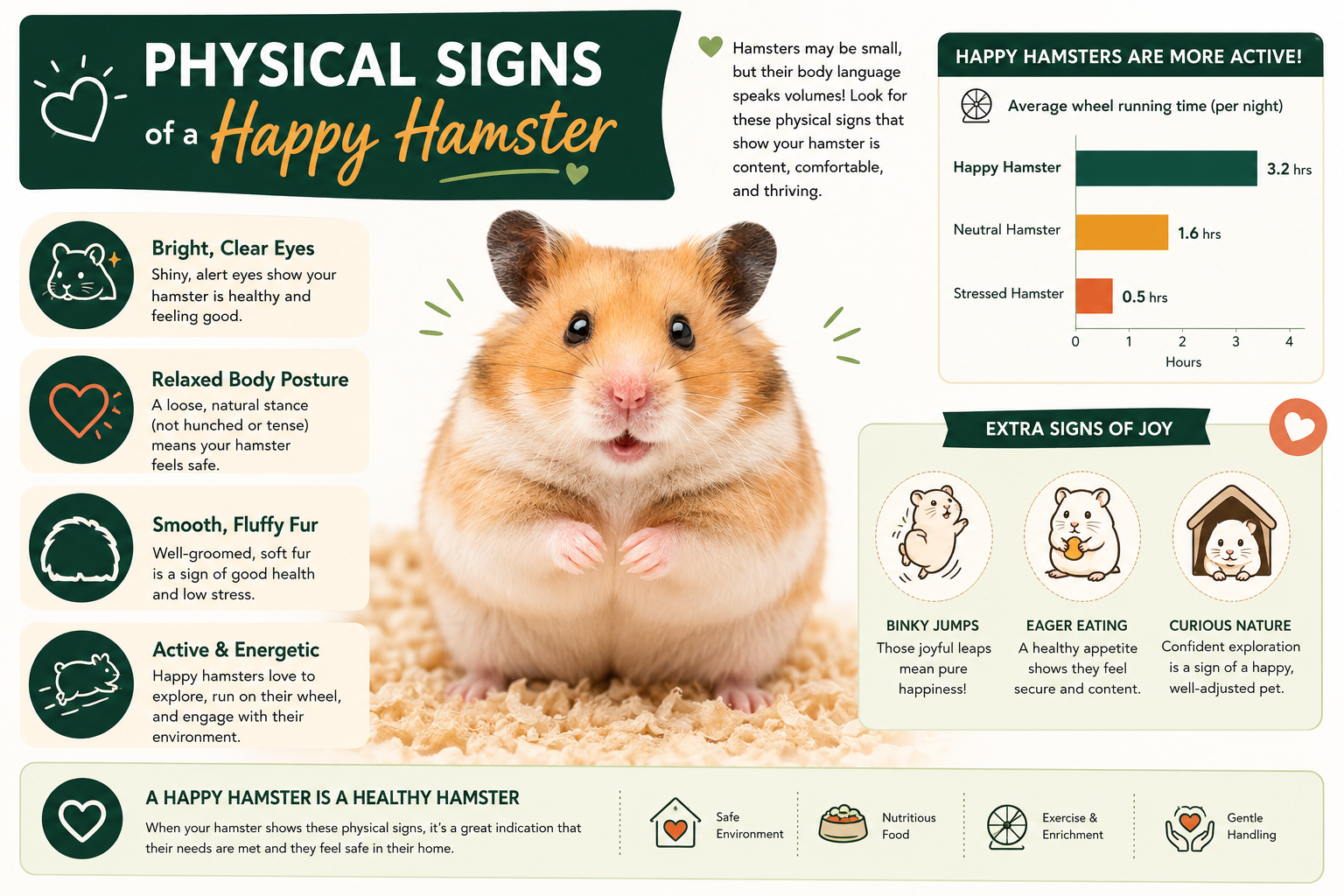
- Active nighttime behavior (wheel running, foraging, exploring) indicates proper enrichment and species-appropriate activity patterns
- Burrowing and nest building require minimum 6 inches of bedding depth, shallow substrate prevents natural behavior
- Scent marking and grooming are positive signs; bar chewing, repetitive pacing, and lethargy signal problems
- Wheel size matters: 8+ inches for Syrians, 6.5+ inches for Dwarfs, too small causes spinal damage and stress
- Species differences are critical: Syrians need solitary housing; some Dwarf species tolerate pairs but require monitoring
Physical Signs of a Happy Hamster
Body Language and Posture
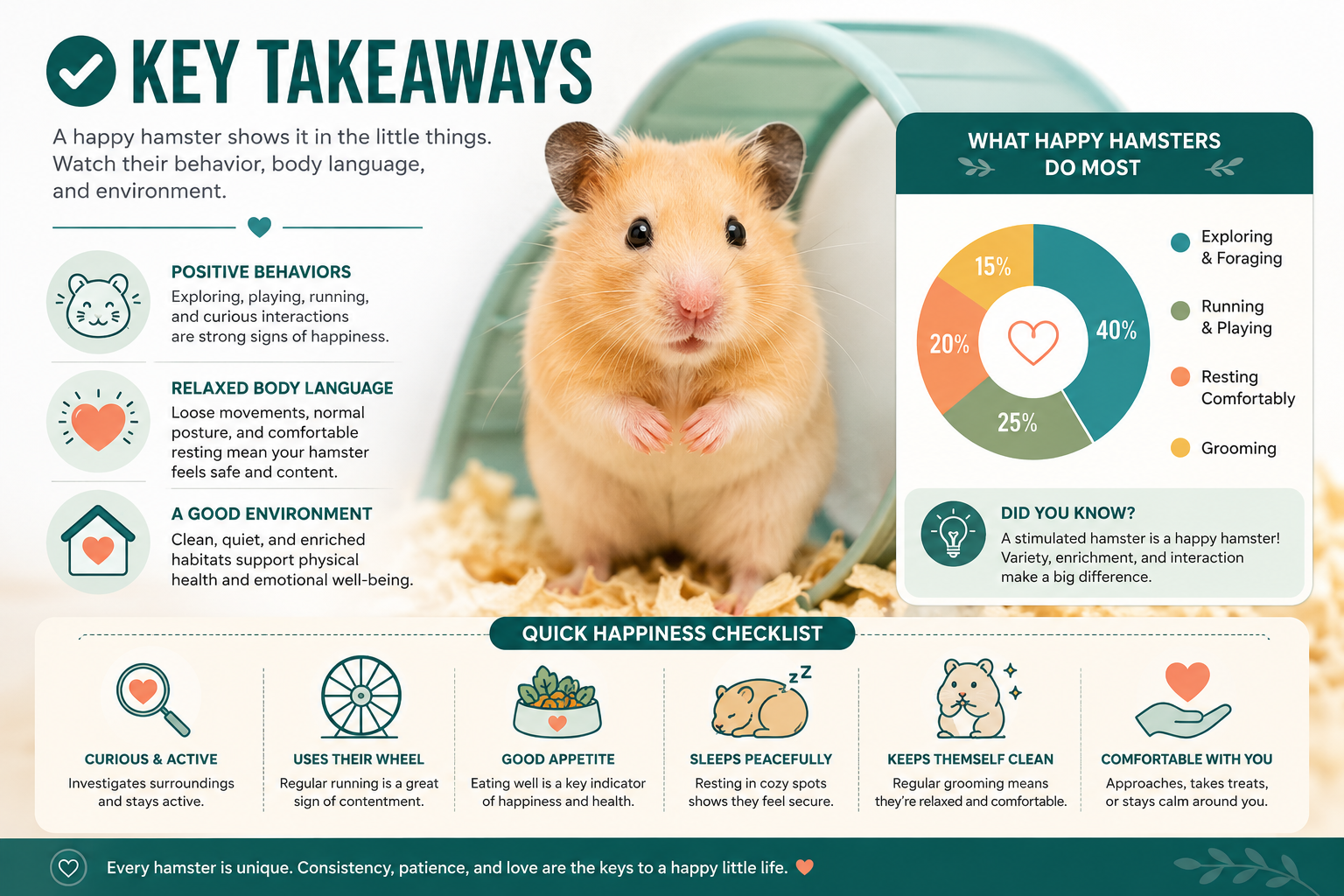
A content hamster moves with confidence. Ears point forward or swivel naturally toward sounds, not pinned flat against the head. The body appears relaxed during exploration, not hunched, frozen, or pressed low to the ground. When a hamster stretches fully while walking (especially along cage walls), they’re scent marking, a territorial behavior that indicates comfort in their environment.
Grooming is a major happiness indicator. Hamsters spend significant time washing their face, cleaning their paws, and grooming their fur when they feel safe. This behavior typically happens after waking or following a meal. If your hamster grooms in your presence, it signals trust and relaxation, prey animals don’t perform vulnerable maintenance behaviors when stressed.
Tail position matters more than most owners realize. A relaxed hamster carries their tail naturally, sometimes slightly raised during exploration. A tail tucked tightly against the body suggests fear or discomfort. During confident movement, you’ll notice the tail follows the body’s natural line without tension.
Healthy Physical Condition
Bright, clear eyes without discharge indicate good health and proper cage conditions. Crusty eyes or excessive wetness around the face can signal respiratory issues from poor ventilation or dusty bedding, both welfare problems that affect happiness. The coat should look clean and smooth, not greasy, patchy, or excessively wet (wet tail is a serious condition requiring immediate veterinary care).
Weight stability matters. A happy hamster maintains consistent body condition, not obese from boredom eating, not thin from stress-induced appetite loss. You should feel a slight layer of tissue over the ribs without prominent bones or excessive fat deposits. Sudden weight changes warrant a vet visit and cage setup review.
Check the scent glands (dark spots on the flanks of Syrian hamsters, on the belly of Dwarf species). These should appear slightly moist but not inflamed, crusty, or excessively groomed. Overactive grooming of these areas can indicate stress or skin irritation from improper bedding.
Behavioral Indicators: How to Tell If a Hamster Is Happy Through Actions
Natural Activity Patterns
Hamsters are crepuscular to nocturnal, they should be most active during evening and nighttime hours. A hamster that’s awake, exploring, and using their wheel between 8 PM and 6 AM is following natural patterns. Daytime activity can indicate disturbance, inadequate enrichment, or hunger (though brief waking for snacks is normal).
Wheel usage is non-negotiable for happiness. A content hamster runs several miles nightly. If your hamster ignores their wheel, check the size first: Syrians need 8+ inches diameter, Dwarfs need 6.5+ inches minimum. Wheels that are too small force back arching, causing pain and discouraging use. Silent spinners or wooden wheels prevent the noise complaints that lead owners to remove this essential enrichment.
Foraging behavior demonstrates engagement with the environment. Happy hamsters scatter-feed, digging through bedding to find food rather than eating exclusively from a bowl. They carry food to their nest, creating visible food hoards. This is normal, not wasteful, preventing hoarding by removing stored food causes significant stress.
Exploration and Enrichment Engagement
A thriving hamster investigates their cage regularly, even in familiar setups. They should explore hides, climb on platforms (if provided safely), and interact with chew toys. Enrichment variety prevents boredom, but rotation matters, introducing too many new items simultaneously can overwhelm rather than stimulate.
Burrowing behaviour is species-essential. Hamsters are fossorial, they need to dig, tunnel, and create underground chambers. This requires minimum 6 inches of bedding depth, preferably 8-10 inches in at least one section of the cage. Paper-based bedding (like Carefresh) or aspen shavings work well; avoid cedar and pine due to respiratory irritants. A hamster that can’t burrow will show stress behaviors regardless of other cage quality factors.
Confident hamsters approach the cage front when you’re near, especially around feeding time. They may stand on hind legs to investigate or take treats from your hand. This differs from begging due to inadequate food, a happy hamster shows curiosity without desperation. If your hamster consistently hides when you approach, review handling frequency and whether your interaction style respects their comfort level.
Social Behavior and Bonding
Despite being solitary animals, hamsters can form bonds with their owners. A happy hamster may climb onto your hand voluntarily during floor time or cage cleaning. They might groom your fingers, a significant trust signal. These behaviors develop over weeks or months, not days, and forcing interaction before trust is established creates lasting fear.
Scent marking your hand is positive. When a hamster rubs their flanks along your palm or stretches across your fingers, they’re claiming you as part of their territory. This behavior indicates comfort and acceptance. It’s different from frantic scrabbling to escape, which signals fear or overstimulation.
Vocalizations are rare in content hamsters. Occasional soft squeaks during play or feeding are normal, but frequent squeaking, hissing, or teeth chattering indicates distress, pain, or aggression. A happy hamster is generally quiet, silence isn’t concerning unless accompanied by lethargy or other warning signs.
Warning Signs: When Happiness Is Missing
Stress Behaviors to Monitor
Bar chewing is the most common stress indicator in hamsters kept in wire cages. This repetitive behavior damages teeth, causes nose injuries, and signals inadequate space or enrichment. If your hamster bar chews, the cage setup needs immediate review, minimum 450 square inches of continuous floor space for Syrians, 370 for Dwarfs, with proper wheel size and bedding depth. Understanding stress signals helps prevent serious welfare issues.
Repetitive pacing or “cage surfing” (climbing walls repeatedly) indicates boredom or insufficient space. This differs from normal exploration, stressed hamsters follow the same path obsessively, often for extended periods. Adding enrichment helps, but if the cage is fundamentally too small, no amount of toys compensates.
Excessive sleeping or lethargy during normal active hours suggests illness, depression from inadequate stimulation, or environmental problems (temperature extremes, poor air quality). Hamsters should wake naturally in the evening and show immediate interest in food and activity. A hamster that remains in their nest when disturbed or shows no interest in favorite foods needs veterinary assessment.
Physical Health Red Flags
Weight loss, dull coat, discharge from eyes or nose, and wet tail area are medical emergencies, not just happiness issues. These conditions cause suffering and require immediate veterinary care. Wet tail (proliferative ileitis) is particularly serious in young hamsters and can be fatal within 48 hours without treatment.
Overgrown teeth prevent normal eating and cause pain. Hamsters need constant access to appropriate chew items, wooden toys, whimble sticks, or mineral chews. If teeth become misaligned or overgrown despite proper enrichment, veterinary trimming is necessary. A hamster with dental pain won’t show normal happiness behaviors regardless of cage quality.
Skin problems, bald patches, redness, excessive scratching, can result from mites, allergies to bedding, or stress-induced overgrooming. These conditions cause discomfort that prevents normal behavior. Switching to dust-free, paper-based bedding and reviewing cage hygiene often resolves minor issues, but persistent problems need veterinary diagnosis.
Creating the Right Environment for Hamster Happiness
Essential Cage Setup Requirements
Floor space is the foundation. Syrians need minimum 450 square inches of continuous floor space (30″ × 15″ or equivalent), Dwarfs need 370 square inches minimum. Vertical space doesn’t compensate for inadequate floor area, hamsters are ground-dwelling animals. Bin cages, large glass tanks (40+ gallons), or purpose-built hamster cages meet these requirements; most pet store “hamster cages” don’t.
Bedding depth directly impacts happiness. Minimum 6 inches allows basic burrowing; 8-10 inches enables natural tunnel systems. Use one section of deep bedding rather than spreading thin layers throughout, hamsters create distinct nest, toilet, and food storage areas. Paper-based bedding holds burrows better than wood shavings and produces less dust.
Wheel quality matters as much as size. Solid running surfaces prevent foot injuries; open rungs or mesh cause bumblefoot. The wheel should spin freely without wobbling, resistance or noise discourages use. Position it away from the nest area so nighttime running doesn’t disturb the sleeping chamber. Proper wheel setup is essential for Dwarf species and Syrians alike.
Enrichment and Environmental Complexity
Multiple hides create security, minimum two per hamster, positioned in different cage areas. Ceramic hides regulate temperature better than plastic; wooden hides absorb urine and need regular replacement. One hide should be large enough for full-body stretching; another can be smaller for tight security.
Scatter feeding transforms mealtime into enrichment. Instead of bowl feeding, sprinkle pellets and seeds throughout the bedding. This encourages natural foraging behavior and extends feeding time from seconds to 20+ minutes. Hamsters evolved to search for scattered food sources, making it too easy removes a primary activity.
Chew toys prevent boredom and maintain dental health. Rotate items weekly: applewood sticks, willow balls, loofah pieces, cardboard tubes. Avoid plastic toys that can be ingested. Safe, species-appropriate toys vary by individual preference, some hamsters love digging boxes filled with shredded paper, others ignore them.
Species-Specific Considerations
Syrian hamsters are strictly solitary. Housing two together, even siblings, results in fighting, stress, and often death. They need solitary housing from 8-10 weeks of age. A “lonely” Syrian is actually a content Syrian, they don’t experience loneliness like social species do.
Some Dwarf species (Roborovski, occasionally Winter Whites or Campbell’s) can live in same-sex pairs if introduced young and given adequate space. However, even compatible pairs can fight suddenly, requiring permanent separation. Monitor daily for aggression signs: chasing, mounting, wounds, one hamster monopolizing resources. Species differences affect care requirements significantly.
Temperature stability affects happiness. Hamsters thrive at 65-75°F (18-24°C). Temperatures above 80°F cause heat stress; below 60°F risks torpor (a hibernation-like state that can be fatal). Position cages away from windows, radiators, and air conditioning vents. Winter White Dwarfs are more cold-tolerant but still need stable conditions.
Common Mistakes That Reduce Hamster Happiness
Housing and Setup Errors
Too-small cages are the most common welfare issue. Pet store “starter cages” rarely meet minimum size requirements and often include dangerous wire wheels or inadequate ventilation. The colorful plastic habitats with tubes look appealing but provide insufficient space and poor airflow. If your hamster shows stress behaviors in a commercial cage, size is likely the primary problem.
Insufficient bedding depth prevents natural behavior. Many owners use 1-2 inches of substrate, enough for cleanliness but not for burrowing. This is like giving a human a house with no furniture: technically shelter, but missing essential comfort elements. Deep bedding isn’t optional for hamster welfare.
Bar spacing matters for Dwarf species. Gaps larger than 0.4 inches allow escapes, leading to injury or loss. Syrians need maximum 0.5-inch spacing. Wire cages marketed for mice often have appropriate spacing for Dwarfs, but verify before purchasing. Glass tanks and bin cages eliminate this concern entirely.
Handling and Interaction Issues
Waking a hamster during daytime sleep causes stress and can lead to defensive biting. Respect their nocturnal schedule, interact during evening hours when they’re naturally active. Occasional daytime waking for cage cleaning is unavoidable, but daily disturbance prevents proper rest and affects overall wellbeing.
Over-handling reduces happiness. Hamsters aren’t cuddly pets, they tolerate handling but don’t seek it like dogs or cats. Daily brief interactions (5-10 minutes) during active hours build trust; extended holding sessions cause stress. Recognizing when your hamster wants to return to their cage prevents negative associations with handling.
Loud environments and excessive activity near the cage disrupt rest and cause chronic stress. Position cages in quiet areas away from TVs, speakers, and high-traffic zones. Hamsters have excellent hearing, sounds that seem moderate to humans can be overwhelming to them.
Diet and Health Oversights
Inadequate diet variety affects both physical health and mental stimulation. A quality hamster pellet should form the base diet, supplemented with small amounts of fresh vegetables, occasional protein (mealworms, cooked egg), and seed mixes for foraging enrichment. Understanding safe food options prevents both nutritional deficiencies and toxic exposures.
Ignoring early illness signs allows treatable conditions to become serious. Hamsters hide illness as a survival instinct, by the time symptoms are obvious, the condition is often advanced. Weekly health checks (weight, coat condition, activity level, eating habits) catch problems early. Knowing common health risks helps owners respond appropriately.
Skipping veterinary care because hamsters are “small and cheap” is a welfare failure. Exotic vets can treat many hamster conditions successfully if addressed promptly. The cost of proper care should be considered before acquiring any pet, if veterinary expenses aren’t feasible, hamster ownership isn’t appropriate.
FAQ
How long does it take for a hamster to show happiness signs after bringing them home?
Most hamsters need 3-7 days to adjust to a new environment before showing normal behavior. During this period, minimize handling and provide quiet, consistent conditions. By week two, you should see regular wheel use, nest building, and food hoarding. If stress behaviors persist beyond two weeks, review cage setup for size, bedding depth, and enrichment adequacy.
Can a hamster be happy in a small cage if I provide lots of toys?
No. Toys don’t compensate for inadequate floor space. A hamster in a too-small cage will show stress behaviors (bar chewing, pacing) regardless of enrichment quality. Minimum space requirements exist because hamsters need room for distinct functional areas: nest, toilet, food storage, and exercise. Prioritize cage size over accessories, a large, simply furnished cage beats a small, toy-filled one.
Do hamsters show happiness differently by species?
Yes. Syrians tend to be more visible and bold when content, often approaching owners confidently. Dwarf species (especially Robos) show happiness through intense activity, rapid running, enthusiastic digging, and quick movements. Winter Whites and Campbell’s fall between these extremes. All species require the same core welfare elements (space, bedding depth, wheel size) but express contentment through species-typical behavior patterns. Dwarf-specific happiness indicators can differ in intensity from Syrian behaviors.
Is a quiet hamster necessarily unhappy?
Not necessarily. Hamsters are naturally quiet animals, they don’t vocalize happiness like dogs or cats. A quiet hamster that shows normal activity patterns (nighttime wheel use, foraging, grooming) is likely content. Silence combined with lethargy, hiding, or lack of appetite indicates problems. Evaluate behavior patterns, not noise level, when assessing happiness.
How can I tell if my hamster is bored versus stressed?
Bored hamsters show repetitive behaviors (bar chewing, pacing) but maintain normal eating, grooming, and weight. They’re active but lack purposeful engagement. Stressed hamsters often show additional signs: aggression, excessive hiding, changes in eating or elimination patterns, or health decline. Boredom responds well to enrichment additions; stress requires identifying and removing the stressor (usually cage size, wheel size, or environmental factors). Recognizing stress signals helps distinguish between these conditions.
Can hamsters be happy without a wheel?
No. Wheels are essential, not optional. Hamsters travel several miles nightly in the wild, they have biological drives for this activity level. Without a wheel, they can’t express natural behavior, leading to obesity, muscle atrophy, and stress-related behaviors. The wheel must be appropriately sized (8+ inches for Syrians, 6.5+ inches for Dwarfs) with a solid surface. A hamster without a proper wheel cannot achieve genuine wellbeing regardless of other care quality.
Conclusion
Learning how to tell if a hamster is happy requires looking beyond anthropomorphic assumptions to species-specific behaviors and welfare indicators. A thriving hamster shows consistent nighttime activity, uses an appropriately-sized wheel extensively, burrows in deep bedding, and maintains healthy body condition without stress behaviors. These signs don’t appear in inadequate housing, cage size, bedding depth, and wheel quality are non-negotiable foundations for hamster happiness.
Start by auditing your current setup against minimum requirements: 450 square inches for Syrians (370 for Dwarfs), 6+ inches of bedding, 8+ inch wheel for Syrians (6.5+ for Dwarfs), and multiple enrichment items. If your hamster shows stress behaviors, address housing deficiencies before adding accessories. Understanding what hamsters need versus what pet stores sell prevents common welfare failures.
Monitor behavior patterns weekly rather than daily, happiness shows in consistent routines, not moment-to-moment reactions. A hamster that maintains regular activity, builds elaborate nests, hoards food enthusiastically, and shows curiosity during evening interactions is experiencing genuine wellbeing. These behaviors can’t be faked or forced, they emerge naturally when care meets species needs. Invest in proper housing first, build trust through patient interaction, and let your hamster’s behavior guide your care decisions. The difference between a surviving hamster and a thriving one is measurable, observable, and entirely within owner control.