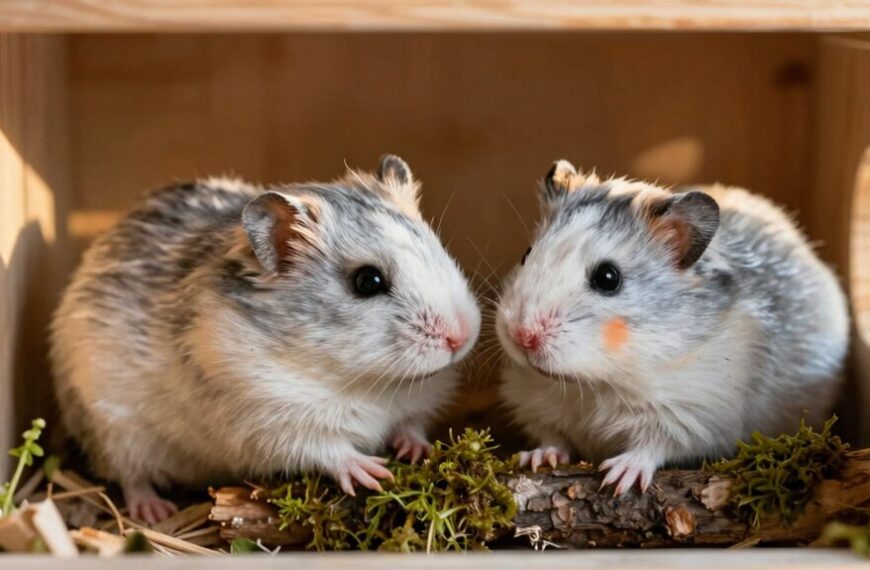
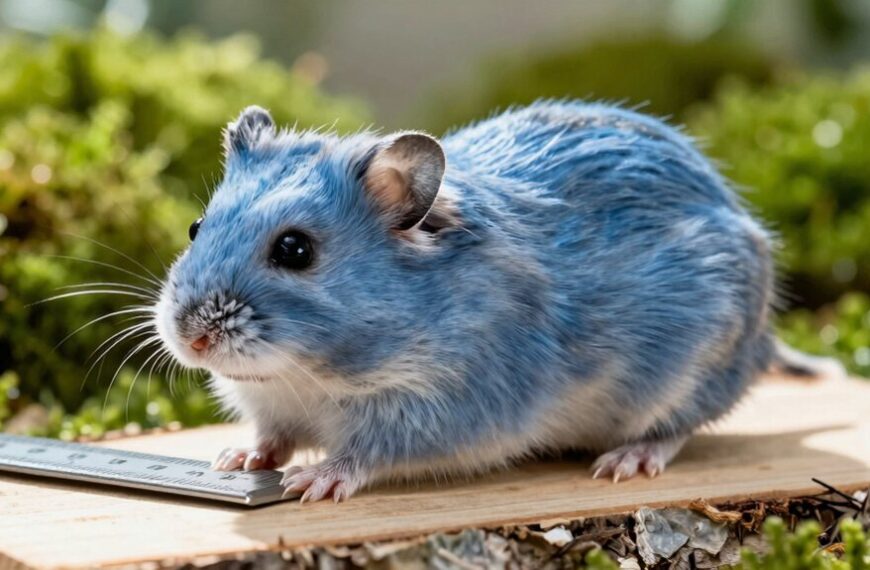
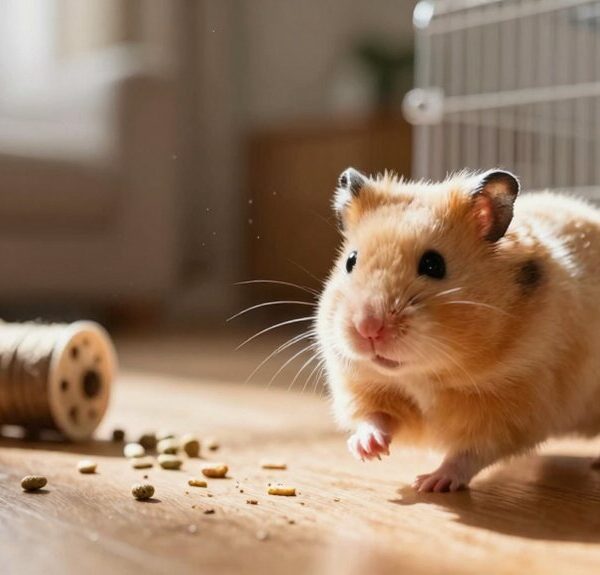
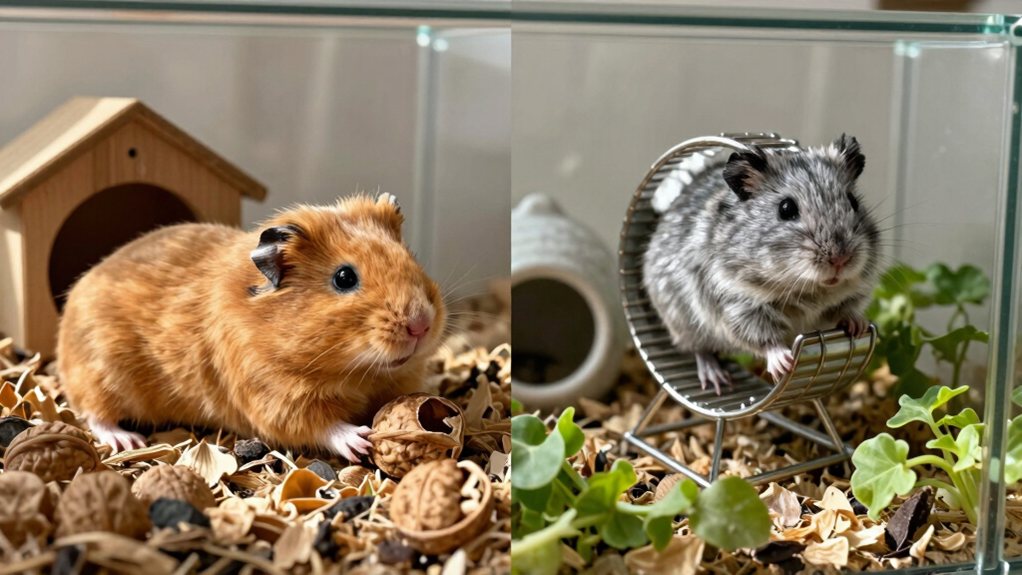
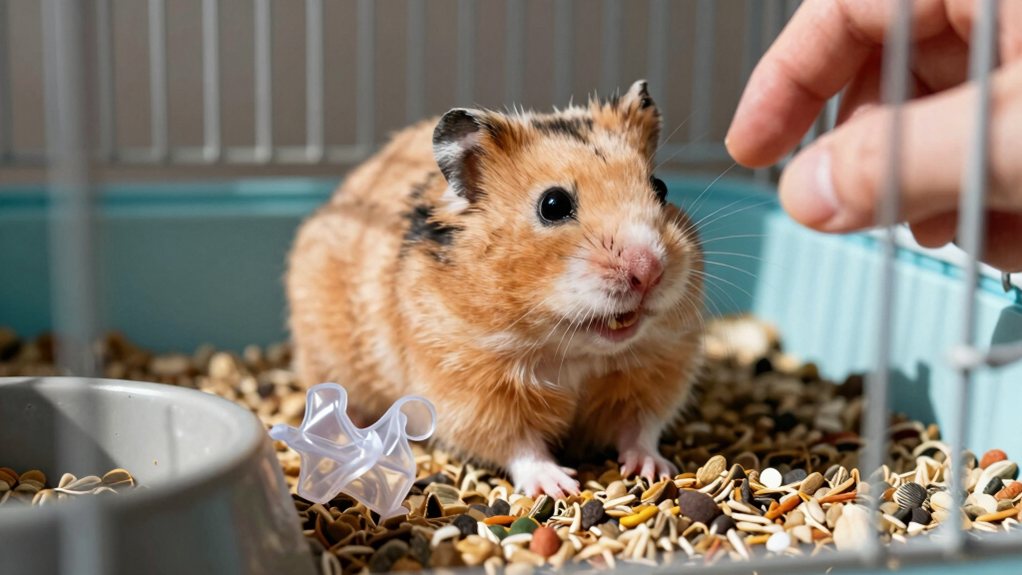
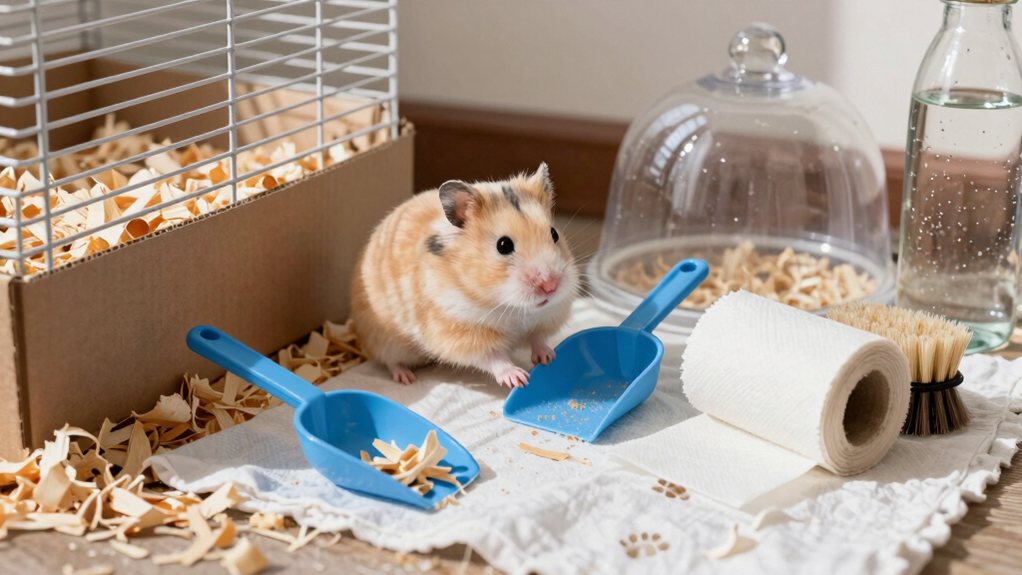
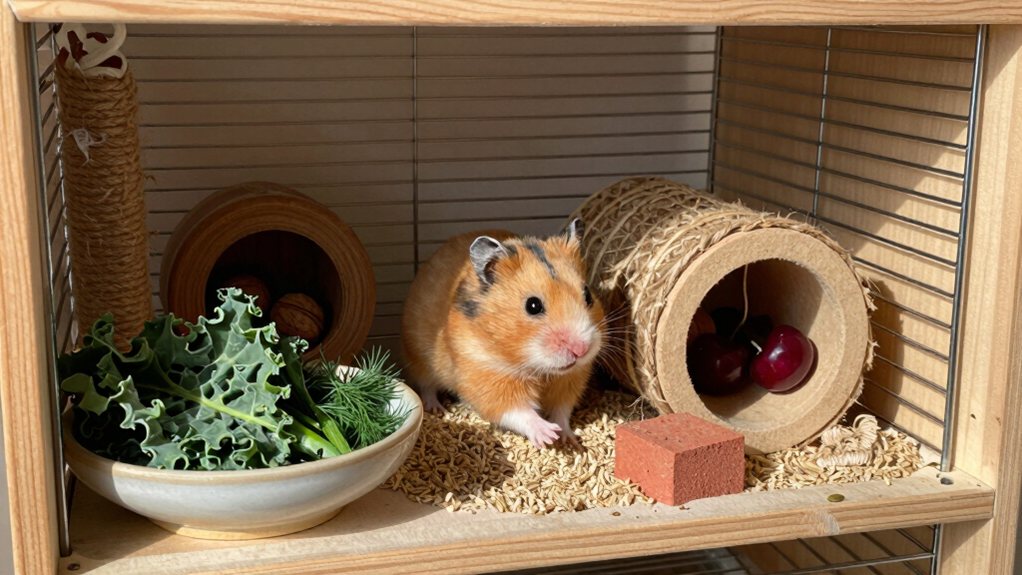
You’ve got two cute but very different tiny pals here. Campbell’s are energetic, curious, and a bit feisty, while Winter Whites are fluffier, calmer, and turn almost white in winter: like little snowballs.
Watch Campbell’s for diabetes, and keep Winter Whites stress-free with quiet and routine. Both need space, safe bedding, and love gentle handling. Pick based on your vibe—speedster or snuggle muffin?
There’s more to their personalities and care than meets the eye.
Campbell’s Vs Winter White Dwarf Hamsters: Which Is Right for You?

So, you’re thinking about bringing home a tiny, furry bundle of joy but can’t decide between a Campbell’s or a Winter White dwarf hamster? Both are adorable, but they’ve got differences you’ll want to know. Campbell’s tend to be a bit more outgoing, while Winter Whites are shy but sweet once they warm up.
When it comes to breeding habits, both can surprise you. Females mature fast, so keep same-sex pairs if you don’t want a sudden pile of pups.
Lifespan expectancy is similar: about 1.5 to 2 years, so enjoy every squeak. Winter Whites even turn whiter in cold months, like tiny snowballs with eyes!
Think about your lifestyle: if you want a curious explorer, go Campbell’s. Prefer a quiet, cozy buddy? The Winter White’s your match.
Either way, you’re in for whiskered grins and bedtime antics.
How to Tell Campbell’s and Winter White Hamsters Apart
While they might look like mirror images at first glance, telling Campbell’s and Winter White dwarf hamsters apart is easier than you think once you know what to spot. Start by checking the fur pattern. Campbell’s usually have a smoky gray stripe down their back and lighter underbellies, while Winter Whites sport a clean, crisp dorsal stripe and fluffier coats that turn nearly white in winter.
Yep, they literally blend into snow. That’s one of their cool genetic traits.
Another clue is eye color. Campbell’s often have darker eyes, while Winter Whites tend to have ruby or deep red ones.
Oh, and size. Winter Whites are a tad rounder and fluffier, like tiny fur donuts. Campbell’s are sleeker, like little speedsters.
Watch how they act, too. Winter Whites can be shyer, especially when adjusting.
Why Winter Whites Change Color in Winter
You’ve probably already noticed how Winter White hamsters look like little puffballs with that sharp, clean stripe down their back, maybe even caught yourself wondering if they’re secretly part snowball.
Well, here’s the cool part: their fur actually changes color in winter as a seasonal adaptation.
Yep, their grayish-brown coat slowly turns snowy white when daylight shortens, helping them blend into snowy environments.
It’s all about natural camouflage—staying safe from predators in the wild. Think of it like nature’s own winter jacket!
The shift usually kicks in around late fall and can take a few weeks.
Not all pet hamsters turn fully white, especially indoors with steady lighting, but many still show some change.
It’s one of those adorable quirks that makes Winter Whites extra special.
Campbell’s Vs Winter White: Temperament Compared

You’ll notice right away that Campbell’s hamsters are usually more energetic, while Winter Whites tend to be a bit calmer and easier to handle.
If you’re looking for a hamster that warms up quickly, the Winter White might be your best bet.
Though with patience, both can become friendly and fun.
Just don’t be surprised if your Campbell’s turns into a tiny escape artist during playtime!
Active Nature Compared
Ever wonder why one hamster zips around the cage like a tiny racecar while the other seems to savor every slow motion stretch?
When it comes to active nature, Campbell’s hamsters are usually the go getters. They’ve got serious nocturnal habits, meaning you’ll often hear them running on their wheel deep into the night.
Their high energy means they’ve got bigger exercise needs, think spacious cages and solid wheels.
Winter Whites, on the other hand, are a bit more chill. They’re still nocturnal, sure, but they tend to move at their own relaxed pace.
You might catch them grooming or exploring slowly instead of full speed marathons. Both need playtime and toys, but Campbell’s demand more action to stay happy.
So if you love a lively little buddy who never runs out of steam, go for Campbell’s.
If you prefer a calmer companion, Winter White’s your hamster.
Handling And Taming
What makes one hamster keen to hop into your hands while another plays hard to get? When it comes to Campbell’s and Winter White dwarf hamsters, temperament plays a big role. Campbell’s tend to be more outgoing and curious, making gentle handling easier from the start. They often warm up faster with consistent trust building.
Winter Whites can be a bit shyer and may need more time and patience. Both respond best to slow, calm interactions, no sudden moves! Offer treats from your palm, let them sniff you, and keep sessions short. Over time, they’ll learn you’re not a threat.
While neither is as cuddly as a puppy, with enough love and gentle handling, they’ll grow comfortable. Remember, every hamster has its own personality. Some are social butterflies, others are introverts who just want a quiet life.
A hamster’s individual personality differences can significantly influence how quickly and deeply it bonds with its human.
Social Behavior Differences
So, which little furball fits your vibe, peppy sidekick or quiet roommate? Campbell’s hamsters are chatty, curious, and love interaction, making them more social with humans and sometimes cage mates. Watch for squabbles.
They’ve got strong nocturnal tendencies, so don’t be surprised if your hamster starts running on its wheel at midnight like it’s training for the hamster Olympics.
Winter Whites, on the other hand, are shy and prefer peace and quiet. They’re less likely to bite but also less enthusiastic for cuddle time.
Both share a love for burrowing habits, turning bedding into underground kingdoms.
While Campbell’s might greet you with a squeak, Winter Whites often just peek from their tunnels.
You get a lively buddy with one, a zen roommate with the other. Pick based on your energy. Both are adorable, just in different ways.
Caring for Winter White Dwarf Hamsters
You’ll want to give your Winter White dwarf hamster a cozy, escape-proof home with plenty of bedding for burrowing, trust me, they’re tiny escape artists!
Feed them a balanced mix of quality hamster pellets, fresh veggies, and the occasional treat, but go easy on the sunflower seeds unless you want a chubby little roommate.
When it comes to handling, go slow and gentle, letting them sniff your hand first so they know you mean no harm.
Choose a cage with chewproof and waterproof materials to ensure long-term safety and durability, especially since Winter Whites are active chewers.
Housing Requirements
Ever wonder how such a tiny fluffball can have such big housing needs? Well, your Winter White dwarf hamster may be small, but he’s got big expectations. For cage size, think spacious: aim for at least 450 square inches so he can explore, dig, and zoom like a furry little racecar.
A cramped cage? That’s a one-way ticket to stress city.
As for bedding type, go deep—literally. These guys love to burrow, so use safe, dust-free bedding like paper-based or aspen, and layer it at least 6–8 inches high.
Avoid cedar or pine; they might smell nice to you, but they’re a no-go for his lungs.
A cozy hideout and some chew toys round things out nicely.
Give him room to roam and dig, and you’ll have one happy, healthy hamster who’s ready to charm your socks off. Just don’t expect him to return them.
Providing safe bedding materials is essential to prevent respiratory issues and skin irritation.
Diet And Nutrition
What’s on the menu for your pint-sized ball of fluff? When it comes to feeding your Winter White dwarf hamster, balance is key.
You’ll want to offer a base of high-quality hamster mix that includes various grain types like oats, barley, and millet, think of it as their version of a balanced breakfast.
Toss in fresh veggies a few times a week, but skip the citrus. It’s a tummy-ache waiting to happen.
While their main diet should come from trusted commercial food, a sprinkle of vitamin supplements now and then can give their immune system a little boost, especially in winter.
Just don’t overdo it. You’re not prepping a five-star feast.
And hey, they might give you puppy-dog eyes for a bite of your sandwich, but stick to their menu. After all, you’re the chef in this tiny, whiskered household.
Feed your hamster every day to support its fast metabolism and overall health, and remember to check hidden food stashes regularly to prevent spoilage and maintain hygiene.
Handling Tips
Now that you’ve got the food sorted, no more sneaking them bits of your orange, we see you. Let’s talk about getting up close and personal with your Winter White dwarf hamster.
These little fluffballs are sweet, but they can be shy or jumpy at first. Start by letting them sniff your hand in their calm environment, no loud music or curious cats nearby.
When it’s time to pick them up, use a gentle grip. Cup both hands around them softly, like you’re holding a tiny, warm marshmallow.
Don’t grab or squeeze, trust builds slowly.
Talk to them in a soft voice, they’ll learn your tone. And if they dart away, no worries. It happens. Just try again tomorrow.
With patience, your hamster will start seeing you as a friend, not a giant. Handling isn’t just fun, it’s bonding. So go slow, stay calm, and enjoy those little squeaks of curiosity.
Always ensure supervised playtime to keep your hamster safe and stress-free during handling sessions.
Why Campbell’s Hamsters Are More Active (and Feisty)
While you might expect all tiny hamsters to act the same, Campbell’s hamsters stand out like the energetic kid who never quite got the memo about nap time.
Their nocturnal energy is real, you’ll often catch them sprinting on their wheel or shredding bedding at midnight.
This feistiness isn’t just attitude, it’s in their DNA.
Thanks to genetic traits passed down through generations, Campbell’s are naturally more alert and active than their Winter White cousins.
They’re curious, bold, and not afraid to let you know they’re in charge.
Here’s what fuels their spark:
- High metabolism – They burn energy fast, so they move constantly.
- Curious nature – They explore every corner, sniffing and scurrying nonstop.
- Territorial instincts – They react quickly to changes, making them seem feisty.
Handle with care, they’re lively for a reason!
Diabetes in Campbell’s Hamsters: What Owners Must Know

If you’ve ever seen your Campbell’s hamster chugging water like it’s training for a tiny hamster triathlon, it might be more than just thirst. Diabetes is a real concern for this lively little breed, so you’ll want to keep a close eye on their habits.
If your pet’s suddenly peeing more, losing weight, or acting sluggish, it’s time to talk to your vet. Blood sugar monitoring can help catch issues early, and yes, there are tiny glucose meters made just for hamsters. They’re kind of adorable.
While it sounds serious, it is. Many hamsters live happy lives with proper care. Stick to low-sugar treats, skip the fruit-heavy snacks, and keep their routine consistent. You’ve got this, and your little buddy’s counting on you.
Stress in Winter Whites: How to Prevent Health Issues
Ever wonder why your Winter White dwarf hamster suddenly hides more than a ninja on a coffee break? Stress in Winter Whites is more common than you think, and catching it early can prevent serious health issues.
Stressed Winter White hamsters hide like ninjas—spot the signs early to keep your tiny fluffball happy and healthy.
These tiny fluffballs are sensitive to changes, so identifying stress triggers like loud noises, cage mates, or a messy habitat is key.
Keep calm and hamster on by doing regular health monitoring to catch signs like fur loss, over-grooming, or grumpiness. To help your little buddy thrive, try these three things:
- Create a quiet, consistent environment, no surprise drum solos near the cage.
- Offer hiding spots and tunnels because everyone needs a personal panic room.
- Check behavior daily, a quick glance can reveal stress before it snowballs.
A lack of mental stimulation can lead to cage rage, a condition marked by hyperactivity, bar chewing, and aggression due to confinement stress.
Stay alert, stay kind, and your hamster will thank you with happy midnight wheel runs.
Which Dwarf Hamster Fits Your Lifestyle Best?
You’ve got the lowdown on keeping your Winter White dwarf hamster calm and cozy, but now comes the fun part: figuring out which tiny furball truly matches your daily groove.
If you love a hamster that’s a bit more social and active during the day, Campbell’s might be your match. They’re curious and love to explore, fitting well into busier households.
Winter Whites, on the other hand, are a little shyer and prefer quiet routines.
When it comes to breeding habits, both can surprise you, so keep males and females separate unless you’re ready for pups!
Lifespan expectancy is similar, around 1.5 to 3 years, so cherish every squeak.
Think about your schedule, noise level, and how much playtime you can offer.
Whether it’s a bold Campbell’s or a mellow Winter White, your perfect pocket pet is out there: tiny paws, big personality!
Final Thoughts
So, you’ve met the lively Campbell’s and the chill Winter White, both adorable, both full of personality. If you want a feisty little explorer, go for Campbell’s.
Prefer a calm, color-changing cutie? Winter White’s your guy. Just remember: watch Campbell’s sugar intake, keep Winter Whites stress-free, and always offer love and snacks.
Either way, you’re in for tiny paws, big charm, and a whole lot of whisker wiggles. Happy hamming!