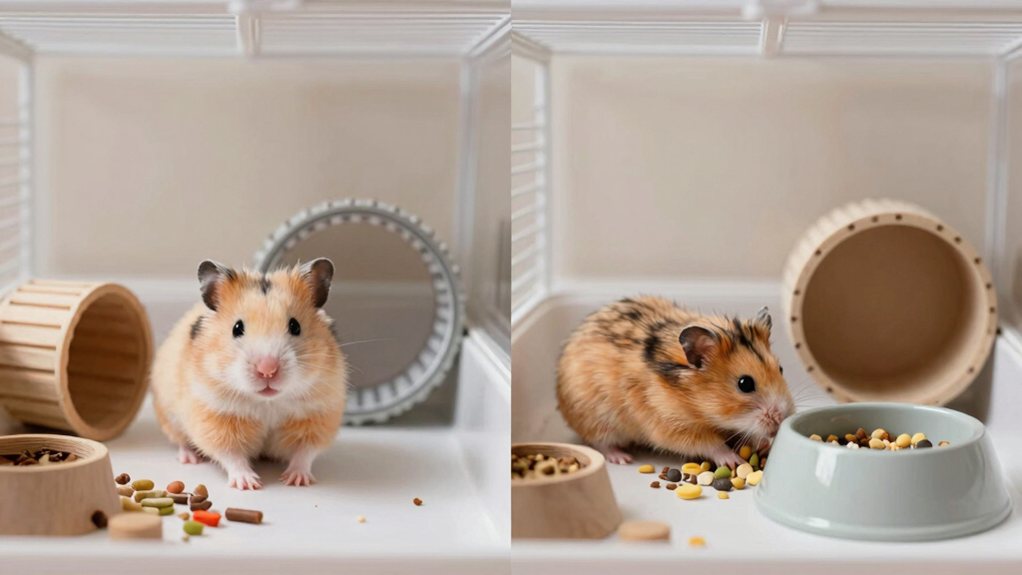
You’ll need a roomy cage, think at least 450 square inches, so your little buddy can explore safely. Grab chewproof, waterproof bedding and keep it cozy with a dust-free, 2-inch deep layer for digging.
Serve up quality pellets, fresh veggies, and the occasional treat, plus fresh water daily. Toss in safe chew toys and a silent, solid-surface wheel for nighttime zoomies. Your hamster’s going to love all the fun surprises waiting ahead.
How Big Should a Hamster Cage Be?
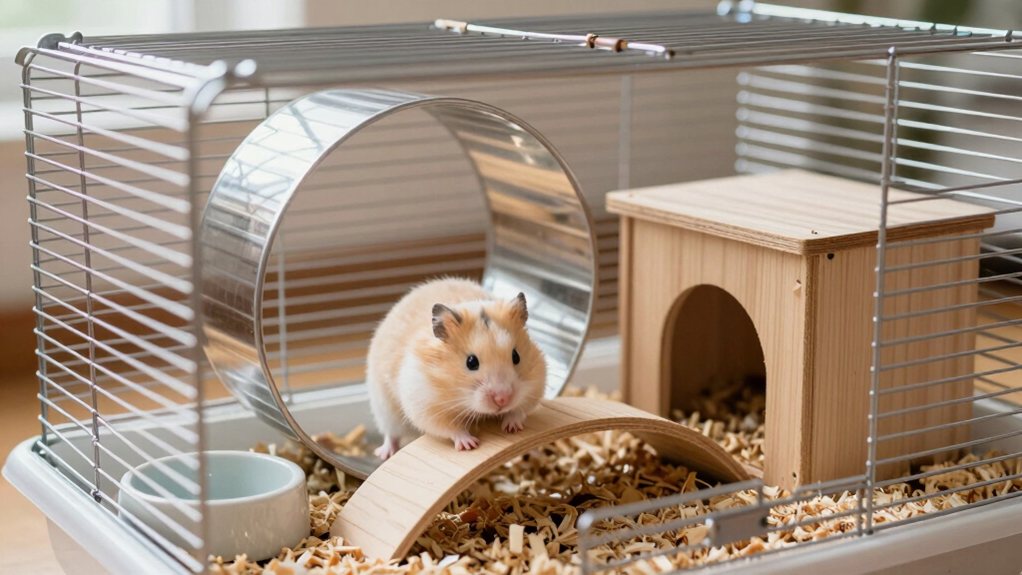
Let’s be real, your hamster may be small, but that doesn’t mean he should live in a shoebox. You’ll want a cage that’s at least 450 square inches so he can run, dig, and explore like nature intended. Bigger is always better, think of it as his tiny apartment with room for upgrades.
Your hamster’s tiny, but his home shouldn’t be. Aim for at least 450 square inches—think of it as his cozy apartment, fully upgradeable and adventure-ready.
Good cage ventilation keeps the air fresh and prevents sneezy sniffles, so skip the plastic bins without airflow. Wire cages or ones with mesh sides work great.
And don’t forget escape prevention, hamsters are Houdinis in fur coats! Check for gaps, secure latches, and avoid multi-level setups with wide gaps.
A spacious, well-ventilated, escape-proof home means a happy, healthy hamster. Plus, fewer 3 a.m. “Where’s the hamster?!” searches. Win-win.
A durable chewproof and waterproof material like polyester-coated pine helps prevent damage and supports long-term safety.
Best Bedding for Hamsters: Safe & Cozy Options
Now that you’ve nailed down the perfect spacious, escape-proof cage, it’s time to talk about what goes inside it.
Specifically, what your little furball will be snoozing, burrowing, and sometimes snack-stashing in.
When choosing bedding materials, go for soft, dust-free options like paper-based or aspen shavings. Your hamster’s nose will thank you.
Avoid cedar and pine. They might smell nice to us, but they’re harsh on tiny lungs.
Hamsters love to dig and nest, so give them plenty to work with.
About 2 inches deep lets them follow their natural nesting habits.
You’ll often find your pet buried under a cozy mountain of fluff, looking way too proud of their masterpiece.
Safe bedding means happy digging, peaceful naps, and fewer sneezes.
Think of it as your hamster’s dream bedroom—snug, soft, and just a little bit silly.
Get it right, and you’ll have one very content couch-potato rodent.
A top choice among veterinarians is 99.9% dust-free bedding to support long-term respiratory health.
What Should Hamsters Eat Every Day?
A balanced diet keeps your hamster hopping with joy, literally. Every day, your tiny friend needs high-quality hamster pellets as their main meal. They’re packed with the nutrients needed for zoomies and naps alike.
Keep your hamster zipping through life with high-quality pellets daily—packed with nutrients for endless zoomies and cozy naps.
Toss in small amounts of fresh vegetables like carrots, cucumber, or spinach a few times a week for extra crunch and vitamins. Don’t go overboard—too much can upset their tummy.
For protein sources, think tiny: a bit of boiled egg, a few mealworms, or a sprinkle of plain cooked chicken works wonders.
Hamsters are little, but their diet needs big thought. Skip sugary treats and junk food. They’re as bad for hamsters as soda is for kids.
And always, always provide fresh water.
With the right mix of pellets, fresh vegetables, and occasional protein sources, your hamster will thrive, cheek pouches full and heart happy.
Feed your hamster every day to support its fast metabolism and maintain digestive health.
Hamster Chew Toys and Mental Enrichment
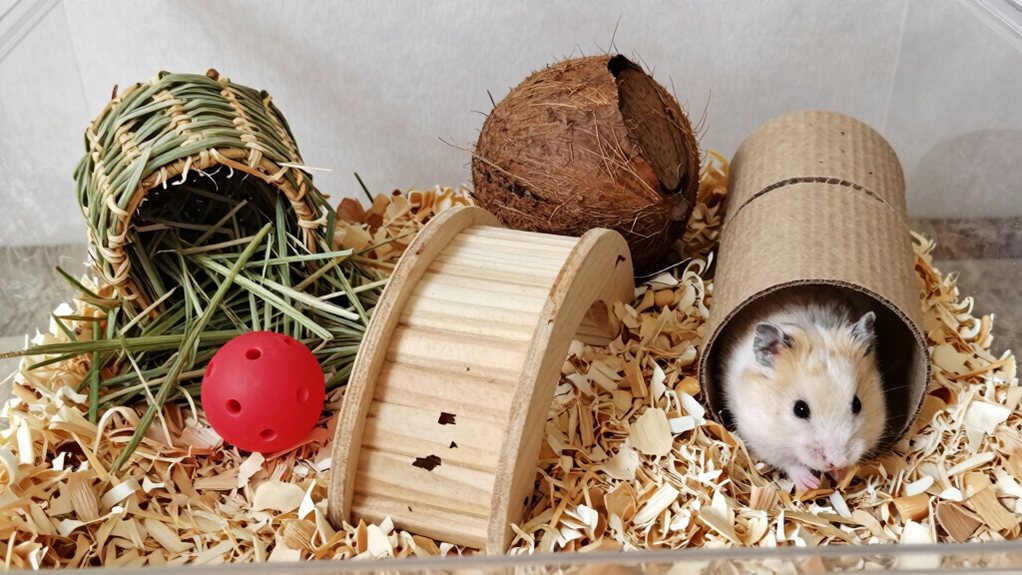
You’ve got their meals sorted, pellets, veggies, and the occasional protein treat. But don’t forget, your hamster’s day isn’t just about eating.
Chewing is a must for healthy teeth, so a safe chew toy is crucial. Look for wooden toys or cardboard tubes. Avoid anything with glue or toxic finishes to guarantee chew toy safety.
Bored hamsters can get grumpy, yes, really. So mix in mental stimulation techniques like puzzle feeders or DIY mazes from toilet paper rolls.
Rotate toys weekly to keep things fresh and exciting.
A hamster with a job, like digging through bedding or solving a simple food hunt, is a happy hamster.
Think of it as their version of Netflix and chill, but with more gnawing.
With the right mix of safe chews and brain-boosting fun, your little furball stays sharp, satisfied, and out of mischief. You’ve got this!
Natural materials like apple wood and timothy hay support both dental health and digestion, making 100% natural materials an essential choice for safe, enriching chew toys.
Best Exercise Wheels for Nocturnal Hamsters
Ever wonder why your hamster seems to hit the gym at midnight?
That’s because they’re nocturnal, and a solid exercise wheel is their favorite late-night cardio session.
When picking the best wheel, go for silent operation, your sleep will thank you.
Nobody wants a tiny treadmill concert at 2 a.m.
Look for models with a seamless, quiet spin that won’t squeak with every turn.
Also, choose durable materials like strong plastic or metal.
Your hamster’s going to run miles each night, so the wheel must handle the marathon.
Avoid wire rungs, they’re tough on little feet.
Instead, pick a solid, enclosed surface to keep your pet safe and comfy.
A good wheel isn’t just a toy, it’s crucial for health and happiness.
Get one that’s sturdy, seamless, and silent, and your hamster will dream of track medals, not sore paws.
Final Thoughts
You’ve got this! A roomy cage, cozy bedding, and healthy food keep your hamster happy and safe. Don’t forget chew toys, they’ll save your furniture and their sanity.
A quiet, solid-wheel gives them midnight zoomies without the squeak. You’re more than just keeping a pet, you’re building a tiny, whiskery world they’ll love. Sweet, right? Just a little care goes a long way.