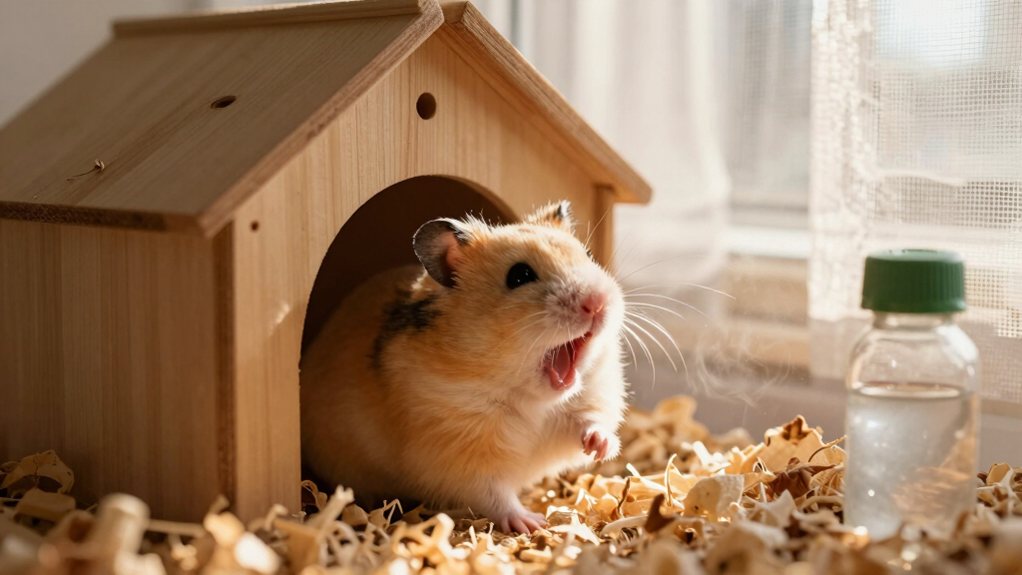
Your hamster usually wakes up between 6 and 8 p.m., just as dusk settles and your evening begins. They’re night owls by nature, springing to life when the room dims and the world winds down.
You might catch them stretching, twitching their nose, or darting to their wheel for a midnight sprint. Bright lights or loud noises can throw off their groove, so keep things calm. Stick around—you’ll soon see how their nightly routine shapes everything from snacks to snuggles.
When Do Hamsters Wake Up?
So, when *do* hamsters wake up, anyway? Well, most of them stir around dusk, think 6 to 8 p.m., since they’re nocturnal little goofballs. You’re probably hitting the couch with a snack while your hamster’s just rolling out of bed!
Most hamsters wake around 6–8 p.m., just as dusk hits—while you’re unwinding, your tiny roommate is just starting their nightly adventure!
They nap during the day, then zoom around at night. So don’t be surprised if your pet starts running on its wheel right as you’re trying to sleep.
To keep your hamster happy and healthy, stick to a consistent hamster diet and try toy rotation every few days. Nothing fights boredom like a surprise tunnel or chew toy!
Just like you need your morning coffee, your hamster needs routine and fun.
Why Do Hamsters Wake Up at Dusk?
You might wonder why your hamster kicks off its day just as the sun’s going down. It’s all tied to the natural light cycles they’ve followed for ages.
They’re wired to be up and running at dusk because it keeps them safe. Those nocturnal behavior patterns helped their wild ancestors dodge daytime predators.
Think of it as nature’s night shift, where quiet, cooler hours mean more time to snack, scamper, and live their best nine-to-five… in reverse.
Hamsters are naturally nocturnal animals, which means their biological rhythm evolved to avoid predators in the wild.
Natural Light Cycles
Ever wonder why your hamster suddenly springs to life just as the sun’s dipping below the horizon? It’s all thanks to natural light cycles. Your little buddy’s internal clock syncs up with the world outside, so when daylight fades, their body says, “Showtime!”
Depending on your geographic location and seasonal variations, dusk comes earlier in winter or later in summer. This means your hamster’s wake-up time might shift slightly throughout the year. They didn’t get a memo about daylight saving, but somehow they’re always on schedule.
These furry nocturnal ninjas thrive in dim light, avoiding the heat and predators of daytime. So while you’re winding down, your hamster’s gearing up for a night of wheel-sprinting and snack-stashing.
It’s not weird—it’s nature! Just think: your pet’s living proof that sometimes, the best adventures start after dark.
Hamsters are naturally nocturnal behavior, which explains their peak activity during the night and tendency to sleep during daylight hours.
Nocturnal Behavior Patterns
Hamsters don’t set alarms, but they’ve got their own built-in sunset alert system. As dusk rolls in, your furry little buddy starts stretching and sniffing, game time!
Hamsters are nocturnal, so while you’re winding down, they’re just powering up.
You’ll notice they avoid diurnal activity, meaning they skip the daytime hustle and save all their energy for nighttime adventures. That’s when they run, dig, and explore like tiny, furry ninjas.
Even their social interaction peaks after dark, though they’re still pretty independent. Even at bedtime, they prefer flying solo.
So, if you’re yawning by 9 p.m., don’t expect your hamster to join you. They’re just hitting their stride, likely plotting their next wheel sprint or snack heist.
It’s not rude, it’s biology. Think of them as your home’s night shift employee: quiet during the day, busy when the stars come out.
Their nocturnal behavior evolved to help them avoid predators in the wild, where staying hidden during daylight hours increased their chances of survival.
Evolutionary Survival Traits
While they may seem like tiny party animals who just love late-night wheel marathons, your hamster’s dusk-driven schedule isn’t about preference, it’s survival, plain and simple.
Long ago, their wild ancestors had to dodge predators and deal with food scarcity, so evolution said, “Hey, let’s try waking up when it’s safer.”
At dusk, fewer predators are prowling, giving hamsters a better shot at sneaking around without becoming someone’s snack.
Plus, cooler nighttime temperatures help conserve energy when food’s hard to find.
So, that 6 p.m. wake-up call? It’s not laziness, it’s millions of years of instinct kicking in.
You’re more than just watching a fuzzy face yawn, you’re seeing nature’s clever workaround for staying alive.
Cute, right? Your little buddy’s routine is proof that even the smallest creatures have big survival smarts.
Their nocturnal behavior also means they thrive on evening interaction, aligning bonding time with their natural activity cycle.
How Light Changes Trigger Wake-Up Time
You mightn’t realize it, but your hamster’s whole schedule hinges on the light around them, natural cycles tell their tiny body when it’s time to wake up and start zooming.
Flip on a bright lamp late at night, and you’ll probably see them stir, because artificial light can trick them into thinking it’s dusk.
Just like you’d grumble if someone turned on the lights during your favorite dream, your hamster counts on darkness to know when to chill and rest.
A sudden burst of light can disrupt their nocturnal nature and lead to stress or irregular activity patterns.
Natural Light Cycles
Ever wonder what flips the switch in your hamster’s tiny brain, telling them it’s time to pop out of bed and start running on that wheel? It’s all about natural light cycles. Hamsters don’t use alarm clocks—they rely on subtle changes in light, like sunrise simulation and moonlight exposure, to set their internal rhythms.
Even in your living room, these critters tune into the world outside your window.
Morning light tricks their brains into thinking it’s time to wind down, yes, they’re night owls!
Dim evening glimmers mimic moonlight exposure, signaling it’s time to stretch and snack.
Sudden bright lights at night? That’s like blasting a trumpet in their ear: rude and confusing.
Keep their space cozy with gradual light changes. Your hamster may not thank you in words, but their happy wheel-sprints just might.
Artificial Lighting Effects
Now that you know how natural light guides your hamster’s daily rhythm, let’s talk about what happens when indoor lighting gets involved.
Artificial lights can confuse your little buddy, especially if they’re left on late. This light pollution tricks your hamster into thinking it’s still daytime, delaying their rest.
Just like you’d struggle to sleep with a bright lamp on, your hamster faces sleep disruption too.
They might wake up at odd times or seem extra grumpy, kind of like us before coffee.
To help, keep their room dim at night and avoid sudden light changes.
A consistent schedule helps them feel safe and well-rested.
Think of it as creating a cozy bedtime vibe, minus the bedtime stories.
With less artificial light messing with their clock, your hamster’s wake-up time stays more predictable, and that means fewer midnight wheel marathons!
Darkness Signals Rest
- Darkness isn’t just quiet, it’s a wake-up call shaped by seasonal adaptation
- Artificial lights can trick them, making nights feel like days
- Keeping a consistent light-dark cycle supports their health and happiness
What Are the Signs Your Hamster Is Waking Up?
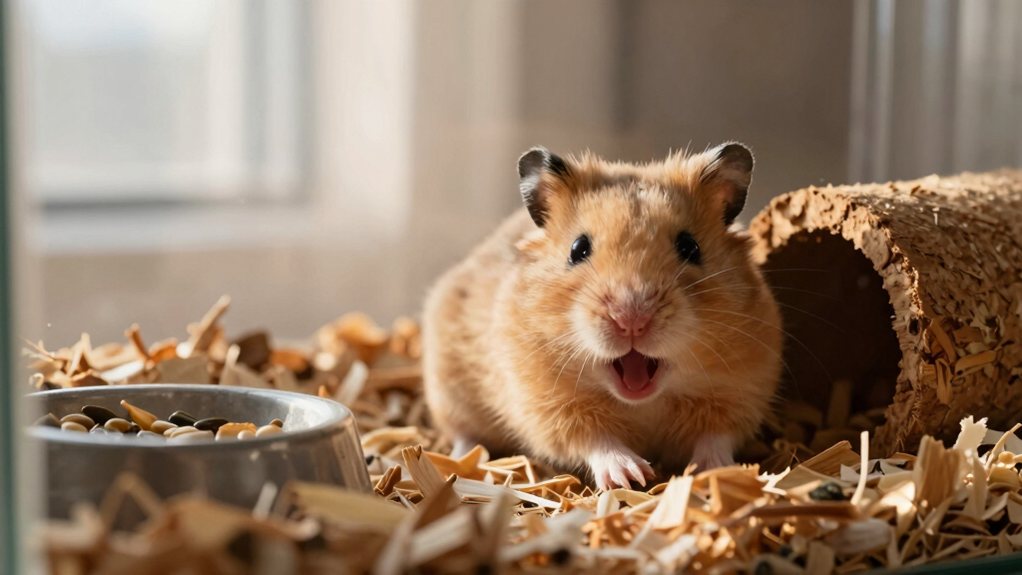
Wondering how to tell when your hamster’s ready to start the day? Since their dream patterns and sleep stages differ from ours, spotting the signs takes a little know-how.
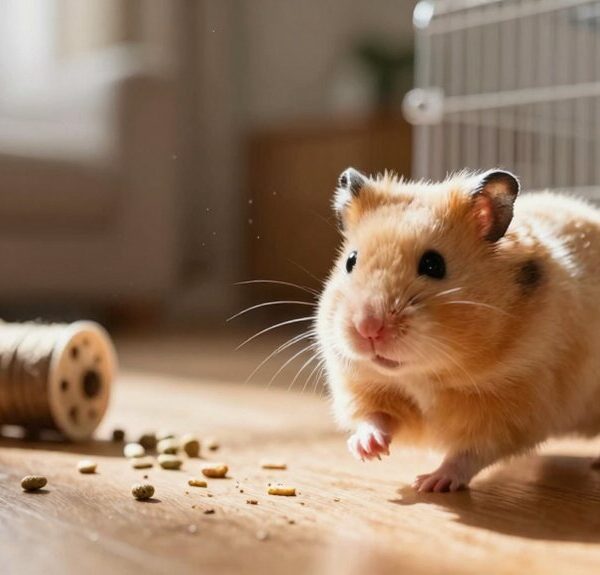
You might notice your hamster twitching its nose or stretching, tiny movements that signal they’re shifting out of deep rest.
Tiny nose twitches and sleepy stretches—your hamster’s cute cues that deep rest is ending and adventure is about to begin.
Ears may perk up, and beady eyes slowly open, scanning the room like they’re checking if it’s safe to party.
They often yawn, yes, really, and start grooming, licking paws like they’re fresh from a spa.
Soon, they’ll scurry to the wheel or rustle bedding, full of energy.
These little cues mean their internal clock has ticked into wake mode.
It’s not always precise, but watching for these behaviors helps you sync with their rhythm.
Honestly, it’s kind of adorable, like your hamster’s personal morning show.
Just don’t expect coffee and small talk.
What Should You Feed When Hamsters Wake Up?
So, what’s on the menu when your hamster shakes off sleep and starts sniffing around the cage?
After a long nap, your little buddy needs morning hydration and post sleep nutrition to kickstart the day right.
Think of it like breakfast for a tiny, furry marathon runner, small but mighty!
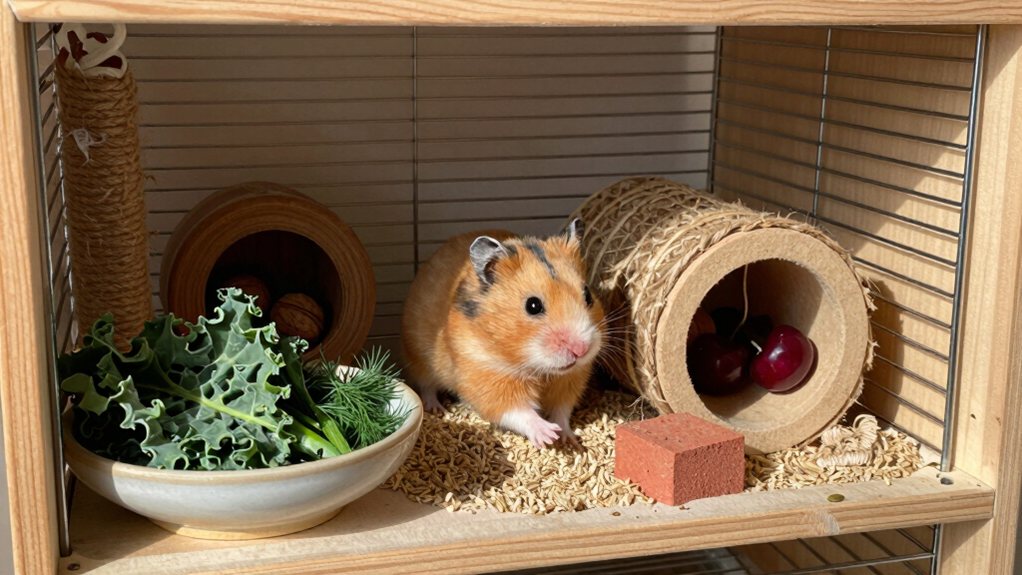
- Fresh water: Always top off the bottle. Dehydration is no joke, even for hamsters.
- High-quality pellets: These deliver balanced post sleep nutrition without the sugar crash.
- A sprinkle of veggies: Think cucumber or carrot. Hydration and crunch in one bite!
You don’t need gourmet meals, just consistency and care.
Watch them nibble away with those beady eyes full of joy. It’s the cutest morning ritual ever.
Just don’t offer sweets. Your hamster isn’t applying for a dentist ad.
Stick to the basics, and you’ll fuel their adventures perfectly.
A consistent daily feeding routine supports your hamster’s rapid metabolism and overall well-being.
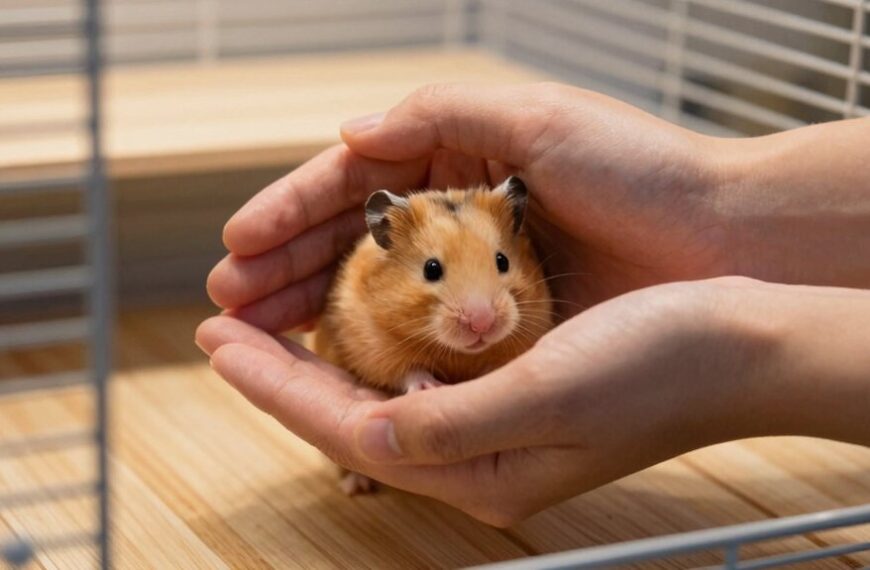
How to Bond With Your Hamster at Wake-Up Time
What if the quiet moments just after your hamster wakes up could become your best chance to build trust?
That’s when your little buddy is most alert but still calm, making it perfect for gentle interaction.
Start your morning routine by softly speaking their name or offering a tiny treat through the bars.
This builds familiarity without overwhelming them.
Avoid grabbing or sudden moves, hamsters aren’t fans of surprise hugs!
Instead, let them sniff your hand first.
Over time, they’ll link your presence with safety and snacks.
Be patient, bonding takes time, like earning a gold star from a furry professor.
A few minutes daily during wake-up time strengthens your connection.
Soon, your hamster might even climb onto your hand willingly.
Who knew friendship could fit in such a small package?
Trust develops over time with patience, calm presence, and warmth, and this quiet morning window is ideal for fostering that bond through consistent, gentle interaction. Trust develops over time
Are You Accidentally Disturbing Your Hamster’s Sleep?
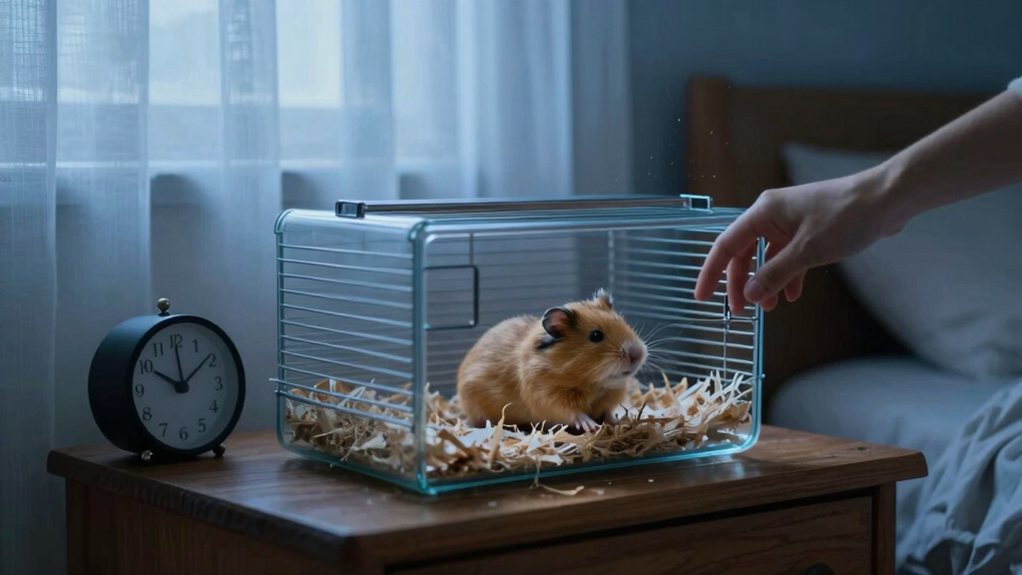
- Avoid loud noises or sudden light during their bedtime routines, hamsters nap during the day and need peace.
- Don’t tap the cage or try sneaky photos while they’re snoozing, it’s like a surprise alarm clock (nobody likes those).
- Schedule playtime after they naturally wake—usually late afternoon or evening—so bonding feels fun, not forced.
Respecting their rest isn’t just kind.
It helps build trust.
Final Thoughts
So, you’ve got the scoop, hamsters wake at dusk, not dawn, and that’s just how they roll. You’re probably not a night owl either, but respecting their rhythm helps you bond better.
Peek in quietly when the sun sets, offer a tasty snack, and say a soft hello. You’ll both be happier, no more grumpy hamster, no more sleepy you. It’s a win-win, with a little patience and a lot of tiny, squeaky joy.