If your hamster stops eating for more than a day, looks lethargic, or has a goopy tail or eyes, don’t wait. These are red flags.
Labored breathing, sudden wobbling, or weight loss of even a few grams? Straight to the vet.
Wet tail can turn deadly in 48 hours, and quiet symptoms often mean big trouble. Your tiny buddy’s acting off? Better safe than sorry. Something’s up, and you’ll want to catch what comes next.
Why Do Hamsters Hide Illness?
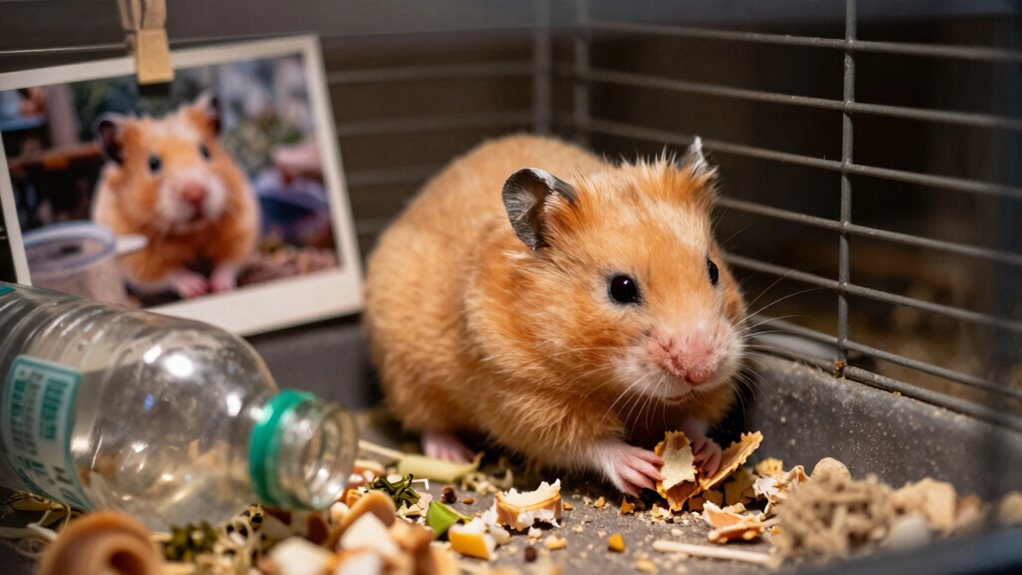
Ever wonder why your hamster seems perfectly fine one day and then suddenly isn’t? It’s more than your imagination—hamsters are pros at hiding illness, all thanks to their survival instincts. In the wild, showing weakness could make them a target, so they’ve evolved to mask pain or sickness.
That means by the time you notice something’s off, your little buddy might already be feeling pretty rough.
Changes in hamster behavior, like less activity, messy fur, or skipping treats, are often the first clues. Don’t wait for dramatic symptoms. Trust your gut. If something feels wrong, it probably is.
Think of it like your hamster playing a sneaky game of “I’m totally fine!” while secretly needing help.
Keep an eye out, stay curious, and remember: you’re their best advocate. When in doubt, a vet visit could make all the difference.
Hamsters can deteriorate rapidly due to conditions like wet tail or respiratory infections, especially when stress or underlying genetic issues are involved.
How Long Can a Hamster Go Without Eating?
You know how hamsters are sneaky about acting sick, just yesterday they were zooming on their wheel, and now they’re not even touching their favorite sunflower seeds? That’s a red flag.
Hamsters shouldn’t go more than 24 hours without eating. Their tiny bodies need steady fuel, and skipping meals can quickly lead to serious health issues.
Hamsters need constant fuel—going over 24 hours without food can lead to serious health risks. Never ignore a missing meal.
If your hammy’s ignoring food, check for spoilage. Old or damp food can turn unappetizing fast, especially in high cage humidity.
Moldy snacks aren’t just gross, they’re dangerous.
Also, humidity can mess with their comfort and appetite.
Maybe they’re feeling off due to a hidden illness or stress.
Either way, don’t wait it out. If they’re truly not eating, it’s time to call the vet.
Better safe than sorry—your little buddy counts on you to notice when something’s wrong.
Is Wet Tail an Emergency? (And How to Spot It)
What if your hamster suddenly seems under the weather, hunched in a corner with a messy, damp bottom?
That could be wet tail, a serious bacterial infection and definitely an emergency.
You’ve got to act fast, because this illness can turn deadly in just 48 hours.
Look for signs like diarrhea, lethargy, a strong odor, and a wet, dirty rear end.
Young hamsters, especially, are at risk during stressful times like moving or weaning.
While it’s not typically spread through casual contact, wet tail transmission can happen in dirty cages or shared spaces.
The best bet is to focus on wet tail prevention: keep things clean, minimize stress, and quarantine new pets.
Think of it like giving your tiny buddy a germ-free spa day.
If you suspect wet tail, skip the home remedies.
Call your vet now.
Your little furball’s counting on you.
Why Is My Hamster Breathing Hard?

If your hamster’s breathing fast or seems to be struggling, it’s natural to get a little worried. After all, they’re tiny drama queens who sometimes overact when stressed.
Look for signs like wheezing, fluffed-up fur, or belly heaving, because rapid or labored breathing can point to something serious like an infection or overheating.
When in doubt, it’s always better to call your vet sooner than later. Better safe than sorry when your little buddy’s involved.
Labored breathing can also be a sign of underlying heart disease, a common and often silent condition in aging hamsters.
Rapid Breathing Causes
Ever wonder why your hamster suddenly sounds like a tiny steam engine puffing away in its cage? Rapid breathing can be a sign something’s off, and it’s smart to pay attention.
While hamsters naturally breathe faster than humans, sudden changes might point to trouble like heat stroke or a respiratory infection.
Don’t panic—just stay alert and check for other symptoms. Here’s what could be going on:
- Heat stroke: Overheating makes your little buddy pant. Keep their space cool and shaded.
- Respiratory infection: Sneezing, wheezing, or mucus? That’s a vet trip waiting to happen.
- Stress or pain: Loud noises or discomfort can spike their breathing too.
If it doesn’t settle soon, a vet visit helps catch problems early. You’ve got this—and so does your furry friend.
Labored Breathing Signs
You’ve already seen how fast breathing can be a red flag, but what if your hamster isn’t just breathing quickly? What if it’s actually struggling to breathe? That’s when you need to pay close attention.
If you notice your hamster’s chest heaving with each breath or its nose flaring dramatically, called nasal flaring, it’s working way too hard to get air. These signs aren’t normal, and they can point to something serious like an infection or even heart trouble.
Your little buddy might also sit hunched, seem tired, or avoid moving much.
Think of it like trying to breathe through a straw. Definitely not fun.
While hamsters are tiny drama queens sometimes, labored breathing isn’t one of their cute acts. It’s a vet emergency.
Breathing difficulties in hamsters can also be accompanied by labored inhalation, a sign of significant respiratory distress that requires immediate veterinary evaluation.
When To Seek Help
What’s going on when your hamster sounds like a tiny steam engine? Labored breathing isn’t normal and could mean your little buddy is in trouble.
Pay close attention to changes in hamster behavior, lethargy, wheezing, or fluffed-up fur are red flags.
Don’t wait it out; some issues worsen fast. Here’s when to act:
- You notice rapid or open-mouth breathing – this isn’t hamster yoga, it’s an emergency.
- There’s discharge from the nose or eyes – paired with sneezing, it may signal infection.
- Cage cleanliness is excellent but symptoms persist – even a clean home can’t hide illness.
If any of these happen, skip the internet sleuthing and call your vet.
Quick action gives your hamster the best shot at bouncing back.
You’ve got this, and so does your tiny, wheezy pal.
Why Is My Hamster Off-Balance or Falling Over?
Is your hamster suddenly doing the tiniest, wobbliest tightrope walk across the cage floor, or worse, tipping over like a furry little acrobat who missed the net? It’s definitely not normal, and it’s time to pay close attention.
Wobbly steps or sudden tumbles? If your hamster’s acting like a dizzy acrobat, it’s not normal—pay close attention now.
An inner ear infection could be the sneaky culprit, messing with their balance just like when you spin too fast and feel dizzy.
But it might also point to something more serious, like a neurological disorder affecting how their body moves and responds.
Either way, you shouldn’t wait it out. These issues won’t fix themselves, and your little buddy needs help fast.
Keep an eye out for head tilting, circling, or trouble eating too.
If you spot any of these signs, call your vet right away. Quick action gives your hamster the best shot at feeling steady—and silly—again.
How Much Weight Loss Is Dangerous for a Hamster?
You know your hamster’s usual chub, so if you start noticing they’re looking a little too slim for comfort, it’s time to pay closer attention.
Losing even a few grams can be a red flag, especially if you’re also seeing them eat less or skip their favorite snacks.
Keep an eye on their food bowl and daily habits.
Sudden changes aren’t just quirky. They might mean it’s vet time.
Significant Weight Loss Concerns
Ever wonder how much weight loss is too much for your tiny furball? Even a small drop, like a few grams, can be a big deal for a hamster. Keep an eye out for these red flags:
Sudden diet changes or poor nutrition might leave your pet underfed without you realizing it.
Stress factors, like loud noises or a cage mate, can make your hamster stop eating.
If they’re losing weight fast and seem lethargic or hunched, it’s vet time.
Don’t wait. Your little buddy can’t tell you when something’s wrong, so you’ve got to be their detective. A quick vet visit could catch something early and save their life.
Think of it like a hamster wellness check-in. Because even the smallest pets deserve big care. You’ve got this!
Monitoring Daily Food Intake
Spotting weight loss early starts with keeping tabs on what’s going into your hamster’s belly every day, because let’s be honest, these little hoarders can be sneaky about their snacks.
Start food tracking by noting how much you put in the bowl and checking how much disappears.
A sudden drop in appetite changes? That’s your cue something’s off.
Hamsters shouldn’t skip meals—ever.
If your furry friend’s eating half of what they used to, or if their favorite treats are being ignored, it’s time to pay closer attention.
Even a few grams of weight loss over a week can be dangerous.
You know your hamster best, so trust your gut.
A vet visit might seem like overkill, but when it comes to tiny tummies, better safe than sorry.
Stay curious, stay calm, and keep that snack drawer full—just not in their cheeks!
What Does Discharge Around the Tail or Eyes Mean?
While a little gunk in the corner of your hamster’s eye mightn’t raise alarm bells, discharge around the eyes or tail is often a red flag waving for attention. If you’re seeing goopy eyes or a messy tail, it’s time to play detective.
These symptoms could point to something serious like an eye infection or tail mites, yes, those tiny pests love to hide back there.
Eye infection: Red, swollen, or crusty eyes? That’s more than sleepy dust — it could be bacteria or injury.
Tail mites: Itchy, flaky skin near the tail often means unwanted hitchhikers.
Wet tail: A smelly, gooey rear end might signal this life-threatening condition.
Don’t wait it out — your tiny friend can’t tell you they’re hurting. A quick vet trip could save their life.
Is Lethargy Normal or a Vet Sign?

Seeing your hamster snoozing in a ball might seem totally normal, after all, these little guys sleep a lot.
But if your hamster’s naps turn into all-day crashes and they’re not moving much when awake, it’s not normal behavior. Lethargy is a red flag.
Healthy hamsters perk up at night with decent energy levels, scurrying around, nibbling, or playing.
If yours is just lying around, ignoring food, or feels cold, it’s time to act.
Sure, they’re not marathon runners, but they shouldn’t look “done” with life.
Low energy levels could mean illness, dehydration, or something worse.
Don’t wait it out — hamsters hide sickness well, so by the time you notice, it’s already serious.
Call your vet.
Better safe than sorry when your tiny buddy’s health is on the line.
When Should You Call the Vet Immediately?
What would you do if your hamster suddenly started dragging one leg like it’s auditioning for a tiny hamster soap opera? That’s your cue to call the vet, now. Some signs just can’t wait, and ignoring them could risk your little buddy’s health. If you spot any of these red flags, don’t hesitate:
- Severe eye swelling that shuts the eye or looks painful
- Sudden, patchy fur loss with red, raw skin underneath
- Dragging a limb, seizures, or trouble breathing
These aren’t “wait-and-see” moments. Eye swelling could mean infection. Fur loss might signal mites or stress. Mobility issues can point to serious injury.
Your hamster’s tiny, but their problems aren’t small to them. A quick vet call could make all the difference. So act fast, stay calm, and give your fuzzy star the care they deserve.
Final Thoughts
You know your hamster best, so trust your gut. If something feels off, it probably is.
Don’t wait days to call the vet if your tiny buddy’s acting strange, skipping meals, or wobbling like they’ve had too much hamster coffee. Better safe than sorry, even if it turns out to be nothing. A quick trip could save their little life.
You’ve got this—and so does your furry BFF.