Your hamster’s probably not a hybrid. Most aren’t.
Syrian and dwarf hamsters can’t mix, thanks to different DNA, so true hybrids are super rare. Funny markings or bold behavior? That’s just their personality, not proof of mixed genes. Even vets can’t tell just by looking.
DNA tests exist but aren’t common. If your hamster seems unique, it’s likely just being wonderfully weird. Stick around, there’s more to uncover about what really makes them special.
What Makes a Hamster a Hybrid?
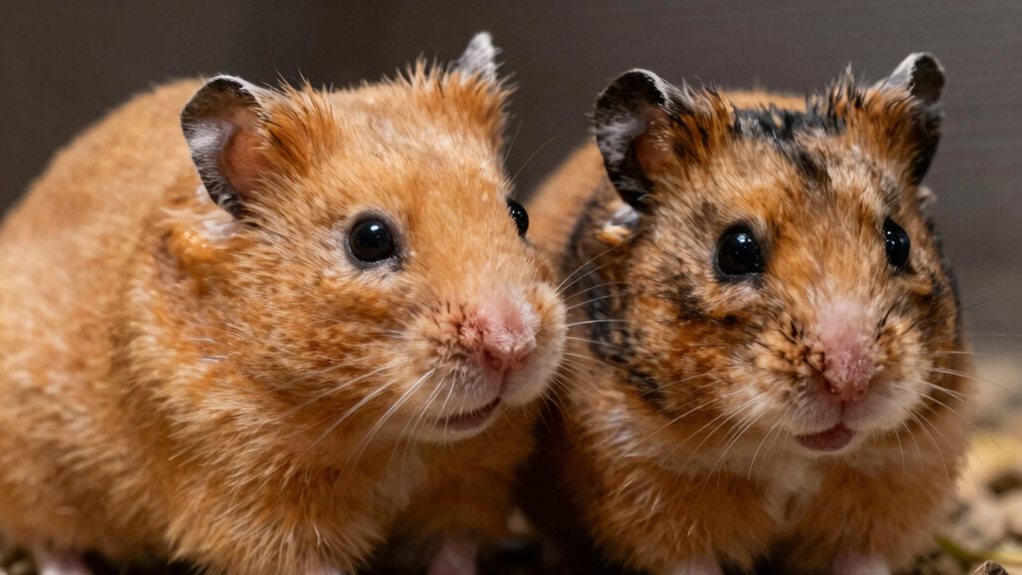
Ever wonder why your hamster seems a little *extra* quirky compared to others? Well, it mightn’t be a hybrid, because here’s the truth: true hybrids don’t really exist in pet hamsters.
All common pet hamsters are purebred species, like Syrians or Dwarfs, bred within their own kind.
So, that wild energy or unique coloring? That’s just personality, not mixed genes.
Still, knowing your hamster’s actual species helps you give the best care.
For instance, different types have slightly different needs when it comes to cage size and hamster lifespan.
Syrians need more space, think at least 450 square inches, while Dwarfs can do well in slightly smaller setups.
And lifespan? Most live 1.5 to 3 years, depending on care and genetics.
So, focus less on hybrid myths and more on happy, healthy habits.
Your tiny buddy will thank you with squeaks and snuggles!

Fun Arcade Hamster Home features a cool multi-level play space to watch your hamster in action 18.11 length x 11.4 width x 21.5 height inches, 6.1 pounds

Fine Silica Sand: Bath sand is one of the necessary hamster accessories. And silica sand is a type of sand commonly used in hamster sand baths. It is a natural and absorbent fine sand that helps remove excess grease and dust from the hamster's fur, removes dirt and odors from the body, and keeps the little pet dry and clean
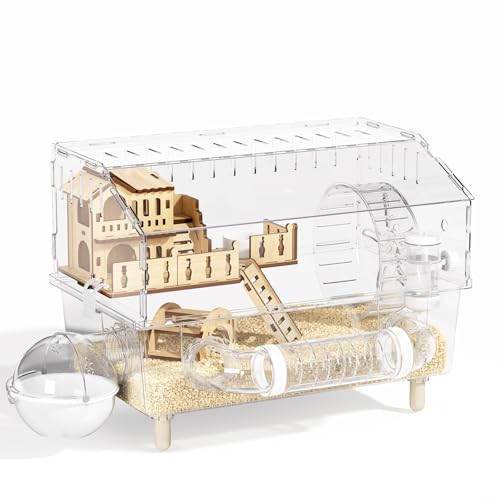
【Complete Starter Kit】This hamster cage comes with a complete set of accessories, including the cage itself, a wooden house, an 18cm silent running wheel, a sand bath, a tunnel, a water bottle, a food bowl, an arched bridge, a platform, and a ladder. All essential accessories are included, eliminating the need for additional purchases and ensuring your hamsters has a comfortable and enriching living environment.
Can Syrian and Dwarf Hamsters Create Hybrids?
Let’s clear up a common hamster myth once and for all. Your fluffy little buddy isn’t secretly part alien or part other hamster species.
Syrian and dwarf hamsters can’t create hybrids, no matter how much you wish for a super-tiny giant hamster. They’re different species with totally different DNA, like cats and dogs. They’re both adorable, but they don’t mix.
So, no hybrid babies, ever. This also means you don’t need to stress about accidental breeding if you house them separately, which you should. Dwarfs and Syrians don’t get along.
While you’re at it, give each type the right cage size. Syrians need more space, think 450 square inches. Dwarfs do fine in slightly smaller digs.
And don’t worry about hamster lifespan changing due to “hidden” hybrid traits, because again, it’s not possible. Just love your little furball for who they are, purebred and perfectly snuggly.
How to Tell a Purebred Hamster From a Hybrid
So, how do you know if your hamster is a purebred or even a hybrid to begin with?
Honestly, it’s tricky since hybrids aren’t common and often look just like regular hamsters.
But here’s what you can check.
Check the breed type.
Syrian and dwarf hamsters don’t mix in the wild, so true hybrids are rare—what you have is likely a purebred with a big personality.
Syrian and dwarf species don’t mix in the wild, so a true hybrid would be rare.
Most “mixed” hamsters are just mislabeled.
Look at size and fur.
Purebreds have consistent traits.
If your hamster’s size surprises you, it mightn’t be a hybrid, just well-fed.
Review hamster lifespan.
Hybrids don’t live longer.
A happy hamster lives 2–3 years, regardless of rumors.
Cage size matters more than genetics.
A spacious cage keeps any hamster healthy, purebred or not.
When in doubt, love what you’ve got.
Your little furball doesn’t need a pedigree to steal your heart.
Do Hybrid Hamsters Change Color in Winter?

You might be surprised to learn that some hamsters actually do change color in winter, kind of like tiny, furry snow ninjas.
This shift usually happens because of genetics that respond to shorter days and cooler temps, not whether your hamster’s a hybrid or purebred.
If you notice your little buddy starting to look a bit frosty around the edges, don’t panic.
It’s probably just nature doing its thing!
Winter Color Change Explained
Most pet hamsters are hybrids and keep a consistent coat year-round.
True winter color shifts happen in specific wild species, not hybrids.
Cold adaptation doesn’t mean color change for domesticated hamsters.
If your hamster looks paler, check health: could be stress or illness.
Genetics Behind Seasonal Shifts
Ever wonder why some animals swap coats with the seasons while others stay the same?
Well, it’s all in the genes, literally. Some hamsters undergo a seasonal shift, lightening or darkening their fur as days change, thanks to a natural genetic mutation that responds to daylight.
This trait is more common in wild hamsters, especially those from regions with extreme seasonal migration patterns, where blending in means survival.
But most pet hamsters today? They’ve been bred for stability, so their coats stay put year-round.
If your hamster isn’t changing color in winter, don’t panic—it’s probably not a hybrid. It’s just genetics doing its thing.
Think of it like fashion: some prefer seasonal trends, others rock the same look forever.
Signs Of Winter Whitening
Could your hamster be pulling a winter fashion stunt and turning white without telling you?
While it sounds like something out of a tiny fur-covered fairy tale, some hamsters do show signs of winter whitening, especially in colder climates or during shorter daylight months.
But here’s the twist: most pet hamsters don’t actually change color, and true winter whitening is rare outside certain wild species.
Don’t worry, though. Your little buddy isn’t secretly prepping for hibernation. Hamsters don’t truly hibernate like bears, but they can enter a state of inactivity if it’s too cold.
Keep their space warm and maintain a balanced seasonal diet to keep them happy and colorful year-round.
- Watch for subtle fur lightening, especially in Siberian types
- Check if lighting or temperature changes trigger shifts
- Know that hamster hibernation is rare but possible in cold homes
- Stick to a consistent seasonal diet to support healthy fur
How to Spot a Campbell’s × Winter White Hybrid
You might notice your hamster has a mix of clear, bold markings and fainter patches, which is a telltale sign of a Campbell’s × Winter White hybrid.
They often act curious and bold like Campbell’s, but still love to burrow like their Winter White cousins.
If your little buddy seems like a quirky blend of both, you’re probably looking at a hybrid.
Mixed Markings Clarity
So, how can you tell if your hamster’s markings are sending mixed signals? When it comes to Campbell’s × Winter White hybrids, coat patterns and fur texture can be sneaky clues. These little furballs often inherit a confusing mix of traits, making them look like they can’t decide who they are.
Kind of like a hamster identity crisis!
- You might see a dark, patchy dorsal stripe that fades or splits, unlike the clean line in purebreds
- Their coat patterns can blend grayish fur with sandy tones, creating a “muddy” look
- Fur texture may be slightly longer or fluffier on one side of the body than the other
- Seasonal color changes might happen partially: some areas lighten, others stay dark
Trust your eyes (and maybe a vet), because mixed markings can be delightfully unclear!
Behavioral Trait Indicators
What if the way your hamster acts could hint at a secret mixed heritage? While purebreds often stick to predictable patterns, hybrids can surprise you.
Watch for unusual nocturnal activity. Maybe your hamster’s zooming at dusk instead of midnight, or taking naps when they should be active. That inconsistency could point to mixed genes.
Social behavior is another clue. While most dwarf hamsters prefer living solo, some hybrids show a quirky interest in companionship, grooming you or sniffing around when you clean the cage.
They might even chirp or popcorn jump when excited! These little quirks don’t scream “hybrid,” but combined, they add up.
You’re observing more than habits. You’re decoding personality.
Do Hybrid Dwarf Hamsters Have Unique Coat Patterns?
Ever wonder if that swirl of fur on your dwarf hamster’s back is a secret hybrid clue? When it comes to hybrid dwarf hamsters, coat patterns can be fun to look at, but they’re not reliable signs of hybridization. Let’s break it down:
Coat texture varies by breed, not only genetics, so soft or wiry fur doesn’t confirm a hybrid.
Soft or wiry fur? That’s just breed variety—don’t mistake texture for proof of a hybrid hamster.
Eye shape stays pretty consistent across dwarf types, whether pure or mixed.
Patterns like spots or patches happen in purebreds too, so don’t assume uniqueness means hybrid.
True hybrid traits show more in behavior or size than in flashy fur.
While it’s tempting to play hamster detective, looks can be deceiving. That adorable stripe? Probably just genetics doing its thing.

Includes a petting zone, food dish and water bottle

Includes a food dish, water bottle, and exercise wheel

Compatible with disposable CritterTrail bedding trays to make cleaning quick and easy
Do Hybrid Hamsters Act Differently?
Could your hamster’s quirky bedtime zoomies or sudden cuddle cravings be signs of hybrid heritage? While hybrid hamsters aren’t officially recognized as a distinct breed, some owners notice slight differences in behavior.
You might see more intense nocturnal behavior, like sprinting on the wheel at 2 a.m. or rearranging bedding like a tiny interior designer. Some hybrids seem extra curious or bold, while others surprise you with their desire to snuggle.
Social compatibility varies too. Some get along with cage mates, while others prefer flying solo. But honestly, every hamster has its own personality, hybrid or not.
So if yours chatters at you or grooms your finger, it’s probably just being *you*-friendly.
Focus less on genetics and more on loving your little furball for who they are. After all, quirks are what make them special.
Why Knowing If Your Hamster Is a Hybrid Matters

You mightn’t think it matters, but knowing if your hamster’s a hybrid can actually save you some vet bills down the road. Some mixed breeds are more prone to certain health issues.
It’s kind of like knowing if your dog’s part-terrier. It helps you get why they act a certain way, especially when they’re zooming at 2 a.m. or ignoring your attempts to bond.
Plus, if you’re thinking about breeding (though it’s not common!), understanding their background keeps surprises to a minimum.
Genetic Health Implications
While you mightn’t think twice about your hamster’s family tree, knowing whether it’s a hybrid could actually make a big difference in how healthy and happy it stays. Hybrids can carry hidden genetic predispositions that affect their well-being, so regular health screening is a smart move. To help you stay ahead:
Some hybrid hamsters inherit weaker immune systems, making them more prone to common illnesses.
You might notice unusual behaviors or physical quirks linked to mixed genetics.
Breeding hybrids unknowingly can pass on unexpected health issues.
Early detection through vet checkups can save you stress, and snacks, down the road.
Paying attention now helps your tiny buddy live a longer, fluffier life. After all, who doesn’t want more midnight wheel marathons and cheek-pouch cuteness? Stay curious. Your hamster’s genes might just need a little extra love.
Breeding Behavior Insights
Spotting the signs of hybrid genetics isn’t merely about keeping your hamster healthy. It also plays a big role when it comes to love and family drama in the cage.
If your hamster’s a hybrid, their breeding behavior might surprise you. Some hybrids show mixed nocturnal patterns, meaning they’re active at odd hours, like when you’re trying to sleep and they’re running on their wheel like it’s the Indy 500.
You might also notice strange shifts in social hierarchy. Hybrids can be more tolerant of cage mates or suddenly turn grumpy, making cohabitation tricky.
Knowing if your hamster is a hybrid helps you predict these quirks.
It’s not merely cute chaos. It’s biology in action. So, if your little furball acts unpredictably, it mightn’t be attitude. It could be their mixed genes calling the shots.
Understanding this keeps peace in the cage, and maybe saves your sanity.
Can a Vet Confirm If My Hamster Is a Hybrid?
So, can your vet pull out a tiny microscope and declare, “Congratulations, this hamster is 50% fluff, 50% mystery”? Not quite, but they can still help. While no vet can glance at your hamster and instantly spot hybrid genes, professional consultation gives you the best shot at answers.
DNA testing exists, though it’s rare and pricey for small pets. Most vets rely on physical traits and behavior clues instead.
Your vet might compare your hamster’s size, fur, and ears to known breeds.
Your vet may compare your hamster’s size, fur, and ears to known breeds to help uncover its unique genetic blend.
They can rule out health issues that mimic hybrid traits.
DNA testing is possible but usually not practical for pet owners.
Professional consultation helps you understand what’s normal vs. unusual.
It’s not a magic reveal, but it’s the closest thing to a hamster family tree.
Common Myths About Hybrid Hamsters Debunked
You’ve probably heard all sorts of wild stories about hybrid hamsters. Maybe your buddy’s fluffball has “rare genes” or is “part alien” because it’s extra bold or has funky-colored fur. Let’s clear the air: true hybrid hamsters, like crosses between species, are extremely rare and usually happen only in labs.
Your hamster’s bold personality? That’s just *them*, not proof of hybrid status. And that obsession with the red wheel over the blue one? That’s toy preferences, not science.
Fur color or hamster fashion doesn’t mean hybrid either—breeding has created all sorts of cool looks in purebreds.
Vets can’t test for hybrids like a DNA kit for humans, so claims are often guesswork.
You don’t need a “special” label to love your little buddy. They’re unique either way—whether they’re a fashion-forward explorer or a shy, sock-hoarding cutie.
Final Thoughts
So, now you know the scoop. Spotting a hybrid hamster isn’t always easy, but paying attention to looks, behavior, and color changes helps. You won’t need a lab coat—just your eyes and a little know-how.
Whether your tiny buddy’s purebred or a cute mixed breed, they’re still lovable. Just remember: hybrids can have unique needs, so staying informed keeps your little furball happy, healthy, and maybe even a little more dramatic in winter.