If your dwarf hamster has diabetes, you’ll likely notice them drinking and urinating much more than usual. Don’t worry, it’s manageable!
The key is a low-sugar, high-fiber diet: think timothy hay pellets and safe veggies, not sugary treats. With careful monitoring of their weight and water intake, plus a calm routine, your little pal can still live a full, happy life.
Let’s explore how you can make their daily care simpler and successful.
What Is Diabetes in Dwarf Hamsters and Which Breeds Are at Risk?
While you might think diabetes is just a human problem, it’s a condition that can also affect your tiny, furry friend.
In dwarf hamsters, diabetes means their little bodies can’t properly manage glucose, leading to high blood sugar.
Their glucose sensitivity is a big factor, and their diet plays a starring role.
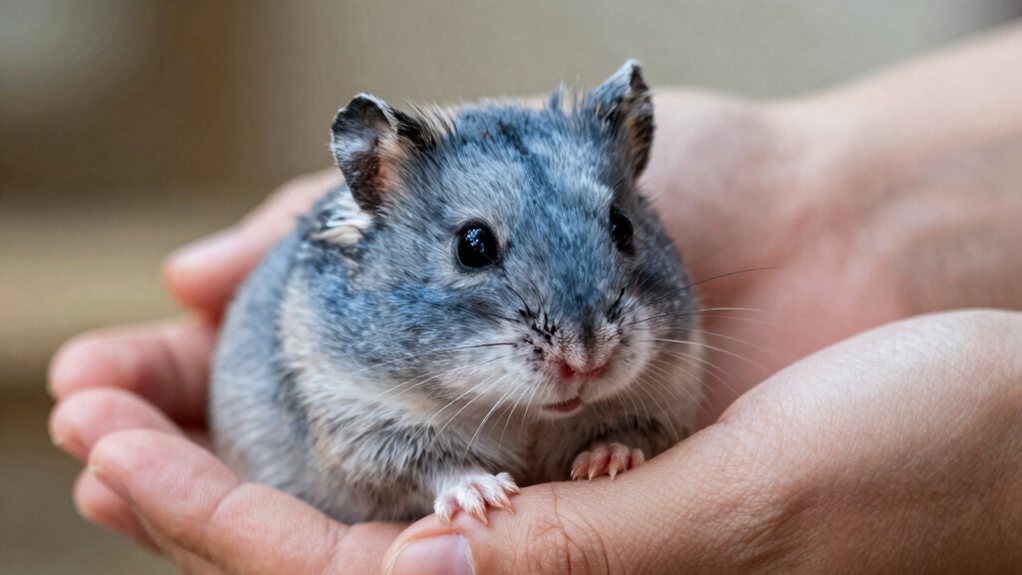
This condition is most common in Campbell’s and Winter White Russian dwarfs due to selective risk breeding in the pet trade.
Sadly, their genetics make them prone to it.
Roborovski dwarfs, however, are rarely affected.
Knowing your pet’s breed is your first clue.
It’s a serious topic, but understanding it helps you become the best hamster health advocate on the block! Additionally, feeding sugary foods can directly contribute to the development of this condition.
Spotting the Signs: Early Symptoms of Diabetes in Your Hamster
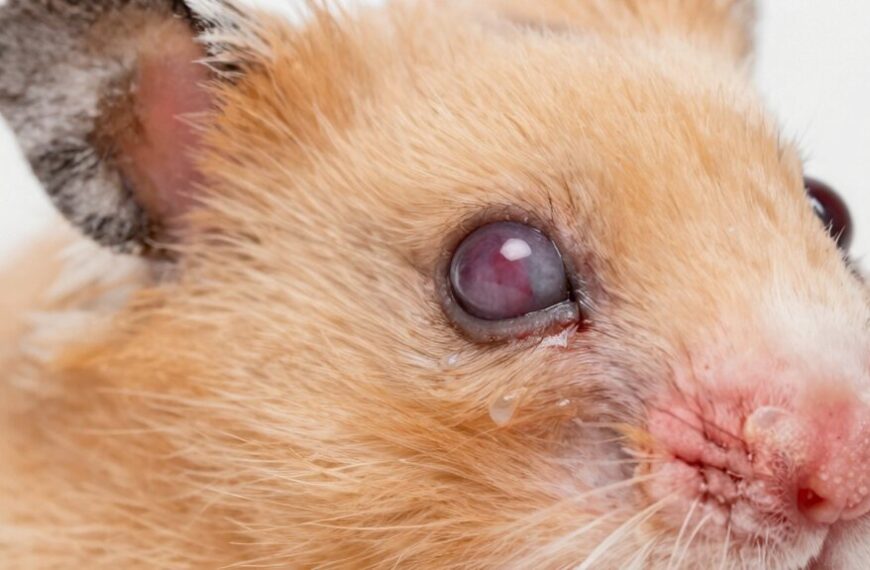
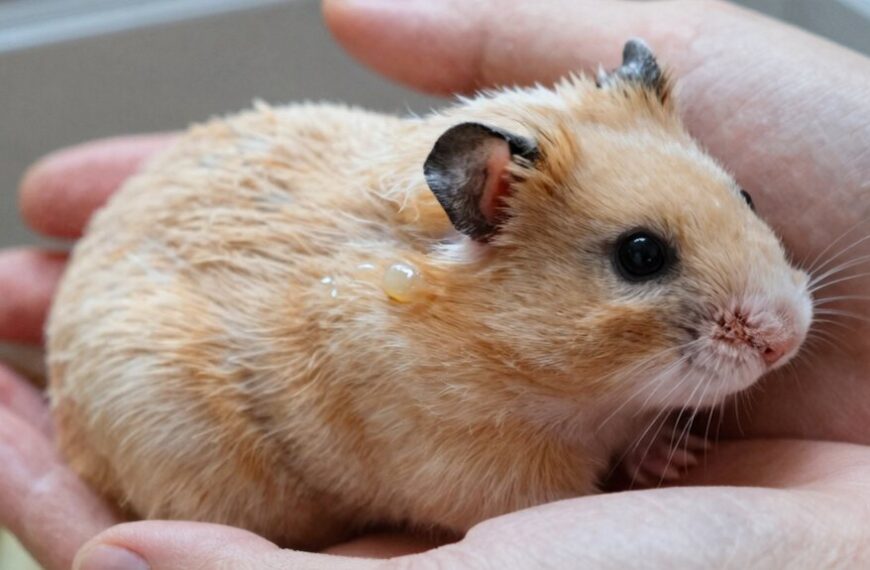
Pay close attention to their water bottle and food bowl. Excessive thirst and urination are major red flags; you might be refilling their bottle constantly.
Watch for appetite shifts, too.
They could start eating like a tiny champion yet still lose weight, which is confusing and worrying.
Their fur might also look unkempt.
While every hamster has an off day, a consistent pattern of these symptoms means it’s time for a vet visit. Catching diabetes early makes management much easier for both of you, and remember that a weakened immune system can make any pet more susceptible to illness.
Getting a Formal Diagnosis: When and How to See the Vet
Here’s your action plan:
- Log everything for a few days, noting even small changes in behavior.
- Call your vet to describe the symptoms and get their advice on timing.
- Prepare for the visit by bringing your log and a fresh stool sample, as daily poop checks are a key part of monitoring hamster health.
- Ask questions about the diagnosis process, like urine testing, so you understand each step.
Your careful observations are the first key to getting your tiny friend proper care.
The Diabetic Hamster Diet: The Cornerstone of Management

Managing your hamster’s diet is the most powerful tool you have to keep their diabetes in check, turning mealtime into a direct path toward better health.
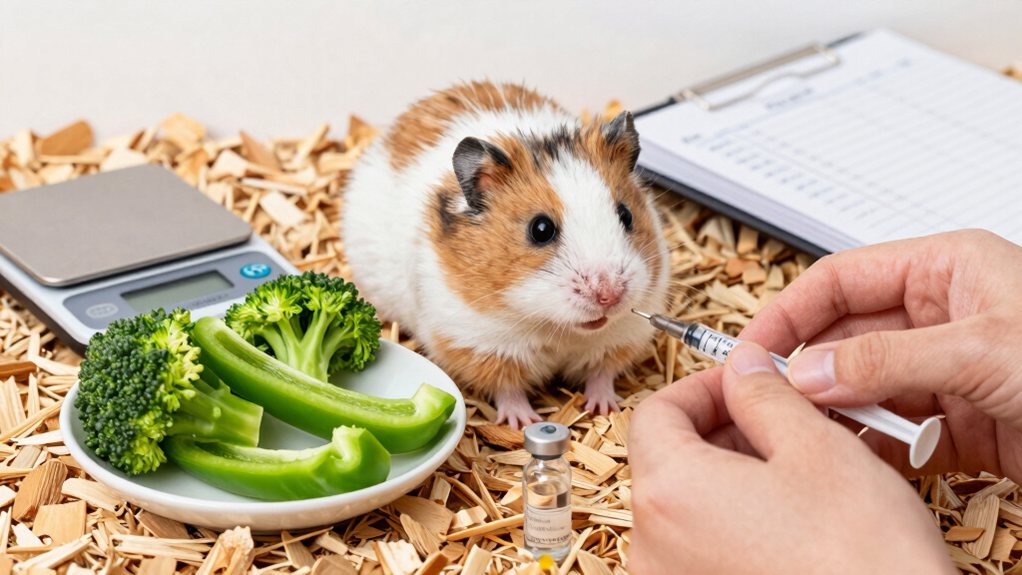
You’ll focus on low-sugar, high-fiber foods. Think high-quality timothy hay-based pellets and plenty of fresh, safe veggies like broccoli. You must ditch sugary fruits and commercial treats cold turkey.
Glycemic monitoring means watching how these foods affect your pet’s blood sugar, so you’ll learn what works.
For hydration, consider vet-approved wet food options, like a pureed veggie mix, which can be a lifesaver if your hamster struggles to drink enough.
It’s a careful menu, but seeing their energy return makes the effort so rewarding. Weekly weighing on a kitchen scale is crucial to detect early signs of weight change, a primary indicator of dietary issues.
Diabetic Hamster Food Guide: What to Include and What to Avoid
- Include: High-quality lab blocks, fresh veggies like broccoli, and limited plain cooked chicken.
- Avoid: All fruits, sugary commercial treats, corn, and wheat-heavy mixes, as even small amounts of natural sugars from fruit can disrupt blood sugar.
- Portion: Serve a teaspoon of pellets daily, adding a tiny veggie piece a few times a week.
- Treats: Try a single, plain pumpkin seed or a bit of scrambled egg as a special reward.
Tracking Progress: How to Monitor Weight and Water Intake at Home
After you’ve got your dwarf hamster’s diet on track, keeping an eye on their weight and water habits gives you a clear picture of how they’re doing. Weigh them weekly on a kitchen scale, and note it in a simple log. Sudden drops can be a red flag.
Track water intake by marking the bottle’s level each morning. A big increase might signal their sugar is high again. Combine this with regular grooming condition checks; a healthy coat often means stable health.
Don’t forget mobility behavior tracking—watch how they move on their wheel. Is their energy normal? You can also use interactive puzzle feeders to monitor their engagement and problem-solving skills during daily play, which can indicate mental alertness. This daily detective work helps you catch changes early, making you a proactive partner in their care.
Daily Care Essentials: Exercise, Enrichment, and Reducing Stress
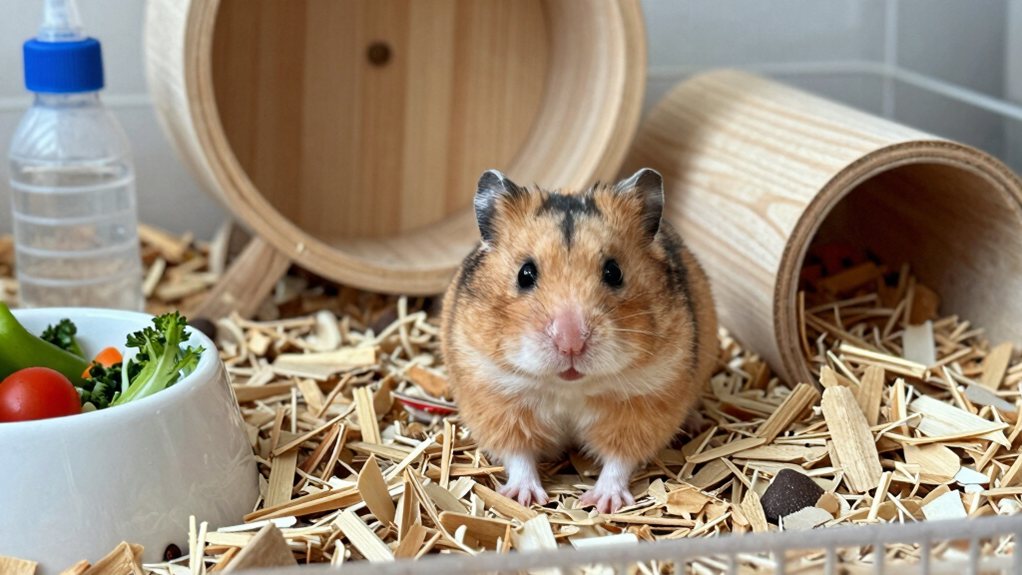
While you’re keeping tabs on your hamster’s health numbers, don’t forget that their daily happiness is just as important for managing diabetes.
Consistent, low-stress care helps regulate their condition.
For diabetic hamsters, a calm and predictable daily routine is a cornerstone of effective blood sugar management.
Establishing safe routines is key for your little friend.
- Encourage gentle morning handling when they’re naturally more active, building trust through calm, predictable interactions.
- Provide a solid-surface exercise wheel for safe nightly runs, which helps with weight management and blood sugar control.
- Offer puzzle feeders and foraging toys to mimic natural behaviors, turning mealtime into stimulating mental enrichment.
- Maintain a quiet, peaceful habitat away from loud noises, as stress hormones can negatively impact their glucose levels.
- Use a secure hamster playpen to provide a safe, enriching space for supervised exploration and exercise outside the cage.
This balanced approach supports their overall well-being alongside their medical plan.
Navigating Potential Health Complications
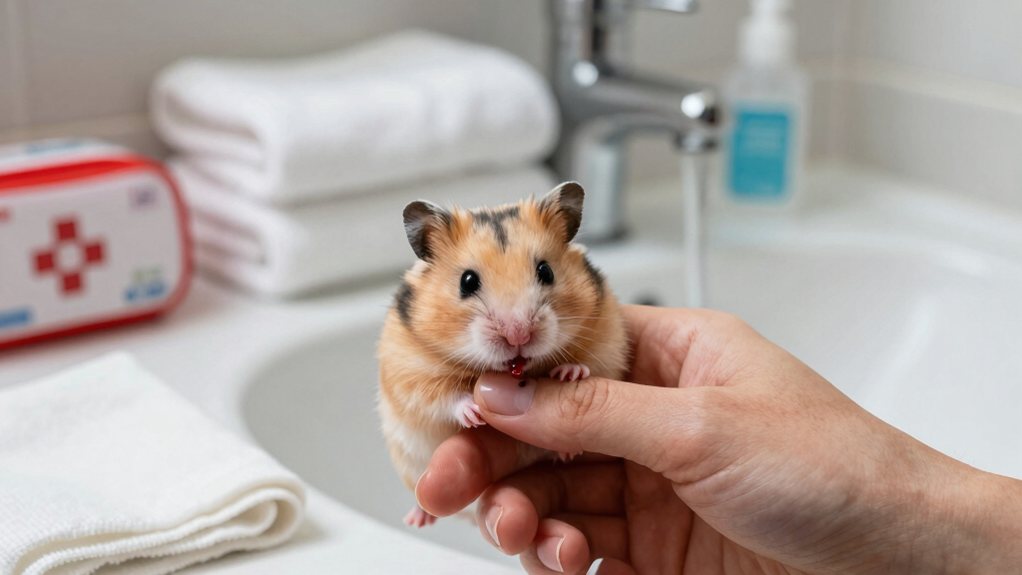
Even though you’re doing everything right with daily care, it’s smart to be aware of other health issues that can sometimes pop up alongside diabetes in dwarf hamsters. You’ve got to be a blood sugar detective, as Preventing Hypoglycemia is just as essential as managing high levels. If your hamster seems wobbly, lethargic, or extra sleepy, a tiny drop of honey on your finger can be a quick rescue, but always call your vet. Should your hamster bite during handling, remember that proper wound disinfection is crucial to prevent infection.
Long-Term Care for a Happy, Healthy Diabetic Hamster
- Stick to the diet, no sneaking them sugary treats, no matter how they beg!
- Monitor their weight and water bottle weekly to catch any changes early.
- Keep their habitat clean and stimulating to reduce stress, a major factor. Perform a full bedding replacement weekly to prevent odor and bacterial buildup that can complicate health.
- Celebrate the small wins together; a healthy, zooming hamster is the best reward.
Debunking Common Myths About Dwarf Hamster Diabetes
Now that you’re equipped with the daily care routines, you might be wondering about some of the stories and rumors you’ve heard about hamster diabetes. Let’s clear things up.
A common myth or diagnosis mix-up is that eating sugar alone causes the condition; the truth involves genetics and weight, so don’t blame that one blueberry.
Another major area involves treatment myths and cure falsehood. Diabetes isn’t curable, but it’s absolutely manageable with your care. Your hamster can still live a full, happy life.
Finally, those sugar misconceptions can be dangerous, some “healthy” treats are packed with hidden sugars. Always check labels, because managing this condition is about smart, informed choices, not fear. It’s also crucial to avoid foods with natural toxins like those in apple seeds, as a hamster’s tiny body is extremely vulnerable.
Final Thoughts
So, you’ve got a diabetic dwarf hamster.
Remember, with the right diet and care, you’re not solely managing a condition, you’re giving your little friend a long, happy life.
Stick to their vet-approved plan, watch for symptoms, and keep their world fun and stress-free.
It’s a commitment, but seeing them thrive is worth every bit of effort. You’ve got this!