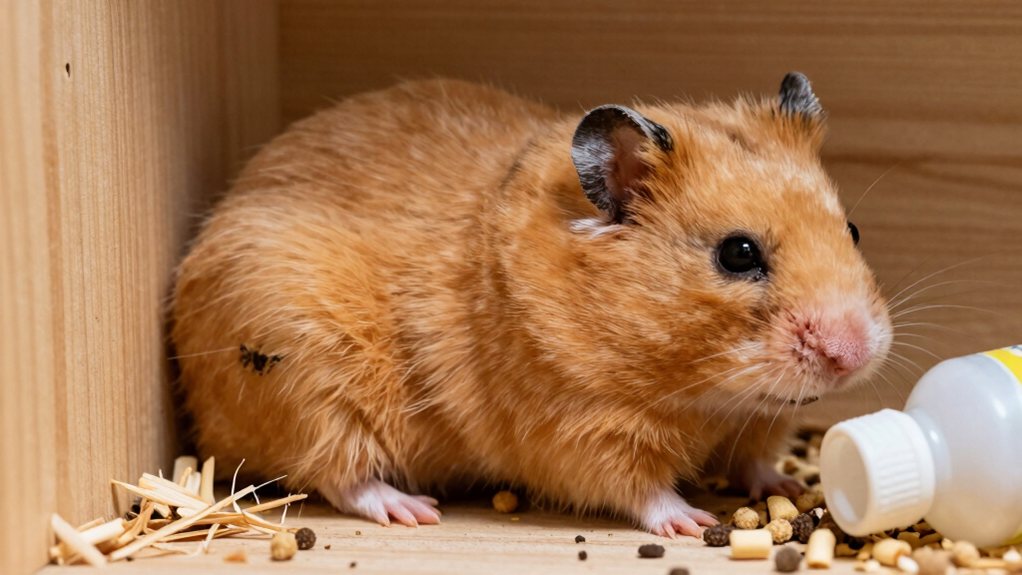
Your hamster might not tell you when they’re sick, but sneezing, wheezing, or goopy eyes could mean a respiratory infection. Wet tail brings smelly diarrhea and a hunched look, urgent care needed!
Watch for bald spots or scratching, which often point to mites. Drooling or weight loss may signal overgrown teeth. Lethargy, bloating, or skipping treats are red flags too. They’re pros at hiding pain, so trust your gut—you’ll spot the subtle clues others miss.
Why Sick Hamsters Hide Symptoms
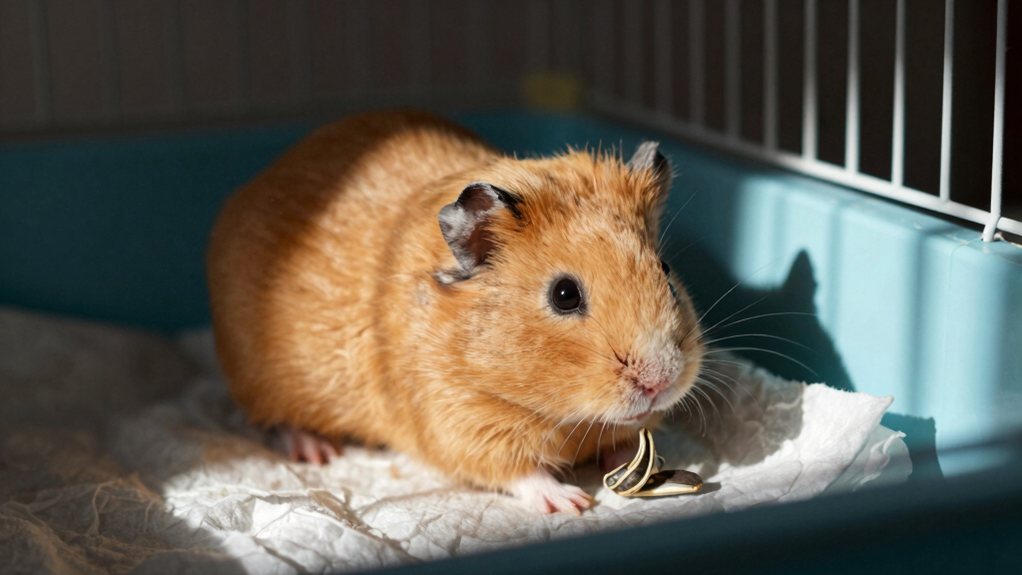
Even though your hamster might seem like a tiny ball of fluff with zero worries, the truth is, they’re experts at hiding when they’re feeling under the weather. It’s more than stubbornness. It’s all about survival behavior.
That quiet moment? It’s not calm—it’s camouflage. Your hamster hides illness to survive, not to ignore you.
In the wild, showing weakness makes a hamster an easy target, so they’ve evolved to keep quiet about their pain. That little guy’s silence? It’s a prey instinct kicking in hard. If they act sick, predators notice.
So, even when they’re struggling, they’ll still run on that wheel like nothing’s wrong. That’s why it’s on you to pay close attention.
Subtle signs, like less chattering, messy fur, or skipping treats, can be red flags.
Don’t wait for dramatic symptoms. By spotting the small changes early, you’re not just being observant. You’re being their hero.
A delay in treatment for conditions like wet tail can lead to rapid deterioration due to its high fatality rate in young hamsters.
Respiratory Infections: Sneezing and Labored Breathing
If your hamster starts sneezing or you spot a bit of nasal discharge, don’t just brush it off like a dusty cage toy. These could be early red flags.
Labored breathing, a wet-looking nose, or even a little wheeze might mean your tiny friend is fighting a respiratory infection.
Think of it like a hamster cold, except way less cute and definitely worth a vet trip.
Sneezing And Nasal Discharge
That little sneeze from your hamster might seem cute at first, like they’re just dusting off their tiny nose. But it could be a sign of something more serious.
If your hamster keeps sneezing or has a runny nose, it might be more than merely a cold. Nasal discharge can point to respiratory infections, especially if the mucus is thick or yellowish.
Watch for nasal blockage, which makes breathing through the nose tough. Your hamster might start breathing through its mouth or seem extra tired.
Irritant exposure from dusty bedding or strong cleaners can also trigger sneezing, so check what’s in their habitat.
While an occasional sneeze is normal, frequent ones need attention. Keep their space clean, use safe bedding, and call your vet if symptoms stick around.
You’ve got this. Your quick action could make all the difference!
Labored Breathing Signs
Ever wonder why your hamster suddenly sounds like a tiny, wheezy steam engine? Labored breathing is a red flag, especially if it follows sneezing or nasal discharge.
If you notice your hamster struggling to breathe, with flared nostrils or a visibly moving chest, it could mean chest tightness from a respiratory infection.
They might sit hunched, look tired, or even gasp—signs of oxygen deprivation that need quick action.
You know how hard it’s to run after a deep breath? For your hamster, it’s worse. Don’t wait.
While it’s easy to panic, stay calm and call your vet. Early care can make all the difference.
Think of it like a cold turning serious, except your hamster can’t tell you they’re struggling. Keep their space warm, clean, and stress-free.
You’ve got this—and so can they, with your help.
Poor cage hygiene can contribute to respiratory issues, as ammonia from urine buildup irritates the lungs and worsens breathing difficulties.
Wet Nose And Wheezing
What’s that sniffle? If your hamster has a wet nose and you hear wheezing, it might be more than just a chilly draft. These signs often point to a respiratory infection, which can sneak up fast.
Unlike an occasional sneeze, persistent wetness around the nose and audible wheezing mean your little buddy is struggling to breathe.
You might also notice him huddling more, eating less, or looking a bit puffed up.
It’s like when you have a cold, but for hamsters, it’s way more serious, so don’t wait.
While it’s tempting to blame the dusty bedding (sometimes guilty!), only a vet can give the right treatment. Think antibiotics, not tea and honey.
Keep the cage clean, warm, and draft-free.
Catching it early? That’s your golden ticket to a snuggly, healthy hamster again.
Wet Tail: Diarrhea Emergency in Hamsters
If your hamster has runny poop and seems extra grumpy, it might be dealing with wet tail, a serious but treatable issue.
This nasty bug often hits young hamsters hard, usually brought on by stress or a dirty home, so keep an eye out for lethargy and a wet bottom.
Don’t panic, but do act fast. Call your vet right away, because quick care can make all the difference.
Symptoms To Watch
Why do some hamsters go from perky to downright pitiful in just a day? It’s often because symptoms can be false alarms or signs of a hidden illness. You might think your hamster’s just grumpy, but a hunched back, messy tail, or refusal to eat could mean wet tail, a serious diarrhea emergency.
Don’t brush off a once-bouncy buddy now sleeping all day. Wet tail hits fast, so catching it early saves lives. Look for wetness around the rear, a strong smell, or sunken eyes. These aren’t just “off days”—they’re red flags.
And yes, even if your little furball seems fine, stress from moving or a new home can trigger it. So stay sharp. Your quick eye could turn a scary situation around.
After all, you’re their hero—even if they don’t throw you a thank-you party. Though a tiny fist bump would be cute.
Causes And Triggers
You’ve seen the warning signs, your hamster’s not bouncing around like usual. Maybe they’re hunched up or looking a little ragged.
Wet tail, a serious form of diarrhea, can hit fast and hard. While it’s scary, knowing the causes helps you protect your tiny buddy. Some hamsters have a genetic predisposition, especially young ones, making them more vulnerable.
But it’s often environmental stressors that flip the switch, like moving homes, loud noises, or even a change in diet.
Think of your hamster like a tiny roommate who hates drama. Keep their space calm, clean, and consistent.
Sudden changes? Not their thing.
Lower stress, and you lower the risk. You’ve got this, just be their chill guardian, and you’ll help them stay happy, healthy, and tail-wagging free, well, as much as hamsters do.
Urgent Care Steps
What do you do when your hamster’s looking droopy and you spot that telltale wetness around their tail?
Don’t panic, but do act fast.
Wet tail is a serious diarrhea emergency, especially in young hamsters, and every hour counts.
First, practice immediate isolation to protect other pets and reduce stress.
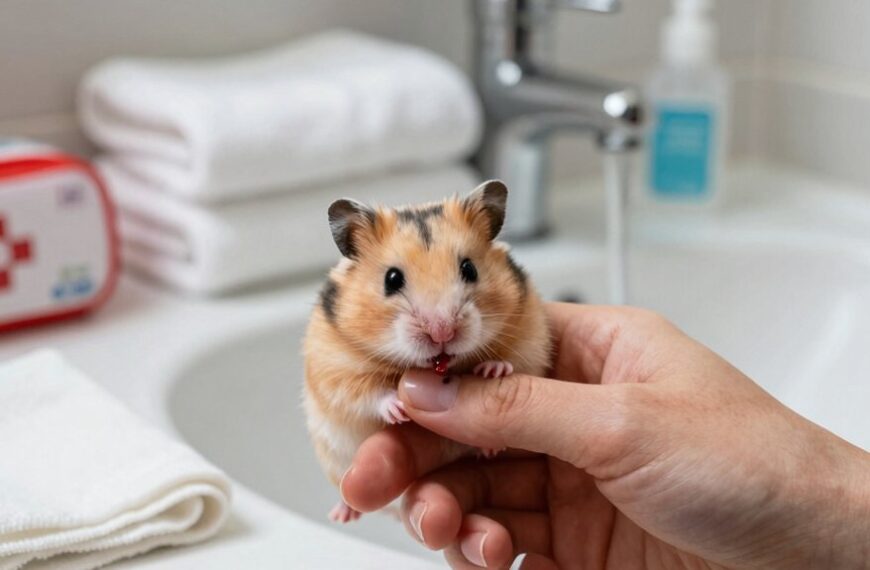
Gently clean your little buddy’s rear with a warm, damp cloth.
No baths.
Then, call your emergency vet right away.
This isn’t a “wait-and-see” situation.
Keep your hamster warm with a cozy blanket or heating pad on low, but not too hot.
Offer fresh water and maybe a bit of baby food to keep them hydrated and fed.
It’s scary, but quick action gives your tiny friend the best shot.
You’ve got this, and so do they.
Skin Mites and Bald Spots: Itchy Hamster?
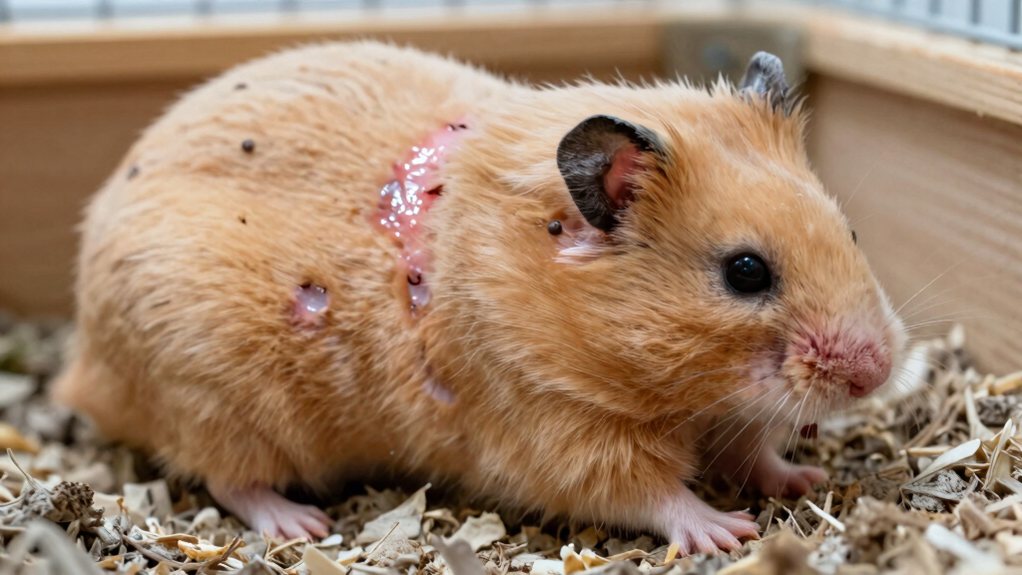
Ever catch your hamster scratching more than a stand-up comedian at a flea convention? If so, skin mites might be the sneaky culprits. These tiny pests cause serious skin irritation, leaving your little buddy itchy, restless, and uncomfortable.
You might notice fur loss around the ears, face, or back, patchy spots where your hamster’s usually fluffy.
Don’t panic, though. Mites are treatable. Take your hamster to the vet, who’ll likely prescribe a safe, topical solution.
In the meantime, give their cage a deep clean to ditch any lingering mites. Keep bedding fresh and avoid overcrowding, since stress can worsen symptoms.
Spotting fur loss early means faster healing. Your hamster counts on you to spot the signs and act fast.
Overgrown Teeth and Drooling: Dental Dangers
Why do hamsters chew on everything in sight? Because their teeth never stop growing! Without enough hard foods to wear them down, your little buddy can develop overgrown teeth, leading to pain and trouble eating. You might notice drooling, weight loss, or picky eating, signs something’s wrong.
Excessive gnawing is normal, but if it seems frantic or your hamster avoids food, check those chompers. Unlike tooth decay in humans, hamsters don’t get cavities, but misaligned or overly long teeth can cut their tongue or gums. Yikes!
The good news? You can help. Offer safe chew toys, wooden blocks, or hard veggies like carrots. These keep teeth trimmed and jaws strong. Think of it as nature’s dental plan!
Stay alert, stay calm, and keep the crunchies coming, your hamster’s smile depends on it.
A great option is providing chews made from untreated fruit woods like apple or peach, which effectively support natural tooth wear.
Diarrhea, Bloating, and Appetite Loss
Ever notice how your hamster usually zooms around with boundless energy, then suddenly seems a little… off? If your tiny buddy has diarrhea, won’t eat, or looks bloated, it might be more than just a bad day. Digestive discomfort in hamsters can sneak up fast.
Loose stools, gassiness, or abdominal swelling are red flags.
You might even catch your hamster hunched up or less enthusiastic for treats. These signs often point to infections, bad diet, or stress.
Don’t panic, but do act fast. Hamsters hide illness well, so early care is key.
Swap wet foods, offer plain hay and water, and call your vet. A little bellyache for them can turn serious quick.
Think of it like a tiny tummy tornado. Nobody wants that. With quick love and help, your hamster can bounce back to bedtime wheel marathons in no time.
Ingestion of apple seeds can lead to cyanide poisoning, which may cause similar digestive and systemic symptoms.
Lethargic Hamster? Key Behavioral Red Flags
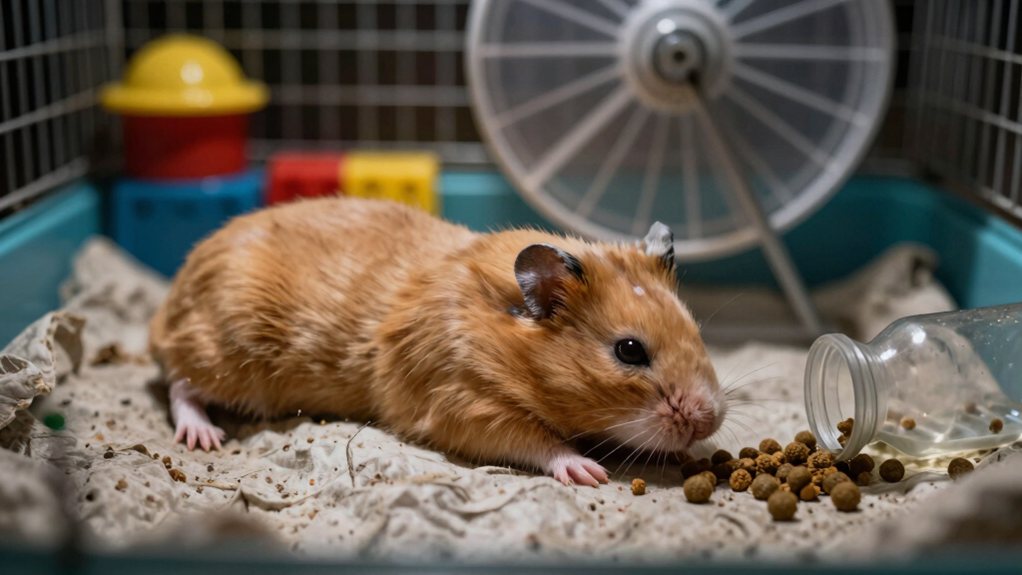
What’s going on when your usually zippy hamster suddenly moves like they’re wading through peanut butter? A lethargic hamster might be more than merely tired, it could signal something’s off.
Watch for behavioral changes like sleeping more, ignoring treats, or barely touching their wheel.
If your little buddy isn’t grooming or seems clumsy, that’s a red flag.
These shifts don’t always mean disaster, but they’re your cue to pay closer attention.
Maybe it’s a chill, or maybe it’s something more serious like an infection or dental issue.
Either way, early action helps.
Keep their space warm and quiet, and don’t wait.
Call your vet.
You know your hamster best, and your hunch matters.
Think of yourself as their tiny superhero.
Spotting these signs early, that’s half the battle won.
A noticeable decline in activity may also be linked to energy and activity decline as part of the natural aging process or underlying illness.
Final Thoughts
You know your hamster best, so trust your gut if something feels off. These tiny pals hide illness well, but now you’ve got the scoop to catch problems early.
Watch for sneezes, soggy tails, itchy scratches, or grumpy eating habits. They’re clues, more than mere quirks. A little vigilance goes a long way, and yes, even heroes need vet checkups.
Stay sharp, stay kind, and keep that little wheel spinning happily.