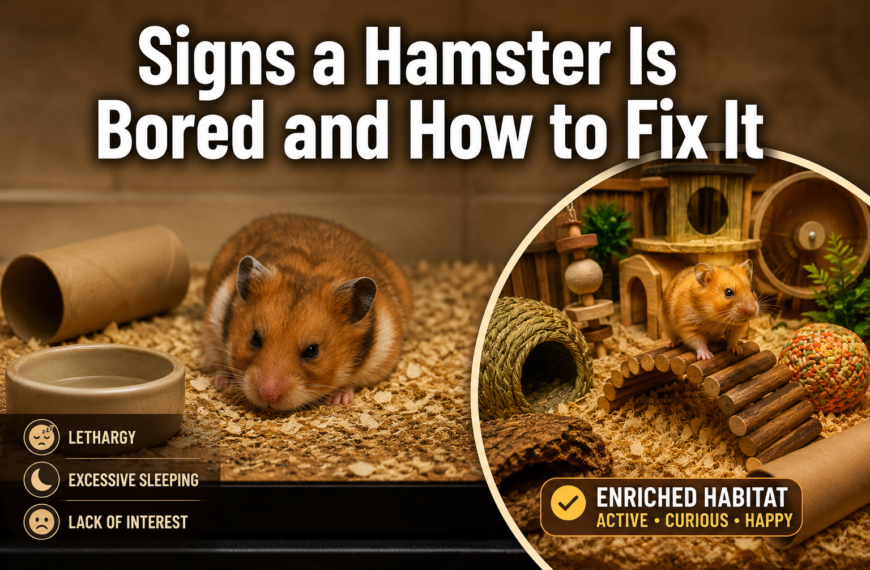
Yes, your hamster absolutely gets bored. Staring blankly at cage bars isn’t zen, it’s stress. Without toys, tunnels, or changes, they get anxious, chew bars, or pace like tiny prisoners.
But you’ve got the power to help. Rotate chew toys weekly, add hidden treats, and build cardboard obstacle courses. A digging box or puzzle feeder turns dull days into adventure.
Stick to simple daily habits—just 5 minutes—and watch their world come alive with curiosity and zoomies. There’s a whole playbook of fun fixes waiting to try.
Do Hamsters Get Bored? (And What Are the Signs?)
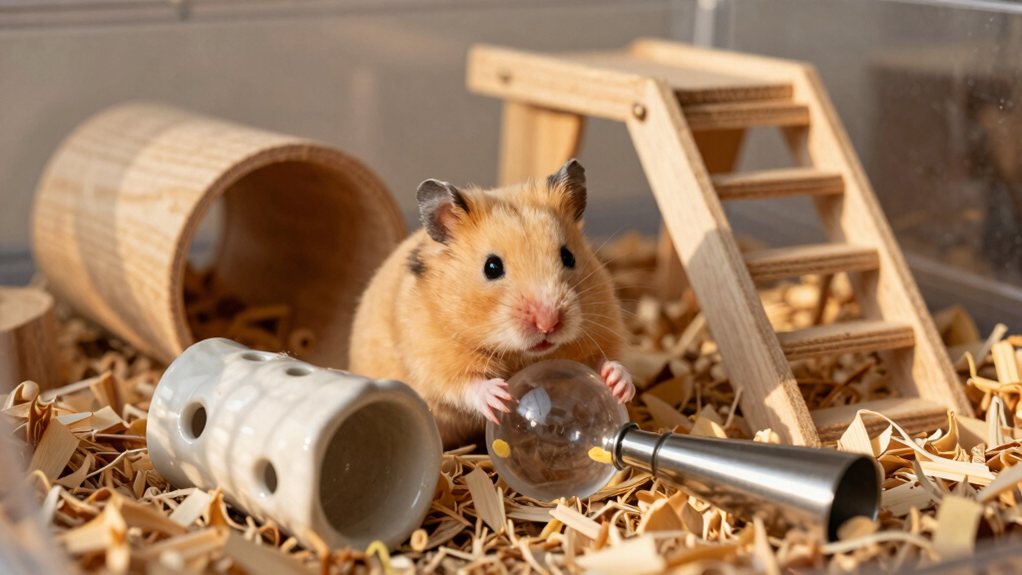
Ever wonder if your hamster’s just zoning out in that corner of the cage, or actually wishing for something more?
While we can’t ask them directly, signs suggest hamsters do feel boredom, yes, they’ve hamster emotions too!
If your little buddy starts chewing the bars, digging nonstop, or pacing like it’s training for a tiny marathon, it might be cage stress.
These behaviors often mean they need more mental and physical stimulation.
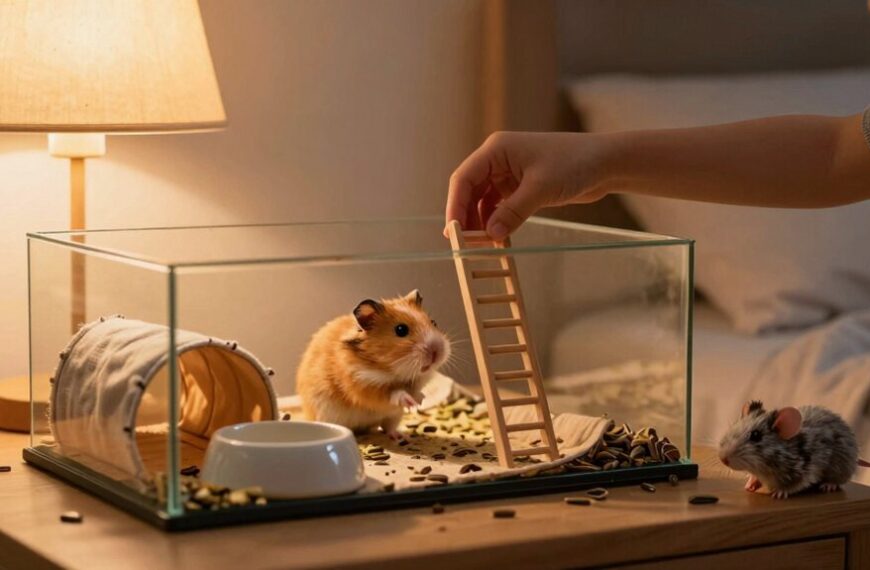
You don’t need a theme park, but switching up cage decorations regularly helps.
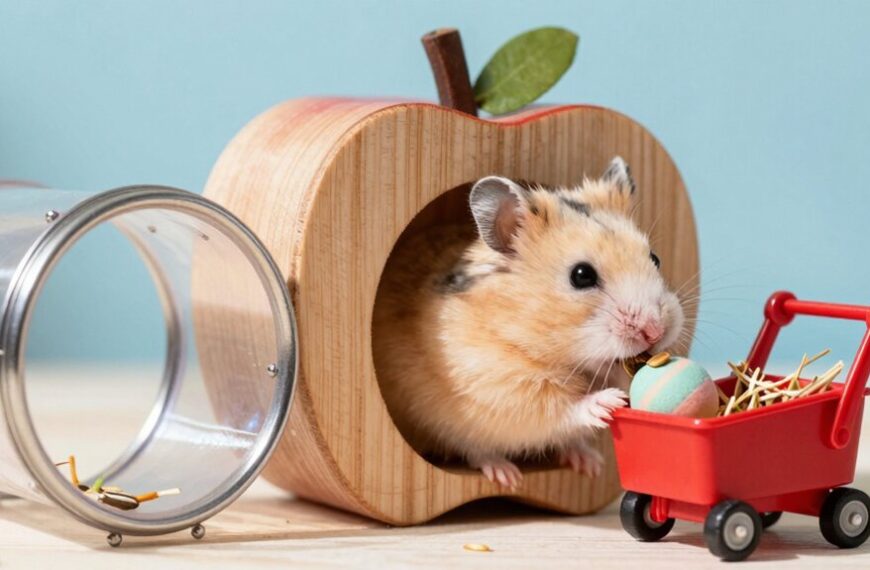
Try tunnels, chew toys, or a new hideout every week.
It’s like redecorating your living room, keeps things fresh!
A bored hamster isn’t just sad, it can lead to health issues.
So, keep things fun and varied.
Your furry pal mightn’t throw a party, but trust us, they’ll show their joy by being active, curious, and way less obsessed with escape plans.
Providing appropriate chew toys made from safe materials is essential for both dental health and mental engagement, especially since hamsters must chew to manage ever-growing teeth. Natural gnawing behavior helps prevent dental overgrowth and reduces destructive cage biting.
Why Boredom Hurts Your Hamster’s Health
You know that restless feeling when you’ve binge-watched everything on TV and still have energy to burn? That’s exactly how your hamster feels without enough mental stimulation, those tiny brains need fun challenges too.
Without them, your little buddy might start chewing the cage or zoning out. And trust me, you’d rather see him zigzagging on his wheel than acting like a grumpy couch potato.
A lack of stimulation can lead to a condition known as cage rage, where hamsters display stress-induced behaviors like bar chewing, pacing, and aggression due to confinement in small, unenriched environments.
Mental Stimulation Matters
What’s going through your hamster’s mind as they sprint on their wheel at 2 a.m.? Probably more than you think!
Mental stimulation matters just as much as food and water for your tiny buddy. Without it, boredom can lead to stress, over-grooming, or even depression.
You don’t want your hamster zoning out like they’re stuck in a tiny, furry prison. Keep their brain buzzing with fun challenges!
- Rotate toys weekly to spark sensory exploration
- Hide treats for them to sniff out (hello, treasure hunt!)
- Set up mini obstacle courses using cardboard tunnels
- Spend time daily for gentle social interaction
A little creativity goes a long way. A stimulated hamster is a happy, healthy hamster, plus they’ll entertain you while you laugh at their midnight marathons.
Foraging toys made from natural grasses can significantly enhance mental engagement while supporting dental and digestive health.
Preventing Behavioral Issues
A hamster with nothing to do isn’t merely sitting around quietly. They’re likely spiraling into habits that can harm their health.
Without mental challenges, your little buddy can suffer from social isolation and environmental monotony, even though they’re naturally solitary.
You might notice them chewing bars, pacing, or over-grooming. These are red flags that boredom’s taking a toll.
These behaviors aren’t quirky. They’re cries for stimulation.
The good news is you’ve got the power to help. Rotate toys weekly, add tunnels, and hide treats to spark curiosity.
A cardboard tube maze? Yes, please.
Enrichment doesn’t need to be fancy—just consistent.
Think of it as hamster daycare with snacks.
By mixing up their world, you’re not merely fighting boredom; you’re boosting well-being.
Keep things fresh, and your hamster will stay active, happy, and way less likely to turn your cage into a chew toy convention.
Introducing a puzzle feeder with multiple compartments can significantly increase foraging time and mental engagement.
Best Chew Toys to Beat Hamster Boredom
Ever wonder why your hamster’s always gnawing on the cage bars or shredding its bedding into tiny confetti? Chances are, it’s bored and craving something to chew.
Hamsters need safe, sturdy toys that match their strong teeth and curious nature. The right chew toys offer great chew textures and exceptional toy durability, so they last longer and keep your little buddy entertained.
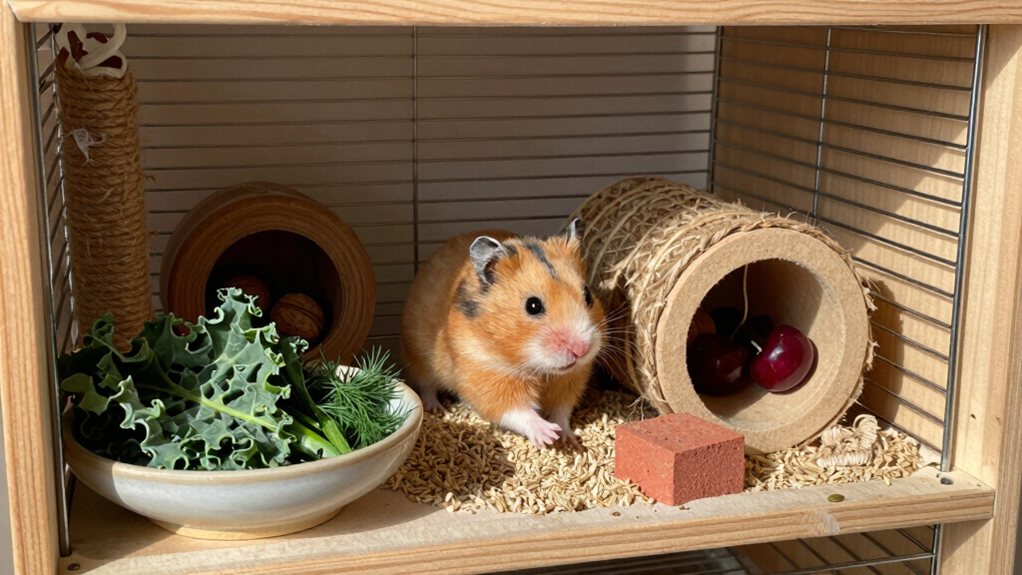
- Wooden chews – Natural, safe, and perfect for satisfying that gnawing instinct
- Cardboard tubes – Easy to shred, fun to explore, and totally replaceable
- Unsalted veggie sticks – A tasty chew that doubles as a snack
- Hard plastic tunnels – Durable, chew-resistant, and great for play
Switch them out weekly to keep things fresh. Your hamster will thank you with fewer bar bites and more happy zoomies.
A variety of natural, non-toxic materials ensures dental health and prevents boredom through safe chewing.
How to Make a Digging Box Your Hamster Will Love
While your hamster mightn’t ask for a sandbox by name, giving them a place to dig can turn a bored little buddy into a busy builder in no time.
Grab a shallow container, like a plastic bin or old baking dish, and fill it with safe digging textures such as shredded paper, coconut fiber, or plain soil (pesticide-free, please!).
Your hammy will go nuts for the chance to burrow and tunnel, which taps right into their natural instinct for sensory exploration.
Watch your hamster thrive as they dig and tunnel, following their instinct to explore, discover, and create in their very own little world.
Sprinkle in some hidden treats or tiny toys, and watch them dig with purpose.
Just keep the box clean and swap materials weekly.
Think of it as their personal zen garden, minus the raking.
It’s simple, fun, and gives your little digger a mental boost.
You’ll both smile when they pop up, covered in shavings, looking proud.
Who knew dirt could bring so much joy?
A great way to complement digging play is by adding a natural wood climbing toy to your hamster’s habitat for enhanced physical and mental stimulation.
Turn Playtime Into Adventure: Build a DIY Obstacle Course
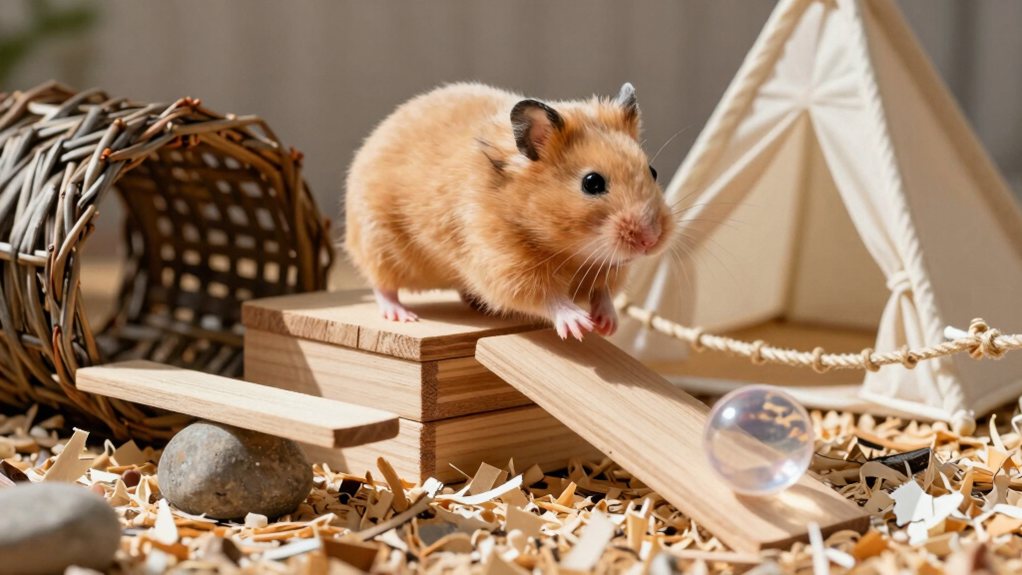
What if your hamster’s next play session felt more like an episode of *Tiny Animal Ninja Warrior*? You can make it happen! Turning playtime into adventure with a DIY obstacle course keeps your hamster mentally sharp and physically active.
The best part? You don’t need fancy gear—just a little course creativity and everyday items.
An empty toilet paper tube becomes a tunnel, a small cardboard box turns into a fortress, and a wooden spoon propped on books makes a perfect ramp.
Focus on safe obstacle design, avoiding sharp edges or small parts they could chew and choke on.
Use toilet paper rolls as tunnels.
Stack books (securely!) for climbing levels.
Add a spoon bridge between boxes.
Hide treats to spark exploration.
Watch your tiny athlete scramble, sniff, and conquer—it’s pure joy with purpose.
Always ensure the play area is a secure play zone to prevent escapes and protect your hamster from household hazards.
Rotate Toys Weekly: Here’s Why It Matters
You know how you’d get tired of doing the same thing every day? Well, your hamster feels that too. Rotating their toys weekly keeps their brain buzzing and stops them from zoning out in front of the same old tunnel.
Mixing things up fights off habituation, sparks their natural urge to forage and honestly, makes your tiny buddy’s life way more fun.
Think of it as a mini surprise party for your furball—no cake, but plenty of cardboard tubes and giggles from you.
A great way to maintain engagement is by including a treat dispenser with adjustable openings to control difficulty and match your hamster’s skill level.
Rotating Toys Keeps Minds Active
Since your hamster’s world is mostly their cage, keeping things fresh helps prevent them from zoning out like a kid stuck on reruns of the same cartoon.
Rotating toys weekly isn’t merely fun. It’s key for sensory exploration and cognitive challenges that keep their tiny brains buzzing.
A stale setup can lead to stress, but a little variety sparks curiosity and joy.
- Swap out tunnels and chew toys every week to encourage sensory exploration
- Introduce puzzle feeders for tasty cognitive challenges
- Use cardboard boxes or loo rolls for cheap, fun hideaways
- Let them “discover” items by hiding treats in new toys
You’re not merely cleaning. You’re upgrading their adventure.
A little change goes a long way in making their world feel big, exciting, and full of surprises. They’ll thank you with happy zoomies.
Prevents Habituation To Familiar Objects
A hamster’s curiosity doesn’t take coffee breaks, it’s always on, always sniffing, always exploring.
If you leave the same toys in the cage week after week, your little buddy starts zoning out. It’s like rewatching the same episode of a show they’ve already binge-ducked.
That’s where rotating toys weekly saves the day. Introducing a novel object keeps their brain buzzing with excitement. Think of it like surprise delivery, but for hamsters.
This habit boosts sensory variety improvement, engaging their sight, smell, and touch in fresh ways.
Without it, they get too comfy, and boredom sneaks in like an uninvited guest. You’re not simply cleaning a cage, you’re curating an ever-changing playground.
Adding natural bedding and bathing materials enhances grooming behaviors and supports a dynamic, stimulating environment.
Encourages Natural Foraging Behavior
- Hide treats to encourage food hiding and mental workouts
- Lay down safe scent trails using herbs like parsley
- Swap toys weekly to spark curiosity
- Use cardboard tubes and boxes for DIY foraging
It’s more than play, it’s purpose.
And honestly, watching them work for snacks is half the fun.
Cardboard toys are safe and enriching when made from plain, unbleached cardboard to avoid exposure to harmful chemicals.
How to Bond With Your Hamster Without Scaring Them
Ever wonder why your hamster freezes like a tiny, furry statue when you reach into the cage? It’s not because they’re practicing for a wildlife documentary, they’re just nervous.
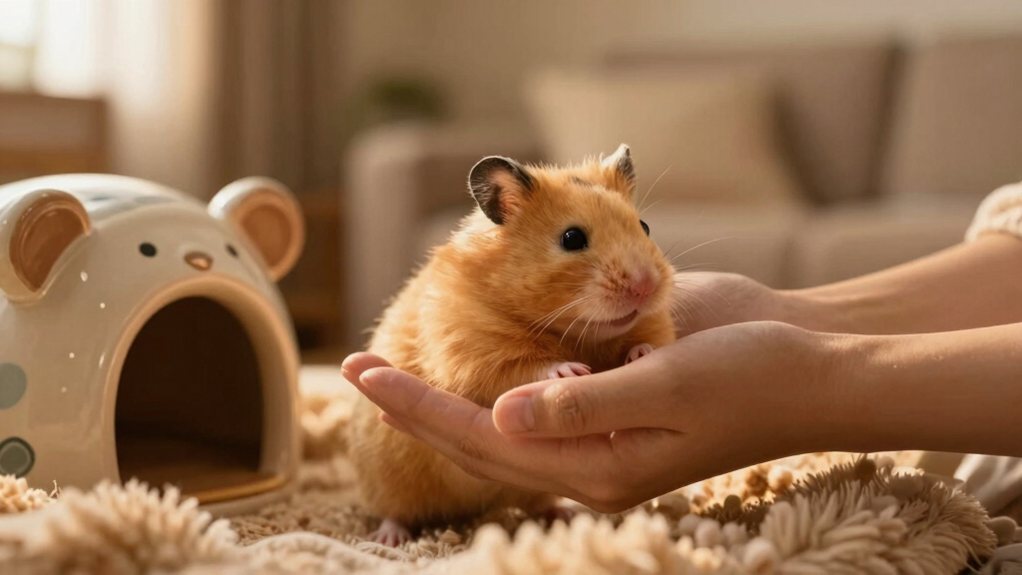
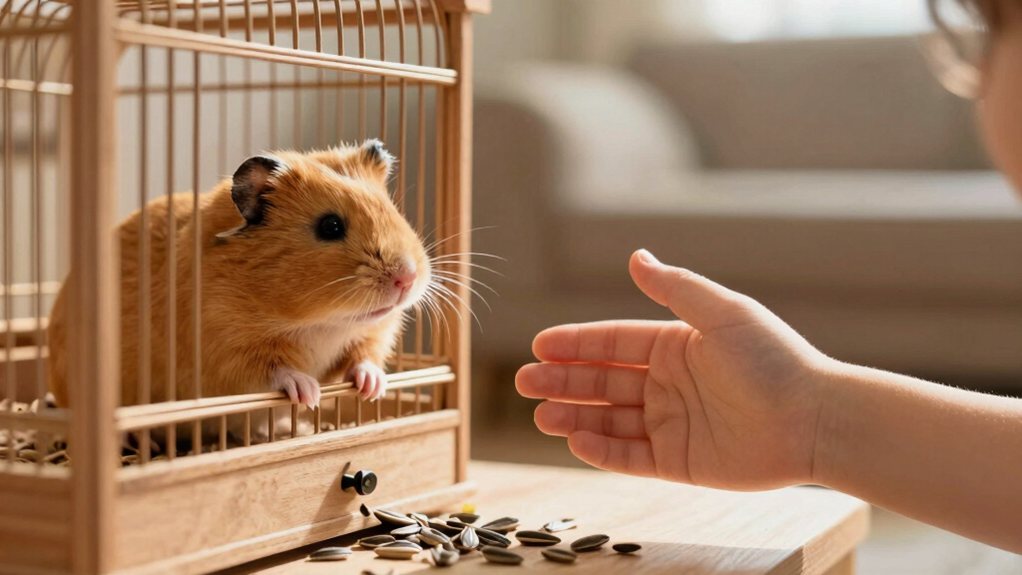
To build trust, start with gentle handling. Let your hand rest in the cage for a few minutes so they can sniff and investigate. No sudden moves!
Offer a treat from your palm, letting them come to you. Over time, this trust building turns fear into friendship. Talk softly, move slowly, and respect their tiny personal space.
Picking them up too fast? That’s a one-way ticket to Panic Town. Instead, scoop them gently with both hands, like you’re holding a crumbly cookie.
With patience, your hamster might even nap in your hoodie pocket. It’s not magic, it’s mutual respect, a little love, and yes, the occasional sunflower seed bribe.
Safe Out-of-Cage Play: Tips & Setup
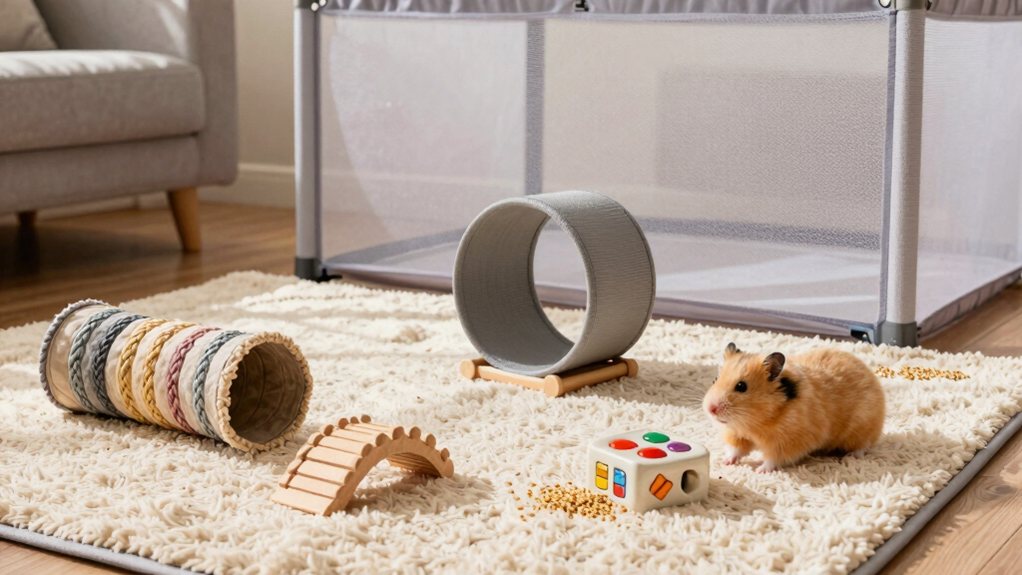
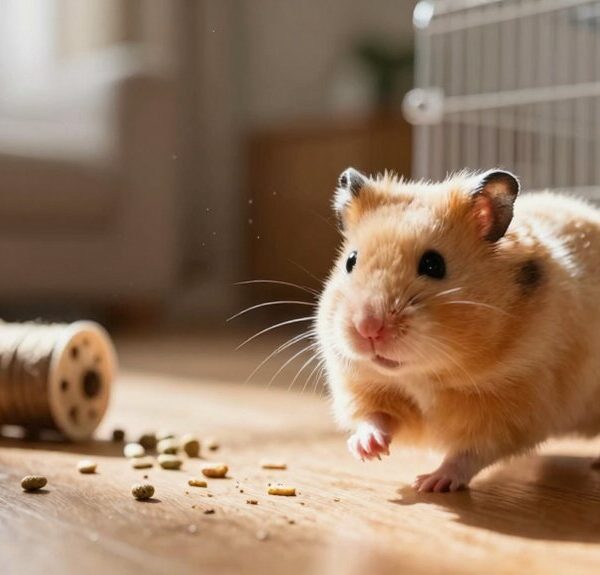
Where should your hamster adventure when they’re not in their cage? Giving your little buddy safe out-of-cage playtime keeps them from getting bored and supports good hamster hygiene by letting them stretch and explore.
Just like you wouldn’t want to stay in your room all day, your hamster needs a change of scenery, minus the cage lighting glare!
Set up a playpen with soft bedding and chew toys.
Supervise at all times, yes, even when they’re zooming like a tiny furry racecar.
Remove hazards like cords or small spaces they could squeeze into.
Keep the room warm and quiet to reduce stress.
A little freedom goes a long way in boosting their mood and health.
Just remember: fun + safety = happy hamster, happy you!
Boredom-Busting Ideas for Syrians, Dwarfs, and Robos
You know your hamster’s got energy to burn, so keep things fresh by rotating chew and dig toys every few days.
Trust me, a cardboard tube today beats yesterday’s plastic tunnel.
Spend a few minutes each day playing with your Syrian, Dwarf, or Robo.
They’ll perk up fast when you turn hand-feeding into a mini game or let them explore a safe maze.
And hey, toss in a tunnel network, because nothing says “happy hamster” like watching them zip through tubes like tiny, furry commuters.
Rotating Chew And Dig Toys
How do you keep your hamster from turning its cage into a tiny theater of repetitive tumbles and endless wheel spins?
Simple: mix up their chew and dig toys regularly.
Chew rotation and dig variety aren’t merely cute phrases.
They’re hamster happiness hacks.
When you switch things up every few days, your little buddy stays curious, not cranky.
- Try cardboard tubes one day, then wooden chews the next
- Swap out shredded paper for soil-safe digging blocks
- Hide treats in puzzle toys to spark foraging fun
- Rotate in natural loofah or seagrass for new textures
You’re not merely cleaning a cage.
You’re directing a tiny adventure series starring your furball.
Boredom? Not on your watch.
With fresh textures and surprise snacks, your Syrian, Dwarf, or Robo will stay mentally sharp and wildly entertained.
A little variety goes a long way.
Just ask your hamster. They’ll thank you with zoomies.
Interactive Playtime For All Breeds
Ever wonder what your hamster dreams about during those long afternoon naps? Probably chasing tunnels, crunching snacks, and showing off in a tiny obstacle course, because interactive playtime isn’t merely fun: it’s crucial.
All breeds, from laid-back Syrians to speedy Robos and curious dwarfs, thrive on social interaction and sensory exploration.
Spend 10–15 minutes daily letting them explore a playpen, crawl through toilet paper tubes, or sniff out hidden treats.
Use tunnels, mirrors, and safe household items to spark curiosity.
Your presence matters. Talk softly, offer your hand, and let them climb on you, supervised, of course. It builds trust and breaks boredom.
Think of it as hamster happy hour: part adventure, part bonding.
You’re not merely preventing cage stress—you’re becoming their favorite part of the day.
Who knew tiny paws could need such big fun?
Tunnel Networks For Natural Behavior
Hamsters don’t just like tunnels, they’re hardwired to explore them.
In the wild, your little buddy spends hours tunneling through soil, hunting for snacks and staying safe.
Replicating that burrow simulation in their cage keeps their mind sharp and boredom at bay.
Tunnel exploration isn’t just fun, it’s natural behavior your hamster craves.
Whether you’ve got a big Syrian or a tiny Robo, a solid tunnel network turns cage time into adventure time.
- Use chew-safe cardboard or plastic tubes to build branching paths
- Add hidden treats at tunnel ends to spark curiosity
- Connect multiple levels for extra climbing and exploring
- Let Your Dwarf Hamster “Commute” Between Hideouts Like A Furry Subway Rider
Watch Them Zip Through Like Tiny Explorers On A Mission, You’ll Both Smile.
5-Minute Daily Habits to Prevent Cage Stress
What if the secret to a happy hamster isn’t grand gestures, but tiny daily moments you barely notice?
You don’t need fancy toys, just consistency.
Adjust cage lighting effects by keeping the area dim at night. Hamsters are nocturnal, so bright lights stress them out.
Stick to a routine that respects their hamster sleep patterns. Disturbing them during the day is like waking a grumpy teen!
Spend a minute each morning checking bedding, adding a sprinkle of fresh veggies, or rotating a tunnel.
Even 60 seconds of gentle interaction builds trust.
Swap out one chew toy weekly. Novelty keeps their brain buzzing.
These micro-habits add up, turning cage time into enrichment time.
It’s not about doing more, just being present in small ways.
Your hamster mightn’t throw a party, but their calm nibbles and curious sniffing? That’s joy.
And honestly, isn’t that kind of adorable?
Final Thoughts
You’ve got this! A little time and creativity go a long way in keeping your hamster happy and stress-free. Watch for those tiny signs of boredom—they’re more than being dramatic.
Chew toys, digging boxes, and even mini obstacle courses turn cage time into adventure time. Bonding builds trust, and playtime builds joy. Your hamster might not throw a party, but trust us, they’ll be doing happy flips, literally.