Start by picking a calm, kid-friendly Syrian hamster. They’re sturdier and less jumpy than tiny dwarfs.
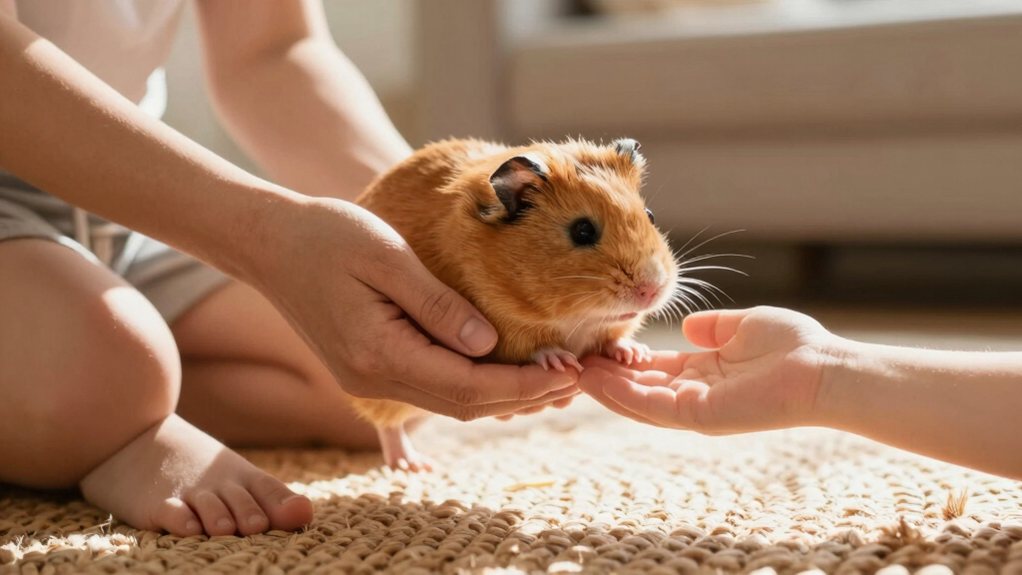
Let your child sit quietly and let the hamster come to them. Gently scoop with both hands to feel secure. Keep sessions short, sweet, and stress-free in a calm, quiet spot away from loud noises or curious pets.
Watch for signs like freezing or squeaking. Those mean it’s time for a break. With daily practice, trust grows fast, and handling becomes a breeze. There’s a bit more to get just right, so stick around to fine-tune the fun.
Start With Gentle Hamster Handling Techniques
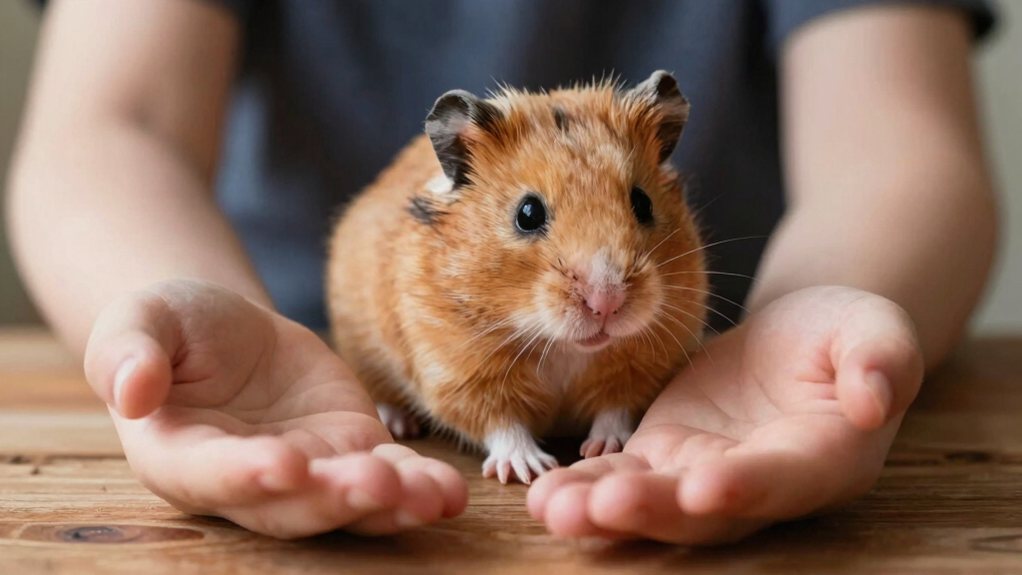
Ever wonder how to pick up a hamster without sending it into panic mode? Start by letting your little one get used to your presence, hamsters are shy, not stage performers.
Hamsters are shy, not stage performers—let them get used to you first. Slow and steady wins the trust race.
When it’s time to handle, always use slow movements. No sudden grabs! Scoop your hamster gently with both hands, supporting its whole body.
Think of it like holding a sleepy potato, firm enough to feel safe, but with a gentle grip. Let your child practice near the floor, just in case Mr. Wiggles decides to make a break for it.
Talk softly, move calmly, and keep sessions short. Remember, you’re building trust, not training a stunt hamster.
With patience and a giggle or two, your child and hamster will become fast friends, on four tiny feet and two big hearts.
Hamsters may bite or scratch when frightened, but these actions are usually a result of fear and stress, not aggression.
Set Up a Calm, Safe Handling Space
Since hamsters can spook easily, setting up a calm, safe space for handling makes all the difference. Choose a quiet environment, like a peaceful corner of the living room, away from loud noises and sudden movements.
Turn off the TV. Ask siblings to lower their voices. Keep other pets in another room. This helps your hamster stay relaxed and focused on you.
Make sure the area is enclosed so there’s no escape route. Sit on the floor or a low chair so you’re at eye level.
When it’s time to hold your hamster, use a secure grip. Cup both hands gently around its body, no squeezing! Think of holding a small, wiggly muffin.
A calm space and confident touch help build trust. They also make handling fun for everyone.
For added safety and containment during playtime, consider using a pop-up automatic playpen designed specifically for small pets.
Spot When Your Hamster Is Stressed
How does your hamster tell you they’ve had enough? Even though they’re tiny, hamsters speak loud and clear through body language. Watch for signs of fear, like freezing in place, wide eyes, or ears pinned back.
If your little buddy starts making escape attempts, scurrying toward edges or scrambling down your arm, they’re saying, “I need a break!”
When your hamster scurries for the edge or scrambles down your arm, it’s their way of saying I need a break—time to slow down and regroup.
Some might even squeak or puff up like a fuzzy stress ball. That’s your cue to gently return them to their calm space.
It’s not personal, they’re just shy or overwhelmed. Think of it like a toddler needing a timeout.
Stay calm, don’t force it, and try again later. Learning these signals keeps your child—and hamster—safe and happy.
After all, a relaxed hamster is more likely to snuggle up than sprint away. You’ve got this!
A hamster showing these signs may be experiencing cage rage, a stress-related condition caused by confinement in small or unstimulating environments.
Build Trust With Short, Daily Handling
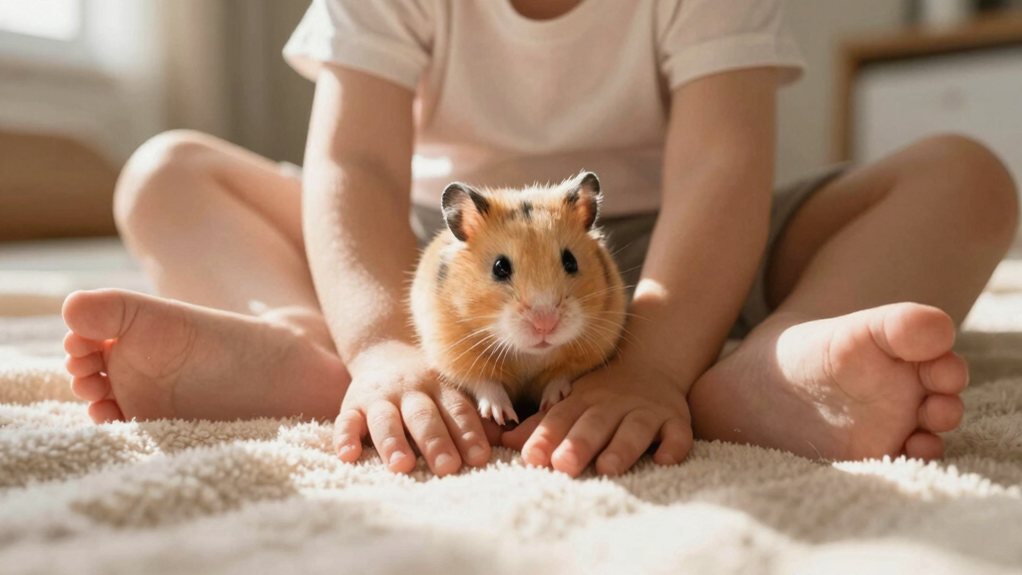
Most days, a few quiet minutes with your hamster can make all the difference in building a bond. Start with short handling sessions, just three to five minutes, right after your feeding routine, when your hamster’s already calm and happy. Gently scoop them up with both hands, speak softly, and let them sniff your fingers. It might feel awkward at first, but consistency is key.
Over time, your hamster will begin to recognize your scent and voice, especially if you stick to a steady play schedule. Think of it like making a new friend: trust grows slowly, with patience and kindness.
Don’t force it if they seem jumpy—try again tomorrow.
Soon, those tiny paws might even climb onto your hand willingly. It’s not magic, just daily care and a little love.
And hey, you’re both learning—cut yourself some slack if it takes a few tries!
Pick a Kid-Friendly Hamster Breed
Ever wonder why some hamsters seem like natural cuddle buddies while others vanish faster than snacks at a sleepover? It often comes down to breed.
If you’re picking a hamster for your child, go with a Syrian hamster. They’re larger, calmer, and usually more tolerant of handling. Most kids find them easier to hold without accidentally squeezing too hard.
Dwarf hamsters, like Roborovskis or Campbell’s, are super cute but super speedy. They’re more prone to darting away or getting startled, which can stress both the hamster and your little one.
Plus, their tiny size makes them trickier to handle safely.
A Syrian hamster’s laid-back vibe makes bonding time easier and more fun. You’ll both feel more confident during those short, daily handling sessions.
Syrian hamsters also tend to have a slightly longer lifespan of 2 to 3 years, which can provide a more stable and rewarding pet experience for children.
Final Thoughts
You’ve got this! With a calm space, gentle hands, and a little patience, you and your child can build trust with your hamster one tiny step at a time. Watch for stress, keep sessions short, and pick a friendly breed. Soon, those little paws will feel like family.
It’s more than just handling. It’s about bonding. And hey, if the hamster steals a snack or two? Totally worth it.