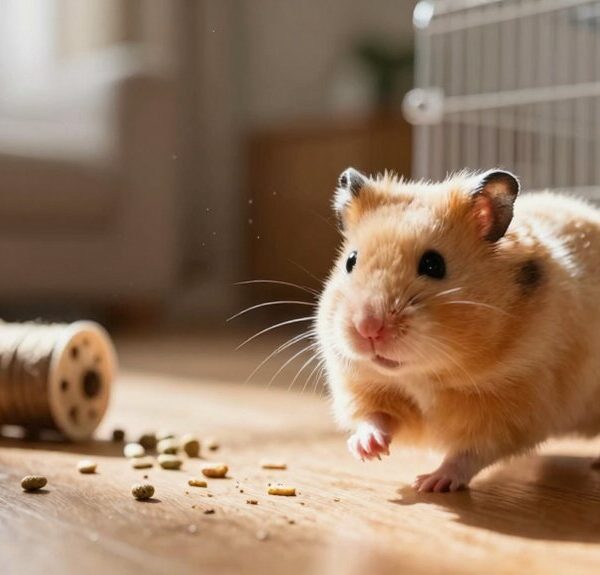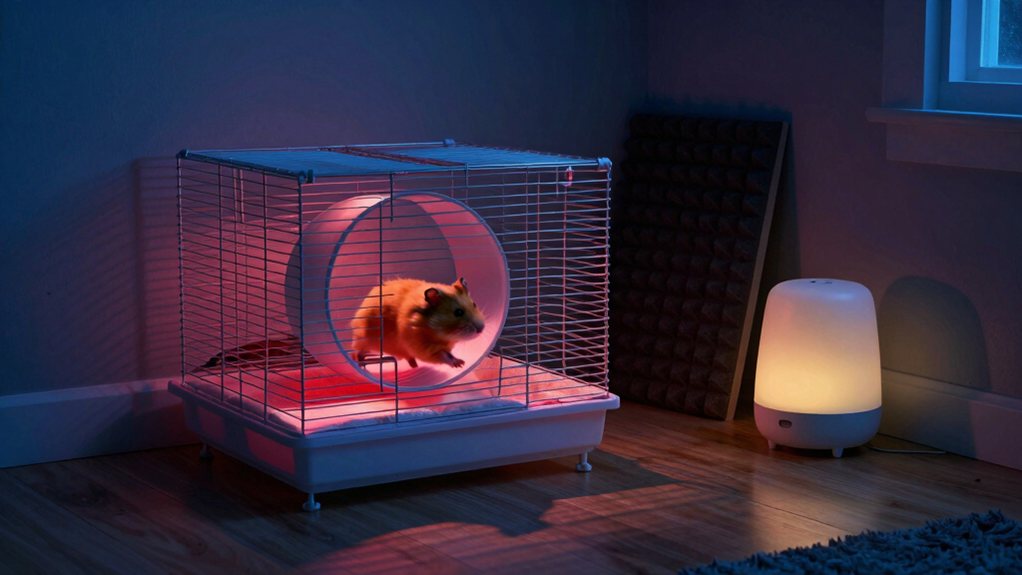
Your hamster’s zooming at night because that’s when they’re naturally active, think midnight joy runs, not sleep sabotage. It’s normal (and healthy!) unless they’re nonstop or seem stressed.
Quiet their routine with a silent, solid-wheel upgrade and place their cage on a rug in a calm spot. Tire them out with daytime play and puzzles.
If the wheel’s still squeaking or they’re acting off, there’s more you’ll want to know.
Why Your Hamster Runs at Night
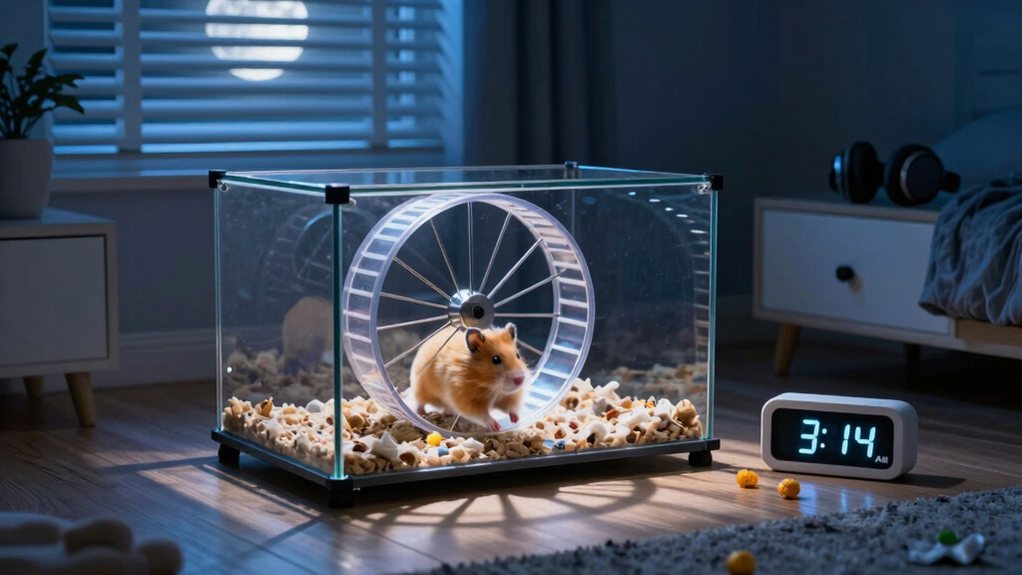
Even though your hamster might seem like a tiny, furry roommate with questionable sleep habits, there’s actually a good reason it’s sprinting on its wheel at 2 a.m. instead of catching Z’s like the rest of the house. Hamsters are naturally nocturnal, so when you’re winding down, they’re just getting started.
Your hamster’s 2 a.m. wheel sprint? It’s not personal—it’s nature. When you’re hitting the hay, your nocturnal little roommate is just clocking in for a night of adventure.
This nighttime energy burst helps them avoid predators in the wild. Now, it just means you hear every frantic spin.
A balanced hamster diet full of protein and fiber keeps them active and healthy, fueling those midnight marathons.
Also, the bedding type in their cage can affect comfort and sleep patterns. Soft, dust-free bedding helps them rest better during the day.
While you can’t turn your hamster into a morning jogger, you can place the cage in a quieter area.
Just remember: that little athlete isn’t trying to annoy you. It’s living its best, most energetic life.
Their reversed sleep cycle is biological, not a sign of laziness, and is tied to their natural nocturnal behavior.
Is Night Running Normal? What It Means for Health
Ever wonder if your hamster’s nightly wheel sessions are a cause for concern or just part of being a hamster? Good news: that midnight marathon is totally normal. Hamsters are naturally nocturnal, so their zoomies after dark are a sign of healthy nocturnal behavior.
In fact, regular night running can actually be a positive sign. It shows your pet is active, curious, and mentally stimulated.
These routines are key health indicators. If your hamster’s moving, eating, and using the wheel consistently, they’re likely thriving.
Of course, if you notice limping, fur loss, or sudden stillness, it’s time to call the vet. But otherwise, that squeaky wheel? It’s just your little buddy living their best night life.
Think of it as their version of a late-night workout, just with more bedding flying.
Hamsters can run up to five miles per night, which highlights the importance of providing adequate exercise wheel space and a proper running environment.
Best Quiet Hamster Wheels to Stop the Noise
That squeaky wheel might be your hamster’s favorite cardio machine, but let’s be honest: it’s not doing wonders for your sleep. You love your tiny buddy, but nobody signed up for 3 a.m. spin class.
The good news is you can stop the noise without stopping the fun. Look for wheels designed for a silent spin and seamless glide. These are total game-changers.
Solid surfaces with no rungs prevent toe traps and reduce noise, while ball bearings keep things quiet and steady. Brands like Silent Runner and Kaytee Quiet Wheel get top marks from pet parents.
Just make sure it’s big enough. No bent-back hamsters allowed.
A happy hamster plus a quiet wheel means better sleep for both of you. Win-win! Upgrade tonight, and maybe, just maybe, you’ll dream in peace.
Where to Place the Cage for a Quieter Night
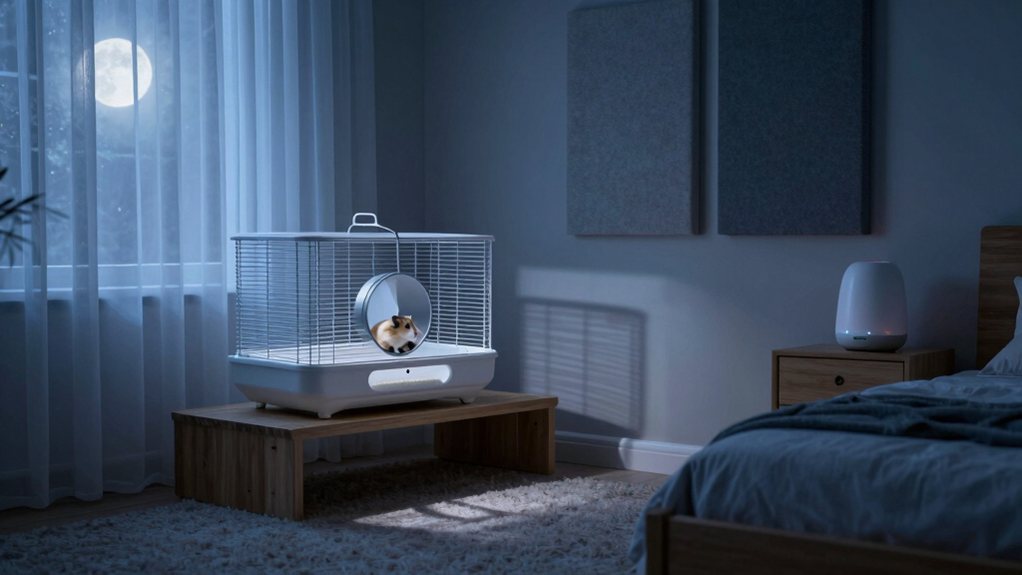
You’ll want to pick a calm spot for your hamster’s cage so you’re not tripping over it at 2 a.m. while they’re busy running marathons.
Keep it away from noisy areas like the kitchen or right next to the TV, your little night owl will thank you, and so will your sleep.
A quiet corner of the bedroom or living room usually hits the sweet spot.
Hamsters are highly sensitive to sound, so placing the cage in a low-noise area helps prevent auditory stress and supports their overall well-being. Be sure to consider safe sound levels when positioning the cage near any electronic devices.
Best Room Placement
Where should you put your hamster’s cage so you’re not kept awake by a midnight marathon?
You want a spot that keeps both of you happy—your hamster active, and you well-rested.
Think through these four things:
- Away from your bedroom, place the cage in a quiet corner of the living room or office, not right beside your bed.
- Consistent lighting, avoid direct sunlight or bright lamps that mess with cage lighting and confuse your pet’s rhythm.
- Low-traffic area, pick a calm spot so sudden movements don’t stress your hamster into overrunning.
- Soft bedding material, thicker bedding reduces noise from scurrying and digging.
A little planning means fewer 3 a.m. wheel spins—and more Z’s for you.
Sweet dreams (for both of you)!
Hamsters thrive in darkness due to their nocturnal nature, which supports natural activity patterns and reduces stress.
Avoid Noisy Areas
Ever wonder why your hamster kicks off its nightly 10K the second you turn off the lights? Placing their cage in a quiet corner helps *everyone* sleep better.
Avoid noisy areas like near TVs, stereos, or busy hallways. Hamsters are sensitive to sound and sudden noises can stress them out.
Instead, pick a calm spot where life isn’t blasting at full volume.
Consider simple soundproofing solutions, like a small rug under the cage, to reduce noise and create a cozier vibe.
Vibration dampening matters too. Hard floors carry noise, so a mat or towel can help muffle wheel rumbles.
You’re doing more than taming the midnight marathon noise. You’re giving your tiny friend a peaceful home.
A little quiet goes a long way—for both of you. Sweet dreams, little runner.
How to Tire Out Your Hamster During the Day
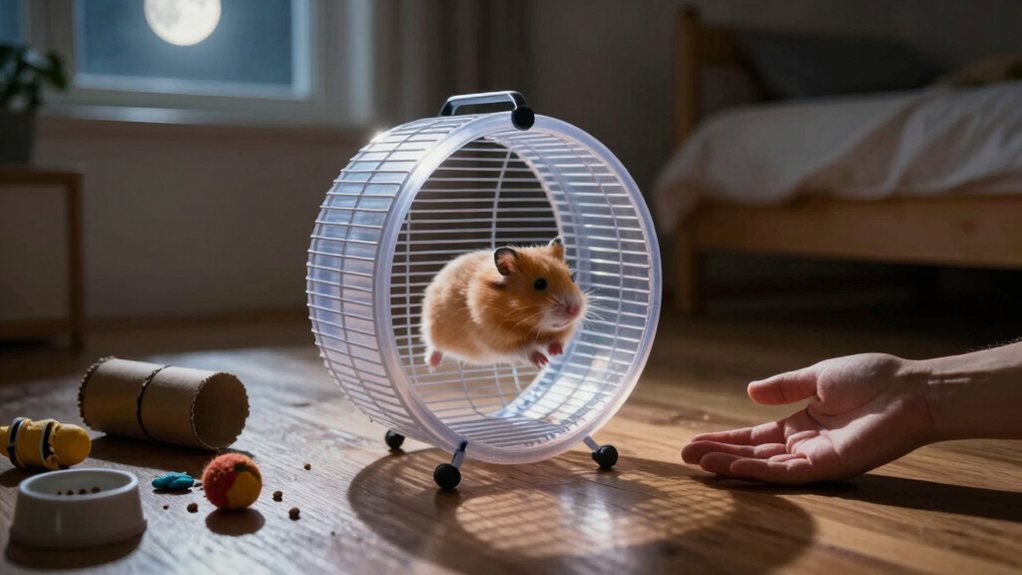
You can help your hamster burn off energy by playing with them during the day, try using tunnels or little toys to keep things fun.
Make sure they’ve got a good exercise wheel too, because let’s be honest, that’s where they really go full sprint.
A tired hamster is a quiet hamster, and that’s a win for both of you.
A properly sized 5 to 7 inches exercise ball can also provide safe, engaging activity during daylight hours.
Active Play Sessions
Ever wonder why your hamster’s like a tiny, furry marathon runner at 2 a.m.?
You can actually help tire them out with some fun, active play sessions during the day.
Boosting playtime enrichment makes a big difference, hamsters need mental and physical stimulation!
Try these simple ideas:
- Set up a safe playpen with tunnels and ramps for climbing.
- Use interactive toys like puzzle feeders to challenge their smarts.
- Let them explore (supervised!) around the room—new scents, new adventures.
- Chase a treat ball or dig in a DIY foraging box filled with shredded paper.
Daily play helps burn energy so they’ll nap more at night.
Plus, it’s adorable to watch them go!
You’re more than just reducing noise. You’re building a happier, healthier hamster buddy. Win-win!
A great way to create a secure space for exploration is by using a pop-up playpen with automatic setup that’s easy to deploy and store.
Exercise Wheel Time
A solid play session helps, but let’s talk about the real MVP of hamster exhaustion: the exercise wheel. If your hamster’s burning off nocturnal energy at 2 a.m., it mightn’t be getting enough wheel time during the day.
Let your little furball sprint to its heart’s content in the evening hours, yes, even if you’re binge-watching your favorite show. A good 30 to 60 minutes of free wheel access can make a big difference.
Just keep up with wheel maintenance: check for squeaks, wobbles, or stuck spots. A silent, steady wheel keeps your hamster happy and saves your sleep.
Think of it as a tiny gym membership, except you’re the one benefiting from the peace and quiet later.
When to Worry About Obsessive Running
Is your hamster turning its wheel into a 24/7 marathon with no finish line in sight? While nightly zoomies are normal, obsessive running could point to anxiety signs or health concerns. Keep an eye out—you know your little buddy best. Here’s when to worry:
- Your hamster runs nonstop for hours without breaks, even during the day.
- It shows signs of exhaustion, like wobbly walking or ignoring food.
- You notice raw spots on its feet or overgrown nails from constant pounding.
- It seems jumpy, hides more, or bites the cage, classic stress clues.
If you spot these, it’s time to tweak their setup. Maybe they need more mental fun—tunnels, chew toys, or a bigger space.
A chatty vet visit can ease your mind too. Sure, they’re tiny, but their feelings matter. Think of it as hamster self-care, because even furballs need a break from the grind!
This kind of relentless activity may be a sign of cage rage, a stress-induced condition caused by confinement in small, unstimulating environments.
Simple Swaps That Reduce Nocturnal Noise
What if the secret to a quieter night isn’t stopping your hamster from running, but working *with* their inner night owl? You can’t change their bedtime routine, hamsters are wired to be active at night. You can make things easier on your ears.
Swap out a plastic exercise wheel for a silent one. It’s an easy fix that cuts down on squeaks.
Place the cage on a rug or foam pad to act as soundproofing materials and absorb vibrations.
Move the habitat away from your bedroom wall, too. Every inch helps.
And while you’re at it, toss in some soft bedding to muffle footstep noise.
You won’t stop the midnight marathons, but these simple swaps can turn a noisy sprint into a gentle whisper. Your sleep (and sanity) will thank you, even if your hamster never punches out.
Choose a cage with a silent 18cm running wheel to minimize noise during nighttime activity.
Final Thoughts
You’ve got a tiny nighttime runner on your hands, and yeah, it’s normal, but that doesn’t mean you can’t catch some peace. Try a silent wheel, reposition the cage, and tire your little buddy out with daytime play. A few smart swaps go a long way.
You’ll both sleep better, and your hamster will still get to live its best 3 a.m. sprinter life, quietly. Sweet dreams (literally)!