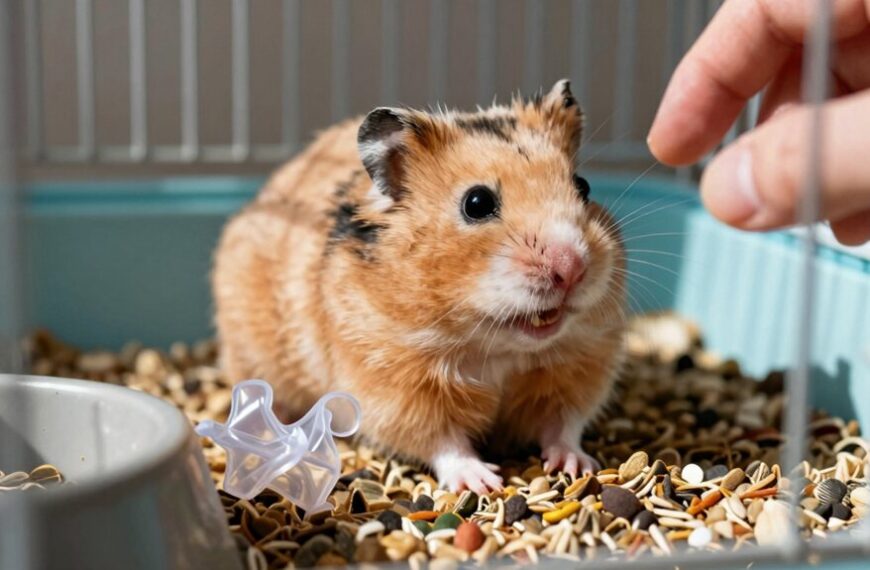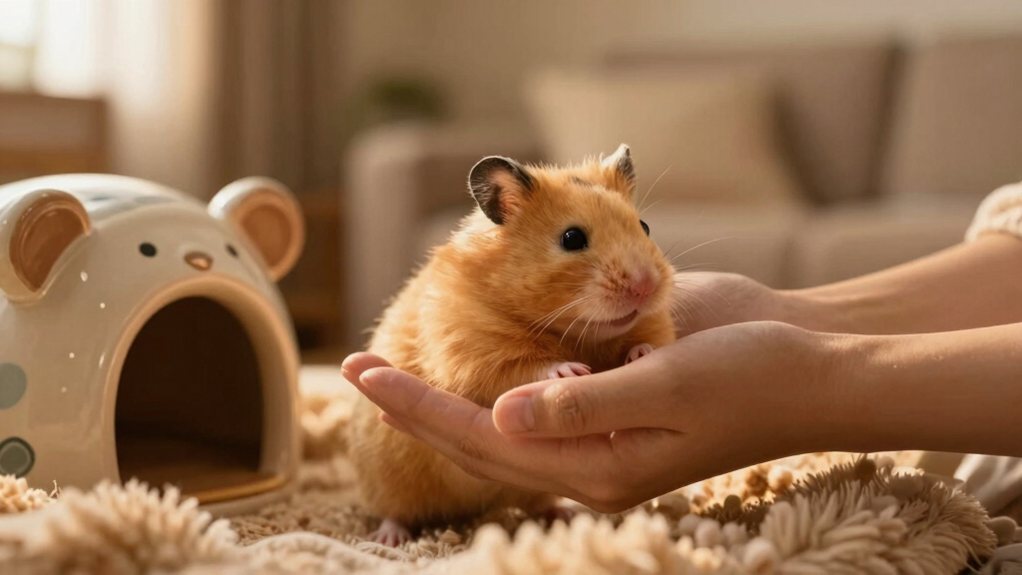
Most hamsters don’t like being held at first, they’re skittish, and sudden hands feel like predator attacks. But with patience, you can build trust.
Start by letting your hamster sniff your hand through the cage. Offer tasty treats and speak in a calm, friendly voice. Avoid grabbing, loud noises, or waking them during the day.
Over time, those jumpy moments turn into cozy hand-perches, especially with Syrians, who often enjoy gentle bonding. You’ll soon see when they’re ready for more.
Most Hamsters Don’t Like Being Held: At First

While your hamster mightn’t leap into your hands like a puppy, that doesn’t mean they’re doomed to hate cuddle time forever. Most actually just need a little patience and trust-building first.
Hamsters are naturally skittish, especially at first, thanks to their nocturnal behavior kicking in when you’re wide awake. Imagine being woken up by a giant hand—that’s your hamster’s view!
Start slow: let them sniff you through the cage bars, using treats to build good vibes.
A smart cage design with hiding spots helps them feel safe, which makes them more open to bonding later.
Don’t rush holding them; instead, spend time near their home, talking softly.
In time, your tiny friend may actually climb onto your hand willingly. It’s not magic—it’s trust.
And hey, slow wins the race, even with hamsters who’d rather nap than snuggle.
A hamster’s individual personality differences can influence how quickly they adapt to human interaction and physical contact.
Why Being Picked Up Stresses Hamsters
You’ve probably noticed your hamster freezing or scurrying away when you reach into the cage, that’s more than just stubbornness, it’s stress. Hamsters are naturally skittish, especially since their nocturnal behavior means they’re groggy or disoriented when handled during the day.
Imagine being yanked from a nap by a giant hand, that’s how your pet feels! On top of that, they’ve strong territorial instincts, so your cage is their safe zone.
When you pick them up, you’re removing them from familiar scents and sounds, which can feel like a threat.
It’s not personal, they’re just wired to stay alert for predators. But don’t worry, with patience and gentle routines, most hamsters learn to trust.
Try hand-feeding first, then short holds. Soon, that little escape artist might actually chill in your palm. Progress, not perfection!
Hamsters thrive in a calm environment, and sudden movements or loud noises can trigger a stress response, so maintaining a calm environment is essential for their well-being.
Signs Your Hamster Isn’t Ready to Be Held
How can you tell if your hamster’s not quite ready for cuddle time? Look out for clear signs of a fear response, your little buddy might freeze, dart away, or even squeak in protest.
Hamsters are naturally skittish, and sudden movements can send them into full escape mode.
Hamsters are naturally skittish—sudden moves can trigger a full escape sprint. Stay calm and move slowly to avoid spooking your tiny, twitchy friend.
If your pal isn’t used to your presence yet, forcing hold time can backfire.
- Your hamster bolts to the corner or dives into bedding the moment you reach in
- It stiffens up or trembles when your hand gets close, classic fear response
- Any sudden movements make it spin around, ready to bolt like a tiny furry racecar
Take it slow, keep your hands calm, and let trust grow naturally.
Biting may occur if the hamster feels threatened, but remember that this behavior is typically fear-based, not aggressive.
How Long It Takes to Build Trust With Your Hamster
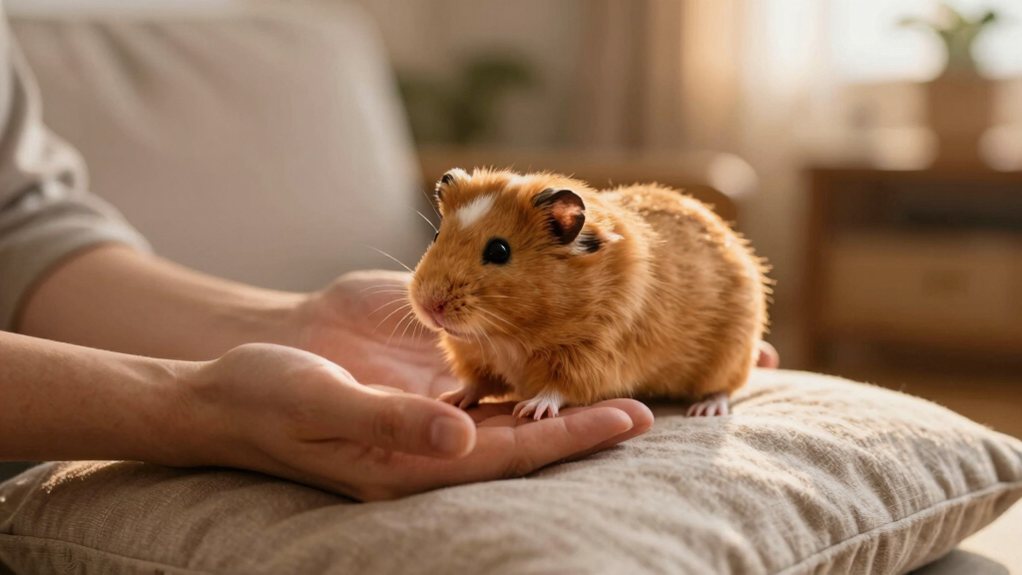
So, how long until your hamster stops treating you like a giant, scary hand from the sky and actually wants to hang out? Well, it depends. Every hamster has their own personality, just like people. Some might warm up in a week, while others take several weeks.
Start by giving your hamster time to adjust to their new cage setup. This is their safe zone.
Talk softly near the cage. Offer treats through the bars, and let them sniff your hand.
Avoid grabbing or rushing them. Patience is key.
Remember, trust isn’t built in a day, especially when you’re tiny and everything’s huge.
With calm, consistent effort, your little buddy will begin to recognize you as a friend, not a threat.
And hey, once they nap in your palm? That’s the hamster version of a gold medal in trust.
Gentle nibbles during early interactions are usually a sign of curiosity, not aggression, not affection, and often decrease as trust grows.
Let Your Hamster Get Used to Your Hands
First, let your hamster sniff your hand through the cage bars, getting used to your scent is a big deal when you’re the size of a muffin.
Offer a treat right from your fingertips so your hamster starts linking your hand with good things, like snacks and not-so-scary adventures.
Just stay calm and patient, because trust grows faster when you’re not rushing like a squirrel on espresso.
Let The Scent Settle
Your hamster’s tiny nose knows more than you think, those little whiskers twitching aren’t merely for show.
They’re sniffing out every detail, especially your scent.
To help your hamster feel safe, let your smell settle in their familiar environment before trying to pick them up.
Hamsters rely on scent marking to understand their world, so your unfamiliar smell can be scary at first.
- Place a worn sock or soft cloth with your scent near their nest
- Let them sniff your hand through the cage bars without grabbing
- Repeat daily so your scent becomes part of their safe zone
This quiet patience builds trust way faster than chasing them with your hands.
Think of it as a slow friendship dance, awkward at first, but sweet when it clicks.
You’re more than just holding a hamster, you’re earning a tiny, twitchy-nosed buddy.
Offer Treats From Fingers
Now that your scent is starting to feel like part of their safe little world, it’s time to turn those sniffing sessions into something even sweeter, snacks from your hand.
Offer tiny treats like bits of apple, seed, or plain yogurt drop.
Just keep the treat variety interesting so your hamster stays curious, not bored.
Start by placing the treat in your open palm and letting them come to you.
No sudden moves!
Clean hands are a must, so always practice good finger hygiene.
No lotions or strong soaps.
Your hamster trusts taste and smell, so keep it safe and simple.
It might take a few tries before they nibble from your fingers, but hey, even tiny food critics need time to warm up.
Be patient, stay calm, and celebrate the little wins.
Like that first brave bite.
You’re more than just feeding them, you’re building friendship, one crumb at a time.
The Right Way to Pick Up Your Hamster
While hamsters mightn’t come running when you call their name like a dog would, they can still enjoy a little one-on-one time if you do it right.
Understanding hamster anatomy helps. Their tiny legs and round bodies mean they feel safest when fully supported.
Tiny legs and round bodies mean hamsters feel safest when fully supported—handle with care and keep those little feet off the edge.
Plus, cage design plays a role. Hamsters in open-top cages may startle easier, so approach calmly.
To pick up your hamster the right way:
- Slide one hand under their belly while using the other to gently guide their back.
- Lift slowly, no sudden moves! You’re not auditioning for a magic act.
- Keep them close to the ground at first, just in case they wiggle free.
Trust builds over time, so go slow, stay patient, and remember: no grabbing. You’re aiming for cuddles, not chaos.
Handling Tips for Syrian, Dwarf, and Roborovski Hamsters
Ever wonder why your hamster sometimes acts like a tiny, furry escape artist when you reach into the cage? It’s all about trust, and knowing your breed helps.
Syrian hamsters are larger and usually calmer, so they often enjoy gentle handling once bonded. Just scoop them slowly with both hands and avoid sudden moves.
Dwarf hamsters are speed demons with big personalities. They can be nippy if startled, so let them sniff your hand first.
Roborovskis? Forget holding them. They’d rather sprint than snuggle. These tiny escape artists thrive on hamster exercise, so focus on building a great cage setup with tunnels and wheels.
Spend time near their home daily, offering treats.
With patience, even the shyest will learn to trust. You’ve got this. Just go slow, stay calm, and let your little buddy set the pace.
Hamsters bite or scratch primarily due to fear and stress, not aggression, so creating a calm environment is key to building trust.
Use Treats and Calm Voice to Make Holding Positive

You can win your hamster’s trust pretty easily with a tasty treat in hand, just hold it out like a tiny peace offering.
Talk in a soft, friendly voice, like you’re sharing a secret, and they’ll start to see you as safe, not scary.
Every time they stay calm during handling, give them a little reward, because hey, even hamsters deserve snacks for good behavior!
Building Trust With Treats
How do you turn a shy, nibble-happy hamster into a little buddy who actually enjoys your company? Start by building trust with treats. Yes, food really is the way to their tiny heart.
A well-balanced hamster diet isn’t just about health. It’s your secret bonding tool. Offer small, tasty bits like bits of apple or a sunflower seed right from your palm.
Pair that with a calm voice and a cozy cage setup that feels safe, and your hamster will start linking your presence with good things.
- You gently extend your hand, palm open, letting them sniff and decide
- They nibble a treat while you stay still, no sudden moves—patience wins
- Over days, they climb onto your hand for snacks, trust growing bite by bite
Soon, holding becomes less scary—for both of you.
Speak Softly For Calmness
What if the secret to a calm hamster wasn’t in your hands but in your voice? Speaking in a soft tone can make all the difference when building trust.
Hamsters have super-sensitive hearing, so yelling or sudden loud noises can send them into panic mode. Imagine someone shouting in your ear during nap time.
Instead, talk gently, like you’re sharing a secret. A quiet environment helps too. Turn off loud music or the TV so your little buddy feels safe.
Use your calm voice while offering treats. This combo tells your hamster, “Hey, I’m friendly!”
Over time, they’ll start to relax when you’re near. It’s like your voice becomes a cozy blanket of reassurance.
Reward Gentle Handling
Isn’t it amazing how a tiny handful of treats can turn a nervous nibbler into a trusting little companion?
Using positive reinforcement makes all the difference when helping your hamster feel safe during handling.
Every time you gently pick them up and they stay calm, reward them right away. It builds trust fast.
A consistent routine paired with a calm voice and tiny snacks turns stress into snuggles, well, hamster-style ones, anyway.
- Offer a sunflower seed or pea treat right after calm handling
- Speak in soft, cheerful tones like you’re sharing a sweet secret
- Repeat the same handling time daily so your hamster knows what to expect
You’re doing more than just holding them. You’re building a bond.
Soon, they’ll waddle over, ready for a lift.
Who knew such a small act could mean so much?
Mistakes That Destroy Hamster Trust
While your hamster might look like a tiny, cuddly stress ball, treating them like one can backfire faster than you can say “I just wanted to snuggle!” Picking them up too soon, grabbing them from above, which feels like a hawk attack to them, or handling them when they’re sleeping can shatter their trust in seconds.
Ignoring warning signs, like freezing, hissing, or backing away, tells you they’re uncomfortable. Don’t force physical contact just because you’re eager for cuddles.
That’s like hugging someone who’s clearly saying “not now.” Instead, let your hamster come to you. Offer a treat from your hand and let them explore at their pace.
Rushing it only sets you back. Be patient, stay calm, and remember: trust grows with time, not treats. You’ve got this—slow and steady wins the race!
Daily Habits That Make Holding Feel Natural
Most days, a few quiet moments with your hamster can quietly work wonders.
Building playtime bonding and trust doesn’t happen overnight, but daily habits make all the difference.
Think of it like making a new friend.
You show up, stay calm, and let things unfold naturally.
Over time, being held starts to feel less like a big event and more like part of your routine.
- Spend 5–10 minutes each day letting your hamster explore outside the cage during safe, supervised playtime bonding
- Gently talk or hum while they sniff your hands, turning cage exploration into cozy connection
- Offer tiny treats from your palm to link your presence with good things
Soon, your hamster won’t just tolerate being held—they’ll look forward to it.
Patience, consistency, and a little silliness go a long way.
Final Thoughts
You won’t win your hamster’s trust overnight, and that’s okay. They’re tiny, nervous, and you’re a giant with grabby hands.
But with patience, treats, and calm talk, you’ll go from “scaredy-scurry” to snuggles. Remember, slow wins the race.
Mess up? No worries. Hamsters forgive, especially for sunflower seeds. Keep it gentle, keep it positive, and soon, holding your little buddy will feel as natural as bedtime.