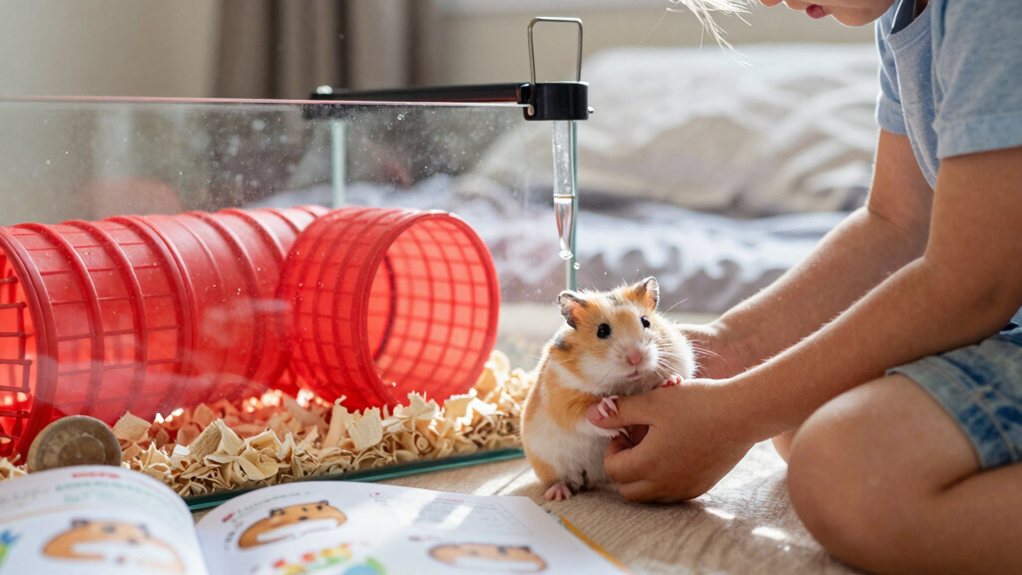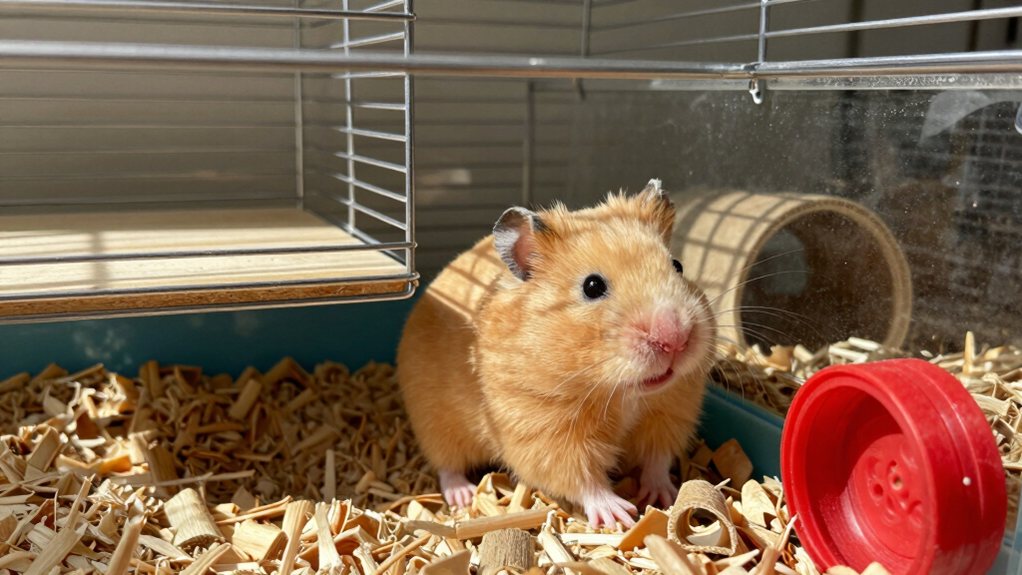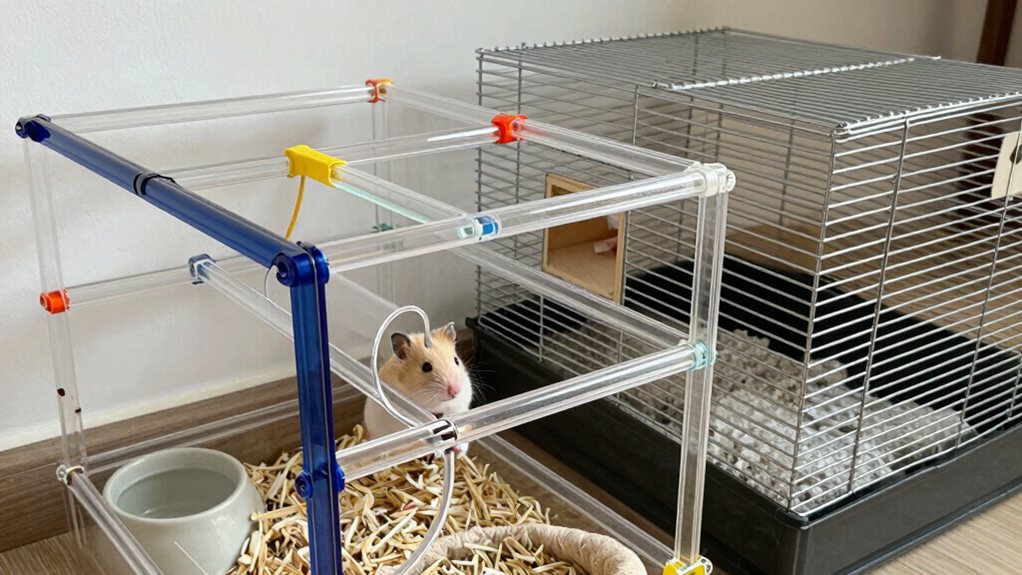
You’ve probably fallen for those cool, futuristic tube cages. They look like tiny hamster roller coasters and light up your Instagram feed.
But here’s the real deal: they trap stale air, stress your little buddy with noisy twists, and block natural digging. Your hamster needs space, fresh air, and cozy hideouts, not a plastic maze.
Swap the tubes for a roomy bin or aquarium setup instead. You’ll both sleep better knowing they’re happy and healthy. There’s a smarter, cuter way to do this.
Why Do Modular Tube Cages Look So Appealing?
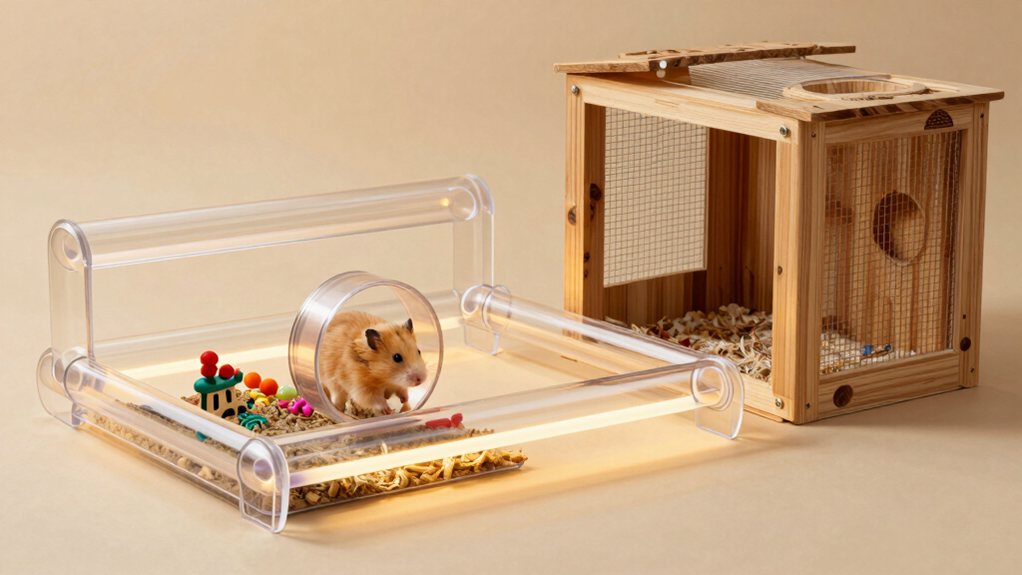
Ever wonder why those sleek, maze-like modular tube cages seem to jump off the shelf and grab your attention? It’s no accident.
Their aesthetic design is futuristic and tidy, like a tiny hamster amusement park built for Instagram.
Thanks to social media trends, these cages pop up everywhere—adorable hamsters zipping through clear tubes, looking like they’re in a sci-fi movie.
You see them online and think, *Wow, my hamster needs that!* They’re marketed as fun, modern, and interactive, which tugs at your heart and wallet.
Plus, they’re modular, so you can snap pieces together like LEGO—super convenient, right?
Snap, connect, play—modular tubes fit together like LEGO, promising endless fun and zero hassle. Pure convenience, right?
It’s easy to get swept up in the hype.
But hold on—just because it looks cool doesn’t mean it’s the best fit. Let’s dig deeper before you hit “buy.”
Can Your Hamster Breathe in a Tube Cage?
Those shiny tubes might look like a hamster’s dream playground, but let’s pause for a second and talk about something way more important than looks: airflow.
Good air circulation keeps your little buddy breathing easy and supports strong respiratory health.
Without it, things can get dicey fast.
Here’s what you should know:
- Tubes can trap stale air, especially if stacked tightly
- Poor ventilation might lead to sneezing or worse, respiratory infections
- Plastic parts don’t breathe like wire or mesh do
- Warm, moist bedding in enclosed tubes? That’s a mold magnet
- Your hamster can’t tell you it’s hard to breathe, so you’ve got to watch for signs
You want fun and safety, right?
A well-ventilated home means your hamster stays happy, healthy, and full of energy.
No gasping in the glow of those cool-looking tunnels.
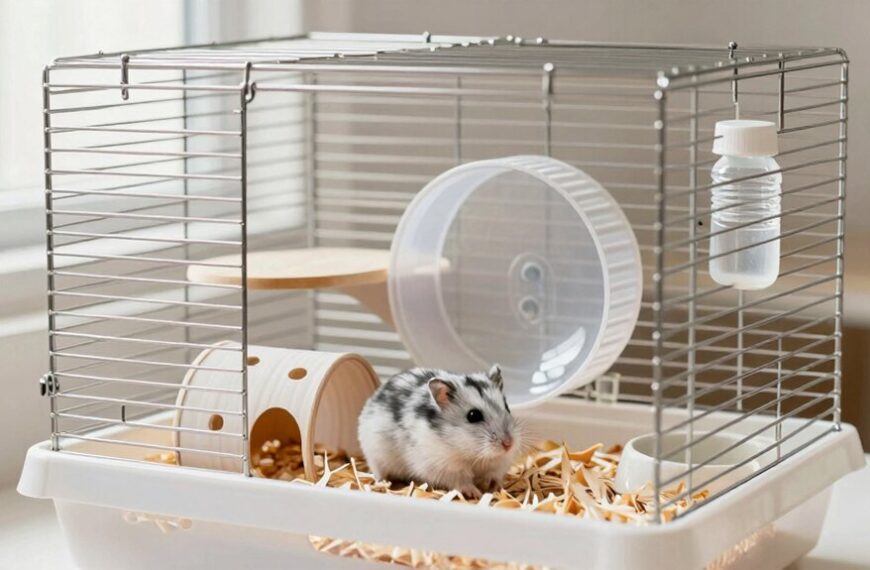
A well-balanced design includes mesh ventilation with ≤5mm spacing to ensure proper airflow while preventing escapes.
How Do Modular Tube Cages Stress Hamsters?
What if your hamster’s fancy tunnel maze is actually making them more anxious than adventurous? Modular tube cages might look fun, but they can cause real stress.
Long, narrow tubes create sensory overload, too many twists, turns, and echoes with no quiet spot to rest. It’s like being stuck in a noisy maze all day.
Plus, if your hamster’s used to being alone, the lack of social isolation can backfire. Even solitary pets need personal space, and cramped tubes don’t offer that.
You might think they’re exploring, but they could be panicking, trying to find a safe corner.
These cages often limit nesting areas and block natural behaviors like burrowing.
The result? A stressed, confused little buddy.
So, while it’s cool to watch them zip through tunnels, remember: simple and spacious beats complex and cramped.
Your hamster will thank you, with calmer, cuter zoomies.
A well-designed setup ensures tunnels have a minimum tunnel diameter of 2 inches to support safe and comfortable movement.
Top 5 Hamster-Safe Cage Alternatives to Tubes
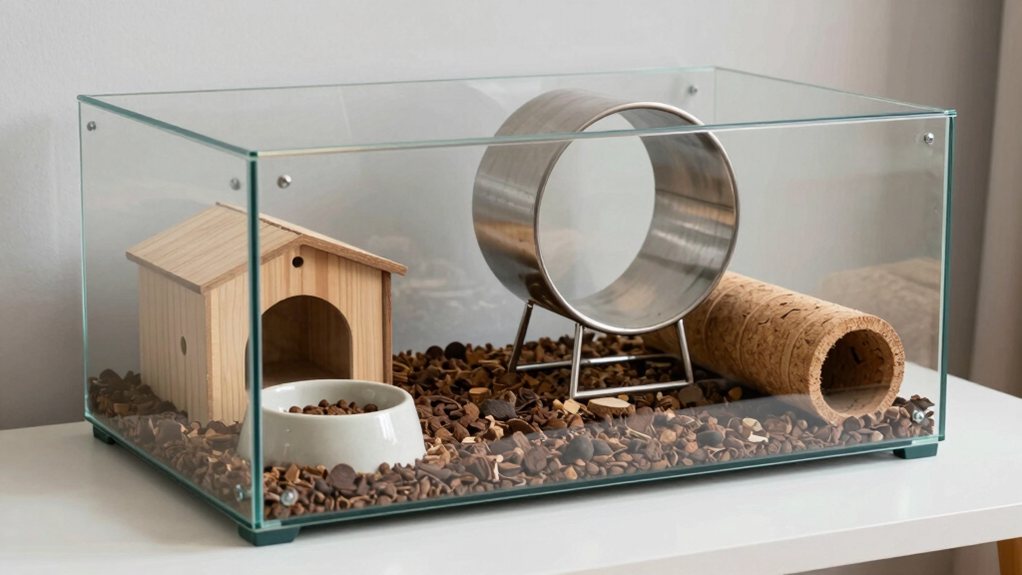
Forget the twisty-turny tubes. Your hamster’s dream home isn’t a plastic maze from a sci-fi movie. You want something safe, fun, and natural-feeling.
Here are five hamster-approved alternatives that support healthy bedding depth and satisfying tunnel complexity:
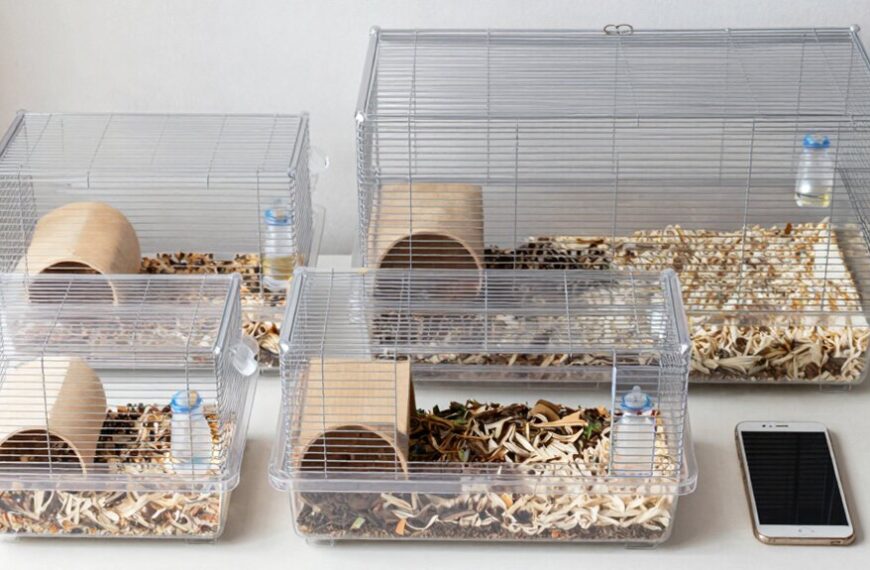
- Glass aquariums with secure lids – Great for deep bedding and diggers who love to burrow.
- Plastic storage bins (DIY cages) – Cheap, customizable, and perfect for adding tunnels and levels.
- Wire cages with solid floors – Offer ventilation and space, just avoid bar spacing over ½ inch.
- Modular habitat boxes – Let your hamster explore safely while mimicking natural burrows.
- Wooden or cardboard hideouts – Add cozy spots and chewable texture for mental stimulation.
Swap the tubes for setups that let your little buddy dig, hide, and thrive.
Because happiness starts with a home that feels right.
A design with tool-free setup allows for easy assembly and regular maintenance without the need for complicated tools or instructions.
Features of a Safe, Spacious Hamster Habitat
A safe and spacious hamster habitat isn’t just a cage. It’s your furry friend’s personal kingdom, and they deserve room to explore, dig, and nap like a tiny, furry emperor.
Your hamster’s home isn’t just a cage—it’s a kingdom. Give your tiny emperor space to explore, dig, and nap in furry luxury.
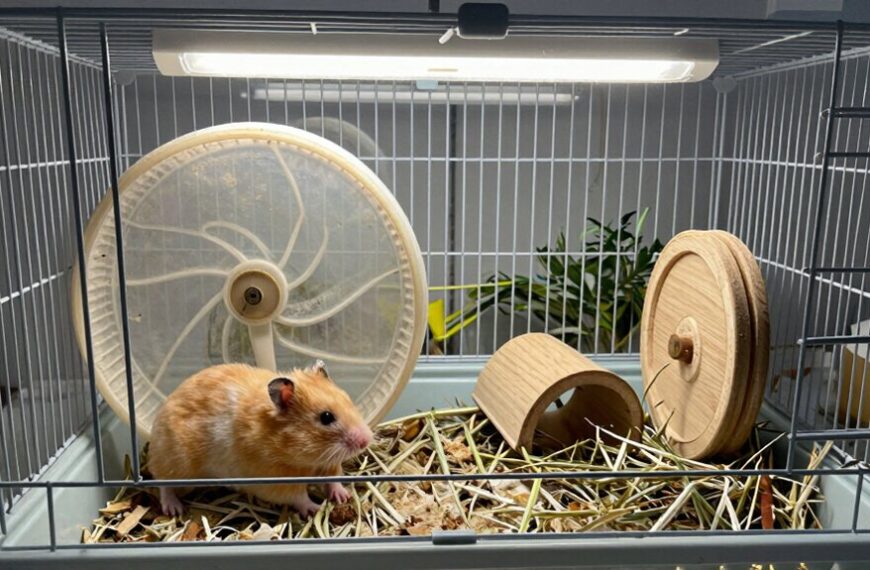
You’ll want at least 450 square inches of floor space. More if you’ve got a cheeky Syrian who acts like they own the place.
Go deep on the bedding depth: aim for 6–8 inches so they can tunnel to their heart’s content. Because what’s life without a secret underground bunker?
Don’t skimp on wheel size. 8 inches minimum for dwarfs, 12 for Syrians. A cramped wheel is like asking you to jog in a closet.
Include hideouts, chew toys, and a cozy corner for snack hoarding. Keep it clean, safe, and full of fun. Your hamster’s tiny, but their joy is huge.
Add a designated potty area with a litter box design that fits seamlessly into the cage layout to help maintain hygiene and reduce odors.
Final Thoughts
So, are modular tube cages good for hamsters? Not really, pal. Sure, they look cool, but your tiny buddy needs space to dig, stretch, and explore without getting stuck or stressed.
Tubes can be confusing and cramped, like living in a maze with no snacks at the end. But hey, don’t sweat it. You’ve got way better options. Think big bins, cozy cages with levels, or DIY setups. Your hamster will thank you with happy zoomies. And isn’t that what it’s all about?