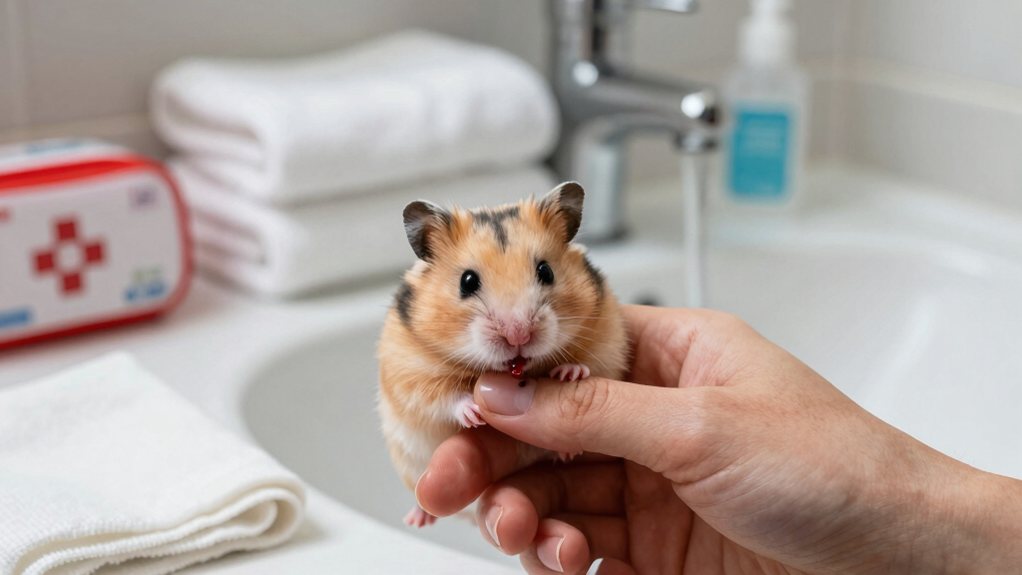
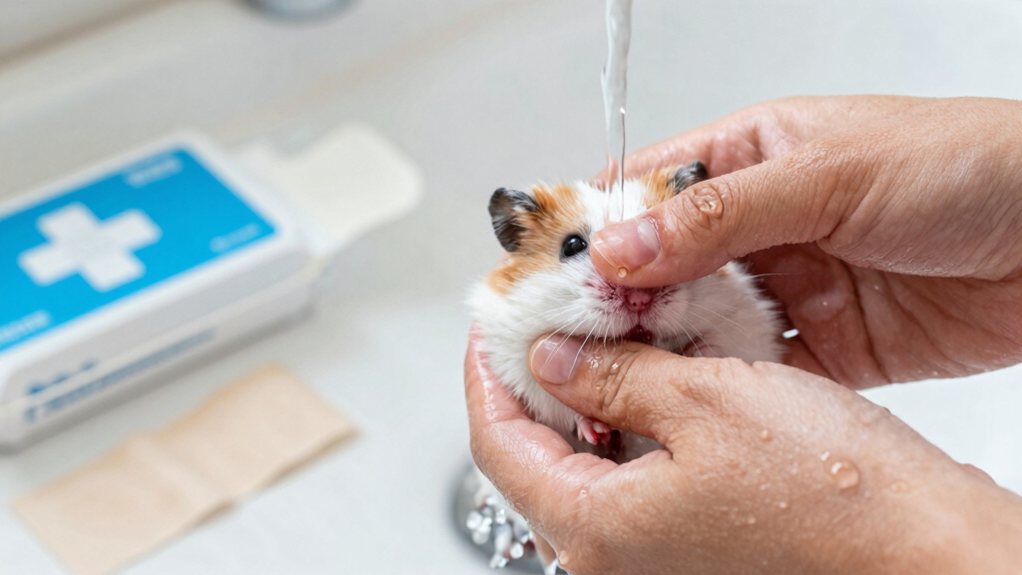
Wash the bite right away with warm water and soap, scrub gently for 20 seconds like you’re cleaning a tiny boo-boo. Pat it dry, then press a clean cloth on it if it’s bleeding. Don’t peek too soon, let it clot!
Dab on some hydrogen peroxide or rubbing alcohol. It might sting a little, but it keeps germs away. Most hamster nips are more surprise than serious, but keeping it clean helps you both feel better. Oh, and good news—rabbits aren’t the only small pets that rarely cause big trouble.
Wash the Bite With Soap and Water

So, you just got nipped by your hamster. Don’t panic, it happens. First things first: wash the bite right away with soap and warm water.
Got nipped by your hamster? Stay calm—it happens. Wash the bite right away with soap and warm water to keep things clean and under control.
Seriously, grab some mild soap and gently scrub the area for at least 20 seconds. This simple step is key for proper wound care and helps prevent infection.
Hamsters aren’t usually aggressive, but their bites can still carry bacteria. Think of it like a tiny battle wound from a furry little warrior—adorable, but still needs attention.
While hamster behavior can be unpredictable, especially if they’re startled or scared, staying calm helps you both. Rinse well, then pat it dry with a clean towel.
No need to overthink it. Just treat it like any small cut. Quick action now means fewer worries later. You’ve got this!
Stop Bleeding With Gentle Pressure
Now that you’ve cleaned the bite with soap and water, take a quick look to see if it’s still bleeding.
Most hamster bites are tiny nips, thanks to their small teeth and generally calm hamster behavior, but sometimes they draw a little blood.
No need to panic—just press a clean cloth or gauze gently on the spot.
Here’s how to handle it like a pro:
- Use soft, steady pressure, no need to wrestle a tiny ninja rodent.
- Keep the cloth in place for a few minutes. Peeking every 30 seconds won’t speed it up!
- Stay calm. Your cool head helps with bite prevention next time.
Most stops within minutes. If it doesn’t, or if you’re worried, a doc visit is smart.
Remember, hamsters usually bite out of fear, not feistiness.
Stay gentle, stay aware, and you’ll both stay happy.
A clean cloth helps maintain gentle pressure to control minor bleeding effectively.
Apply Antiseptic to Prevent Infection
Even though hamster bites are usually more surprising than serious, skipping the antiseptic is like leaving your front door wide open for trouble. After stopping the bleeding, grab some antiseptic, like hydrogen peroxide or rubbing alcohol, and gently clean around the bite. This step is key for proper wound care and serious infection prevention. Think of it as giving those tiny germs a pink slip.
Skip the antiseptic? That’s like inviting trouble through your front door. Clean that bite—germs get a pink slip, not a free pass.
Hamsters carry bacteria in their mouths, so even a small nip deserves attention. Dab it, don’t rub, and let the antiseptic do its job.
If it stings a little, hey, that just means it’s working, kind of like a tiny superhero fighting off bad guys. Keep the area clean and dry afterward.
Watch for redness or swelling, which could mean trouble’s brewing. Good wound care turns a “yikes!” moment into a quick recovery. You’ve got this!
A bite that shows signs of spreading redness may indicate the onset of a more serious infection requiring medical evaluation.
Watch for Infection: What to Look For
How’s your bite looking? Keep an eye on it over the next few days—hamster bites are usually harmless, but infections can sneak up if you’re not careful.
You’ll want to watch for a few key signs so you can act fast. Think of it like being a tiny detective for your skin! Here’s what to look for:
- Swelling redness that spreads or feels warm to the touch, like your body’s throwing a mini protest.
- Pus discharge—a yucky, yellowish fluid saying, “Hey, something’s not right here!”
- Increasing pain or throbbing, even after cleaning it (ouch, no fun).
If you spot any of these, don’t panic—but do call your doctor. Better safe than sorry! Most bites heal fine, but staying alert helps keep things from going from “oops” to “uh-oh.”
A bite that becomes increasingly painful or swollen could be showing signs of rat-bite fever, a rare but possible infection from Streptobacillus moniliformis.
When Should You See a Doctor?
You’ve been keeping an eye on that bite, checking for redness, pus, or pain like a skin sleuth on a mission, and that’s great!
But if the area gets worse, spreads, or you start feeling feverish, it’s time to call the doctor. Even tiny bites can sometimes lead to bigger issues.
If the bite swells, spreads, or you feel feverish, don’t wait—call your doctor. Even small bites can sneak in big trouble.
If it’s been more than 10 years since your last tetanus vaccination, your doc might recommend a booster. Better safe than sorry!
Watch for signs of an allergic reaction too, like swelling beyond the bite, trouble breathing, or dizziness. That’s rare with hamster bites, but never ignore your body’s red flags.
Also, if the bite was deep or the hamster seemed sick, a medical checkup gives you peace of mind.
You’re doing great by staying alert. Just don’t play hero if things feel off. When in doubt, get it checked out!
Hamsters can carry LCMV transmission through saliva, which may pose a risk if the bite breaks the skin.
Why Did My Hamster Bite Me?
What’s going on when your usually sweet little hamster suddenly nips you? Sometimes, it’s not about aggression. It’s about hamster behavior and miscommunication.
Your tiny friend might feel scared, startled, or even confused. Think of it like this:
- You reached into its cozy, dark nest like a giant hand from the sky, no wonder it panicked!
- Your fingers smelled like peanut butter or snacks, and your hamster thought, “Lunch delivery!”
- It was stressed or sleepy, and your timing was just off, like waking someone mid-snooze.
Understanding these moments helps with bite prevention. Wash your hands before handling, move slowly, and respect their space.
Most nips are tiny mistakes, not mean acts. Stay calm, learn the signs, and you’ll both feel safer. After all, nobody’s perfect. Even hamsters get jumpy!
Hamsters may also react defensively if they’re experiencing cage rage, which stems from inadequate space and lack of environmental enrichment.
How to Rebuild Trust After a Bite

So, your hamster took a little bite, and now things feel a bit awkward. It’s like you both need a do-over. Don’t worry, trust can be rebuilt.
Start by giving your hamster space to calm down. Sudden moves can confuse them. Hamster behavior is often misunderstood. They’re not being mean, they’re just scared or startled.
Spend time near their cage daily, talking softly so they recognize your voice. Offer treats through the bars. This turns you into the snack fairy.
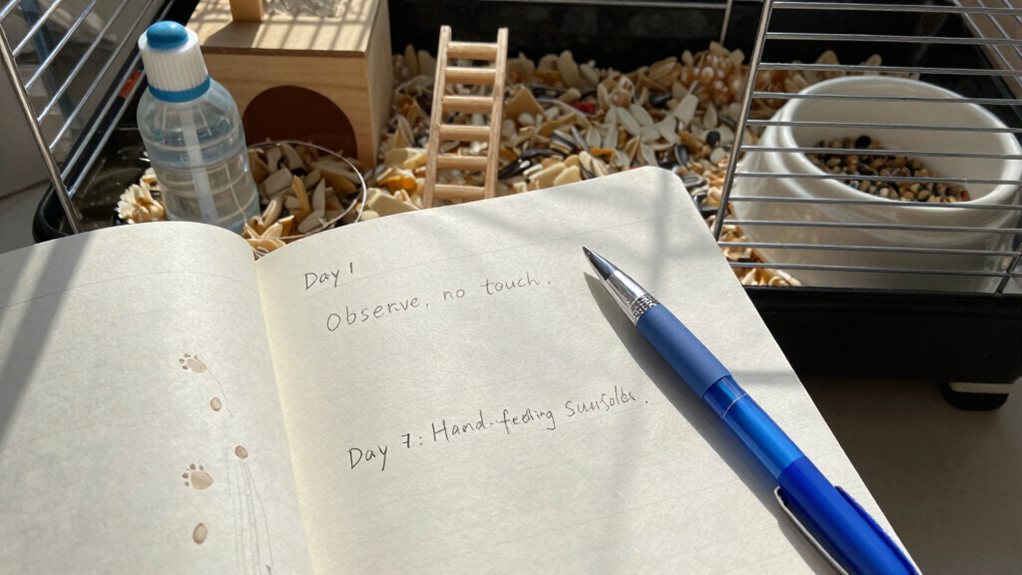
Gradually, try hand-feeding inside the cage. These little trust exercises go a long way.
Move slowly, stay patient, and never force contact. Over time, your hamster will see you as safe, not scary.
It’s not about winning a prize. It’s about small wins, like a curious sniff or a hop onto your hand. You’ve got this!
Biting is rarely about aggression and more often tied to fear-based nips, which can be reduced with consistent, calm interaction.
Can You Get Rabies From a Hamster?
You’re probably worried about rabies after a hamster bite, but here’s the good news: it’s extremely rare, like, “finding a purple crayon in a cereal box” rare.
Hamsters almost never carry rabies, especially if they’re kept as indoor pets and haven’t been exposed to wild animals.
Still, it’s smart to wash the bite right away and keep an eye on it, just to be safe.
Risk Of Rabies Transmission
Could there be a sliver of truth to the fear that a tiny hamster bite might lead to rabies?
Honestly, it’s extremely unlikely, almost like worrying about a snowstorm in July.
Hamsters aren’t known carriers of rabies, and there’s no such thing as a hamster vaccination for it because the risk is practically zero.
Rabies incubation usually happens in larger mammals, not your pint-sized, wheel-running buddy.
Picture this:
- A cozy hamster snoozing in its cage—calm, clean, and totally harmless.
- A raccoon staggering oddly in the dark—now *that’s* a real rabies concern.
- You, calmly washing a small bite, not losing sleep over rabies.
Hamster Bite Safety Facts
Ever wonder if that little nip from your hamster could turn into something scarier than a horror movie marathon? Good news: you can’t get rabies from a hamster. Seriously, it’s almost unheard of. These tiny furballs aren’t known to carry the virus. Still, staying safe matters.
Understanding hamster behavior helps prevent bites. Most happen when they’re scared, startled, or mishandled.
Always wash your hands before handling them, no sudden moves. Avoid waking them from deep sleep.
Gentle, calm interactions go a long way in bite prevention.
If you do get nipped, don’t panic. Just clean the area with soap and water. Keep an eye out for redness or swelling. But serious infections are rare.
How to Handle Your Hamster Safely
You’ve got this, just remember to stay calm and move slowly when picking up your hamster, since sudden moves might startle them.
Cup both hands around their body gently, letting them feel supported instead of grabbing or squeezing.
Think of it like giving a tiny, furry high-five: steady, kind, and always with care.
Gentle Handling Techniques
How do you pick up a tiny, twitchy-nosed hamster without sending it into panic mode? With a calm approach and a gentle grip, you’ve got this. Hamsters aren’t trying to be difficult. They’re just small and easily startled.
Build trust by moving slowly and speaking softly. Let your hamster sniff your hand first. It’ll help them feel safe.
Here’s how to handle your little buddy like a pro:
- Cup both hands around the hamster like a warm, cozy nest.
- Lift slowly, keeping them close to the ground. No acrobatics!
- Support their whole body so they don’t feel like they’re falling.
You’re doing more than just holding a pet. You’re building a bond. Stay patient, stay calm, and remember: no sudden moves.
Soon, your hamster will see your hands as safe spots, not scary traps. And hey, fewer bites mean more cuddles. Win-win!
Proper Hand Positioning
Now that you’ve got the basics of calm handling down, let’s talk about where your hands should actually go.
Because even the gentlest touch can go sideways if your grip isn’t quite right.
Use your dominant hand for most of the lift. Your hand dominance gives you better control and grip stability.
Cup both hands around your hamster, with one hand supporting its bottom and the other gently guarding the front.
Think of it like holding a tiny, furry cupcake—secure but soft.
Keep thumbs near each other to close the “cage” and prevent surprise escapes.
Avoid grabbing from above. It makes you look like a predator.
Instead, scoop from the side or below.
If your hamster wiggles, don’t panic—just stay calm and adjust.
Good positioning means fewer jumps, fewer bites, and way less “why is my hamster on the lampshade?” drama.
You’ve got this!
Final Thoughts
So, you got nipped by your tiny furball. No need to panic. Clean it, calm down, and keep an eye out for redness or swelling. Most bites are little more than a surprise squeak moment.
Hamsters aren’t out to get you. They’re just scared or startled. Give them and yourself a second chance. Handle gently, and laugh it off. You’ve both got this!