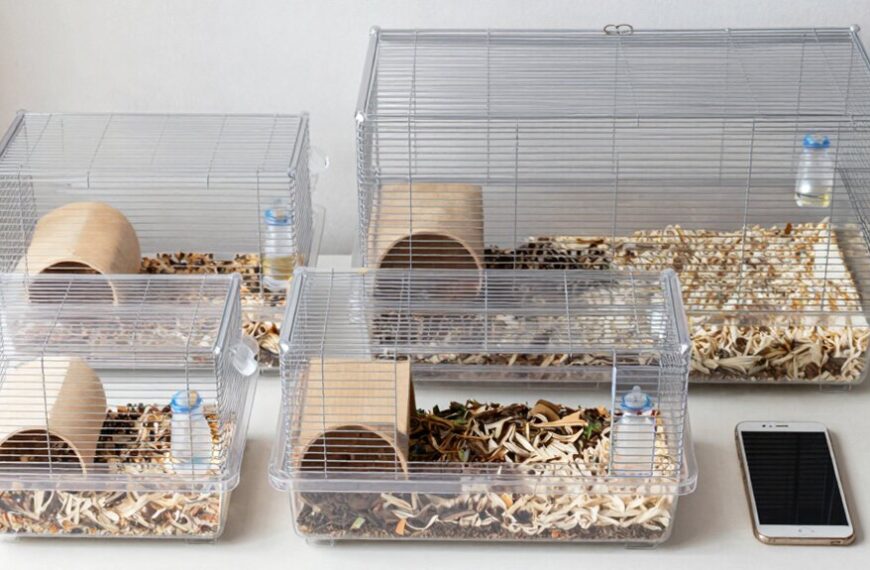
Your hamster doesn’t care if their home is a cage or a tank, as long as it’s roomy, airy, and full of places to dig and explore. They’ll love you more for giving them 12 inches of bedding to tunnel in and plenty of fresh air to sniff.
Wire cages offer great airflow and climbing fun. Glass tanks hold burrows better and won’t wobble. The real win is a hybrid setup that gives them the best of both worlds. Keep going, and you’ll see how easy it is to make your hamster truly happy.
What Hamsters Need: Space, Air, and Burrowing Room
Let’s talk about your hamster’s happy place, because just like you wouldn’t want to live in a closet with no windows, your tiny fur buddy needs room to thrive.
Hamsters need space to run, air to breathe, and plenty of bedding depth to dig like they’re on a mission to China.
A cramped cage or a stuffy tank without ventilation? No thanks.
Think of their home like your bedroom—cozy but functional.
You’d want space for a bed, a desk, and maybe a mini gym, right? Same goes for them.
They need room for exercise wheels, the hamster version of a sports car, and tunnels to explore.
Without enough airflow or digging space, they get stressed—no drama, please!
Go for a cage with good airflow and at least 12 inches of bedding depth.
Your hamster will thank you with happy midnight zoomies.
A well-ventilated cage with micro-holes or mesh panels ensures healthy air circulation and helps prevent respiratory issues, so look for designs with ventilation under 5 mm.
Do Hamsters Need Ventilation?
While your hamster mightn’t complain in words when the air gets stuffy, they’ll definitely let you know, through sneezes, sluggishness, or that sad stare as they nose the lid of their home.
You’ve got to give them fresh airflow; it’s non-negotiable.
Without proper ventilation, damp bedding and ammonia from waste can build up, turning their cozy space into a health hazard.
Cages usually win here, with their wire sides letting air move freely, unlike tanks that can trap moisture.
But if you’re using a tank, prop the lid slightly open or add mesh panels, just keep it safe.
Good airflow also helps with temperature control, preventing hot spots, and lets in natural lighting without turning their home into a greenhouse.
Think of it like your room: you wouldn’t want to sleep in a closet with no windows, right?
Your hamster feels the same.
Breathe easy, so can they.
To monitor these conditions accurately, consider using a digital hygrometer thermometer with humidity range monitoring to maintain ideal habitat levels.
Are Tanks Better for Burrowing?
Imagine this: your hamster diving into a mountain of bedding, disappearing like a tiny furry astronaut tunneling through a planet of fluff. When it comes to burrowing, tanks can actually give your little digger the edge. Why? Because they let you pile up way more bedding depth, think 6 to 12 inches, so your hamster can dig tunnels like a pro.
Cages with wire bars often limit how deep you can go, but a tank’s solid base holds it all in.
Plus, the stable walls help with tunnel stability, so tunnels are less likely to collapse and scare your pet.
Sure, tanks need extra airflow, but for serious burrowers, that cozy underground maze is worth it.
You’ll laugh watching little paws kick out bedding like a mini excavator.
Just make sure it’s safe and deep enough. Your hamster’s dream home is basically a fluffy underground fortress.
A deep layer of safe bedding supports natural behaviors and prevents health issues, so always choose dust-free materials that are non-toxic and soft for your hamster’s sensitive respiratory system and delicate skin.
Why Wire Cages Suit Active Hamsters

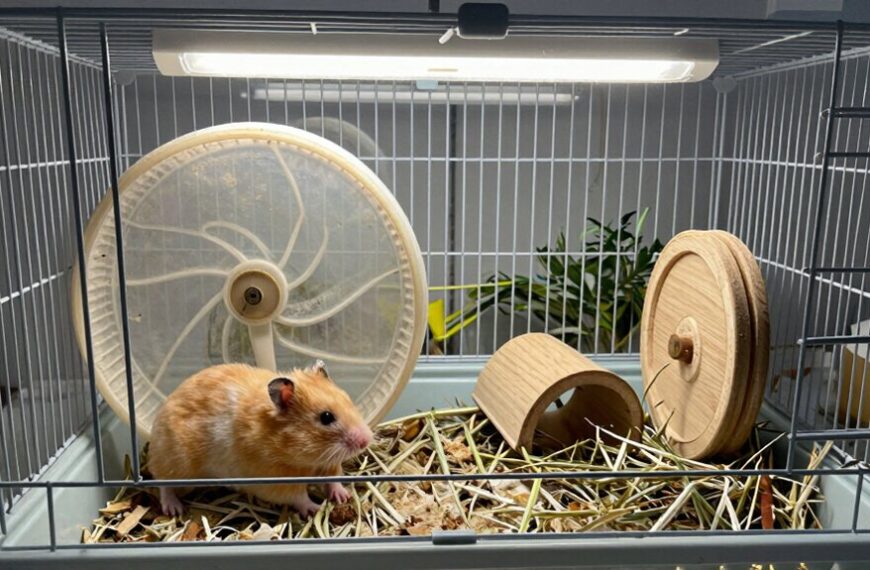
Not every hamster dreams of living underground. Some are born climbers, sprinters, and explorers at heart. If your hamster’s always on the move, a wire cage might be the perfect fit. These cages give your little buddy room to climb, jump, and burn off that endless energy.
With climbing bars built right in, your hamster can scale new heights like a tiny, furry mountaineer.
Plus, wire cages usually have space for big exercise wheels. Because let’s be honest, your hamster’s probably training for the hamster Olympics.
The open design lets air flow better and makes it easier for you to interact with your pet.
Just make sure the bars are close enough together, so your escape artist doesn’t pull a Houdini.
Wire cages keep active hamsters happy, healthy, and hilariously busy. A tired hamster is a good hamster. And really, who doesn’t love watching their pet zoom?
Why Glass Tanks Help Digging Hamsters
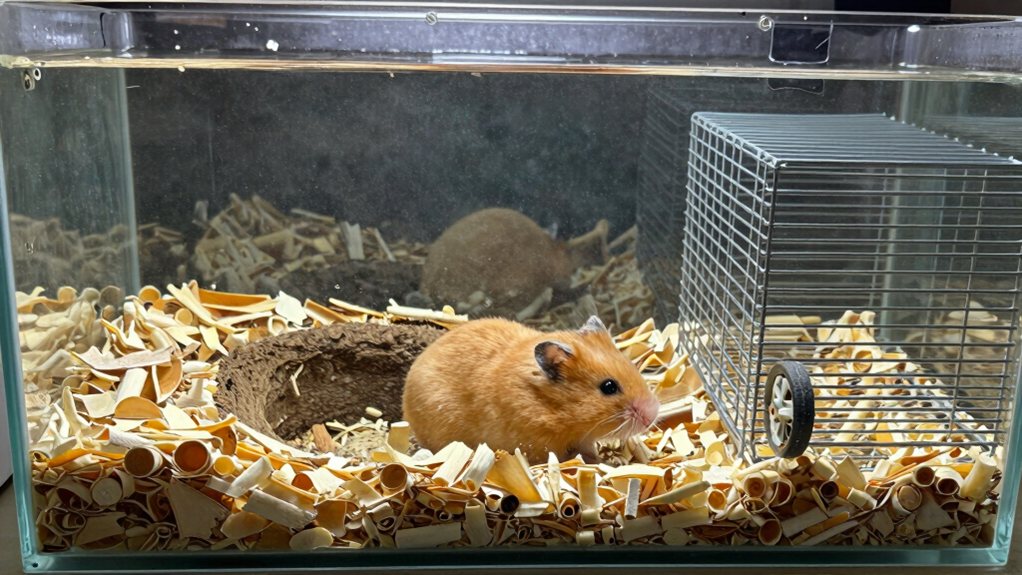
If your hamster spends more time burrowing than exploring, a glass tank might just be the ultimate dream home. You’ll love how the wide base gives your little digger plenty of room to tunnel to their heart’s content.
For burrow-loving hamsters, a glass tank is pure bliss—wide, deep, and perfect for tunneling adventures that let their inner architect shine.
With deeper substrate depth, think 6 to 12 inches, they can mimic their natural underground nests like a pro. No more half-hearted scoops in shallow bedding.
Glass tanks also offer better natural lighting. Just keep it out of direct sun, please, no sauna for your furball.
Plus, no bars means no chewed wires or escape attempts… probably. Sure, airflow needs a mesh lid, but hey, every diva needs proper ventilation.
Watching your hamster vanish into their self-made maze is equal parts adorable and impressive. You’ll feel good knowing they’ve got space to express their inner architect.
Cage vs. Tank: Which Is Safer?
So, which setup keeps your hamster safer—cage or tank? When it comes to escape prevention, tanks usually win. Those glass walls don’t have gaps for tiny Houdinis to squeeze through, unlike some wire cages. You’ll sleep easier knowing your little explorer isn’t plotting a great escape every night.
Tanks also offer better temperature control. Glass holds heat and humidity more evenly, so your pet stays comfy in all seasons. There are no chilly drafts or hot spots.
Cages, especially wire ones, can create uneven airflow, making it harder to keep a stable climate.
Sure, tanks are heavier and a pain to clean, but safety-wise, they’ve got the edge. Think of it like choosing between a cozy fortress and a breezy treehouse. Both are fun, but one’s just sturdier. Your hamster mightn’t send a thank-you note, but their safe, snoozing face will say it all.
Can You Use a Hybrid Cage-Tank Setup?

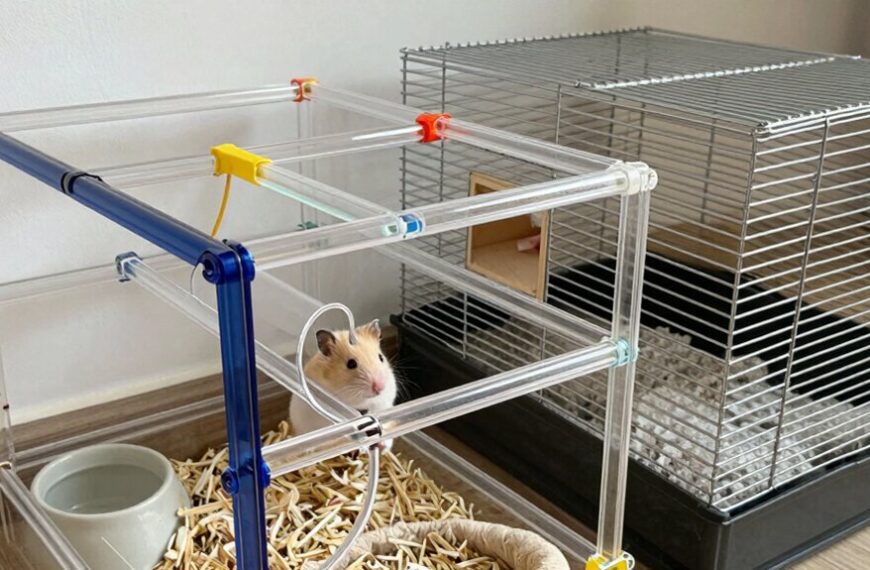
You can totally mix the best of both worlds with a hybrid cage-tank setup, think cozy hideouts from cages and clear views from tanks.
You’ll get great airflow and a front-row seat to your hamster’s adorable midnight workouts.
Plus it’s way easier to clean than you’d think.
Honestly, it’s like building a tiny studio apartment your hamster didn’t ask for but totally deserves.
A well-designed hybrid setup ensures minimum 360 square inches of floor space to support natural behaviors like running and digging.
Hybrid Setup Benefits
While you might think you have to choose between a cage or a tank for your hamster, why not have the best of both worlds? A hybrid setup gives your little buddy the perks of natural lighting and solid temperature control, without the drawbacks of either option alone.
You get ventilation from the cage part and containment from the tank side, making it a win-win.
Your hamster enjoys fresh air and sunlight, just like in the wild.
The glass helps regulate temperature, so it’s not too drafty or stuffy.
You can customize levels and tunnels, turning it into a mini hamster mansion.
It’s like giving your pet a studio apartment with a view and AC.
Seriously, they’ll be doing backflips, well, maybe just wheel runs, but you get the idea.
Ventilation And Visibility
You’ve already seen how a hybrid cage-tank setup can give your hamster the cozy, stable home they crave while still letting them enjoy fresh air and a bit of sunshine.
Now let’s talk ventilation and visibility, two big deals for your tiny buddy. Good airflow keeps the air fresh and prevents stuffiness, which your hamster will thank you for, probably with a happy wheel sprint.
Mesh tops or open sides help, especially if you place the setup where they get gentle natural lighting, just not in direct, scorching sunlight.
Plus, better visibility means you can watch their adorable antics without disturbing them.
And let’s be real: a setup with smart ventilation and clear sightlines boosts the aesthetic design of your room. It’s like pet parenting and interior decorating in one. Win-win.
Ease Of Maintenance
When it comes to keeping your hamster’s home clean and comfy, a hybrid cage-tank setup actually makes life a whole lot easier than you might think. You get the best of both worlds—great airflow from the cage top and a sturdy base from the tank that helps reduce waste buildup.
With a smart design, cleaning frequency drops because mess stays contained, yet access stays simple. The open-top cage lets you quickly scoop out soiled bedding without wrestling with tiny doors.
The solid tank bottom catches droppings and food scatter, making cleanup way less of a treasure hunt. You can swap out sections without fully dismantling the habitat—huge win on busy days.
You’ll spend less time scrubbing and more time watching your little buddy burrow like a pro. Honestly, it’s like having a dishwasher-safe hamster home.
A consistent weekly deep clean supports hygiene and mimics essential maintenance routines like laundry.
What Vets Say About Cages vs. Tanks
Ever wonder what your vet would say if you asked whether your hamster would rather live in a cage or a tank?
Curious what your vet would say about cage vs. tank for your hamster? The answer might surprise you—fresh air and space are top priorities for happy, healthy pets.
Well, most vets agree that when it comes to happy, healthy hamsters, ventilation and space matter most.
Cages usually win because they let air flow better, which helps prevent respiratory issues, something your little furball will thank you for.
Tanks can work, but only if they’re big enough and have a secure mesh lid for airflow.
Vets also stress the importance of easy cleaning and safe bar spacing to avoid escapes or injuries.
So while your hamster won’t hand you a written review, experts say a well-designed cage gives them the best mix of comfort and safety.
Think of it like picking a home: you want fresh air, room to explore, and no sneaky drafty corners.
Your vet wants your pet to thrive, not merely survive.
Listen to their advice, and your hamster will feel right at home.
Final Thoughts
So, do hamsters prefer cages or tanks? Well, it really depends on your little buddy’s personality. If they’re super active, a ventilated wire cage gives them room to climb and explore.
But if they’re all about digging tunnels like tiny miners, a glass tank holds bedding better. Both can work. You just need to meet their needs.
Talk to your vet, get creative, and hey, maybe try a hybrid setup. Your hamster might just throw you a grateful nibble.