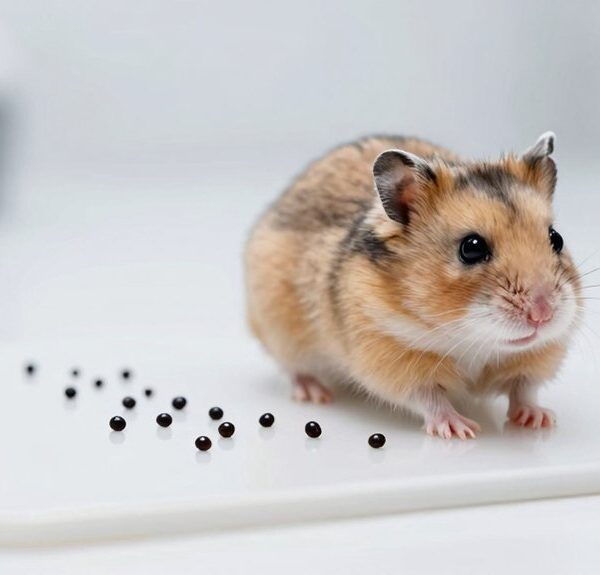
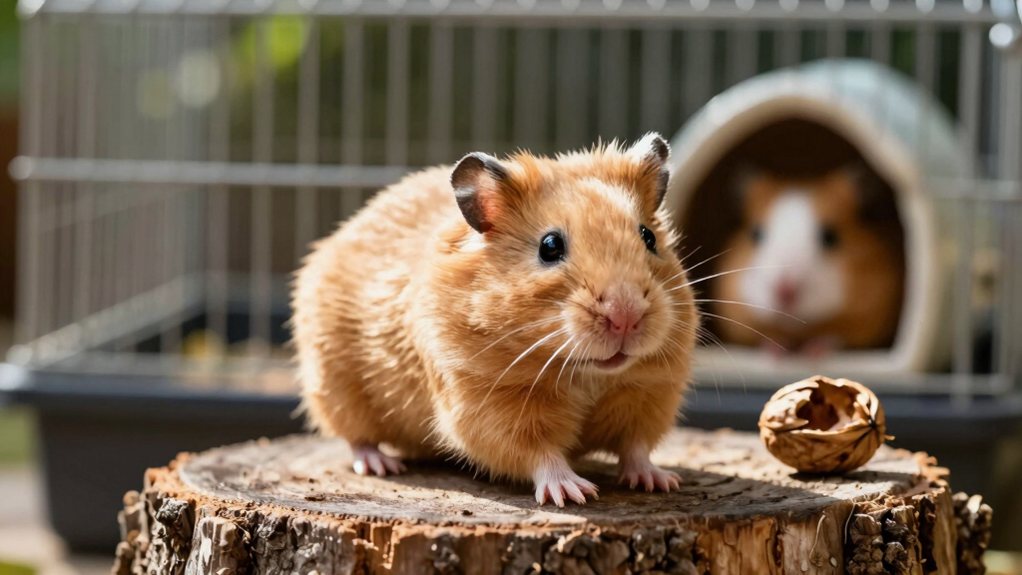
No, hamsters don’t usually pee where they sleep. You’d be surprised how picky these tiny roommates are. They naturally pick one corner for bathroom breaks, keeping their cozy nest clean and dry.
It’s their instinct to separate sleep, eat, and pee zones, kind of like your own bedroom, kitchen, and bathroom. If you spot wet bedding in their nest, something’s off—maybe stress, illness, or a setup issue. Spotting this early helps keep your little buddy happy and healthy.
There’s more to their quirky habits than meets the eye.
Do Hamsters Pee Where They Sleep?

Ever wonder if your hamster treats their cozy sleeping nook like a full-time bathroom? Good news—you’re in luck! Hamsters are actually pretty clean creatures and usually don’t pee where they sleep.
Thanks to their nocturnal habits, they’re most active at night, scampering around to eat, play, and yes, use the bathroom, just not in their nest.
They tend to pick a specific corner for pee, kind of like their own tiny toilet. It’s part of their natural instinct to keep their sleeping area safe and tidy.
While they don’t have a complex social hierarchy like some animals, they still value personal space and cleanliness.

ODOR CONTROL for long-lasting freshness. Kaytee Clean & Cozy can be used with any type of habitat for a fresh animal home.

ODOR CONTROL for long-lasting freshness. Kaytee Clean & Cozy can be used with any type of habitat for a fresh animal home.
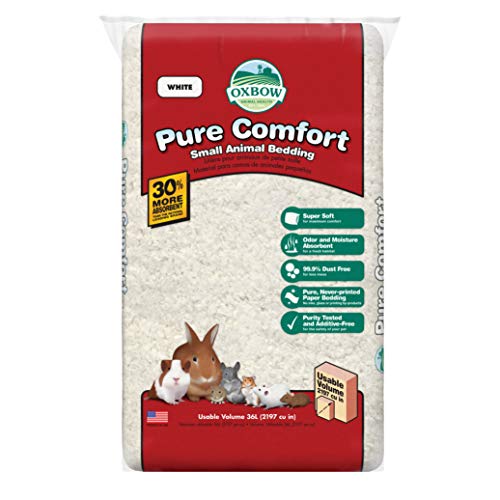
ODOR ABSORBENT TO MINIMIZE PET ODORS: Effectively neutralizes odors to keep bunny bedding & hamster bedding fresh; Ideal for pet bedding, ferret cages, and litter boxes, it helps maintain a clean environment for your pets and a better experience for you
Why Do Hamsters Pick One Spot to Pee?
You’ve probably noticed your hamster always peeing in the same corner. Turns out, they’re more than just being quirky, they’re actually staking their claim.
By picking one spot, they use their scent to mark territory and feel more in control of their little kingdom.
Think of it like leaving a tiny “I was here” note, hamster-style!
Potty Spot Preference
Why do hamsters always seem to pick the same corner for their bathroom breaks? Well, it’s more than random—they’re actually pretty smart about it. You’ll notice they choose a spot far from their food storage and cozy nesting areas, keeping things clean where it counts.
This little habit helps them stay healthy and their space smelling fresh, well, fresher.
Think of it like your own bathroom being separate from your kitchen and bedroom. Makes sense, right? Hamsters are instinctively tidy, and picking one potty spot is part of their natural routine.
It’s kind of impressive, honestly. So next time you see your furry friend heading to their favorite corner, give them a little mental high-five. They may be small, but they’ve got their life organized—one pee spot at a time.
Scent Marking Behavior
While it might look like your hamster’s just being quirky by using the same corner every time, there’s actually a clever reason behind it. This isn’t just a potty spot, it’s a personal billboard.
Your hamster uses scent glands near their hips and belly to rub against surfaces, leaving behind a unique signature.
Combined with urine composition that carries individual info, this marks territory and says, “Hey, I live here!”
It’s how they feel secure and communicate in their quiet, smelly way.
Here’s what that little corner really means:
- Ownership – “This is mine!”
- Comfort – Familiar scents reduce stress
- Communication – Other hamsters (or you) get the message
- Routine – Predictability =安全感 (safety!)
Territory Control Instinct
Even though your hamster’s cage looks like a tiny kingdom, that one corner they always pee in? That’s no accident. It’s strategy.
You see, your little furball is quietly declaring, “This is mine!” through scent dominance. By peeing in the same spot, they’re marking territorial boundaries, just like a tiny, furry landlord.
It’s their way of saying, “Hey, world, I live here — and this corner? Prime real estate.”
While it might seem odd, this instinct helps them feel secure and in control. Think of it as their version of hanging a “Do Not Disturb” sign, but in pee form.
Cute, right?
Can Stress or Illness Cause Pee Accidents?
Ever wonder why your usually tidy hamster suddenly starts leaving little wet spots around the cage? Stress or illness could be the sneaky culprits.
Sudden wet spots in your hamster’s cage? Stress or illness might be to blame—don’t ignore the signs.
When your tiny buddy feels anxious, maybe from loud noises or a cage mate, it might pee more often, even in its favorite sleeping corner.
Illnesses like urinary infections can also lead to accidents. These are often paired with noticeable behavioral changes like lethargy or grumpiness.
Don’t panic—just keep an eye out for signs and act fast. Here’s what to watch for:
- Frequent, small puddles outside the litter box
- Cloudy or strong-smelling pee (yep, really)
- Licking the genital area more than usual
- Sudden grouchiness or hiding more than normal
If you spot these, a vet visit could save the day. Your hamster’s health—and your carpet—will thank you.
Does Cage Setup Influence Where Hamsters Pee?

You’d be surprised how much your hamster’s cage layout shapes where they decide to pee, just like you wouldn’t want to go to the bathroom right where you eat. They’ve got preferences too.
If you pile the bedding deep in one corner, they’ll likely treat it like their personal restroom, especially if it’s away from their food and nest.
Cage Layout And Habits
- Place a litter box where they naturally go
- Keep the wheel away from sleeping nooks
- Expand cage size for better zoning
- Use bedding that absorbs and contains odors
You’re more than building a cage, you’re shaping a tiny hamster world.
Bedding Choice Matters
While your hamster mightn’t come with an instruction manual, they definitely have preferences, and their bedding is more than just fluff. Choosing the right bedding can make a big difference in where your hamster decides to pee.
Bedding absorbency matters because highly absorbent materials help control odors and keep your pet drier, which means fewer wet spots near their cozy sleep corner. You don’t want your hamster slipping on a pee-soaked nest.
Also, always check for material safety. Avoid dusty or chemically treated bedding that could irritate their tiny lungs. Paper-based or aspen shavings are great picks.
A smart bedding choice shapes your cage setup and guides your hamster’s habits. Think of it like picking the right mattress—comfortable, safe, and leak-resistant. Your hamster might still have quirky pee spots, but good bedding helps steer the stream, literally.
Can You Litter-Train a Hamster?
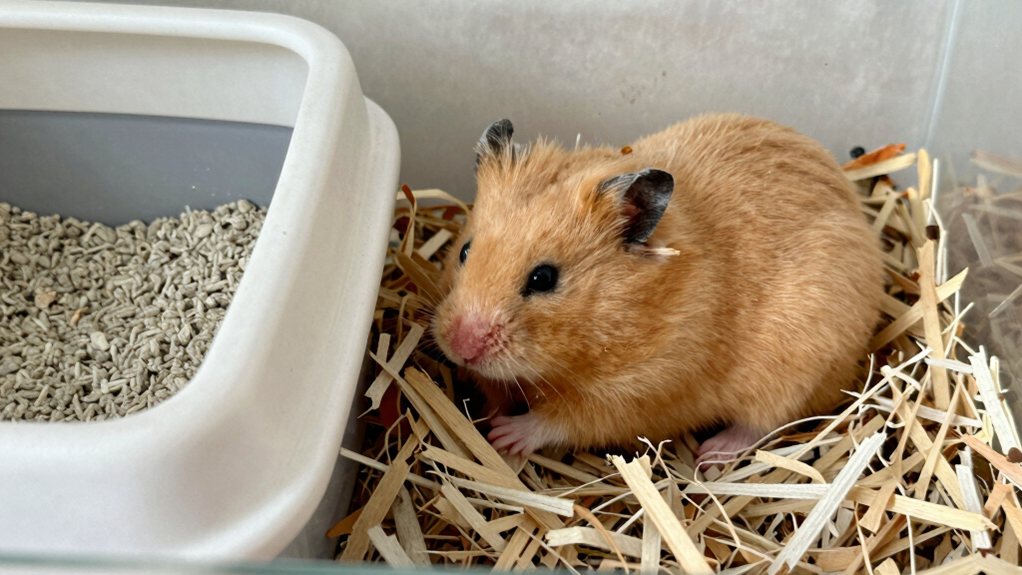
- Place a litter box in their favorite bathroom corner.
- Use safe, non-clumping paper-based litter.
- Transfer soiled bedding to the box to reinforce the scent.
- Clean accidents outside the box promptly, no scolding though!
It’s not perfect, but progress is possible. Think of it as hamster potty training: more “guided luck” than precision.
You’ll still spot a stray drip, but hey—every little win counts when you’re sharing your home with a tiny, furry roommate!

【Safety First for Our Fur-babies】Crafted with premium plastic, our Rabbit potty tray is odorless and safe for your pet's daily activities, giving you peace of mind.

MATERIAL: The bunny litter box is made of durable, stain and odor resistant plastic. The bottom is reinforced to withstand small animals of 3-8 kg

SIZE:9-1/2 inch length,6-1/2 inch width,4 inch high. The ideal size is suitable for small guinea pigs, hamster, baby rabbit, chinchillas and galesaur or other small animals. Please note that the potty is relatively small, and it isn't fit for adult rabbit or relatively large rats
How to Clean So Pee Stays Out of the Nest
Keeping your hamster’s nest clean and dry is a lot easier when you stay one step ahead of the pee patrol. You know your little buddy likes to keep things cozy, but pee in the nest? Not so cute.
Stay ahead of the pee patrol—because nobody wants a soggy nest. Keep it dry, keep it cozy, and your hamster will thank you with happy, healthy zzz’s.
To protect sleep hygiene, spot-clean wet spots daily, yes, really. Use a small scoop or tissue to remove any damp bedding moisture before it spreads.
Replace soggy bits with fresh, absorbent bedding like paper-based or aspen shavings. Skip the cedar, it’s harsh.
Place a litter box or small tray in their favorite corner, many hamsters pick one spot to go.
Rotate toys and hideouts to discourage marking.
A dry nest means happier naps and healthier hamsters. Think of it like tidying your room before bed, nobody wants to sleep in a swamp! Stay consistent, and you’ll both breathe easier. Literally.
What Are the Signs of Bad Bathroom Habits?
Ever wonder why your hamster’s cage still smells off even after cleaning? It might be more than just a messy roommate. It could signal bad bathroom habits. Keep an eye out for these signs:
- Damp bedding in the nest – Could point to bedwetting issues.
- Cloudy or strong-smelling pee – A red flag for urinary infections.
- Frequent licking of the genital area – Your hamster might be uncomfortable.
- Avoiding the usual bathroom corner – They’re usually creatures of habit!
If you spot these, don’t panic. But do call your vet. Catching urinary infections early makes treatment easier.
And while we’re at it, no, hamsters *shouldn’t* pee where they sleep. Just like you wouldn’t nap in a bathroom! A little vigilance keeps your tiny buddy happy, healthy, and fresh-smelling.
Final Thoughts
You might catch your hamster peeing where they sleep, but don’t worry, it’s totally normal. They often pick one spot for everything, even if it’s cozy.
Stress or illness can change their habits, so keep an eye out. A smart cage setup helps, and yep, you can even litter-train them (kind of).
Clean gently, watch for red flags, and remember: tiny creature, tiny messes. You’ve got this!

Harvest Flowers: Natural flowers are a beautiful pop of color in hamster bedding. Beautiful and gorgeous flowers and branches, hamster spray is made from hand-picked, carefully selected natural flowers and dried, fresh and without additives, natural raw materials, neatly trimmed branches, hamster cage decoration is the perfect hamster bedding

Natural Enrichment for Small Pets: This hamster bedding is made from carefully selected dried plant sprays, creating a realistic habitat that supports instinctive foraging, exploring, and nesting behaviors for hamsters, gerbil, mouse, and other small animals in their cage

The size of the large hamster cage platform is 9.84 * 5.9 * 4 inches. The size of the climbing hamster ladder is approximately 11.02x 4.65x2.76 inches, and the platform and tunnel ladder shelter are large enough for small animals to move freely, making it suitable for most hamster cages. The hamster hiding tunnel is very suitable for hamsters to hide, climb, and sleep. The hamster tunnel ladder is very suitable for connecting to hamster houses, hamster platforms, or hamster houses.