You can swap a sand bath for a water bath sometimes, but not always, think of sand like an oven and water like a slow cooker. Sand handles high heat like a champ, going way past water’s 100°C limit, and it’s low-maintenance with no spills.
Water wins for gentle, precise heating, especially with delicate samples. Your pick depends on temperature, container, and what you’re working with. Stick around, and you’ll see which one truly fits your lab’s rhythm.
What Is a Water Bath: And Why Is It a Lab Staple?
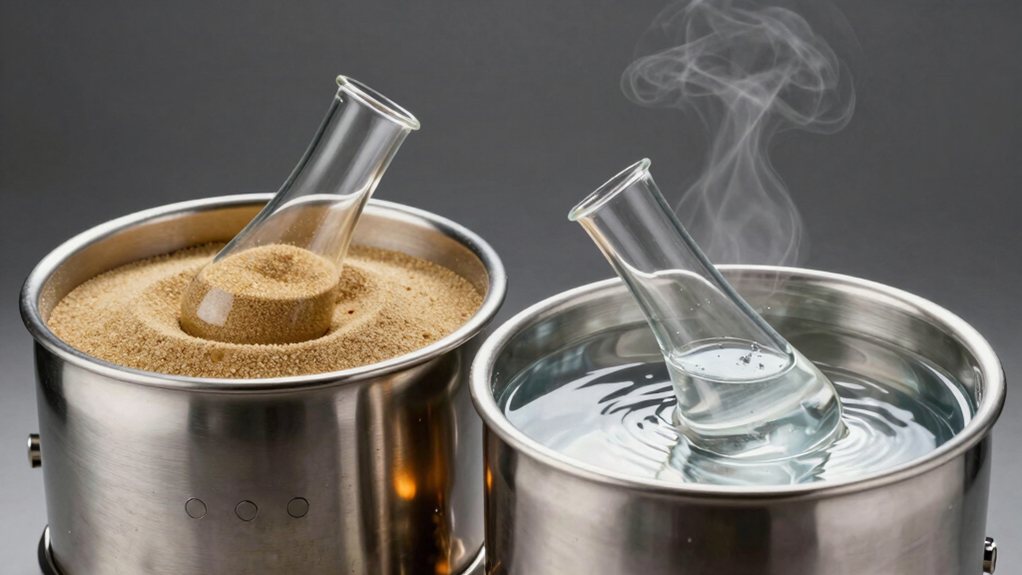
Ever wonder how scientists keep their test tubes from turning into tiny science explosions? That’s where a water bath comes in, it’s like a cozy hot tub for your lab gear. Instead of cranking up a flame, you gently heat samples using warm water, which spreads heat evenly thanks to its solid thermal conductivity. This keeps reactions calm and consistent, especially for stuff that freaks out under direct heat.
Plus, water’s low evaporation rate means you don’t have to refill it every five minutes. You get stable temps without the drama.
Labs love water baths because they’re reliable, safe, and perfect for delicate tasks like warming cultures or dissolving solids. Think of it as the gentle giant of the lab, quiet, steady, and always there when you need it.

Safety Design:EAAKKOOM instant water heater has passed UL certification testing and features a high-quality stainless steel protective cover, effectively preventing direct contact between heating elements and people or animals. The rust-resistant design ensures durability. Our immersion water heater is equipped with intelligent temperature control, automatically cutting off power when water temperature reaches 75°C (165°F).Warning:Always submerge the heater in water before plugging it into the outlet. Ensure the heater is fully immersed to prevent fire hazards.

【PRODUCT DETAILS】Products Size:13.39"×7.87"×8.66", Studio:11.8"×5.9"×5.5". Beaker holes can be easily resized according to the needs of the project and users.2 openings, 6L capacity, 600W power

Ultimate Safety: Anti-Dry Burn & Auto Shut-off: Safety is paramount for any portable immersion water heater. Our device is equipped with advanced anti-dry burn technology that cuts power instantly if the water level is too low. As a reliable water immersion heater, it also features an intelligent thermostat: it stops at your set temp and restarts if the water drops by 15°F, providing consistent warmth safely.
How Does a Sand Bath Actually Work?
So, what’s keeping your samples toasty in a sand bath? Sand! Yep, good ol’ sand, just like at the beach, but way less fun for building castles. When you crank up the hot plate, the sand heats up slowly, thanks to its low thermal conductivity. That means heat moves through it gradually, giving your glassware a nice, even warmth without sudden spikes.
Think of it like baking cookies: you don’t want burnt edges and a gooey center, right? Sand’s solid structure also gives it great heat retention, so it holds onto warmth like your favorite hoodie on a chilly morning.
Even heat is key—like baking cookies without the burn. Sand holds warmth like your favorite hoodie, keeping reactions cozy and consistent.
That steady temp is perfect for gentle reactions or evaporating solvents without boiling things over.
Sure, it’s not as fast as a water bath, but it’s a solid (pun intended) choice when you need consistent, controlled heat. Just don’t forget the sunscreen. Kidding!
Can Sand Baths Match Water’s Temperature Precision?
You’ve got that cozy, even heat from the sand bath working for you, great for keeping things stable and avoiding hot spots. But can it match water’s temperature precision? Honestly, not quite.
Water has higher *thermal conductivity*, so it heats and cools more evenly and responds faster to adjustments. Sand holds heat really well, excellent *heat retention*, but it’s slower to react, kind of like your oven versus a microwave.
That means fine-tuning temps takes patience.
If you need spot-on accuracy, like for delicate chemistry or lab work, water still wins. But for steady, gentle warmth over time, sand’s your buddy.
It’s not a perfect swap, but in the right situation, it’s a solid backup.
Think of it like this: water’s the precision chef, sand’s the slow-cooker pro. Both useful, just pick the right tool for your job.
When Does a Sand Bath Work Better Than Water?
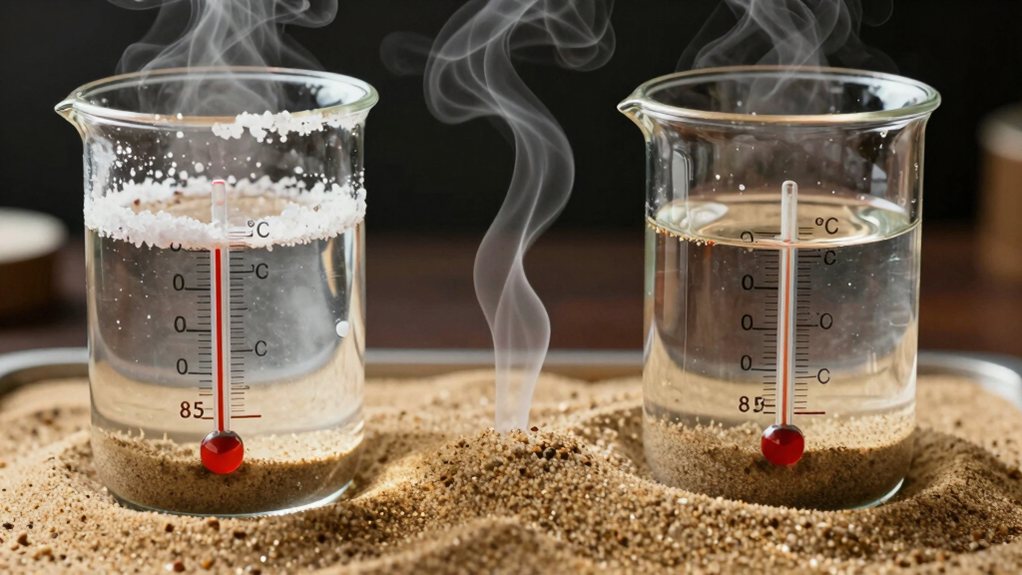
You’re better off grabbing a sand bath when your experiment needs serious heat, water just can’t compete past its boiling point.
Sand spreads warmth evenly, so your samples won’t feel left out or get hot spots.
Plus, let’s be real, nobody wants water sneaking into their stuff and causing a chemistry mishap.
High Temperature Needs
Ever wonder why your lab mate reaches for sand instead of water when the heat really cranks up? It’s all about high temperature limits. Water baths max out around 100°C. Once you hit boiling, things get steamy, literally.
But sand? It laughs at those numbers. With sand, you can safely go way beyond, often up to 300°C or more, thanks to its solid thermal stability. No boiling, no evaporation, just steady, even heat.
So when your experiment needs serious warmth, like drying glassware or running high-temp reactions, sand’s your go-to. It holds heat longer and spreads it evenly, reducing hot spots.
Sure, it’s not ideal for delicate work, but for rugged, high-heat jobs, sand wins.
Think of it as the tough-as-nails cousin of the water bath. Less splash, more sizzle. When the heat’s on, sand’s got your back.
Even Heat Distribution
Why does your reaction suddenly behave better when you switch from water to sand? It’s all about even heat distribution. Sand heats more slowly than water, but once warm, it holds and spreads heat steadily.
Water has higher thermal conductivity, sure, but it can create hot spots, especially at higher temps. Sand is like nature’s slow cooker: gentle and consistent.
You get better heating uniformity, meaning your samples aren’t getting scalded in one spot and ignored in another.
Think of sand as the calm, reliable friend who keeps things even when the lab gets chaotic.
When precision matters and you’re working above water’s boiling point, sand steps up.
So, if your experiment’s acting moody, maybe it just needs the steady warmth of a sand bath.
Sometimes, slow and steady really does win the race, especially when you’re cooking up science.
Sample Contamination Risk
What if the very thing keeping your experiment clean isn’t fancy glassware or a high-tech hood, but good old-fashioned sand?
Sand baths lower sample contamination risk because sand is chemically stable and won’t react with most substances.
Unlike water, which can grow microbes or leach impurities, dry sand stays inert.
This makes it great for sensitive reactions.
Plus, sand offers better material compatibility with certain labware, reducing the chance of cracks or leaks from thermal stress.
You’re doing more than just heating your sample. You’re shielding it.
Sure, sand won’t replace water in every case, but when purity matters, it’s a quiet hero.
Think of it like using a cast-iron skillet instead of a flimsy pan. Reliable, tough, and no surprises.
So next time contamination’s a worry, remember: sometimes, the dirtier option is actually cleaner.
Who knew?
When Is a Water Bath Still the Best Choice?
So, you’re wondering when that trusty water bath still wins the race over a sand bath?
Well, sometimes old-school is just better, especially when these four things matter most:
- You’re working with water-soluble chemicals. Water baths offer better chemical compatibility without risking reactions.
- You need even, gentle heat for delicate samples. Water distributes warmth more evenly than sand.
- You hate constant upkeep. Water baths typically require less maintenance frequency than sand baths, which can clump or burn over time.
- You’re on a tight budget. Water is cheaper than buying and replacing fine, lab-grade sand.
Sure, sand baths have their moment in the sun, or under the burner.
But when precision, safety, and simplicity are key, your water bath isn’t just good, it’s golden.
Stick with it, and you’ll keep your experiments running evenly.
No sand in your shoes required.
Are Sand Baths Safer Than Water Baths?
You’ve seen how water baths shine when it comes to delicate work and low maintenance. Now let’s talk safety, because nobody wants a lab surprise that ends in a jump scare or a singed eyebrow.
Sand baths offer better thermal stability than water baths, heating evenly without hot spots that could ruin your sample. Since there’s no liquid, you also skip the risks of spills, splashes, or steam burns. That means far less worry about evaporation control. No topping off water or dealing with condensation.
Plus, sand won’t grow bacteria or need frequent cleaning like water.
Sure, sand takes longer to heat up, but once it’s warm, it holds steady like a cozy campfire. You’re in control, with fewer moving parts and no boiling over at 2 a.m.

TEMPERATURE RANGE: 20 to 100°C (68-212°F)

HIGH-PRECISION TEMPERATURE: The JoanLab Thermostat Water Bath has a wide temperature range, ranging from room temperature to 100°C. The distinguishability is 0.1°C. The digitally controlled temperature can be set along with a built-in timer, which ranges from 0-999 minutes.

【PRODUCT DETAILS】Products Size: 7.87"×7.87"×7.87", Studio: 6.3"×6.3"×5.1". Beaker holes can be easily resized according to the needs of the project and users.1 opening, 3L capacity, 300W power.
Which Containers Work Best in a Sand Bath?
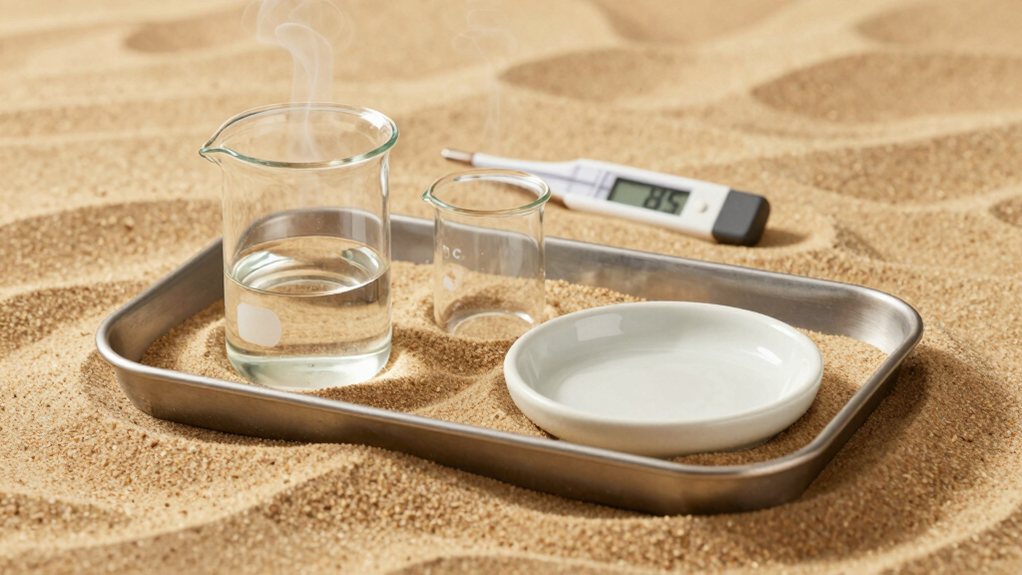
You’ll want to pick the right container if you’re going to get the most out of your sand bath, trust me. Glass and metal work best because they spread heat evenly without cracking.
Unlike water baths, where shape isn’t a big deal, in sand, shorter, wider containers heat up faster and stay steady without tipping over.
Just picture your container cozy in the sand like a beachgoer catching rays. It’s gotta fit just right to cook right.
An acrylic container with half-transparent lid helps minimize sand scatter while supporting natural digging behavior.
Best Container Materials
When it comes to picking the right container for your sand bath, just any dish from the back of your cupboard will do.
Some materials handle the heat like a champ, while others throw in the towel, sometimes literally, if they crack and spill.
You’ll want to focus on thermal conductivity and material durability so your setup stays safe and effective. Here are the top picks:
- Stainless steel – heats evenly, tough as nails, and won’t rust.
- Borosilicate glass – great heat resistance, though a bit fragile if dropped.
- Cast iron – holds heat like a dream but needs seasoning and care.
- Ceramic (glazed) – stylish and steady, just make sure it’s oven-safe.
Avoid plastic or thin aluminum. They warp or melt faster than ice cream in July.
Choose wisely, and your sand bath will thank you with steady, reliable warmth every time.
Heat Distribution Comparison
Ever wonder why some containers heat up evenly while others leave you scrambling to adjust the flame? When using a sand bath, the container’s material makes a big difference. Materials like stainless steel and aluminum have high thermal conductivity, so they spread heat fast and evenly, no hot spots sneaking up on you.
Glass? Not so much. It’s slower to respond and can crack under sudden changes.
But here’s the kicker: even with great thermal conductivity, heat retention matters just as much. Thick-walled containers hold heat longer, giving you a steadier temp—perfect for delicate tasks.
Think of sand like a cozy blanket, holding warmth gently around your pot or beaker.
Size And Shape Matters
Just because your pot heats evenly doesn’t mean it’s playing nice with the sand, size and shape can make or break your setup.
When using a sand bath, you’ve got to pick the right container to guarantee solid thermal conductivity and material compatibility. Here’s what works best:
- Flat-bottomed pans sit flush in the sand, spreading heat evenly.
- Round vessels? Not ideal. They wobble and create hot spots.
- Thin metal containers heat fast but can overreact. Go for thick, even walls.
- Glass beakers work if tempered, but avoid sudden temp swings.
You want snug contact between sand and container—no gaps!
Think of it like a cozy hug: too loose and it’s awkward, too tight and things get weird.
Match your gear to the sand’s flow, and you’ll cook or experiment with way less stress.
Is a Sand Bath Worth the Cost Over Time?
While you might think splurging on a sand bath sounds like something only desert spas do, it’s actually a smart long-term move if you’re tired of wrestling with water baths that leak, rust, or take forever to heat up.
You’ll save money over time thanks to its cost efficiency, no more replacing parts or dealing with moldy hoses.
Sand baths heat up faster and hold warmth longer, so you’re not burning electricity all day.
That means real long term savings on your energy bill.
Plus, they’re tough, no corrosion, no leaks, just set it and forget it.
Sure, the upfront price might make you blink, but think of it like buying a solid cast-iron pan instead of a flimsy one that warps.
A little more now, a lot less stress later.
Honestly, your future self will thank you while you’re kicking back, warm and worry-free.
Should You Switch From Water to Sand?
So, is it time to ditch the water bath and let sand take the spotlight? Maybe, but let’s break it down.
Switching from water to sand isn’t just a trend, it’s a practical choice for some. Here’s what you should consider:
Thermal conductivity: Sand heats slower but holds heat longer, giving you steady temps without wild swings.
Maintenance frequency: Say goodbye to daily water changes, sand wins with less frequent upkeep.
No more evaporation worries! Your bath stays stable, even during long experiments.
Cleanup’s a breeze, well, a sandy one, and spills aren’t a soggy mess.
Sure, water baths have their charm, but sand? It’s the low-maintenance, heat-hugging hero you didn’t know you needed.
If you’re tired of refilling and regulating, switching might just make your lab life a whole lot easier and a little more beachy.
Final Thoughts
You’ve got options, and that’s a good thing! A sand bath won’t replace your water bath completely, but it can definitely lend a hand, especially when you need higher heat or worry about spills. Think of it like swapping a pot of soup for a frying pan: different job, different tool.
Use water for gentle, even warmth. Reach for sand when things need to kick up a notch. Both have their place, so keep both in your lab toolkit. No need to choose sides!

Soft and Plush Chenille - OLANLY's chenille bathroom rugs boast an elegant striped design, bringing a touch of modern luxury to your space. Each step onto the thick and soft chenille floor mat delivers a luxurious feeling, pampering your feet with spa-like comfort. With high pile density and ultra-plush texture, these rugs offer superior comfort. They keep feet warm on cold tile floors, ideal for families with toddlers and seniors, or anyone who loves cloud-like softness underfoot.

Soft and Plush Chenille - OLANLY's chenille bathroom rugs boast an elegant striped design, bringing a touch of modern luxury to your space. Each step onto the thick and soft chenille floor mat delivers a luxurious feeling, pampering your feet with spa-like comfort. With high pile density and ultra-plush texture, these rugs offer superior comfort. They keep feet warm on cold tile floors, ideal for families with toddlers and seniors, or anyone who loves cloud-like softness underfoot.

[Stylish and Cloud-Like Comfort] OLANLY's plain-colored bright-velvet memory foam bath mat enhances any bathroom aesthetic with elegant design. Well-suited for families with kids, pet owners, small apartment living, single dwellers seeking daily luxury, or thoughtful selections. The ultra-soft memory foam bright velvet outer layer plus thick cushion memory foam contours to your body, offering a cloud-like experience with every step.