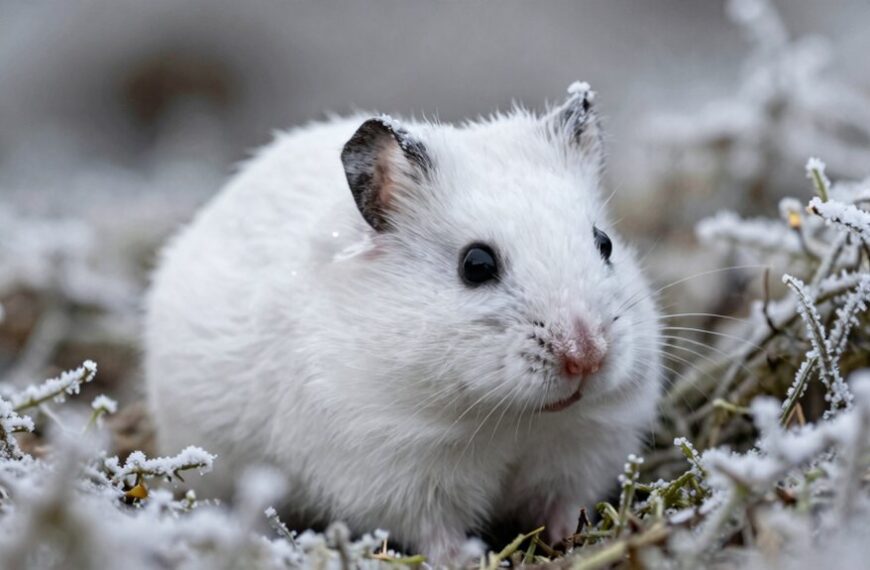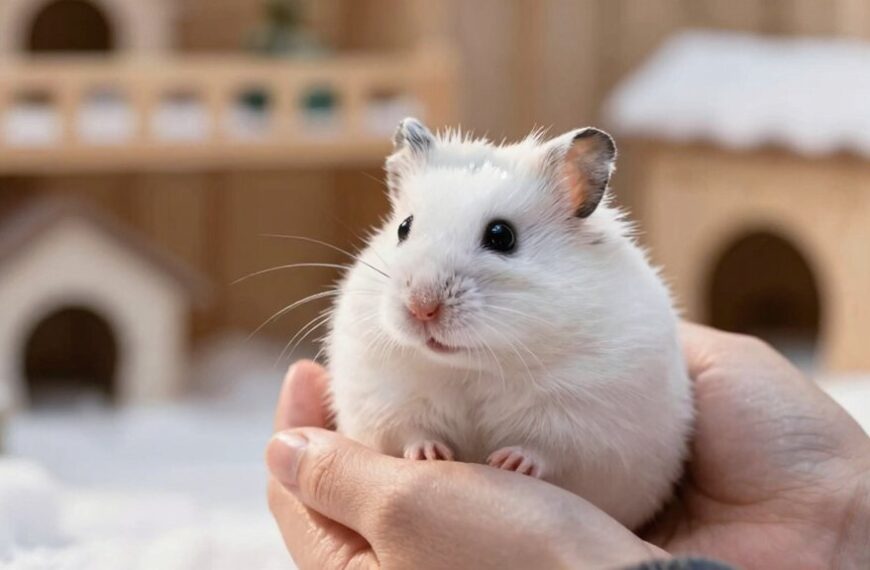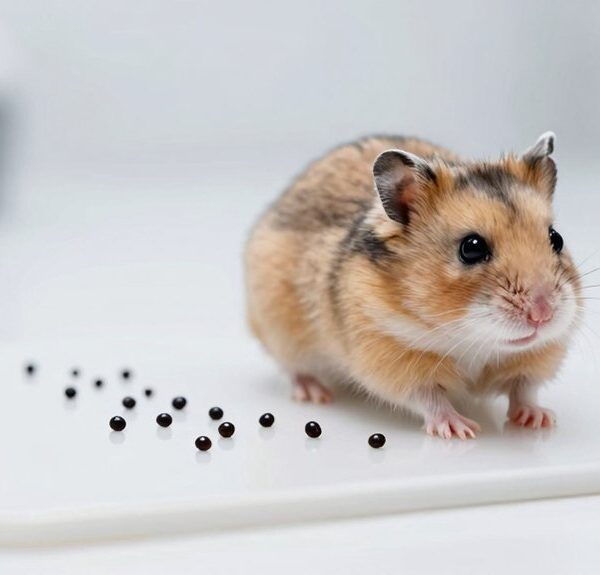
Yes, your Russian hamster can live alone, and honestly, they’ll probably love you more for it. These little introverts thrive solo, using their cage as a personal kingdom without roommates to steal snacks or hog the wheel.
Pairing them often ends in drama, not friendship. Give them space, a solid wheel, and daily chin scratches, and they’ll be your happy, low-maintenance buddy. Stick around—you’ll see just how content a solo hamster can be.
Can Russian Hamsters Live Alone?
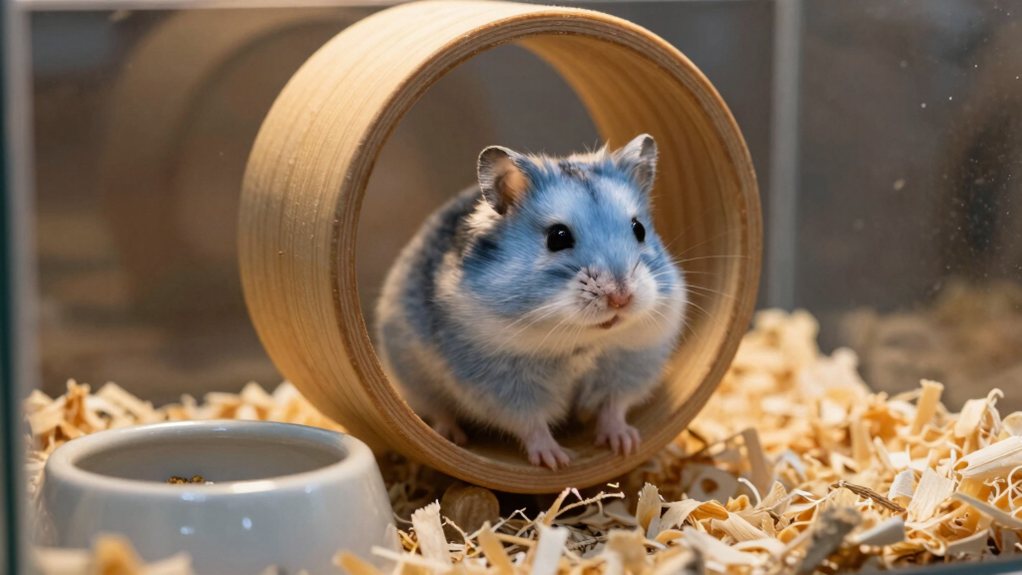
So, can Russian hamsters really live alone? Yes, they absolutely can, actually prefer it! Unlike some pets that crave constant company, your little Russian hamster is perfectly happy flying solo.
Thanks to their natural instincts, they’re territorial and might even get grumpy if you try to share their space. Think of them as the introverts of the rodent world: happiest with some alone time, especially during their active nocturnal behavior.
You’ll catch them zooming around at night while you’re fast asleep. Just make sure their cage is cozy and stocked with fun toys.
When it comes to dietary preferences, they love seeds, veggies, and the occasional treat. Just don’t overdo the sunflower seeds, or you’ll have a chubby little roommate! With the right care, your solo hamster will thrive, living their best quiet, nighttime life.
Why Do Russian Hamsters Prefer Living Solo?
You know how some people just need their personal space? Well, Russian hamsters are kind of like that. They’re territorial by nature and see cage mates as uninvited roommates crashing their pad.
They’ve got solitary survival instincts baked in, so sharing isn’t caring for them.
And honestly, having a buddy around can stress them out more than a pop quiz on Monday morning.
Territorial By Nature
While they might look cute enough to snuggle up together, Russian hamsters are actually wired to go solo from the start. You see, they’re territorial by nature. Your tiny furball sees their cage as their kingdom, and sharing isn’t part of the deal.
Thanks to their nocturnal habits, they’re up and running when you’re asleep, digging and exploring like tiny underground architects. That burrowing behavior is more than just for fun. They’re claiming space, building tunnels, and setting boundaries, all on their own schedule.
Try adding another hamster, and you’re basically crashing their personal party. Drama and bites will follow. They don’t get lonely like we do. In fact, they’d rather have you than a roommate.
Solitary Survival Instincts
Russian hamsters aren’t just picky about roommates. They’re built to fly solo, thanks to instincts that go way back in the wild. Here’s why going solo works so well for them:
Their nocturnal habits mean they’re up and running when everyone else is asleep, perfect for avoiding drama and staying stealthy.
With strong burrowing behavior, they dig complex tunnels to claim their own space and feel secure.
In the wild, sharing territory could mean fighting for food, so living alone reduces stress and snack theft.
They’ve evolved to handle life solo. No roommates, no mess, no awkward hamster breakups.
You’ve gotta admire their independence! They’re not being antisocial. They’re just wired to thrive alone.
Stress From Companionship
Ever wonder why your Russian hamster turns into a tiny, furry tornado when another hamster comes near? It’s more than grumpiness. These little guys are hardwired to live solo.
In the wild, they don’t deal with social hierarchy drama or share burrows. Throw another hamster in the mix, and stress spikes fast. No chill, no roommates—just panic.
Even mating rituals are quick and to the point, followed by, “See ya, wouldn’t want to be ya!”
Trying to pair them up? That’s asking for fights, anxiety, and a shredded habitat. Your hamster isn’t being antisocial; it’s just being true to its instincts.
Living alone keeps them calm, safe, and in control of their tiny kingdom.
What Happens If You House Russian Hamsters Together?
If you house Russian hamsters together, you might think you’re giving them a buddy, but you’re actually setting up a tiny turf war. They’ll get aggressive, fight over space, and stress each other out.
Seriously, their little cheeks puff up like they’re permanently mad. Instead of cuddling, they’re more likely to treat each other like roommates from a reality TV show gone wrong.
Aggression And Fighting
What could go wrong when you toss two Russian hamsters into the same cage thinking they’ll be best buds?
Well, let’s just say it’s less “cute snuggle party” and more “tiny furry MMA match.”
These little guys aren’t fans of roommates, especially with food hoarding and nocturnal activity making things tense.
Here’s what might go down:
They’ll fight over territory, even that corner with the chewed-up wheel.
One might bully the other away from food, leading to stress and hunger.
Nocturnal activity turns into midnight wrestling instead of peaceful nibbling.
Injuries happen fast, biting, scratching, and yes, sometimes worse.
It’s not that they hate everyone, they just prefer flying solo.
So unless you want a hamster soap opera full of drama and tiny battle scars, keep them in separate pads.
Your pets and your peace will thank you.
Territorial Behavior Issues
You just saw how quickly things can turn into a tiny tussle when two Russian hamsters share a space.
Now let’s talk about why that cage might feel more like a kingdom than a home.
These little furballs are fiercely territorial, and each one sees your pet’s enclosure as *their* personal castle.
Thanks to their natural burrowing behavior, they dig tunnels and claim spots they don’t want to share.
Even if they seem calm at first, stress can spark drama fast.
And because they’re nocturnal habits, you might miss the midnight skirmishes—only to find chewed bedding or a displaced hideout in the morning.
Housing them together? It’s like forcing roommates to share a bedroom with zero boundaries.
Spoiler: it rarely ends well.
Keep them solo, and you’ll save yourself (and your hamsters) a lot of grief.
One cage, one boss—simple as that.
Stress And Health Risks
Ever wonder why your Russian hamster acts like a tiny, furry general guarding a fortress? It’s because they’re naturally solitary.
Forcing them to share space can backfire fast.
When housed together, stress spikes, leading to real health risks.
You’ll notice changes in their behavior and body that hint at bigger problems brewing. Here’s what can go wrong:
- Fighting and injuries: Even “friendly” nibbles can turn into serious wounds.
- Poor sleep patterns: Constant tension means your hammy won’t get the rest they need.
- Diet impact: Stress can make them eat too much or too little, messing with their nutrition.
- Weakened immunity: Over time, chronic stress makes them prone to illness.
Keep your little buddy solo, and you’ll help them stay calm, healthy, and happily grumpy in their cozy castle.
Their solitary nature is deeply rooted in natural behavior, making shared living spaces a significant source of distress.
How to Spot Stress in a Russian Dwarf Hamster
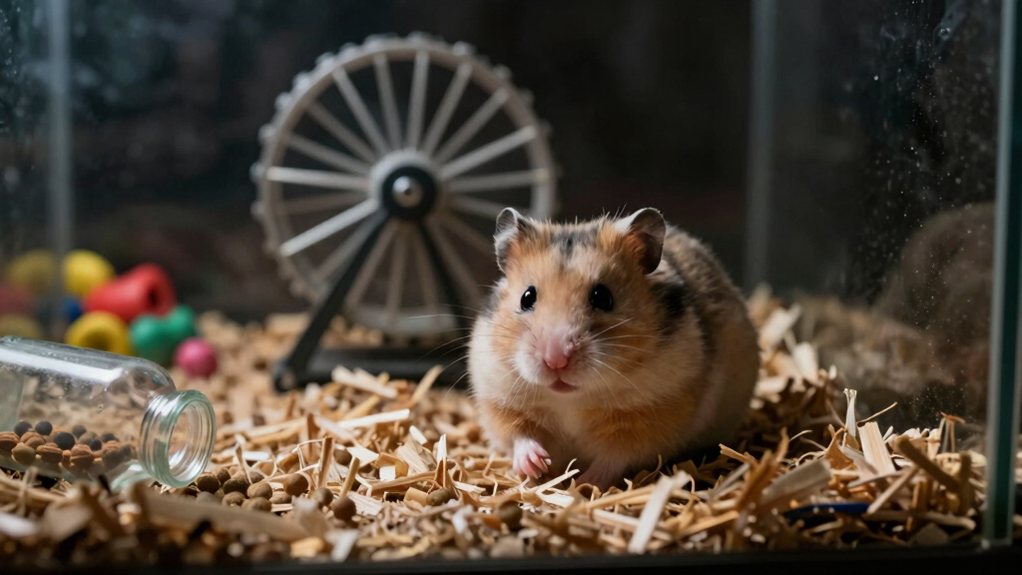
How do you know when your tiny furball is feeling frazzled? Keep an eye out for changes in grooming habits, your hamster might look messier than usual or over-groom to the point of bald spots.
Stress can also mess with their appetite, so sudden disinterest in food or dramatic diet variations are red flags.
Is your usually active buddy now sluggish or hiding more? That’s another clue. You might even catch them chewing on cage bars or acting jumpy when you approach.
These behaviors aren’t just quirky, they’re SOS signals.
While they can’t tell you in words, their actions scream stress. Stay calm, tweak their environment, and offer comfort with cozy hideouts and familiar treats.
Think of it like decoding a tiny, furry Morse code.
Spotting these signs early helps keep your little buddy happy, healthy, and far from a hamster meltdown. You’ve got this!
Repetitive bar chewing and hyperactivity may indicate cage rage, a stress-related condition caused by inadequate space and lack of stimulation.
Best Cage Setup for a Single Russian Hamster
A stressed hamster often starts with a less than ideal home, so getting the cage right can do wonders for that little bundle of energy.
You want your solo Russian dwarf to feel safe, happy, and ready to zoom at midnight like a tiny, furry racecar.
Here’s how to build the perfect pad.
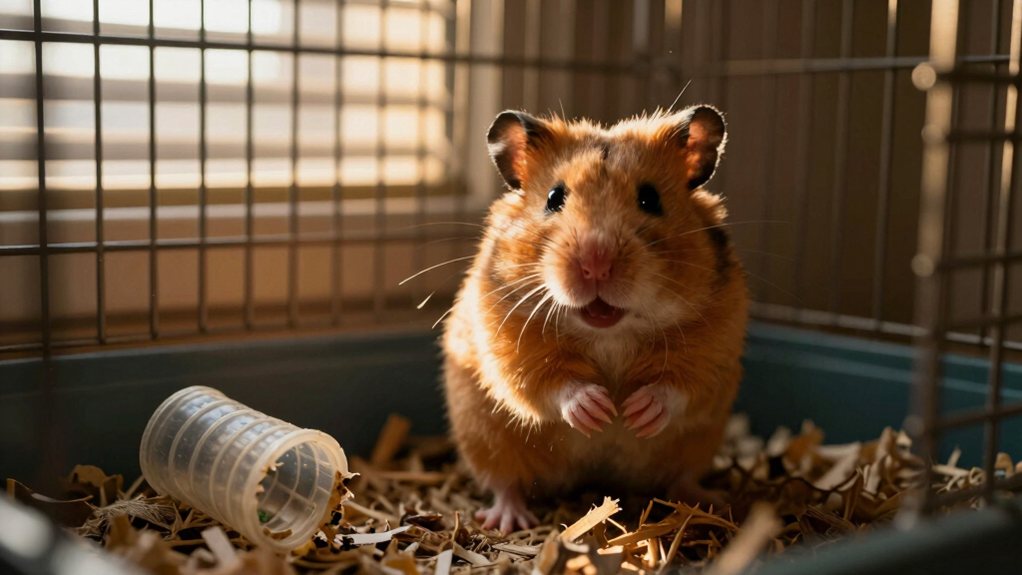
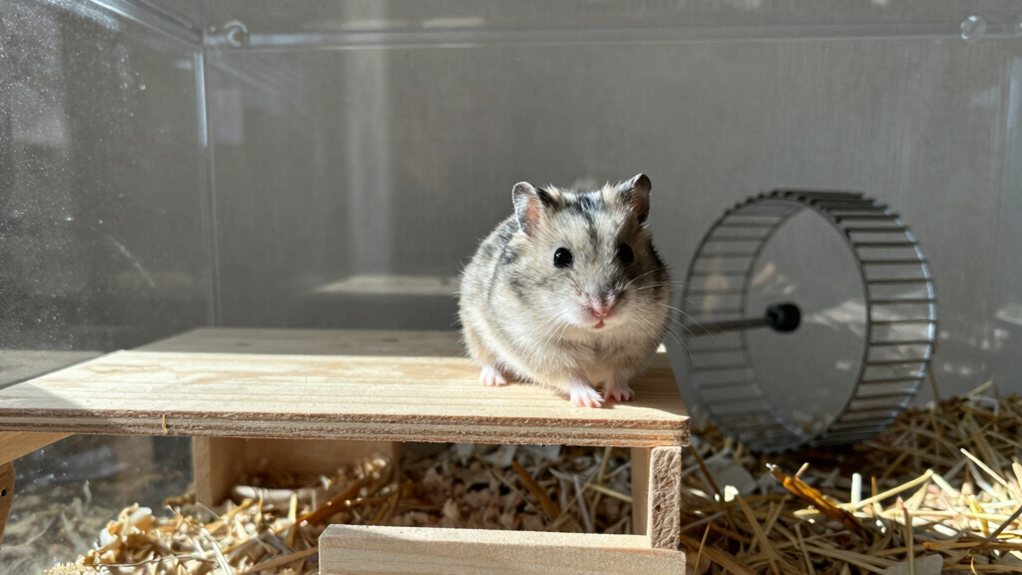
Pick a cage at least 24 x 12 inches. Bigger is always better for exploring and escaping boredom.
Bigger is always better when it comes to cage size—plenty of room means happy zooms and zero boredom for your tiny explorer.
Go for a solid bottom cage with good ventilation. Wire floors hurt those tiny feet.
Choose a wheel size of 6.5 inches or larger to keep their back comfy. No more hunched sprinting.
Keep cage lighting soft and natural. Avoid bright, constant light since they’re most active at dawn and dusk.
Your hamster mightn’t say “thanks,” but trust us—they’ll show it with happy cheek pouches and fewer escape attempts.
A secure and chewproof polyester-coated pine construction helps prevent escapes and supports dental health.
Best Toys for a Solo Russian Hamster
What’s better than watching your solo Russian hamster dart around like a wind-up toy with a mission? Not much.
To keep that tiny bundle of energy happy and healthy, you’ll want to stock up on a few key toys. Exercise wheels are a must. Your hamster will run miles each night, so pick a solid, silent one to save your sleep.
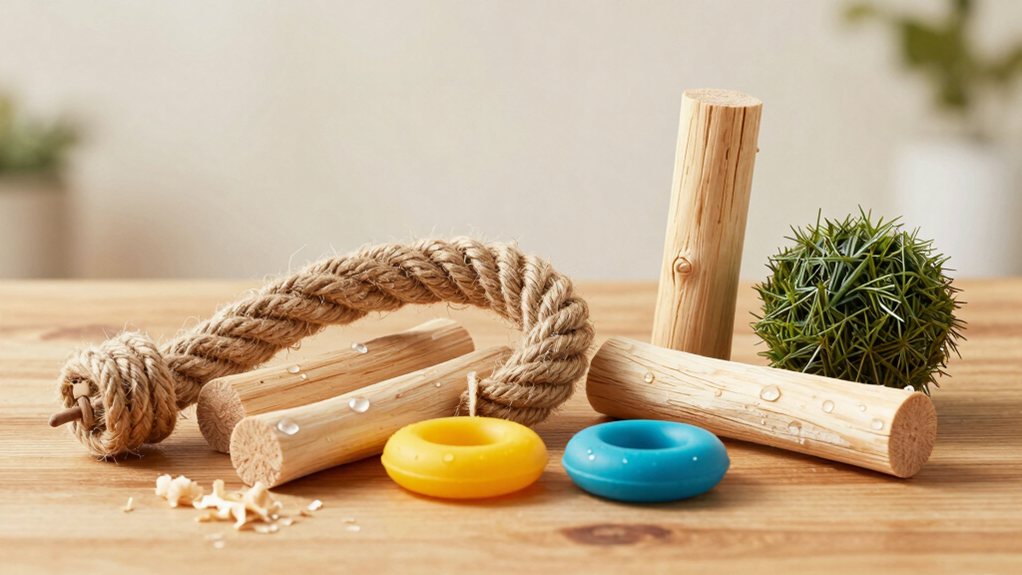
Chew toys? Absolutely. They help wear down those ever-growing teeth and keep boredom at bay. Try wooden blocks, cardboard tubes, or even DIY toilet paper roll puzzles.
Rotate toys weekly to keep things fresh. Hamsters get bored too, you know!
A tunnel or two adds adventure, turning their cage into a mini maze.
With the right mix of chew toys, exercise wheels, and clever hideaways, your little loner will thrive. Just sit back and enjoy the show.
Choose 100% natural materials to ensure safe, non-toxic chewing that supports dental health and satisfies natural gnawing instincts.
How to Bond With Your Russian Hamster Daily
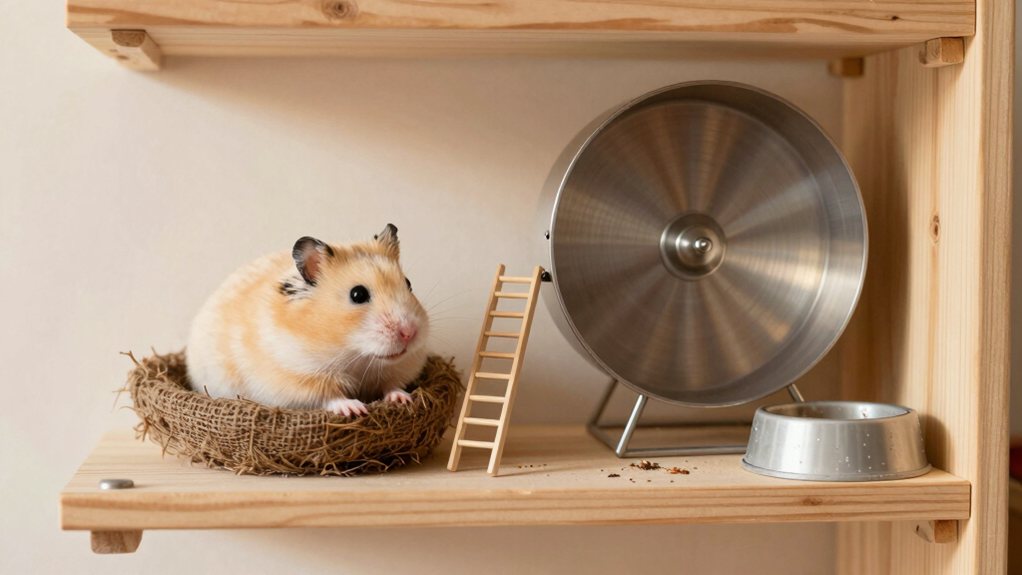
Most days, a little patience and a quiet moment go a long way in building trust with your Russian hamster.
Bonding doesn’t need to be fancy, just consistent and kind.
Pay attention to their sleep patterns so you’re not waking them up like an overeager alarm clock.
A well-rested hamster is a happy, friendly one!
- Spend a few minutes daily hand-feeding treats during their active hours to strengthen feeding routines.
- Gently talk to them in a calm voice so they recognize and feel safe with your presence.
- Let them explore on your lap (supervised!) while you sit quietly—no sudden moves!
- Offer cozy hideouts or tunnels they can drag around, making them feel secure and loved.
You’ll soon notice they’re more enthusiastic to see you—tiny heart, big bond.
How Often Should You Handle a Russian Dwarf Hamster?
Usually, you’ll want to handle your Russian dwarf hamster every day, but keep it short and sweet, like a quick chat with a busy friend. Think five to ten minutes max, especially if it’s still getting used to you. This daily touch helps build trust without stressing your tiny pal.
You can tie handling into your feeding schedule. Offer a treat from your hand to make it fun and rewarding. Just don’t overdo it. Too much playtime duration can overwhelm them.
Watch for signs they’re done, like yawning or scurrying away. Respect their mood. They’re not being rude, just honest. Consistency matters more than length, so regular, gentle sessions work best.
And hey, if your hamster nips once in a while, don’t take it personally. They’re just tiny, nervous roommates figuring life out. Keep it calm, keep it kind, and you’ll both enjoy the routine.
Trust develops over time with patience, calm presence, and warmth, so consistent human interaction is key to forming a strong bond.
Do Russian Dwarf Hamsters Need a Friend?
Ever wonder if your Russian dwarf hamster gets lonely curled up in its cozy nest all by itself?
Good news, you don’t need to worry about finding a roommate for your tiny furball.
These little guys are actually happiest solo.
Here’s why.
Russian dwarf hamsters are territorial, and pairing them up often leads to squabbles, not snuggles.
Pairing Russian dwarf hamsters usually ends in squabbles, not snuggles—they’re happiest living solo and in charge of their own cozy nest.
Their nocturnal habits mean they’re busy exploring when you’re asleep, perfect solo adventurers.
They’re content with your attention during evening playtime or gentle handling.
Plus, their dietary preferences, like seeds, veggies, and the occasional treat, are easier to manage without a buddy stealing snacks.
You’re the best friend they need.
With a cozy setup, tasty bites, and your love, your hamster’s living its best, perfectly solo life.
No roommate drama, just happy, quiet nights full of wheel-running and cheek-pouch stuffing.
Final Thoughts
You’re doing great by giving your Russian dwarf hamster its own space, these tiny pals really thrive solo! Trust me, they’d rather have a private castle than a roommate.
Keep their cage cozy, toss in fun toys, and say “hi” daily with a gentle hand. They’ll bond with you just fine—no hamster BFF needed. Just remember: one hamster, one happy home. You’ve totally got this!