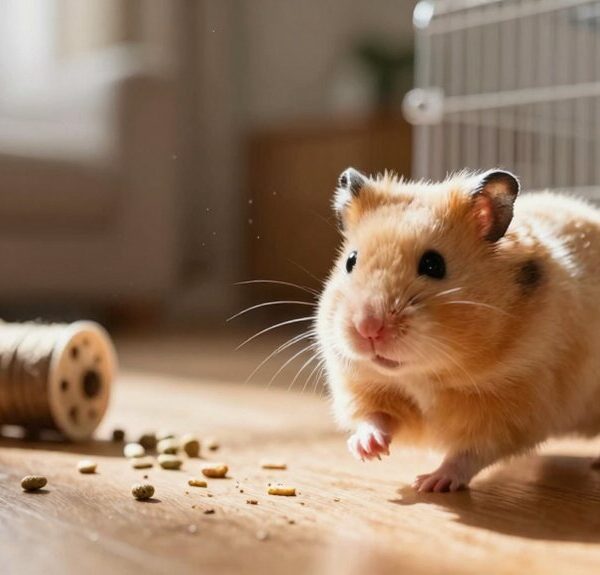
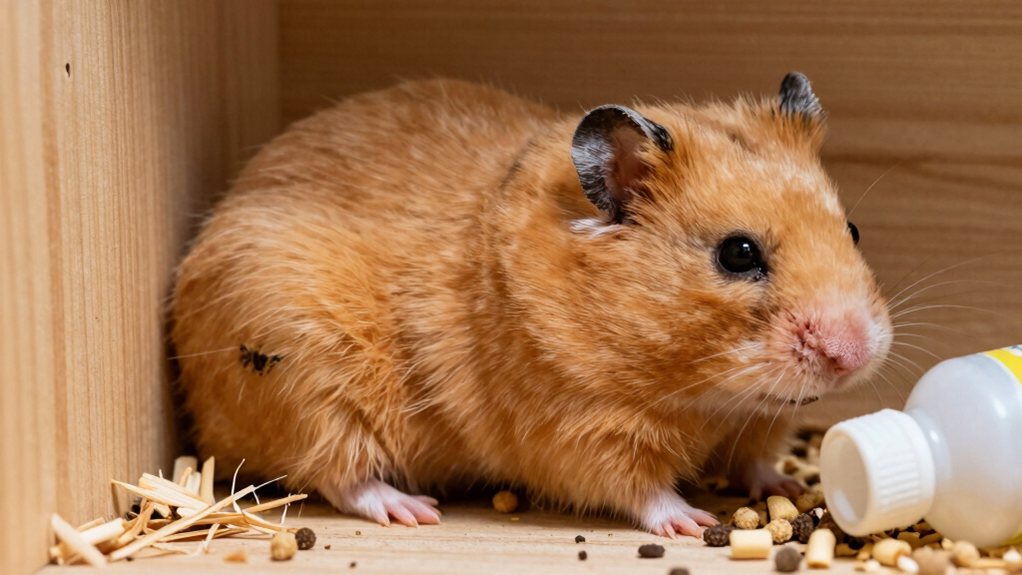
You’re looking at a Syrian hamster, fluffy, round, and impossibly cute, like a tiny teddy bear with whiskers. They’re not a separate breed, just extra cuddly-looking with their thick fur and sweet face.
About the size of a small banana, they’re friendly, curious, and love a good midnight run on their wheel. They bond well with you, but need space, clean bedding, and crunchy snacks to stay healthy. You’ll see why they’re a favorite choice once you get to know them.
What Is a Teddy Bear Hamster?
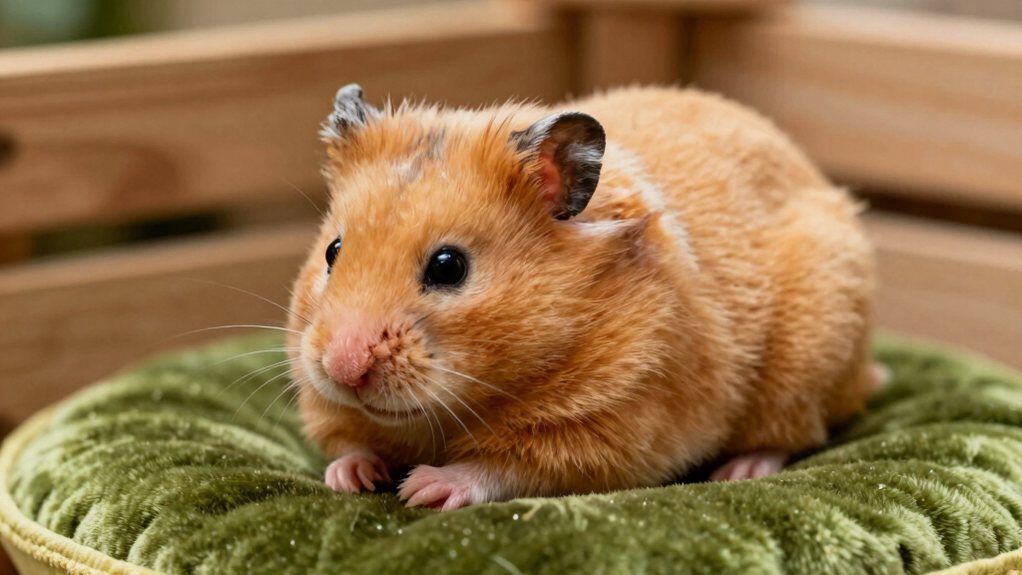
Let’s clear up a common mix-up right away, there’s no such thing as a “teddy bear hamster” in the official pet world. You’ve probably heard the name, maybe even used it yourself. Don’t worry, we’ve all been there.
What people really mean is the Syrian hamster, a fluffy, friendly pet often mistaken for its own breed. These cuddly cuties come from Syria, hence the name, and their hamster origins trace back to desert regions where they lived solo in burrows. Thanks to their sweet nature and adorable round faces, they’ve become fan favorites.
Meet the Syrian hamster—fluffy, friendly, and adorably mistaken for a breed of its own. Hailing from Syrian deserts, these sweet-faced solo dwellers have won hearts worldwide.
Their long fur leads to all sorts of coat variations, silky, wavy, even “rosette” patterns that make them look like tiny stuffed animals.
Seriously, they’re like the plush toys we once hugged as kids, now scurrying around with cheek pouches full of snacks.

Naturally Air-dried: Every sprig is hand-picked from whole plants and air-dried. Each stem is neatly trimmed, retaining its natural color and scent. Material: dried plant stems only. Suitable for pets to sniff and explore. Always supervise your pet during use. Store in a dry, dark place away from moisture, and handle gently as petals may shed if squeezed

Hamster Bedding: Hamster bedding consists of a variety of natural floral and herbal materials that have been carefully selected. All of them are hand-picked and naturally air-dried without any added ingredients, providing a soft surface for hamsters to walk, sleep and play comfortably

【Premium All-Natural Hand-Picked Moss Bedding】Our hamster bedding is crafted from premium, all-natural forest moss, meticulously hand-selected and UV-sterilized. It is dye-free, low-dust, and low in impurities, ensuring safety and meeting pet safety standards. Its fluffy, soft texture perfectly aligns with pets' instincts, providing a cozy, green moss addition to the hamster habitat.
Why Do They Look Like Teddy Bears?
You’ve probably already fallen for those big eyes and round cheeks that make them look like they belong on a toy store shelf. The reason they resemble cuddly teddy bears comes down to their fluffy fur and round face. Their thick, soft coat gives them that plush, huggable look, like a stuffed animal come to life.
And that round face? It’s more than baby fat. It’s part of their charm, making every expression seem sweet and curious. Combined with their petite paws and perky ears, the whole package screams “cute overload.”
Honestly, it’s hard not to smile when one waddles over, whiskers twitching, ready for a snack or a chin scratch. They weren’t bred to be toys, but nature and maybe a little selective breeding gave them that lovable appearance.
How Big Do Teddy Bear Hamsters Get?
Most teddy bear hamsters grow to about 5 to 7 inches long, roughly the size of a small banana or your hand when you stretch out your fingers.
About 5 to 7 inches long—roughly a small banana or your outstretched hand—teddy bear hamsters pack big charm into a tiny, cuddly frame.
You’ll notice they’re a bit chunkier than other hamsters, which adds to their cuddly charm.
Don’t let their fluffy fur fool you—they may look bigger, but that’s just their thick coat doing magic.
These little pals usually live 2 to 3 years, so you’ll want to enjoy every snuggle while you can.
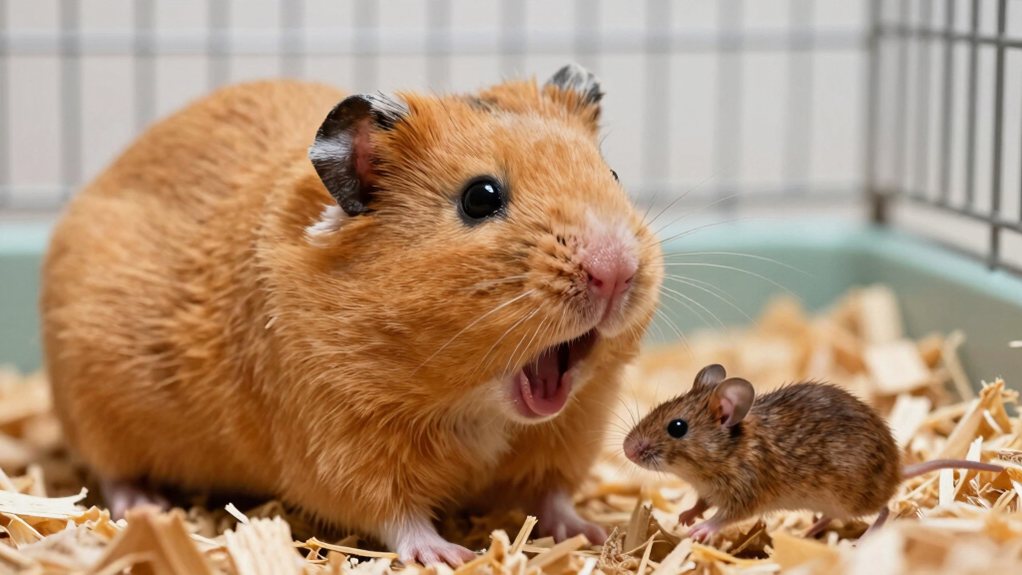
Their breeding habits mean they can have litters fairly quickly, so if you’re housing more than one, keep males and females separate unless you’re ready for a hamster party.
Even though they’re small, they’ve got big personalities packed into that tiny frame.
Watching them explore or stuff their cheeks is pure joy.
Size doesn’t matter when your hamster steals your heart this fast.
What’s a Teddy Bear Hamster’s Personality Like?
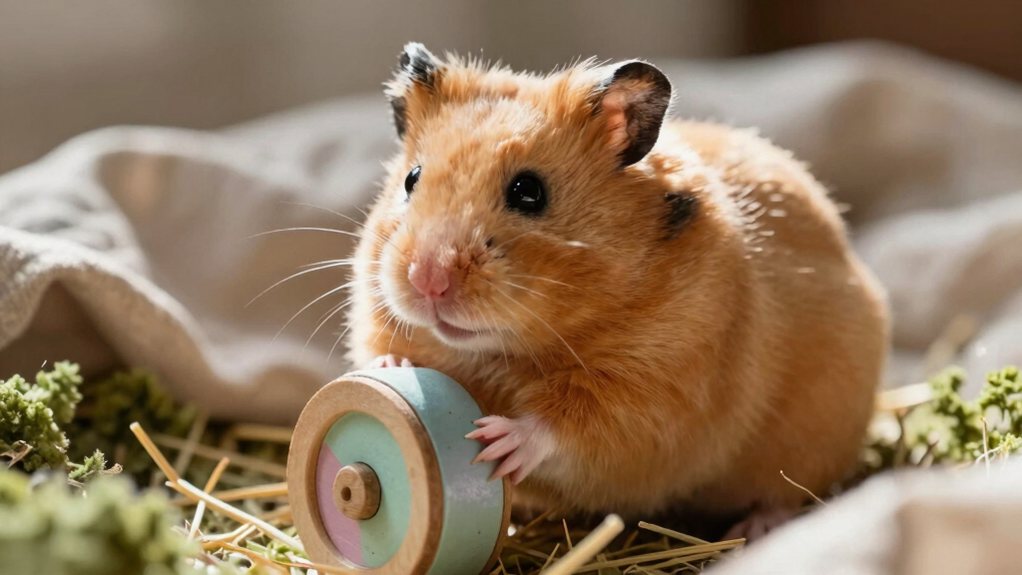
Ever wonder what it’s like to have a tiny, furry roommate who’s equal parts curious and cuddly? Teddy bear hamsters are known for their playful nature and love of interaction. You’ll often catch them exploring tunnels, nudging toys, or gently climbing onto your hand.
Unlike some grumpy hamsters, they usually enjoy your company, thanks to their friendly social behavior. They’re not always in the mood to snuggle, even tiny buddies need downtime. But with patience, they bond closely with you.
Think of them as the cheerful, slightly mischievous friend who brings joy without saying a word. They’re alert, responsive, and surprisingly expressive.
Just remember, every hamster has a unique personality. Some are bold adventurers; others are shy observers. Either way, their charm lies in their mix of sweetness and spunk.
You’ll laugh, you’ll coo, and yeah, you’ll probably talk to them like they’re your tiny therapist.
Are Teddy Bear Hamsters Good for Beginners?
Their friendly antics and soft, cuddly looks might make you think teddy bear hamsters are the perfect starter pet, especially after seeing how sweet and social they can be. And honestly, you’re not wrong—they’re usually great for beginners. They’re calm, easy to handle, and love attention, which makes bonding fun.
Just keep in mind their long fur needs a little extra grooming, especially during seasonal molting when they shed more. It’s not a big deal, but a quick brush helps.
Also, because of their breeding habits, they can reproduce quickly if you keep males and females together. So stick to same-sex pairs or go solo.
They don’t need a ton of space, but a clean cage and daily playtime keep them happy.
With basic care, a little love, and a watch on those fluffballs during molting season, you’ll have a joyful little buddy who’ll steal your heart and maybe your socks.

【Mini Size for Your Pets】 This is S size for small furry animals, about 6.1x3.74x7 inch(15.5x9.5x18 cm). Highly recommended for dwarf hamsters, small gerbil, mice, and other similar-sized pets, fits for them when run without bending their backs.

Comprehensive Small PET Set: this set includes 1 large wooden Hawaiian style house, 1 wooden arch bridge, 2 rattan balls, 2 wooden blocks, 1 seesaw, 1 wood tower, paper rope carrots, 1 set of branches, 1 suspension bridge, 1 of 24 cm running wheel, and 1 castle style wooden hamster hideout; Ideal for hamsters, gerbils, and mice, meeting all their needs

18-in-1 Comprehensive Value Pack: cater to all your small pet's daily needs with one curation; This18-piece cage accessories kit features 1 multi-room wooden maze house, 1 quiet 9.5-inch hamster wheel with an adjustable stand, 1 height-adjustable water bottle holder with a 4.2 oz bottle, and 15 diverse natural chew toys; Nice setup for hamsters, gerbils, mice, and other tiny pocket pets
What Does a Teddy Bear Hamster Need to Stay Healthy?
You’ve got to feed your teddy bear hamster a balanced mix of quality pellets, fresh veggies, and the occasional tasty treat, think of it like packing a lunch for a tiny, furry kid who loves snacks.
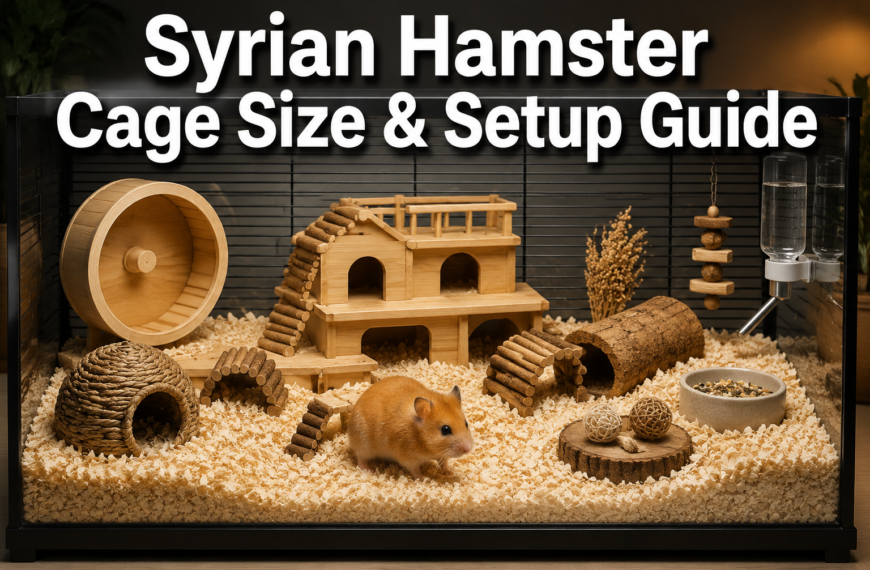
Make sure their cage is cozy, roomy, and full of fun stuff to climb and chew, because even small pets need big comforts.
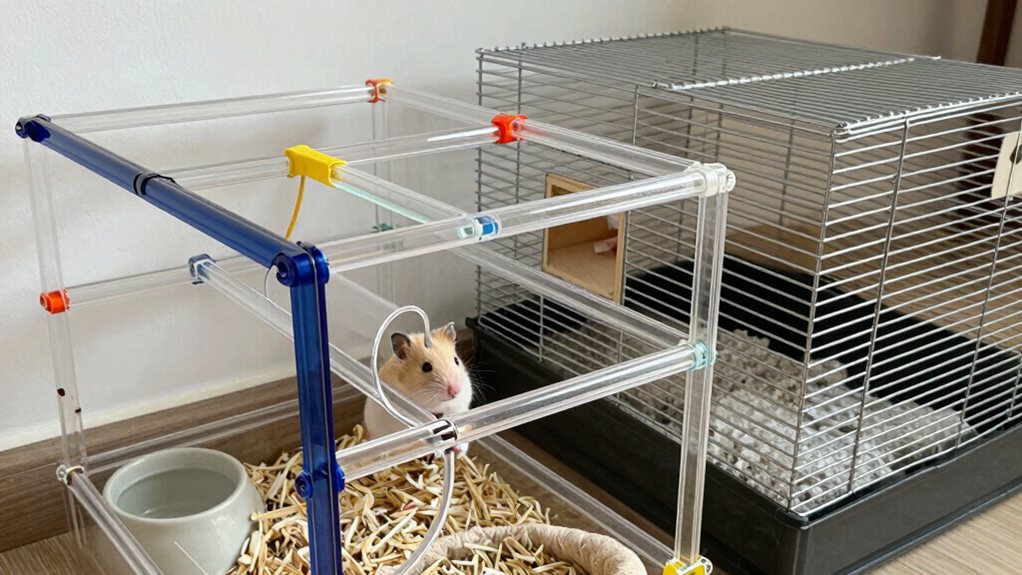
And don’t forget to let them run around in a hamster ball or playpen every now and then, they’re not lazy, they’re just waiting for their daily workout!
Adequate ventilation requirements help prevent respiratory issues and maintain a healthy living environment.
Proper Diet Essentials
Wondering what keeps your teddy bear hamster so lively and full of zest? It all starts with fresh food and balanced nutrition. These little furballs thrive when you mix quality pellets with tasty, healthy extras. Think of their diet like your own, junk food won’t cut it!
Here’s what really matters:
- High-quality hamster pellets – They’re packed with the nutrients your pet needs daily.
- Fresh food – Offer small amounts of veggies like carrots or cucumber a few times a week.
- Occasional treats – A nibble of apple or a sunflower seed can make their day, but don’t overdo it!
Skip the sugary snacks. Your hamster’s tiny tummy can’t handle them. With the right mix, you’ll keep that fluffy face twitching happily. A well-fed hamster is a happy, zoomy hamster!
Comfortable Living Space
When it comes to keeping your teddy bear hamster happy and healthy, a cozy, roomy home is more than just a nice touch. It’s a must. You’ll want a cage with plenty of floor space so your little buddy can explore, not one of those cramped pet store models.
Line the bottom with safe bedding options like paper-based or aspen shavings. Skip the cedar, it’s a no-go. Add soft nesting material so they can build a snug burrow.
Don’t forget toys and enrichment. Chewing blocks, tunnels, and exercise wheels keep their mind sharp and teeth trim. A bored hamster is a sad hamster.
Rotate toys weekly to keep things fresh. Think of it as hamster Netflix.
With the right setup, your furry pal will thrive, zoom at midnight, and nap like a pro. You’ve got this!
A properly sized cage should offer at least 360 square inches of floor space to support natural behaviors like running and digging.
Regular Exercise Needs
How does your teddy bear hamster stay so full of energy, zipping through tunnels and scrambling up ramps like a tiny, furry athlete? It’s all thanks to regular exercise! These little cuties need daily movement to stay happy and healthy. Without it, they can get bored or even a bit grumpy.
Here’s how you can keep your hamster active:
- Wheel running – A solid, silent wheel is a must. Your hamster will love sprinting on it at night.
- Playtime exploration – Let them roam in a safe, enclosed area a few times a week.
- Toys and tunnels – Add bridges, chew toys, and mazes to spark curiosity.
You’ll laugh watching them dart around, and they’ll thank you with bright eyes and bouncy hops. Keep that routine going. Your teddy bear hamster thrives on fun, daily workouts!
Do Teddy Bear Hamsters Like to Be Held?

Ever wonder why your teddy bear hamster sometimes scampers away when you reach for them? It’s not that they don’t like you. They just need time to feel safe.
These little furballs aren’t born loving cuddles, but with patience, they can learn to enjoy being held. Start with cage bonding: sit near their home, talk softly, and offer treats through the bars. This builds trust and shows them you’re not a threat.
These little furballs aren’t born loving cuddles—but with patience, soft words, and treats through the bars, trust begins to grow.
Gradually, move to hand-feeding and gentle petting. Remember, trust building takes days or even weeks. When they finally climb onto your hand willingly, it’s a win!
Not every hamster becomes a snuggle bug, and that’s okay. Respect their limits, go slow, and celebrate small victories, like a curious sniff or a cozy nap in your palm.
A hamster’s individual personality differences play a significant role in how quickly and deeply they bond with their human.
What Health Problems Do Teddy Bear Hamsters Face?
You’ll want to keep an eye out for wet tail disease, especially if your teddy bear hamster is young. It’s serious but treatable if caught early.
They can also get sniffles from dirty cages or cold drafts, so don’t skip cleaning their little home.
And yep, their teeth grow nonstop, so if you see them munching like it’s their job (because it is!), that’s actually a good sign!
Heart disease is a common cause of death in older hamsters, often linked to genetic predisposition and age-related organ decline.
Wet Tail Disease
What’s lurking in your teddy bear hamster’s cage that could turn a bubbly ball of fluff into a lethargic little lump overnight?
It might be wet tail disease, a serious bacterial infection that hits hard and fast.
You can’t ignore the signs: diarrhea, hunched posture, and a wet, messy tail.
But don’t panic. There are ways to fight back.
Spot symptoms early. Check your hamster daily, especially after a move or new cage mate.
Focus on wet tail prevention. Keep the cage clean and avoid sudden changes in diet.
Practice stress management. A calm, quiet space helps your hamster stay healthy and happy.
While it’s no joke, catching it early means a better shot at recovery.
So stay alert, keep things cozy, and remember: a healthy hamster is a happy hamster.
And way more fun to snuggle with.
Respiratory Infections
While wet tail might be one of the scariest illnesses your teddy bear hamster can face, it’s not the only health hiccup that can ruffle their fluffy fur.
Respiratory infections are surprisingly common, especially if their cage is drafty or damp.
You’ll want to watch for respiratory symptoms like sneezing, wheezing, or goopy eyes and nose, basically the hamster version of a cold.
If you spot these, don’t panic, but do act fast. A trip to the vet can save tiny lives.
The good news is that infection prevention is mostly about smart setup: keep bedding dry, avoid dusty materials, and make sure their home isn’t near a window or AC unit.
Think cozy, not drafty. With a little care, your cuddly buddy can breathe easy—literally.
After all, snuffles are cuter on teddy bears than in them.
Dental Overgrowth
Ever wonder why your teddy bear hamster is always chewing on everything in sight? That constant chewing behavior isn’t just cute. It’s essential!
Teddy bear hamsters have teeth that grow continuously, and without proper wear, they can develop dental overgrowth, making it hard to eat or even breathe comfortably.
You can help prevent this by offering safe chew toys and hard foods. Keep an eye out for signs like drooling or weight loss, and schedule regular vet checkups.
Here’s how to keep those tiny chompers in check:
- Provide wooden chew blocks or safe cardboard tubes.
- Feed crunchy veggies like carrots or broccoli stems.
- Watch your hamster eat daily to catch issues early.
A great option is choosing chew toys made from 100% natural materials that support both dental health and instinctual chewing behaviors.
Stay alert, stay playful. Your little buddy’s smile depends on it!
Final Thoughts
So, you’ve met the fluffy little teddy bear hamster, adorable, friendly, and full of charm. They’re more than cute; they’re great companions, especially if you’re just starting out. With the right care, space, and a few gentle pets, they’ll thrive.
Yeah, they might nibble your finger once in a while, but hey, nobody’s perfect. Love them, laugh with them, and they’ll warm your heart—fur real.

Brushy is a lifelike Hamster stuffed animal with realistically patterned gold and white plush fur. High quality materials and silky polyester fill make Brushy a squeezably soft stuffed animal that will hold up to hours of play and cuddling.

[ All-Natural Materials ] Made from 100% natural materials, with no artificial harmful additives or preservatives, ensuring a safe and healthy option for your pets.

12 Pack Hamster Chew Toys: Small animals chew toys pack includes apple wood ladder, bell roller, single-plank bridge, bell swing, unicycle, seesaw, square molar block with rope,pine nuts*2, willow rattan ball, wood rattan ball,apple sticks 50g.