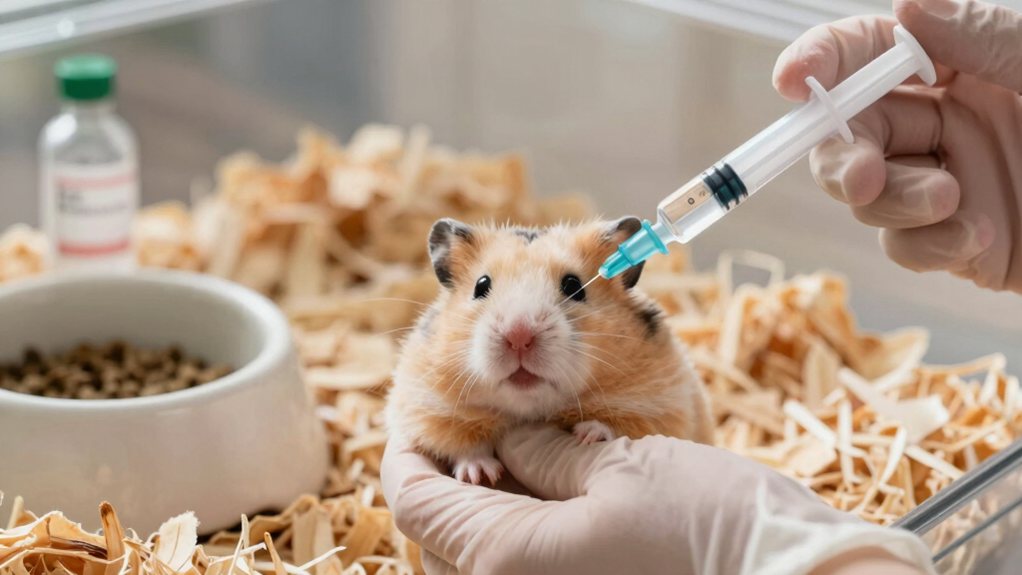
Always use vet-prescribed meds, no guessing or sharing from other pets. Get the dose and timing just right, since your hamster’s tiny body counts on it.
Use a syringe for liquids, or hide pills in treats if your vet says it’s okay. Stay calm, be gentle, and keep sessions quick and stress-free. If your hamster spits it out, don’t panic—try again patiently.
Watch for side effects, but also those little signs of improvement. There’s more to get right, and a few tricks can make it much easier.
Confirm It’s a Vet-Prescribed Medication
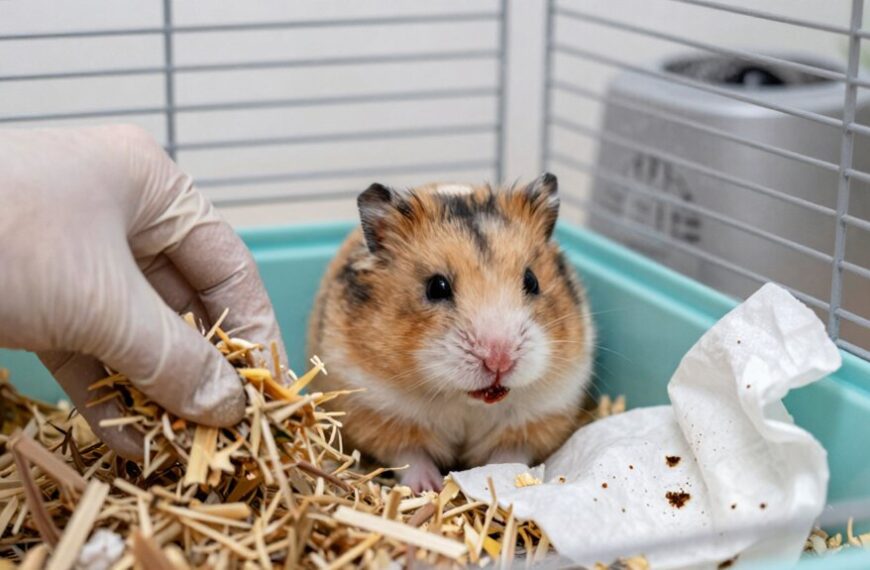
Ever wonder why your hamster’s acting a little off? Maybe they’re sneezing or not eating like usual.
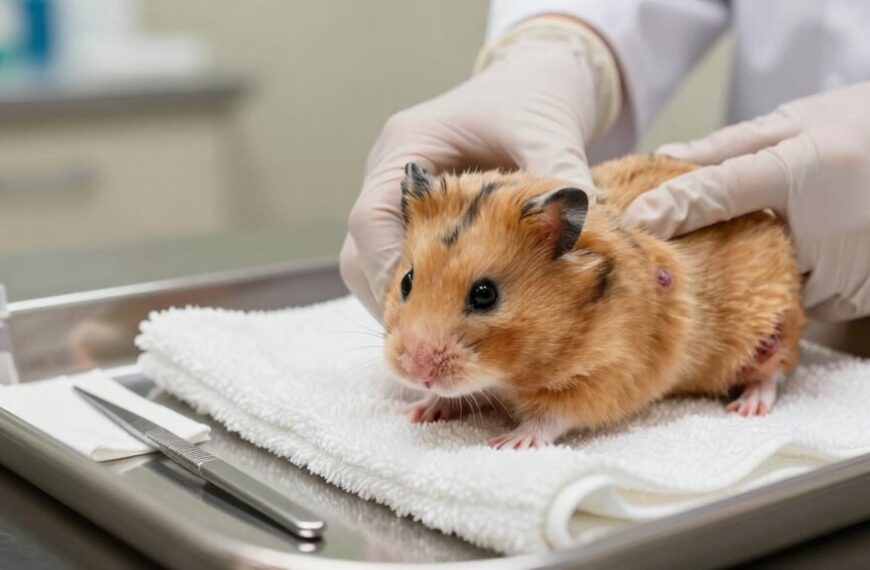
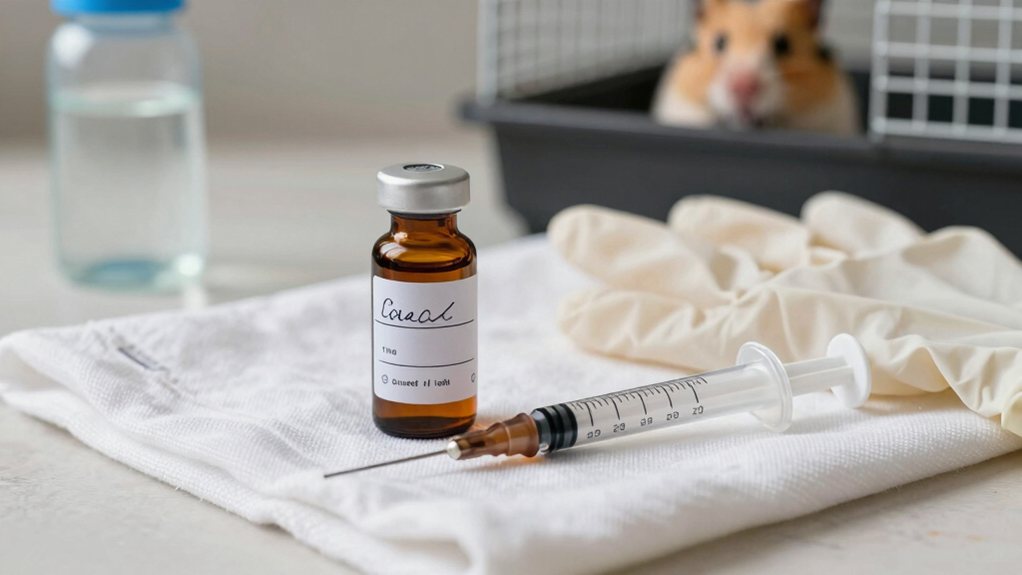
Before you even think about giving medication, stop and double-check: is it vet-prescribed?
Never guess or borrow meds from another pet. What works for a guinea pig won’t help your hamster.
Never assume one pet’s meds fit another—what helps a guinea pig could harm your hamster. Always use vet-approved treatments tailored to your tiny friend’s needs.
Confirming medication authenticity is key. Your tiny buddy needs the right dose for their tiny body.
Call your vet if you’re unsure. Ask questions, get clarity.
Prescription verification isn’t just paperwork, it’s peace of mind.
Think of it like checking the expiration date on milk—better safe than sorry.
And hey, your hamster mightn’t thank you in words, but they’ll feel better faster when you get it right.
So take a breath, read the label, and make sure it’s the real deal.
Your little furball’s counting on you. No pressure, right?
Know the Right Dose and Timing
How do you make sure that tiny drop of medicine actually helps instead of hurting? It all comes down to dosage accuracy and timing consistency, two things that sound serious because they’re but are totally doable with a little focus.
Always double-check the vet’s instructions. Your hamster’s tiny body needs just the right amount.
Use a syringe without a needle for precise dosage accuracy. No guesswork allowed!
Give meds at the same time every day to maintain timing consistency. Your hamster will thank you.
If you miss a dose, don’t panic. Just call your vet instead of doubling up.
Think of it like feeding a clockwork pet: steady, careful, and full of love. A little routine goes a long way in helping your furry buddy bounce back. Because nothing’s cuter than a healthy hamster zooming in its wheel.
Pick Between Liquid, Pill, or Food-Based Meds
Now that you’ve got the timing and dosage down, let’s talk about the actual form that medicine takes, because not every hamster will happily chug a tiny potion like it’s a magic energy drink. You’ve got options: liquid, pill, or food-based meds.
Not every hamster will chug medicine like a magic potion—thankfully, you’ve got options: liquid, pill, or food-based meds. Find what works for your tiny, stubborn buddy.
Liquids are easy to dose but need proper medication storage. Keep them cool and dark.
Pills can be hidden in a treat, but never crush unless your vet says it’s safe.
Food-based meds mix right into their snack, but double-check the dosage frequency so you don’t under- or over-treat.
Each method has pros and cons, and your hamster’s personality matters. Some are sneaky snack rejecters!
Stay calm and patient. This isn’t a race.
With the right form and a little creativity, you’ll turn medicine time into a win. Your tiny buddy’s counting on you, and hey—you’ve totally got this.
Gather Supplies Before You Begin
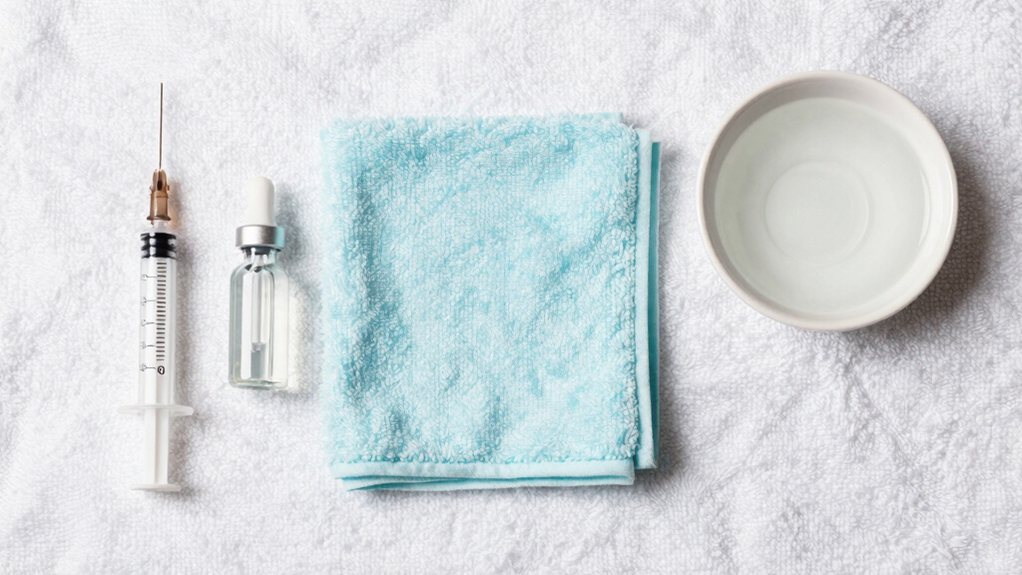
You’ll want to get everything ready before grabbing your hamster, nobody likes playing pharmacist mid-squeeze.
Make sure you’ve got your meds, a syringe or piller, gloves, and a cozy towel handy, so you’re not scrambling like a hamster on a wheel.
And hey, a treat or two? Smart move, because even tiny patients deserve a reward for bravery.
Proper Medication Handling
- Store your hamster’s medication exactly as directed, some need refrigeration, others don’t, so check that label carefully (medication storage matters!).
- Double-check the vet’s instructions to get the dosage calculation right, too much or too little can be dangerous.
- Use the right tool: a small syringe (no needle!) or pill dispenser makes life way easier.
- Keep a clean, quiet space ready, less stress means a more seamless experience for both of you.
You’ve got this. Stay calm, be precise, and treat yourself to a deep breath, you’re doing great.
Essential Tools Checklist
While your hamster mightn’t be thrilled about medicine time, having the right tools on hand can turn a stressful moment into a quick, effortless mission.
No drama, no escape attempts (hopefully).
Grab a small syringe (without a needle, of course: safety first!), some soft treats to reward bravery, and clean gloves to keep things sanitary.
Don’t forget a cozy towel to gently wrap your wiggly patient if needed.
Store the medication properly.
Follow the dosage frequency and check the label for storage tips, such as “keep refrigerated” or “away from light.”
Keeping everything in one spot, maybe a little “hamster medicine kit,” saves time and stress for both of you.
Being prepared means less fumbling and more snuggles post-dose.
You’ve got this—and so does your tiny, grumpy, but totally worth-it patient.
Safe Restraint Techniques
When your hamster’s hopping like they’ve had too much espresso, getting them to sit still for meds can feel like trying to catch a furry little ninja. But with the right approach to safe restraint, you can reduce stress for both of you and beat that pesky medication resistance.
Gently cup your hamster in both hands, supporting their whole body to avoid fear-based hamster behavior.
Work on a low, soft surface so they won’t panic or escape if they wiggle free.
Speak in a calm, quiet voice to help soothe them, yes, they recognize your tone.
Keep sessions short and sweet, hamsters aren’t fans of prolonged handling.
Stay patient and move slowly. Rushing only fuels resistance.
With trust and consistency, even the squirmiest hamster will learn this isn’t a battle, just a quick pause in their busy day.
Calm Your Hamster’s Space First
Ever wonder why your hamster turns into a tiny, stressed-out gymnast every time you try to give medicine? It’s likely because their space feels chaotic.
Before dosing, take a moment to calm your hamster’s habitat. Turn off loud noises, dim the lights, and keep other pets far away.
A peaceful environment means major stress reduction for your little buddy.
You’d be jumpy too if someone loomed over you with a syringe.
Spend a few quiet minutes near the cage, talking softly so your hamster recognizes your voice.
This simple prep helps them feel safe instead of scared.
Think of it like setting the mood, no candles, but same idea.
A calm space doesn’t just soothe your hamster, it makes medicating easier for both of you.
Less panic, more progress.
You’ve got this, and so does your furry gymnast.
Hold Your Hamster Without Stressing Them Out
You’ve calmed the space, so now gently scoop your hamster into your hands like you’re holding a tiny, twitchy potato.
Keep your grip soft but steady, firm enough so they don’t leap for freedom, but light enough that they don’t panic and start doing the hamster version of a backflip.
Gentle Handling Techniques
Though your hamster might look like a tiny, furry potato that’s always ready to bolt, getting a good but gentle hold on them doesn’t have to turn into a comedy sketch starring a panicked pet and a guilty owner.
Understanding hamster behavior helps you spot stress signals, like freezing, squeaking, or trying to escape, so you can adjust your touch.
Stay calm and confident. They’ll pick up on your energy.
- Scoop them gently with both hands, letting them feel supported.
- Avoid grabbing from above. It mimics predator moves and scares them.
- Keep handling sessions short, especially if they’re shy.
- Offer a treat after to build trust and sweeten the moment.
With patience and soft hands, you’ll turn medicine time into a quiet, safe routine—for both of you.
Secure But Calm Hold
Now that you’ve got the basics of gentle handling down, it’s time to fine-tune your grip, because holding your hamster securely isn’t about strength, it’s about confidence and calm.
Cup both hands around your hamster like a cozy little nest, letting them sit in your palms instead of dangling.
Watch for stress signals, like frantic scrambling or squeaking. That means they’re nervous.
Slow breaths and soft whispers help soothe them; hamsters pick up on your energy fast.
Keep your hold firm but gentle, supporting their whole body so they feel safe.
Think of it like holding a tiny, furry cupcake—too tight and you squish it, too loose and it rolls away.
Understanding hamster behavior helps you adjust in real time.
Stay patient, stay calm, and remember: a relaxed you means a relaxed hamster.
You’ve got this—and so do they.
How to Give Liquid Medicine to Your Hamster
- Gently hold your hamster with one hand, supporting its body and head.
- With the other hand, aim the syringe at the side of the mouth, behind the teeth.
- Slowly drip the medicine in, letting your hamster swallow between drops.
- Stay patient. Rushing can cause choking or spilled meds.
Praise your little buddy after with a soft word or gentle stroke.
You’ve got this. A little teamwork turns a tricky task into a trust-building moment.
Can You Mix Medicine With Food? (And When Not To)
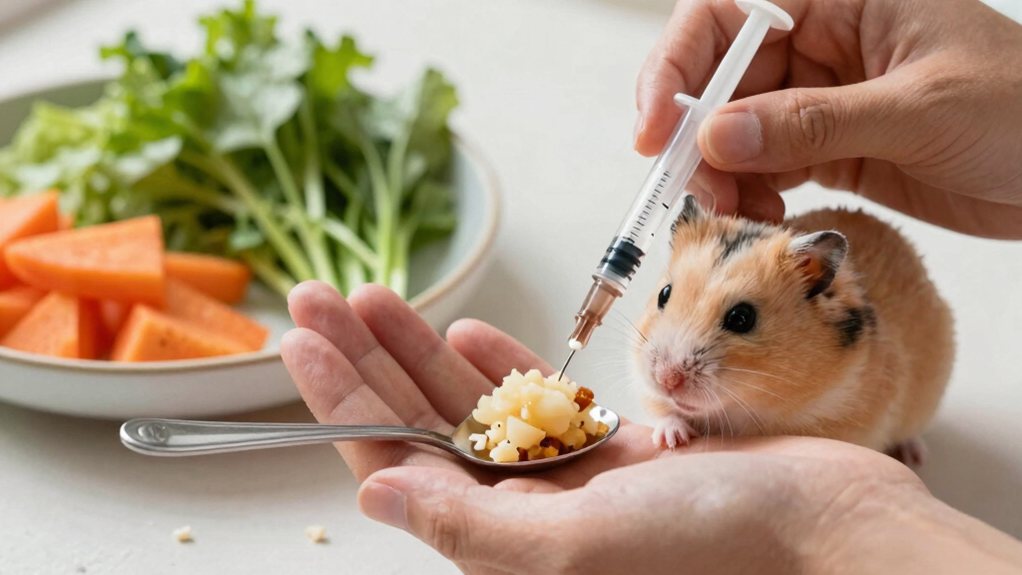
You’ve got the hang of using a syringe for liquid meds, and that’s a big win, go you!
Now, can you mix medicine with food? Sometimes, yes, but tread carefully. If your hamster turns up its nose at the taste, mixing meds with a favorite treat like applesauce or baby food can boost medication palatability.
Just make sure they eat the whole portion so they get the full dose.
But watch out: some meds lose strength or cause harm when mixed. Those are food interaction risks.
Never mix meds with fatty or dairy-based foods unless your vet says it’s safe.
And never hide time-released meds in food. It messes with how they work.
When in doubt, ask your vet.
A little creativity helps, but safety comes first.
Your tiny buddy’s counting on you to get it just right. So keep being awesome!
What to Do If Your Hamster Spits Out Medicine
What happens when your hamster turns into a tiny medicine fountain and spits the dose right back at you? Medication refusal can be frustrating, but it’s actually pretty common hamster behavior. Stay calm and try again, your little buddy isn’t being stubborn on purpose!
Wait a few minutes to let your hamster relax. Rushing can make things worse.
Double-check the dosage and use a clean syringe to avoid contamination.
Try mixing the medicine with a favorite treat, like plain applesauce or mashed banana.
Gently re-administer the dose, aiming for the side of the cheek pouch.
If your hamster keeps spitting it out, jot down the behavior and call your vet. They might suggest a different method or adjust the prescription.
Patience and a soft voice go a long way. Your care makes all the difference.
Watch for Side Effects and Signs of Recovery
Now that you’ve gotten the medicine into your hamster, cheers to you, by the way, it’s time to play a little detective.
Keep an eye out for side effects like diarrhea, lethargy, or loss of appetite. These are red flags.
If your tiny buddy seems wobbly or stops eating, call your vet right away.
On the flip side, watch for recovery signs: more energy, grooming again, or that cheeky nighttime wheel sprint? That’s music to your ears.
Some meds take a few days to work, so don’t panic if progress feels slow.
Think of it like a hamster healing montage—quiet, fuzzy, and kind of adorable.
Stay patient and consistent.
You’re doing great, and your little furball knows it.
Just keep observing, loving, and maybe whispering sweet nothings like, “You’ve got this, champ.”
Teamwork makes the dream work—even in hamster healthcare.
Final Thoughts
You’ve got this! Giving meds to your hamster might feel tricky, but staying calm and patient makes all the difference. Just follow your vet’s advice, stick to the schedule, and keep an eye on your little buddy.
A few funny faces or sneaky spit-outs? Totally normal. Watch for improvement, celebrate small wins, and remember: love and consistency go a long way. You’re doing great, and so is your hamster.