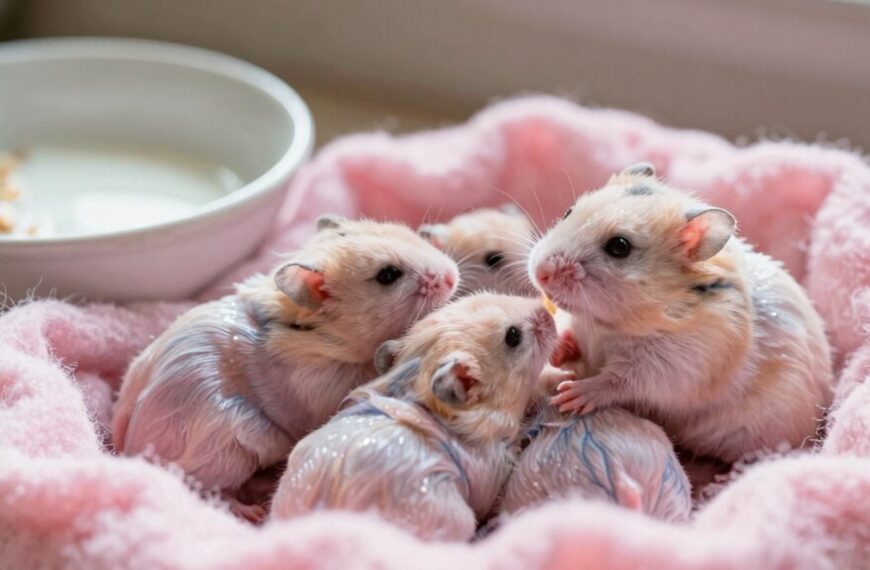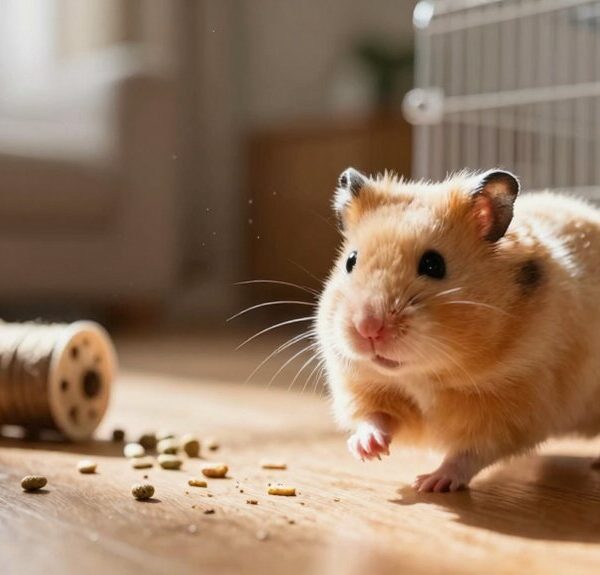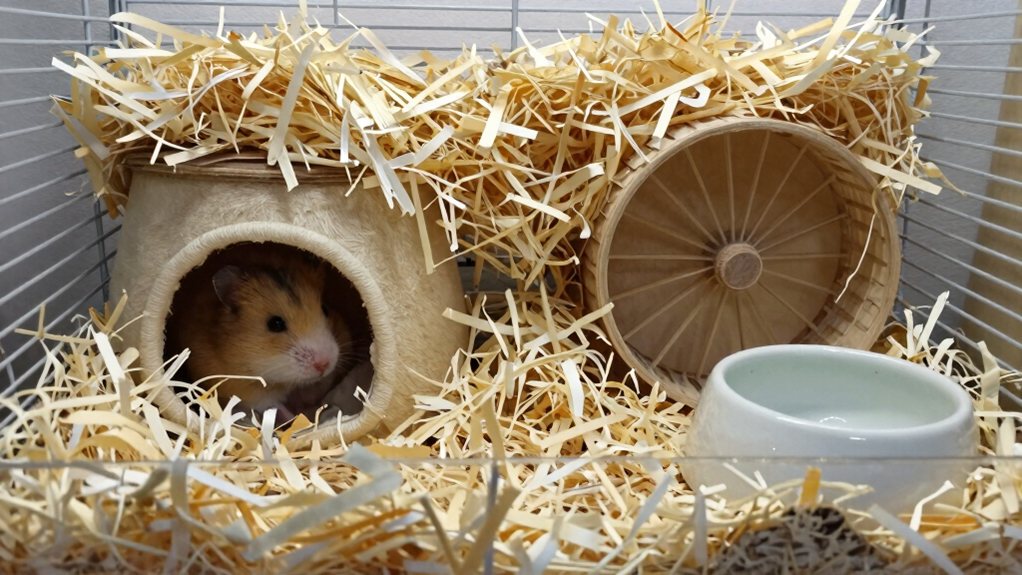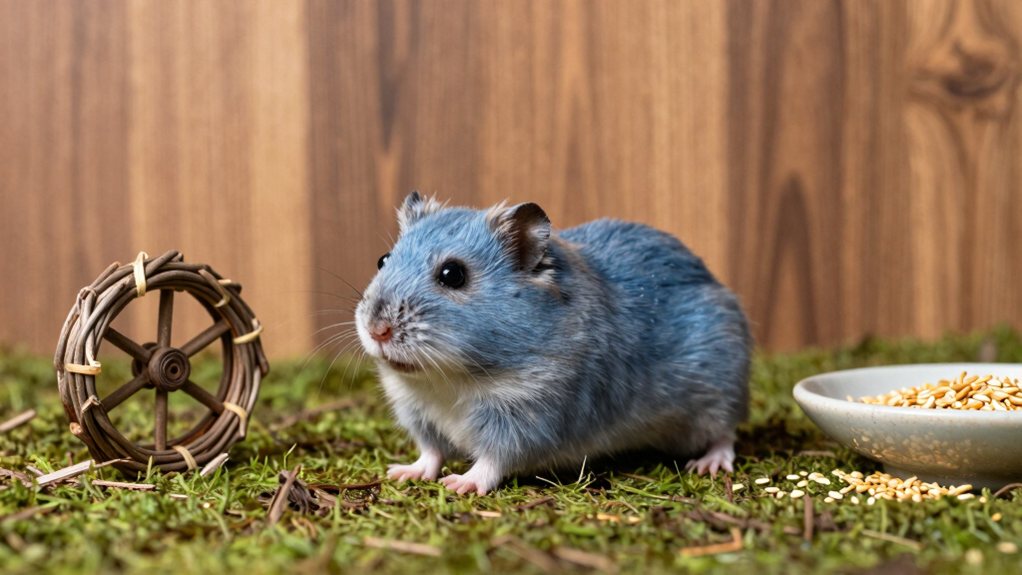
You can start gently handling your baby hamsters at two weeks old, but keep it short and sweet, just a minute or two.
Wait until they’re three to four weeks old for regular cuddle time, when they’re wobbly no more and full of curiosity. Watch for open eyes, playful nibbling, and tiny hideouts as clues they’re ready.
Separate boys from girls by four weeks to avoid surprise litters. Moms do not hand out birth control.
Trust builds faster with calm hands and a quiet voice, so go slow. There’s a little more to know if you want your hamster pals to truly thrive.
When to Start Handling Baby Hamsters?
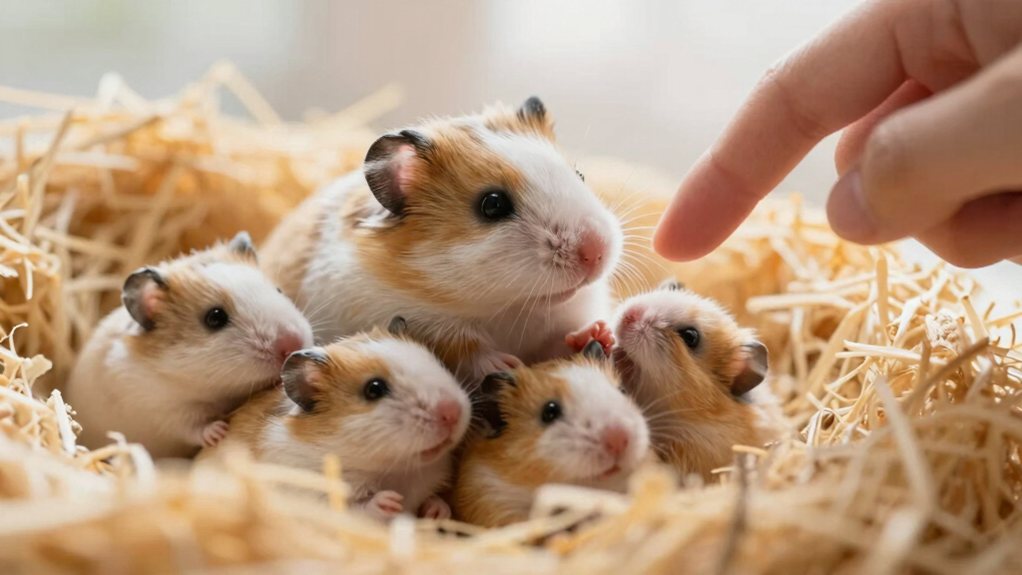
So, when *can* you finally scoop up those tiny, wiggly bundles of joy and give them a gentle cuddle? Well, hold off for at least two weeks. Baby hamsters are fragile, and mom needs time to care for them without stress.
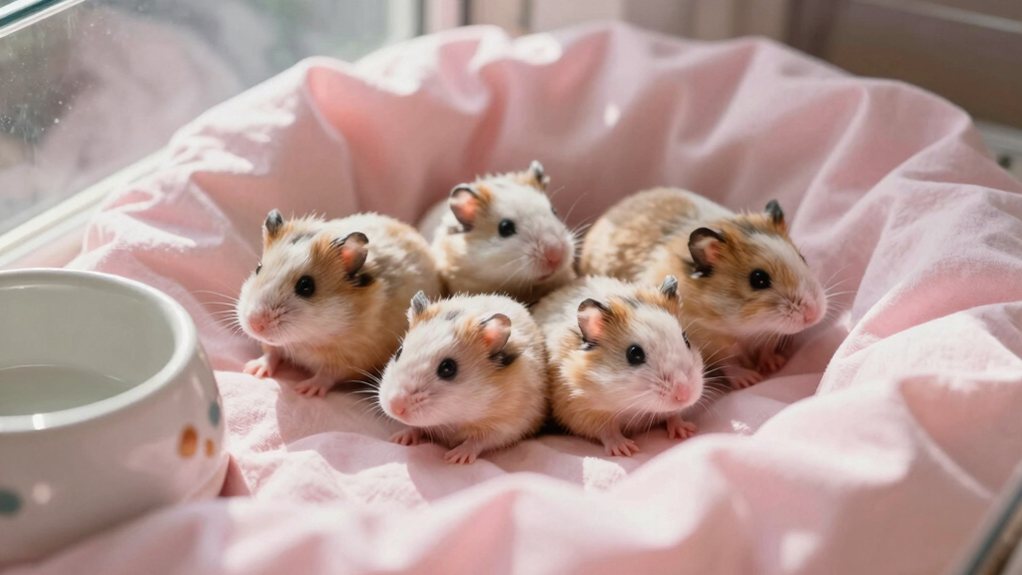
During this time, you’ll notice her focused nesting behavior, she’s keeping them warm and safe.
After two weeks, you can start gently handling them for short periods, letting them get used to your scent. Just keep an eye on feeding frequency; mom still needs peace to nurse.
By three weeks, they’re more active and curious, making handling easier. Just wash your hands first—no strong scents!
It’s tempting to snuggle them early, but patience helps them grow strong. Think of it like waiting for cookies to bake—rushing ruins the treat. You’ll both enjoy the bond more when the timing’s right.
Why Early Handling Stresses Mom and Babies
You might think a quick peek or gentle pet won’t hurt, but mom hamster can get super stressed if you handle her babies too soon. She might even see it as a threat to her tiny, helpless pups.
Those little ones aren’t just cute; they’re super fragile during their first week. They rely on mom for warmth, milk, and safety.
It’s kind of like showing up uninvited to a newborn’s nap time… except with way more squeaky drama.
Maternal Stress Risks
Ever wonder why your enthusiastic hands should wait before snuggling those tiny, squirming bundles of fur?
Touching baby hamsters too soon can spike maternal stress, and that’s bad news for everyone.
Mom might feel threatened, leading to maternal aggression.
Even gentle moms can snap when scared.
You don’t want to be on the receiving end of that tiny, toothy warning.
Early handling also causes nesting disruption, which unsettles both mom and babies.
She works hard to keep them warm and safe.
Moving things around confuses her and stresses the litter.
Think of it like walking in on someone deep in a baby-care routine.
You’d want to wait for the right moment, right?
Give her space for at least two weeks.
Your patience keeps peace in the cage and helps those little fluffballs grow strong.
Trust the process, and save the cuddles for later.
Babies’ Vulnerability Period
Right after birth, baby hamsters enter a delicate stage where everything feels extra sensitive, from their tiny whiskers to the rhythm of mom’s heartbeat.
During this time, you’ve gotta be super careful. Even stepping too close to the cage can cause nest disruption, and that stresses both mom and babies.
She might panic, leading to feeding interruptions, which can seriously impact those tiny, growing bodies.
Think of it like walking in on a naptime cuddle session, only way more intense.
For the first two weeks, it’s best to keep your hands off and just observe. No peeking, no handling, no “just one little touch.”
Let mom do her thing without extra drama.
Your patience now means healthier, happier hamsters later.
It’s tough, we get it, those little squeaks are adorable, but trust the process.
You’ll have plenty of time to snuggle them soon enough.
How to Hold Baby Hamsters Safely at 2 Weeks
While those tiny paws and squeaky little noses might make you want to scoop up your baby hamsters right away, it’s best to wait before handling them at just 2 weeks old, because even though they’re starting to look like mini adults, they’re still super fragile and deeply bonded to their mom.
Right now, their feeding schedule is still tied to her milk, and they rely on her nesting behavior for warmth and safety.
Disturbing them too soon can stress the mom and even cause her to move or reject the babies. So, resist the urge to cuddle!
Instead, quietly observe them from a distance.
If you must check on them, wash your hands first and move slowly—no sudden grabs.
Think of it like being a ninja: calm, quiet, and careful.
Your patience now builds trust later.
And trust us, those wiggly little cuties will be ready to play in no time—just not quite yet.
Signs Baby Hamsters Are Ready for Regular Handling
Once those little furballs start wiggling around with confidence and their eyes are wide open, usually around 3 to 4 weeks old, you’ll know they’re starting to grow into their own tiny personalities.
You’ll notice they’re curious, sniffing around during playtime benefits like short out-of-cage adventures. That’s your cue! They’re more than napping all day anymore; they’re exploring, climbing, and even testing their tiny teeth on everything.
Watch their nesting habits too. If they’re building little hideouts instead of just huddling together, they’re feeling secure and independent.
Gentle handling becomes easier now, and they’re less likely to get stressed. Just keep your hands slow and calm.
If your hamster nibbles your finger but then scampers off to dig or play, that’s hamster-speak for “I’m ready!”
Regular handling helps build trust, so enjoy these squeaky little moments—they grow up fast!
When to Separate Baby Hamsters by Gender
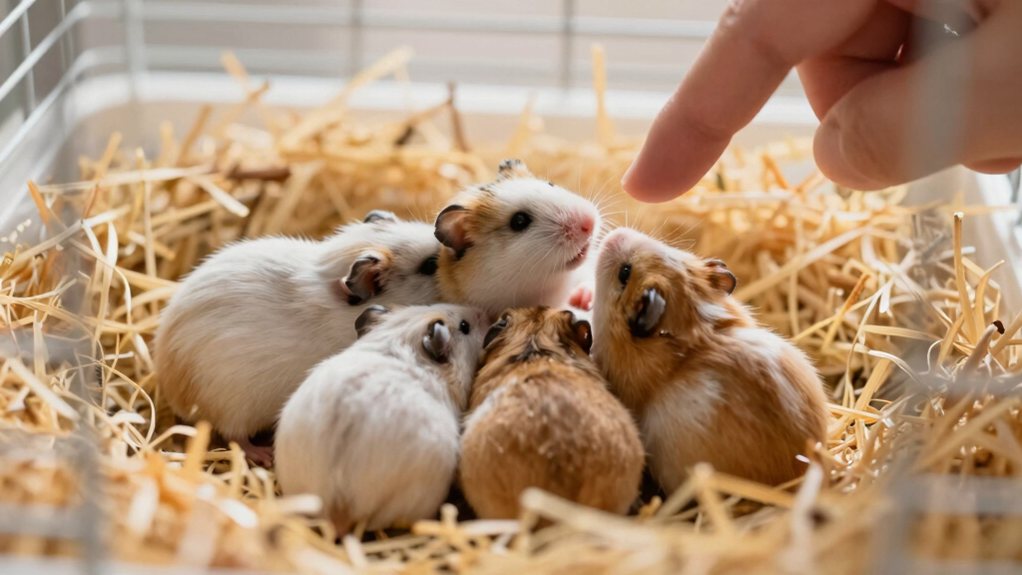
So, how do you know when it’s time to split the boys from the girls before things get *awkward*? Around 4 to 5 weeks old, baby hamsters reach breeding maturity. Yep, they’re ready to start families way earlier than you’d think! That’s why you’ve got to act fast.
Accurate gender identification is key, and it’s easier than you might guess with a quick, gentle check. Males have noticeable space between their genital and anal openings, females don’t.
Once you’ve figured it out, separate them right away. No sleepovers allowed! Keeping them together risks unexpected litters and stress.
It may feel a little dramatic, but trust us, it’s for the best. Handle them gently during the move, and give each group a cozy, familiar setup.
You’re doing more than preventing baby boom chaos. You’re setting them up for healthier, happier lives. Parenting win!
How to Separate Baby Hamsters to Prevent Breeding
You’ve figured out the genders, awesome. Now it’s time to separate your little furballs to prevent early breeding and keep things chill.
Hamsters mature fast, and before you know it, they’re ready to start their own breeding cycles. To protect their health and guarantee genetic diversity, separate them by 4 to 5 weeks old. Here’s how to do it seamlessly:
- Grab two clean, cozy cages—same setup, different rooms if possible.
- Move same-gender siblings together; no mixed crews!
- Label each cage with names or colors so you don’t mix them up.
- Watch for stress signs—hiding, chewing bars—but don’t panic.
- Keep playtime supervised so no sneaky romance happens.
You’re doing great. Your hamsters will thrive with space and safety!
How to Handle Baby Hamsters to Build Trust
Start handling your baby hamsters gently right from the beginning, you don’t want to scare them. Think of it like making a new tiny friend.
Always wash your hands first, no one wants snack-scented fingers near a nervous nibbler.
Keep the first few cuddle sessions short, just a minute or two.
They’ll learn to trust you faster if you’re calm, clean, and don’t overdo it. Think quality time, not marathon snuggles.
Gentle Touch From Start
Ever wonder how to turn tiny, trembling baby hamsters into confident little pals who don’t bolt at the sight of your hand? Start with gentle touch from day one, your soft approach builds trust fast. These bonding techniques and playful interaction make all the difference.
Let your hand rest in the cage so they sniff and explore at their pace.
Use a spoon with a treat to encourage them to climb on board.
Speak softly; your voice becomes a calming background tune.
Limit handling to a few minutes at first—tiny bodies tire quickly.
Wash your hands (but skip strong scents) so you don’t startle their sensitive noses.
You’re more than just petting a hamster—you’re making a friend. With patience and a light touch, those wobbly newborns grow into curious, cuddly companions who actually want to see you.
Over time, they begin to recognize you as a source of safety, especially through repeated calm presence and warmth.
Wash Hands Before Handling
A quick handwash before reaching into the cage might seem like a small thing, but it’s a big win for your baby hamster’s trust. You wouldn’t want someone grabbing you with greasy pizza hands, right? Clean hands mean better hand hygiene and less stress for your tiny buddy.
Plus, it’s a simple step in germ prevention, keeping both of you healthy.
Use warm water and mild soap, scrub for 20 seconds (sing “Happy Birthday” twice!), then dry thoroughly. No strong lotions or perfumes. They can scare or confuse your hamster.
Think of it as part of your bonding ritual.
Clean hands say, “I care,” and that builds trust fast. Over time, your hamster will learn your scent and feel safer.
LCMV transmission can occur through contact with contaminated surfaces or inhalation of dust from bedding, making handwashing even more critical.
Limit Handling Time Early
Now that your hands are squeaky clean and free of pizza-scented distractions, it’s time to talk about how long you actually spend holding your tiny furball.
When handling baby hamsters, short sessions are key, think 2 to 5 minutes at first. You want to build trust, not overwhelm your little escape artist.
Frequent breaks help them adjust without stress. Here’s how to keep it fun and safe:
- Start with just a few minutes each day
- Watch for fidgeting or squeaking, it’s nap time
- Let them explore your hand, not the floor
- Stay calm and quiet, no sudden moves
- Praise softly, yes, they notice your tone!
You’re more than simply playing, you’re building a bond.
With short sessions and frequent breaks, your hamster will soon see you as a friend, not a fuzzy threat.
Patience pays off with sleepy, snuggly moments later.
Final Thoughts
You’ve got this! Wait until the little furballs are about two weeks old before gently handling them, any earlier and you might stress out mom.
By three weeks, they’re ready for regular cuddles and separation by gender to avoid surprise litters. Handle them calmly, keep things quiet, and you’ll build trust fast. Think of it like babysitting tiny, squeaky roommates who can’t share a room past three weeks!