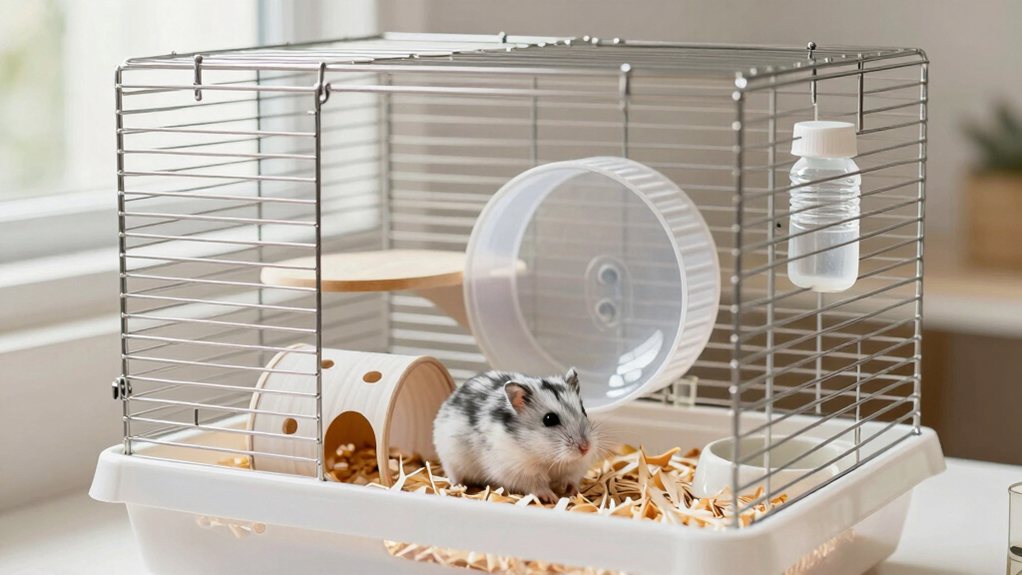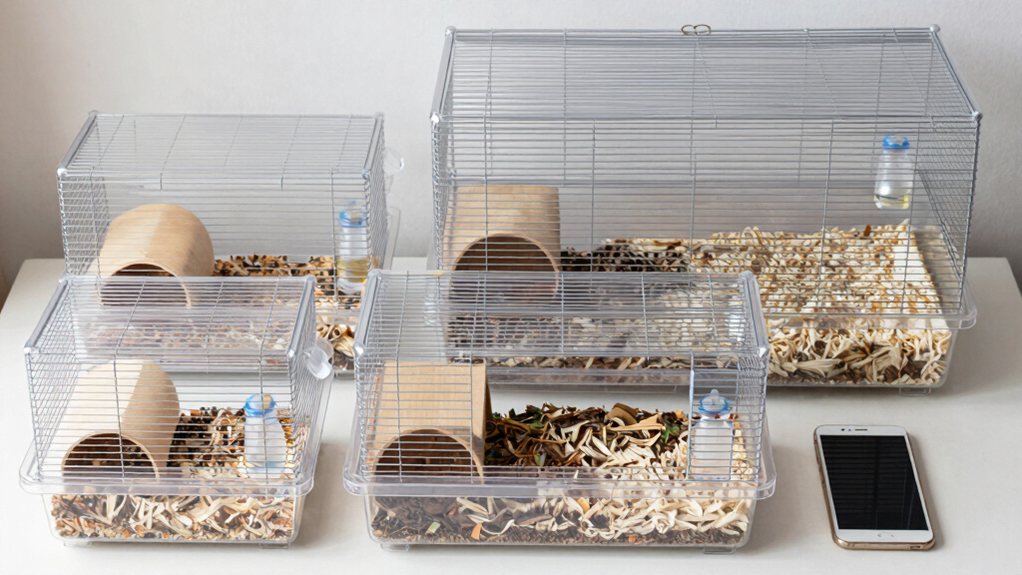
You’re probably surprised to learn your hamster needs way more space than that cute pet store cage offers. Most give less than half the room they actually need.
Syrians thrive in 450+ square inches, while dwarfs and Robos still need 300–350. Tiny cages lead to stress, bar-biting, and even back problems from undersized wheels. Bigger isn’t just better. It’s crucial for happy, healthy burrowing and zooming.
And trust us, what you’ll discover next might just change how you see hamster homes forever.
Why Hamster Cage Size Affects Health and Behavior
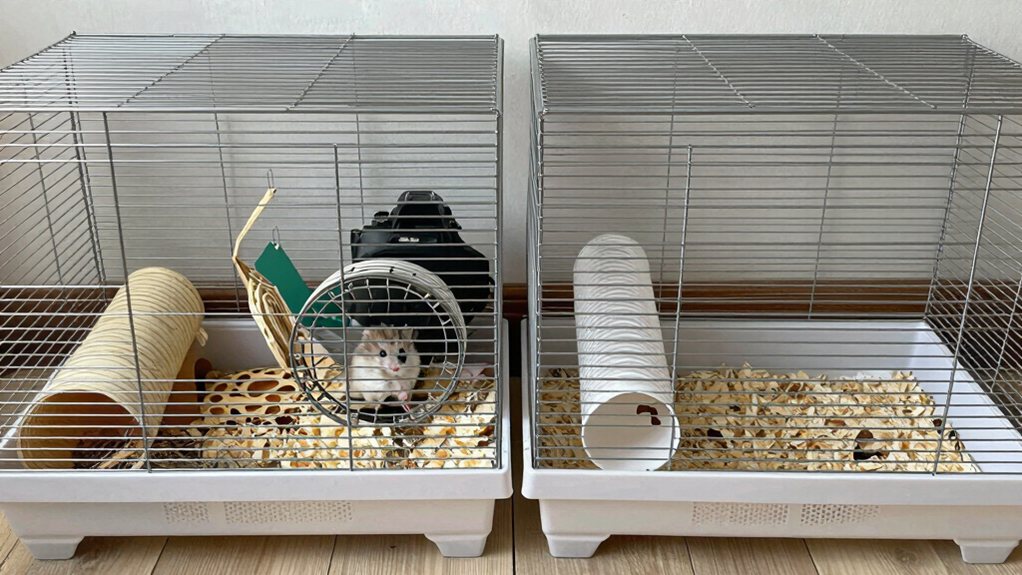
While you might think a tiny cage is just a cozy fit for your pint-sized pal, skimping on space can actually lead to big problems for your hamster’s health and happiness. You see, hamsters are naturally active, especially during their nocturnal activity cycles.
Picture your little buddy running miles on a wheel or exploring tunnels when you’re fast asleep.
If the cage is too small, they can’t move enough, which may lead to stress, obesity, or even behavioral issues like biting.
Plus, while hamsters aren’t big on social interaction with other hamsters, they’re pretty solo by nature. They still need room to express natural behaviors like burrowing and climbing.
Giving them space isn’t just kind—it’s key to keeping them healthy and lively.
Adequate cage size also supports proper ventilation requirements to prevent respiratory issues and maintain air quality.
Best Hamster Cage Sizes by Breed (Syrian, Dwarf, Robo)
Let’s face it, your hamster isn’t just a tiny furball with a snack obsession. They’re a full-on little explorer with big dreams and even bigger energy.
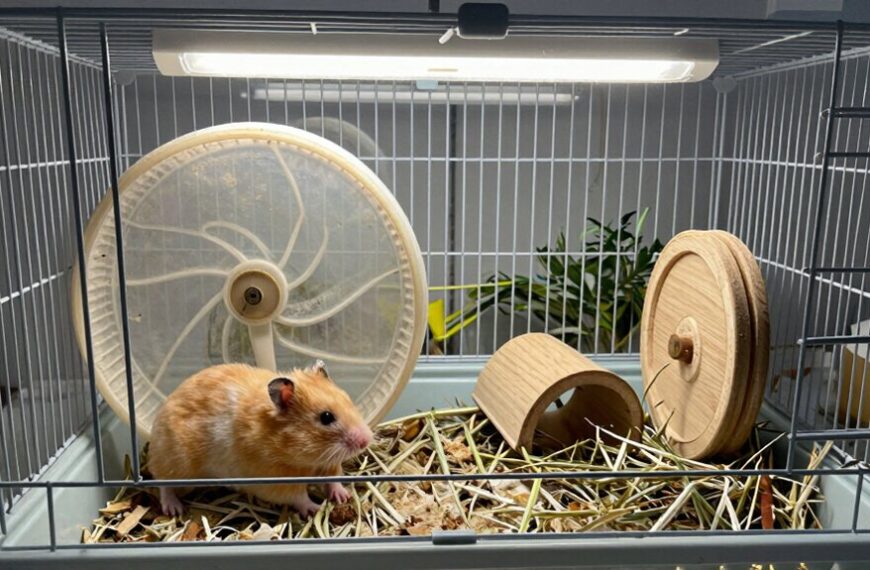
Size matters, especially when it comes to their home. For Syrian hamsters, think spacious: aim for at least 450 square inches of floor space. They need room to dig, so pack in a bedding depth of 6–8 inches for tunneling bliss. A wheel diameter of 8–12 inches keeps their backs safe while they sprint like furry Olympians.
Dwarf hamsters are smaller but no less active—300 square inches works, with 6 inches of bedding and a 6–8 inch wheel.
Robo hamsters? They’re in the middle: 350 square inches, 6–7 inches of bedding, and a 7–9 inch wheel.
Get the size right, and you’ll have a happy, healthy, zoomie-happy buddy.
DIY vs. Pre-Made Cages: Which Gives More Space?
If you’ve ever stared at a pet store cage and thought, “There’s no way this counts as enough room,” you’re not wrong.
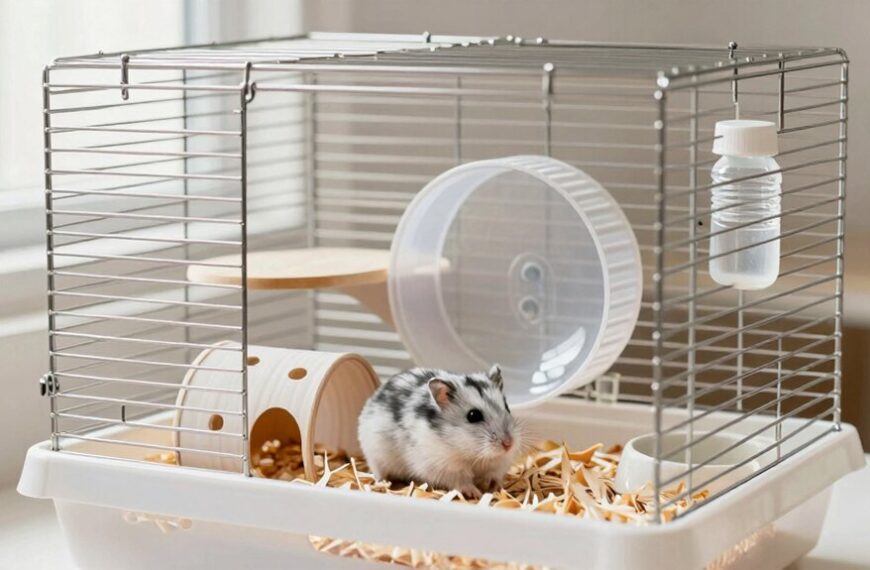
Many pre-made cages skimp on floor space, prioritizing height and flashy ramps over what your hamster actually needs: real estate to roam.
Sure, they’ve got cute cage aesthetics and fun tunnels, but often sacrifice square footage.
DIY cages, like modified storage bins or C&C grids, usually offer way more space for less money.
You control the size, layout, and even the material durability, using chew-proof, safe components.
Pre-made cages might look sleek, but they’re often cramped and flimsy.
With DIY, you’re building a palace, not a studio apartment.
And honestly, your hamster won’t care about color-coordinated plastic—they just want room to dig, run, and nap.
So skip the toy-like designs and go big.
Your tiny roommate will thank you with happy cheek-puffing and midnight wheel sprints.
Do Pet Store Cages Meet Hamster Cage Size Needs?
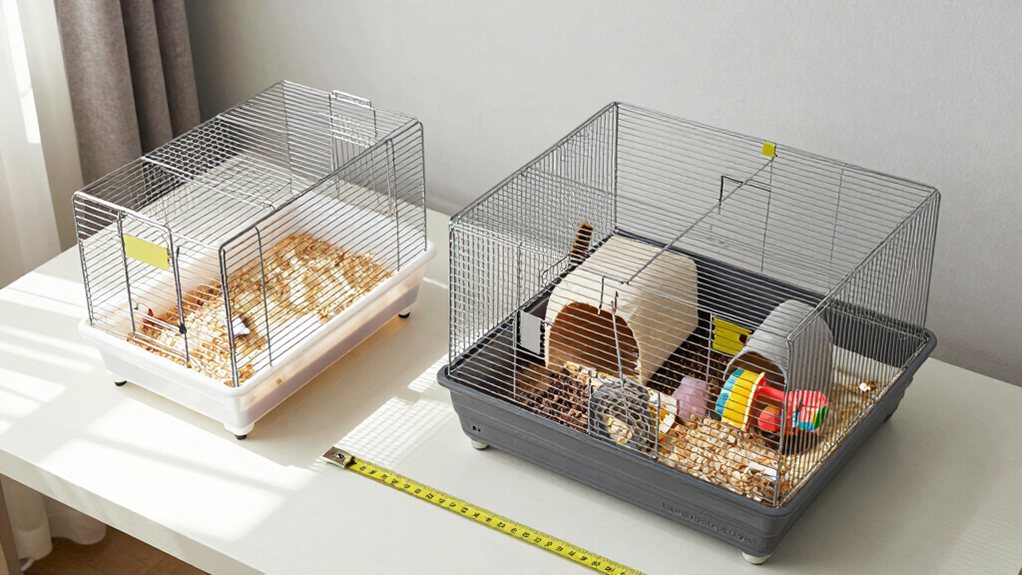
You’ve probably picked up a cute little cage from the pet store, thinking it’s perfect for your hamster.
Turns out, most of them are way too small and packed with design flaws.
Sure, they look fun with all those tubes and levels.
But if the floor space doesn’t meet even the bare minimum, your furry buddy won’t have room to run like they should.
And let’s be real, those wire cages?
They’re like giving your hamster a fancy hotel room with no floor.
Looks cool, but totally misses the point.
Minimum Size Shortcomings
Ever wonder why your hamster spends so much time running in circles? Chances are, the cage is too small, way too small.
Most pet store cages fall short, focusing more on cage aesthetics and toy variety than actual space. Sure, they look cute with colorful tunnels and tiny swings.
But your hamster needs room to explore, dig, and live happily.
Here’s what’s often missing:
- Space to roam: Minimum sizes are often just 2 sq ft—barely enough to stretch!
- Exercise freedom: Tiny cages limit wheel use and natural movement.
- Mental stimulation: Without space, even the coolest toys get boring fast.
- Natural behaviors: Digging, foraging, and burrowing need depth and area.
You’re not a bad pet parent. You were just sold a cute box, not a home.
Upgrade their world, and watch your hamster thrive.
Wire Cages: A Misstep
That cramped cage mightn’t be the only problem. Those trendy wire setups from pet stores often make things worse, not better.
Sure, they boast sleek cage aesthetics and seem sturdy at first glance, but don’t be fooled by wire durability alone. Those bars trap your hamster’s scent, stress them out, and offer zero privacy.
Imagine living in a fishbowl with no downtime.
Plus, many wire cages are way too small, even by minimum standards. Your little buddy needs space to dig, dash, and dream, but not merely hang out on display.
And let’s be real: just because it looks cute on your shelf doesn’t mean it’s kind to your pet.
Skip the wire maze and go for something roomier and more natural. Your hamster won’t thank you with words, but you’ll see their joy in every happy hop.
Trust us, they’d rather have floor space than fancy bars.
A well-designed cage should provide at least 360 square inches of floor space to support natural hamster behaviors like running and burrowing.
Space Vs. Design Flaws
Why do so many hamster cages look more like tiny studio apartments in a bad reality show? You’re not imagining it, most pet store cages fail both on space and smart design. Sure, they’ve got flashy cage aesthetics, but don’t let the colorful plastic fool you. Here’s what really matters:
Size matters: Many cages offer less than half the space hamsters actually need to thrive.
Poor layout: Ladders and tubes eat up floor space instead of encouraging natural behaviors.
Material durability: Flimsy plastic tunnels crack, and thin wire bars bend—safety first!
Style over substance: Cute designs often sacrifice ventilation and ease of cleaning.
You want the best for your little buddy, so look past the packaging. Focus on room to roam and tough, safe materials. Your hamster will thank you, probably with a happy wheel sprint.
How Tiny Cages Cause Stress, Bar-Biting, and Obesity
What if your cozy living room suddenly shrank to the size of a shoebox, no room to stretch, play, or even take a proper lap around? That’s life for hamsters in tiny cages.
Without enough space, they get stressed fast, leading to bar-biting, a sign they’re desperate for more room. You wouldn’t want to live in a closet, right? Same goes for your tiny buddy.
Cramped spaces also mean less room for toys and enrichment, which are key for keeping their minds sharp and paws busy.
Poor lighting conditions can make it worse, messing with their natural rhythms.
And let’s talk about obesity. No space to run means no exercise, and that little wheel just won’t cut it.
A bigger cage means happier hops, healthier habits, and fewer midnight chew sessions.
Give your hamster the upgrade they deserve. Your furball will thank you with zoomies, not zzz’s from boredom.
Hamsters also need mental stimulation to prevent obsessive behaviors like constant bar chewing and pacing.
How to Upgrade to a Spacious, Safe Hamster Cage
You’ve seen how cramped cages can leave your hamster stressed and sad, so it’s time to give your tiny buddy the upgrade they deserve. Start by picking a cage that’s roomy enough for zoomies and snacks, think at least 450 square inches, because even small mammals need personal space.
Then, double-check for escape-proof bars and latches, unless you enjoy a midnight hamster hunt under the couch.
For seamless expansion, choose modular designs with snap-together connectors to easily add tunnels and chambers as your pet’s needs grow.
Choosing The Right Size
While your hamster mightn’t send a formal request for more space, you’ll definitely notice the signs, like endless bar-chewing or that dramatic sigh every time they circle their too-tiny home.
Choosing the right cage size isn’t just about square inches. It’s about creating a happy, healthy life for your tiny buddy. Here’s how to get it right:
- Aim for at least 450 square inches of floor space. Bigger is always better.
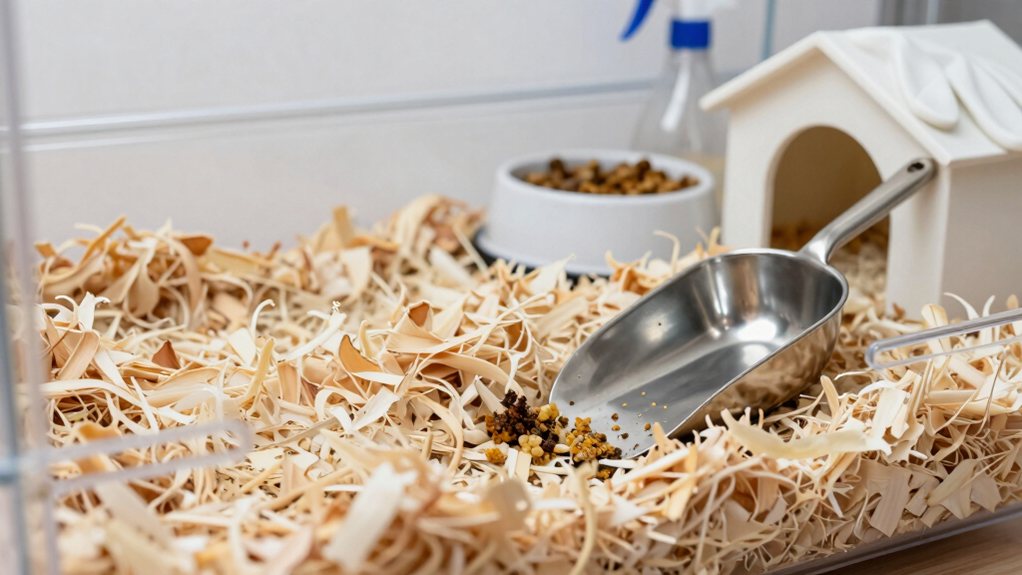
- Prioritize bedding depth. 6–8 inches lets your hamster dig like they’re on a mission.
- Pick a wheel diameter of 8–12 inches to keep their back happy and their runs comfy.
- Go horizontal over vertical. Hamsters aren’t climbers, and falls hurt.
You’ve got this. A roomy cage means fewer chewed bars and more joyful cheek-puffing.
Securing Escape-Proof Features
Now that you’ve nailed down the perfect size for your hamster’s home, roomy floor space, deep bedding, and a wheel fit for a furry marathon runner, it’s time to make sure that dream cage stays their safe haven, not an escape route.
Hamsters are sneaky little escape artists, so escape prevention is key.
Check for gaps, especially around doors and corners. If your hamster’s head fits, their body will follow!
Secure latches and avoid chewable plastic parts.
Wire spacing matters too: too wide, and they’ll squeeze out; too narrow, and you’ll ruin the ventilation balance. Aim for ½ inch or less between bars.
Glass tanks with secure mesh lids work great, while modified plastic bins need strong, chew-proof tops.
A well-ventilated, escape-proof cage keeps your buddy safe *and* happy.
After all, you want bedtime stories, not midnight hide-and-seek.
Adding chew-proof bar covers can further prevent gnawing damage and improve long-term cage security.
Beyond Floor Space: Tunnels, Levels, and Hideouts
Ever wonder why your hamster spends so much time darting through tubes or burrowing into little plastic huts? It’s more than cute—it’s instinct.
To keep your little buddy happy and healthy, you’ve gotta think beyond floor space. Tunnel complexity and hideout variety are key for mental stimulation and natural behavior.
Here’s how to level up your setup:
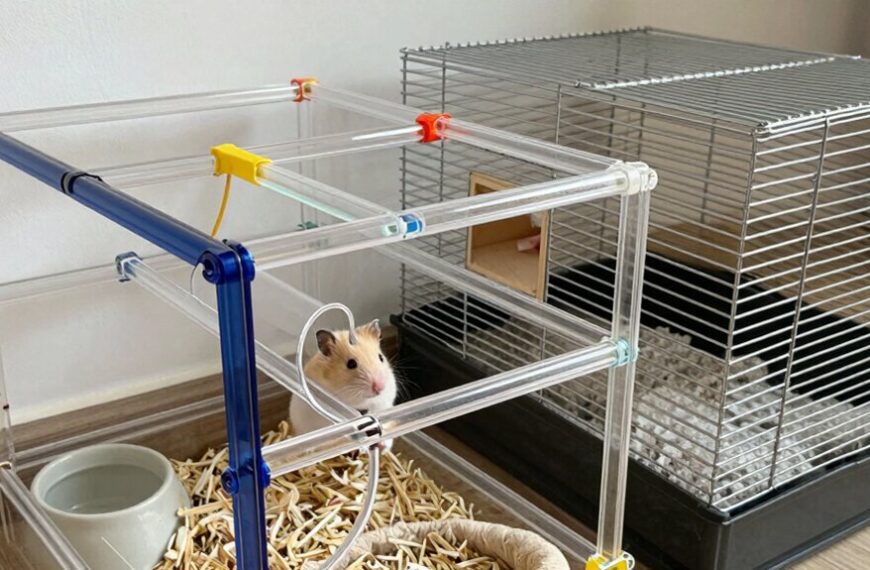
- Tunnels: Connect tubes to create a maze that encourages exploration.
- Levels: Add ramps and platforms so your hamster can climb and survey their kingdom.
- Hideouts: Offer multiple cozy spots: wooden houses, igloos, or DIY boxes: for naps and privacy.
- Rotation: Switch things up weekly to keep things fresh and exciting.
Your hamster’s more than running. They’re adventuring. Make their world rich, fun, and full of surprises!
A great way to enhance climbing safety and comfort is by choosing platforms with an anti-slip natural texture.
Final Thoughts
You’ve got the power to give your hamster a happier life just by going bigger on cage size. Trust me, your little buddy will thank you with less bar-biting and more wheel-running joy.
Whether you build or buy, aim big, add tunnels, and toss in cozy hideouts. A roomy home means a healthier, perkier pet. And honestly, who doesn’t want their hamster living its best, fluffball life?