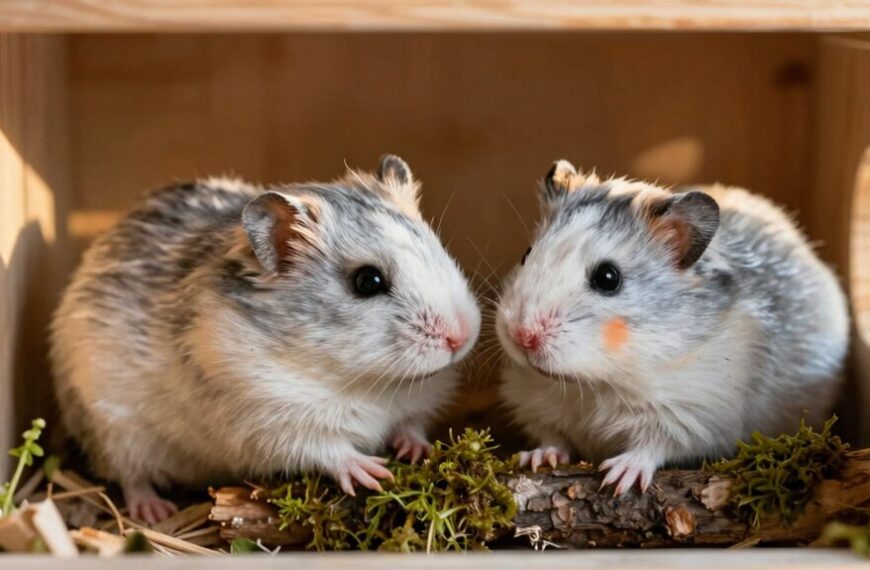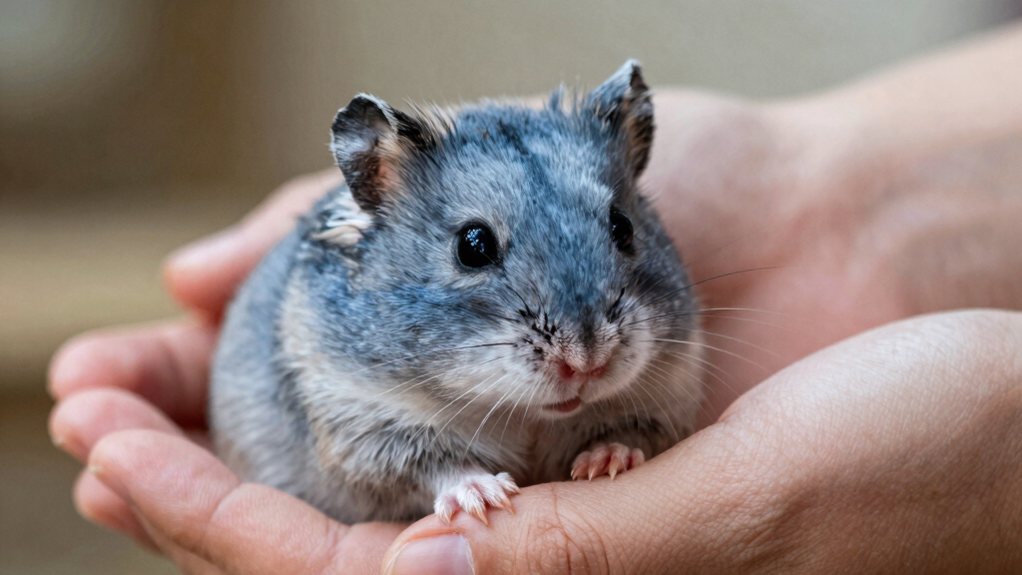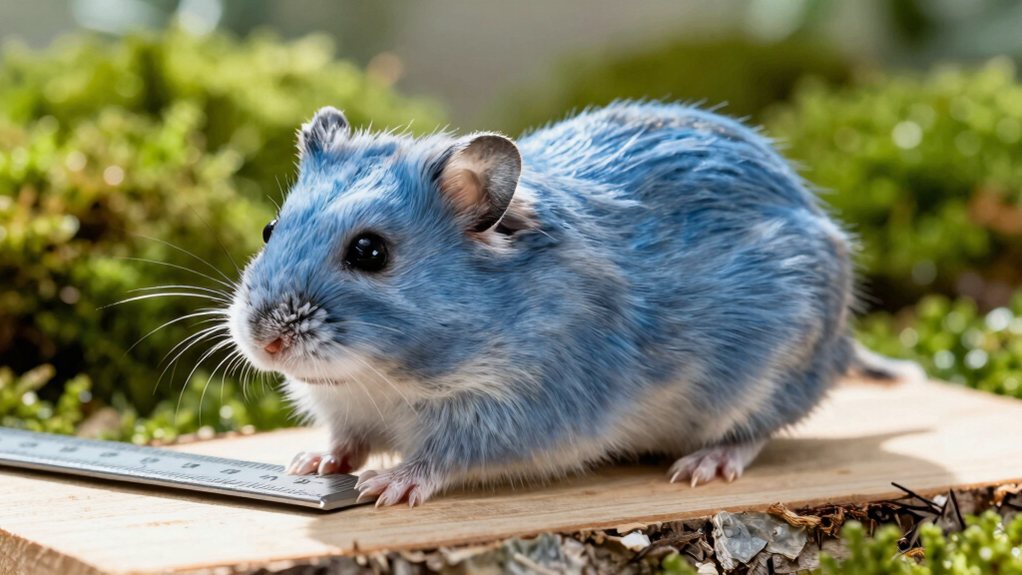
You’ll find Campbell dwarf hamsters top out at about 3 to 4 inches long, yes, roughly the size of a small banana, but way more energetic and way less likely to bruise in your lunchbox.
Born tiny, they grow fast and fit in the palm of your hand within weeks. Genetics, diet, and care all shape their size. Keep them healthy with good food, space to explore, and plenty of chew toys, and you just might spot some cheek-stuffing cuteness along the way. There’s more to learn about helping them thrive.
How Big Do Campbell Dwarf Hamsters Get?
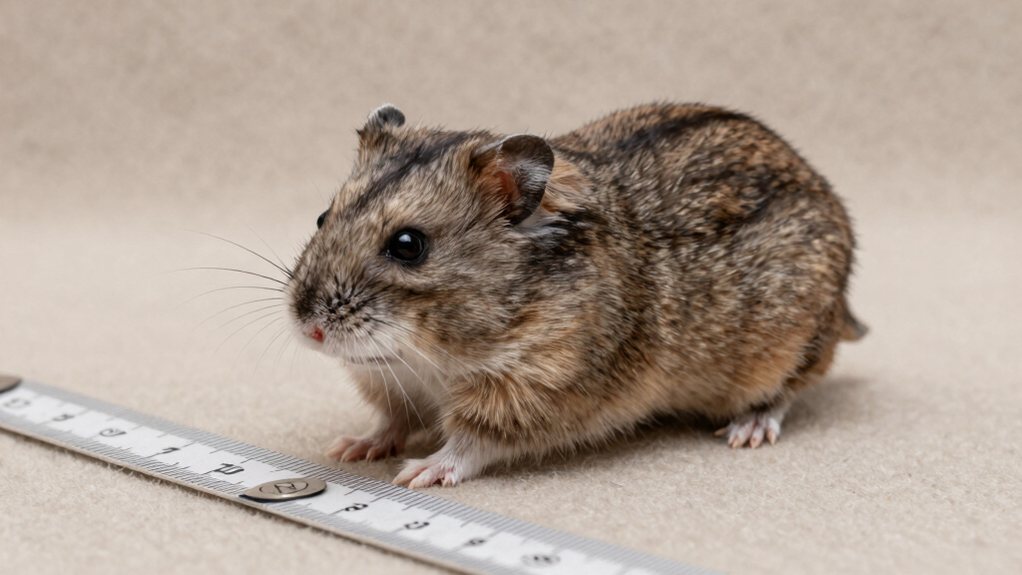
You might be surprised to learn that Campbell dwarf hamsters are tiny, like, really tiny. We’re talking about a pet that grows to just 3 to 4 inches long, roughly the size of a banana (the small kind, not the giant ones). That’s barely bigger than your palm, making them super easy to miss if they escape—trust us, check under the couch.
Their small size influences their hamster behavior. They’re curious, quick, and love to explore every nook. Because they’re so active, they need a habitat that matches their energy—think cozy hideouts and plenty of space to run.
Their habitat preferences include soft bedding and chew toys to keep those ever-growing teeth in check. Don’t let their size fool you—these little guys pack big personalities into small bodies.
Caring for them is a joy, not a chore, and watching them zoom around is pure entertainment. Tiny? Yes. Boring? Never.
How Big Are Baby Campbell Hamsters at Each Stage?
Now that you’ve got a sense of just how small adult Campbell dwarf hamsters really are, about the length of a banana, give or take, a natural question pops up: how tiny are they when they start out?
At birth, baby Campbell hamsters weigh just 1 to 2 grams. That’s less than a teaspoon of sugar! They’re hairless, blind, and fit in the palm of your hand, if you’re careful. A typical litter size ranges from 4 to 8 pups, though sometimes there are more.
Newborn Campbell dwarf hamsters weigh only 1–2 grams—lighter than a teaspoon of sugar—hairless, blind, and small enough to cradle in your palm with care.
By one week, they start growing fur and gain weight quickly.
At two weeks, their eyes open, and they begin exploring.
By three weeks, they’re nibbling food and looking more like tiny, wobbly hamsters.
What Affects Campbell Dwarf Hamster Size?
You might be surprised how much your Campbell dwarf hamster’s size depends on things you can’t always control, like their genes and family line. But don’t worry, you’ve still got some say in the matter.
What you feed them plays a big role, since good nutrition helps them grow strong without packing on extra fluff.
And remember, they won’t stay tiny babies forever. They’ll grow most during their first few months, so keep an eye on their development as they mature.
Genetics And Lineage
While you can’t exactly ask a hamster about its family tree, genetics play a starring role in how big your Campbell dwarf hamster will grow.
Just like people inherit traits from their parents, your tiny furball gets its size from its lineage history and genetic diversity.
A hamster with a strong, varied background might grow a bit larger and healthier than one from a limited gene pool.
Here’s what really matters:
- Parental size: Big parents often mean a slightly bigger baby hamster.
- Breeding practices: Reputable breeders prioritize genetic diversity to avoid health and growth issues.
- Lineage history: Hamsters from long, well-documented lines tend to follow more predictable growth patterns.
Diet And Nutrition
Ever wonder why one Campbell dwarf hamster seems just a tad plumper or longer than another? While genetics play a role, your hammy’s diet and nutrition are big players too. Feed them a balanced mix of quality pellets, fresh veggies, and the occasional protein treat, and they’ll grow healthy, not oversized.
Overfeeding or sugary snacks can lead to chubbier cheeks and a rounder belly, even if their genes say otherwise.
Don’t forget, their exercise habits and sleep patterns matter just as much. A hamster that runs daily on its wheel and sleeps soundly is more likely to maintain a good size.
Think of it like a tiny gym routine with naps, cute, right?
You’ve got the power to keep your little buddy fit and feisty with the right food and routine.
Age And Development
How does a tiny ball of fluff turn into a perky little explorer in just weeks? Your Campbell dwarf hamster grows fast, and age plays a big role in their size. By 6 weeks, they’re nearly full-grown, usually 3 to 4 inches long.
But what affects their growth?
- Litter size – Larger litters mean more competition for milk, which can slow early growth.
- Maternal care – A calm, well-fed mom means healthier, stronger pups.
- Genetics – Just like people, some pups inherit the “big hamster” genes!
You’ll notice your little furball zooming around and nibbling solids by week 3. By week 4, they’re weaned and ready to shine.
It’s wild how much happens in such a short time, like hamster puberty on fast-forward! But hey, that’s nature’s way of keeping the wheel spinning.
5 Signs of Healthy Growth in Young Hamsters
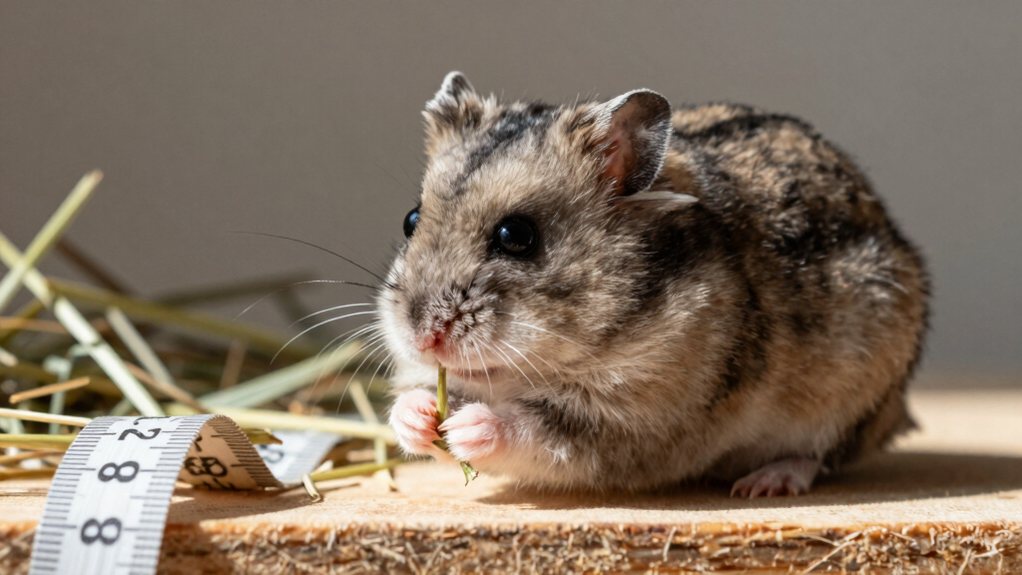
A happy, growing hamster is a joy to watch, and spotting the signs of healthy development is easier than you might think. You’ll notice your little buddy is thriving when they’re full of energy, darting around the cage or going ham on the exercise wheel.
A thriving hamster is a lively one—zooming around the cage or going ham on the wheel is a sure sign your little buddy’s happy and healthy.
Play behavior, like burrowing, climbing, or tossing bedding around, is a solid sign they’re feeling good. Don’t be surprised if they stuff their cheeks to comical sizes during snack time, that’s totally normal.
Social interaction matters too. Healthy young hamsters respond to your voice, sniff your fingers, and might even “talk” back with soft squeaks. They should have bright eyes, sleek fur, and steady weight gain.
If your pup is curious, active, and not hiding all day, you’re doing something right. Just don’t take it personally if they bite the bars, teenage hamster drama is real!
When to Worry: Is Your Hamster Stunted?
What if your tiny hamster isn’t growing like the others you’ve seen? While Campbell Dwarf hamsters are naturally small, a lack of growth could signal a problem. Don’t panic. Just pay close attention.
Here are three red flags to watch for:
- Poor exercise habits – If your hamster ignores the wheel or seems lethargic, it mightn’t be thriving.
- Limited environmental enrichment – A bare cage with no toys or tunnels can stunt both physical and mental development.
- Consistently low weight – Not gaining size over weeks, even with good food, could mean underlying health issues.
You’re doing great by staying observant. Most stunted growth cases link to care, not genetics. Tweak their setup. Add fun tunnels. Keep that wheel spinning.
A little love and enrichment go a long way. Your pint-sized pal might just surprise you yet!
Introducing foraging toys can significantly boost mental stimulation and support natural behaviors essential for healthy development.
How Campbell Dwarf Hamsters Compare in Size
You’ve probably noticed your Campbell dwarf hamster is pint-sized, like a fluffy little ping-pong ball with legs, and that’s exactly how they’re supposed to be. Compared to other dwarf types, like the slightly larger Roborovski, Campbells are compact but feisty, usually reaching just 3 to 4 inches.
Even next to a Syrian, they look like tiny escape artists in fur coats. Their size doesn’t depend on coat color, whether they’re gray, brown, or sapphire, they all stay small.
Eye shape doesn’t change their size either, though those round, beady eyes make them look extra curious.
Don’t worry if your hammy seems smaller than a friend’s, slight differences are normal. Just keep an eye on their energy and appetite.
As long as they’re active and eating well, that little body is perfectly proportioned for zooming through tubes and stuffing their cheeks.
Size doesn’t measure charm, and yours is full of it.
Best Cage Size for a Growing Campbell Hamster
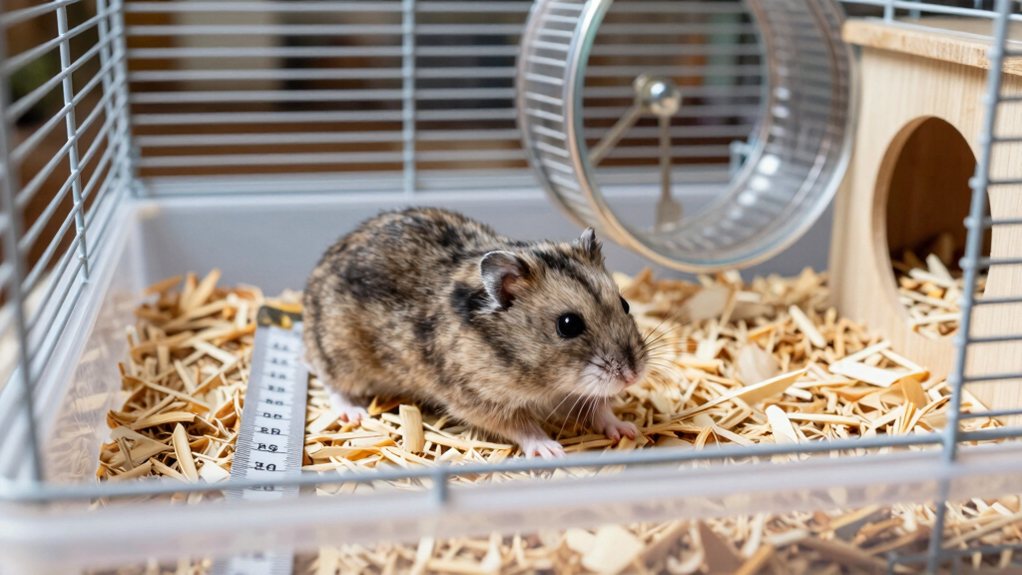
You’ll want to give your growing Campbell hamster enough room to stretch their tiny legs and show off their zoomies, so aim for a cage that’s at least 24 inches long by 12 inches deep.
Trust me, they’ll thank you with fewer escape attempts.
Make sure the bar spacing is no more than 0.4 inches, or you might wake up to a Houdini act starring your pint-sized escape artist.
A safe, roomy home keeps them happy, healthy, and where they belong: inside, not halfway to the kitchen floor.
A pull-out tray allows for quick, tool-free cleaning and helps maintain a hygienic environment between full bedding changes.
Minimum Cage Dimensions
While your tiny Campbell dwarf hamster might start off looking like he could fit in the palm of your hand, don’t let his small size fool you. He’s going to need room to roam as he grows.
For a happy, healthy hamster, aim for a cage that’s at least 24 inches long, 12 inches deep, and 12 inches tall. That gives him space to burrow, climb, and burn off all that midnight energy.
Here’s what else matters:
- Cage placement: Keep it in a quiet, draft-free spot, away from direct sunlight and loud TVs.
- Ventilation needs: Wire tops or mesh sides help airflow and prevent stale air, but avoid aquariums with poor lids.
- Floor space over height: Hamsters dig horizontally, not vertically, so wide beats tall every time.
Trust me, your pint-sized pal will thank you with happy wheel runs and fewer “I’m bored!” escape attempts.
A properly sized cage should provide a minimum of 360 square inches of floor space to support natural behaviors like running and digging.
Bar Spacing And Safety
When it comes to keeping your Campbell dwarf hamster safe and snug, bar spacing is a bigger deal than you might think. If the bars are too far apart, your tiny escape artist might squeeze through and make a break for it, adorable but not safe.
For proper cage safety, stick to a spacing of no more than ¼ inch. That’s about the width of a standard pencil, so if you can fit a pencil between the bars, it’s too wide.
Campbell dwarfs are small and sneaky, so tight bar spacing keeps them where they belong: inside, comfy and secure.
A well-built cage with the right spacing also prevents curious paws from getting stuck.
Trust us, you don’t want a midnight hamster hunt! Focus on bar spacing as a key part of cage safety.
It’s a simple fix that keeps your little buddy safe, happy, and right where you can spoil them with treats.
To further protect against chewing and escape attempts, consider using chew-proof bar covers made from BPA-free materials like PET plastic or durable polyester.
Best Foods for Healthy Campbell Dwarf Hamster Size
Since your Campbell dwarf hamster’s size and energy depend heavily on what’s in their tiny paws at snack time, feeding them the right mix of foods isn’t just smart, it’s a game-changer.
To support their exercise needs and lively social behavior, balance is key.
You wouldn’t survive on candy alone, and neither should your pint-sized pal!
Here’s what to include:
- High-quality hamster pellets – packed with vital nutrients for steady growth.
- Fresh veggies like carrots and cucumber – great for hydration and tiny teeth.
- Occasional protein snacks – think boiled egg or mealworms, because even mini mammals need muscle fuel.
Skip sugary treats, they lead to weight gain and cranky hamsters, and nobody wants a grumpy roommate.
Pair good food with a roomy cage and playtime, and your little buddy will thrive, staying small but mighty, just how Campbell dwarfs should be.
Final Thoughts
You now know just how big your tiny furball can grow, around 3 to 4 inches, about the length of a banana. With the right food, space, and care, your Campbell dwarf hamster will thrive.
Watch for healthy growth signs, and don’t stress if they’re pint-sized—cute comes in small packages. Just keep an eye out for red flags, because even little bodies need big love.