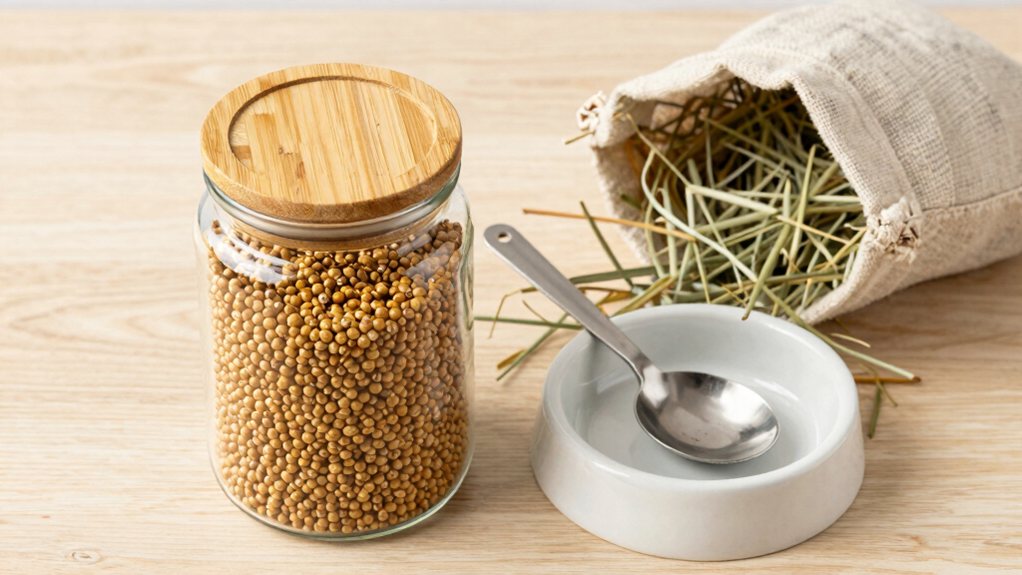
Keep your hamster’s food fresh by storing it in airtight glass or thick plastic containers. This locks in nutrients and keeps bugs out.
Store it in a cool, dry, dark spot, like a pantry, to avoid mold and rancid snacks. Label and date everything so you use older food first, and check weekly for weird smells or tiny intruders. Small containers help reduce air exposure, keeping kibble crunchy.
You’re doing great. There’s even more smart, simple tips waiting to make life easier for you and your little munchkin.
Store Hamster Food in Airtight Containers
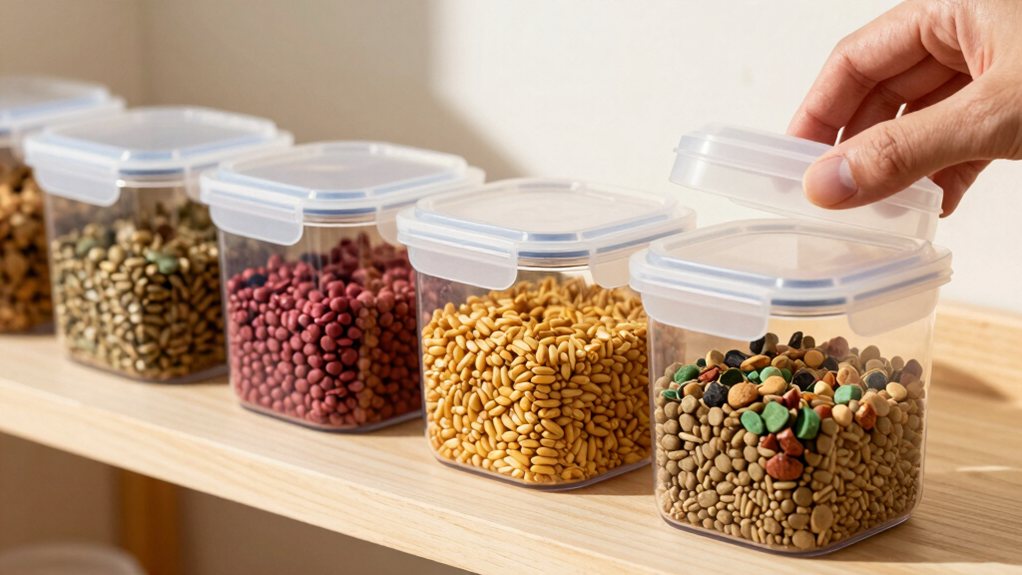
While you might think tossing your hamster’s food into any old bowl or bag is just fine, doing that could actually do more harm than good.
To keep things fresh and safe, always store hamster food in airtight containers, yes, really! This simple step locks in nutrients and keeps out moisture and pests that could mess with your pet’s health.
Think about it: stale food can lead to picky eating, and we all know how dramatic hamster behavior can get when dinner isn’t up to snuff.
Plus, proper storage helps prevent mold, especially if your cage placement is in a slightly humid corner. No one wants a fuzzy science experiment near their furry friend!
Airtight bins are cheap, easy to find, and make refilling bowls a breeze.
Your hamster mightn’t say “thank you,” but trust me, their bright eyes and happy nibbling will.
Just pop the container in a cool, dry spot, and you’re golden.
Keep Food Cool, Dry, and Out of Sunlight
Since heat, moisture, and sunlight team up like villains in a hamster horror movie, you’ll want to keep your pet’s food safe by storing it in a cool, dry spot away from direct light. Think pantry, not windowsill.
Keep hamster food fresh by dodging heat, moisture, and sunlight—store it in a cool, dark pantry, not on a sunny windowsill.
Temperature control is key. Warm spots speed up spoilage and can make fats go rancid fast. No one wants to serve their tiny furball a stale snack!
Light exposure isn’t just a mood killer. It breaks down nutrients and fades food quality. Keep those kibble bags in a dark cupboard, and your hamster will thank you with happy cheek-puffing.
Moisture is a no-go. Damp food invites mold, and that’s a one-way ticket to vet visits. So skip the garage or basement if they get humid.
Stick to a stable, shaded spot in your kitchen or closet.
Your hamster may not talk, but their health speaks volumes. Keep it fresh, keep it safe, and keep those tiny paws full of goodness.
Block Moisture to Prevent Mold and Clumping
Keep your hamster’s food fresh by using airtight containers, they’re like little bunkers against sneaky moisture.
Store them in dry spots, not places like under the sink where humidity loves to hang out.
Trust me, your furry little chef will thank you when their meal isn’t a moldy mess or a clumpy surprise.
Keep Containers Airtight
If you’ve ever opened a bag of hamster food only to find it fuzzy with mold or clumped into sad little rocks, you know how gross that is.
Your tiny furball definitely won’t be throwing a dinner party for that!
To keep food fresh, always store it in airtight containers.
This simple step blocks moisture and keeps bugs out, which matters because hamsters are picky eaters and will ignore spoiled snacks.
Think about your hamster behavior.
If the food smells or feels off, they’ll likely stash it and let it rot in their cage.
That’s a recipe for mold and mess.
Also, check your cage placement.
Keeping it near a window or sink adds humidity, making food spoil faster.
A sealed container made of glass or thick plastic works best.
Just scoop what your hamster needs daily, and you’ll save money, reduce waste, and keep your little buddy happy and healthy.
Win-win!
Store In Dry Areas
You’ve sealed your hamster’s food in a tight container, great job! Now, let’s talk about where to stash it. Moisture is the sneaky villain here, causing mold and clumping that can make your little buddy sick. So, skip the damp basement or steamy kitchen. Store the container in a dry, cool spot instead.
Even airtight containers can’t fight humidity if the room’s too moist, so ventilation importance can’t be ignored. A closet or shelf in a climate-controlled room works wonders.
Also, consider your container material. Glass or thick plastic resists moisture better than flimsy bags.
Think of it like keeping snacks fresh at a picnic. Dry is happy! Your hamster deserves crisp, tasty bites every time.
A little effort now saves vet visits later. Plus, no one wants to explain why they’re crying over soggy hamster chow. Stay dry, stay smart!
Use Small Containers to Minimize Air Exposure
You’ll want to stash your hamster’s food in small, airtight containers. It keeps the kibble fresh and crunchy, just how your little buddy likes it.
When you only open what you need, you cut down on air exposure. This means less mold and fewer sad, stale snacks.
Think of it like a snack-sized fortress against spoilage. Your hamster will thank you with happy nibbles.
Airtight Containers Preserve Freshness
While it might sound like overkill to treat hamster food like a top-secret recipe, keeping it fresh actually comes down to something pretty simple: air is the enemy. You don’t need fancy natural packaging or vacuum sealing. Just a good airtight container.
Once that bag opens, freshness starts slipping away fast. But seal it tight in a container with a snug lid, and you’re locking in nutrients and flavor. Think of it like putting your hamster’s dinner in a tiny fortress. Nothing gets in or out!
Airtight containers block moisture, bugs, and stale air, which means every bite stays tasty and safe.
Plus, it’s way easier than resealing flimsy bags that never close right. Your hamster will thank you with happy munching sounds.
Small Batches Reduce Spoilage
A little goes a long way when it comes to keeping hamster food fresh. Instead of filling a giant bin, try storing food in small batches. This helps with portion control and keeps things from going stale.
Think of it like snacks for you. Would you open a huge bag and eat it all at once? Probably not, unless it’s cheese puffs. No judgment.
With batch rotation, you use older food first and keep freshness high.
Smaller containers also mean less air exposure every time you open them, which slows spoilage. Your hamster will love you for serving up crisp, tasty bites every time. Plus, it’s easier to spot if something’s off.
Limit Oxygen To Prevent Mold
Since mold thrives in damp, airy environments, keeping oxygen out of your hamster’s food is a smart move. You don’t need a science degree—just a few simple tricks to keep those tiny treats fresh and safe. Here’s how:
- Use small, airtight containers to limit air exposure, less space means less oxygen.
- Toss in oxygen absorbers; they’re like tiny superheroes fighting mold and moisture.
- Try vacuum sealing bulk food, it squishes out air and keeps everything crisp.
- Label and date containers so you know what to use first (no guessing games!).
Not only does this keep food fresher, but it also means fewer trips to the store.
Plus, your hamster will thank you with happy, munching cheeks.
Just imagine—no more mysterious green fuzz in the food bowl!
A little effort now saves hassle and sniff tests later.
Label and Date All Hamster Food Supplies
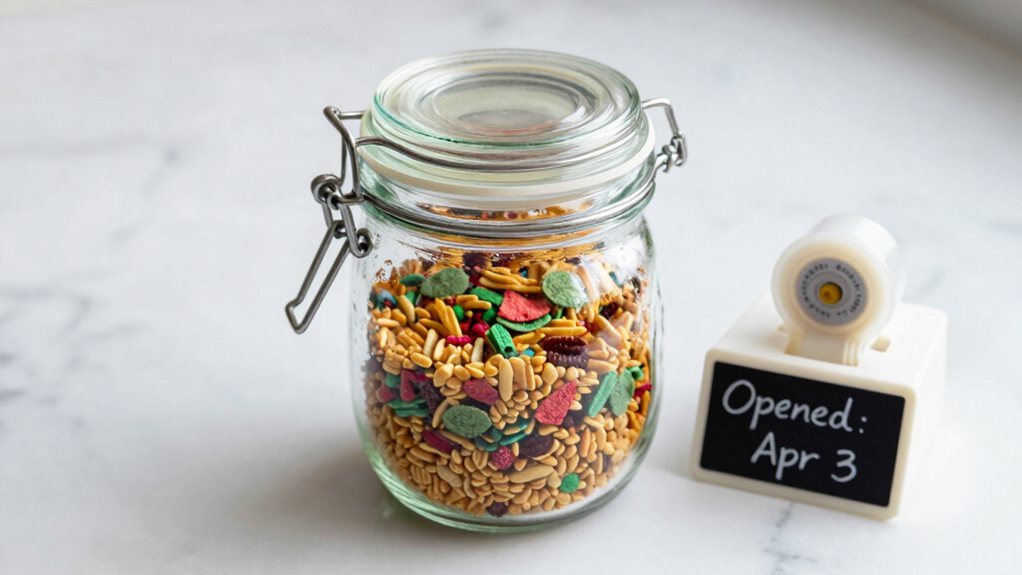
Ever wonder how to keep your hamster’s food fresh and safe for snacking? Start with smart food labeling and date tracking, your secret weapons! Grab a marker and clearly label each container with what’s inside and when you bought or opened it. Trust me, “that crunchy stuff from last month” isn’t helpful.
Label it right: name and date every container. “Crunchy stuff from last month” won’t cut it—your hamster deserves fresh, safe snacks every time.
Hamsters love consistency, and stale food? Not so much. By dating your supplies, you’ll always use the oldest food first. Hello, freshness! Think of a tiny pantry system for your tiny roommate.
Plus, it’s way easier than playing food detective later. A little effort now saves your hamster from munching on yucky, expired bits. And honestly, who wants to explain to a disgruntled hamster why dinner tastes off?
Keep it simple, keep it labeled, and your fuzzy friend will thank you with happy wheel runs and adorable cheek stuffing. Win-win!
Store Treats Separately to Preserve Freshness
While your hamster might dream of a buffet-style snack bar, mixing treats with their regular food is a fast track to soggy seeds and stale surprises.
Keep things fresh and tasty by storing treats separately. Here’s how:
- Use airtight containers just for natural treats like dried veggies or plain oats.
- Keep flavored snacks in a cool, dark spot to prevent melting or hardening.
- Label each container with the treat type and date, yes, even the cheesy puffs.
- Check weekly for mold or odd smells, because nobody wants a stinky surprise.
This way, your little buddy gets crisp, delicious rewards every time.
Plus, you’ll avoid turning their snack stash into a science experiment.
A little extra effort now means happier munching later.
Trust me, that happy hop after a fresh treat? Totally worth it.
Spot Spoilage: Mold, Bugs, and Rancid Smells
You’ve got your treats tucked away nice and snug, but let’s talk about what happens if you don’t keep an eye on the whole food stash, because nobody wants to serve dinner that’s hosting a mold party or playing host to uninvited bug guests.
Check your hamster food weekly. Look for fuzzy spots, tiny bugs, or a sour, rancid smell. These mean it’s time to toss it.
Spoiled food loses its nutritional value fast, and that’s no good for your little buddy’s health.
If your hamster starts ignoring their food, it mightn’t be picky behavior. It could be spoiled.
Keep food in a cool, dry place, sealed tight. This simple habit keeps meals fresh and safe.
A happy hamster means you’re doing it right. Stay sharp, and your furry friend will thank you with bright eyes and lots of wheel-running joy.
Pest-Proof Your Hamster Food Storage
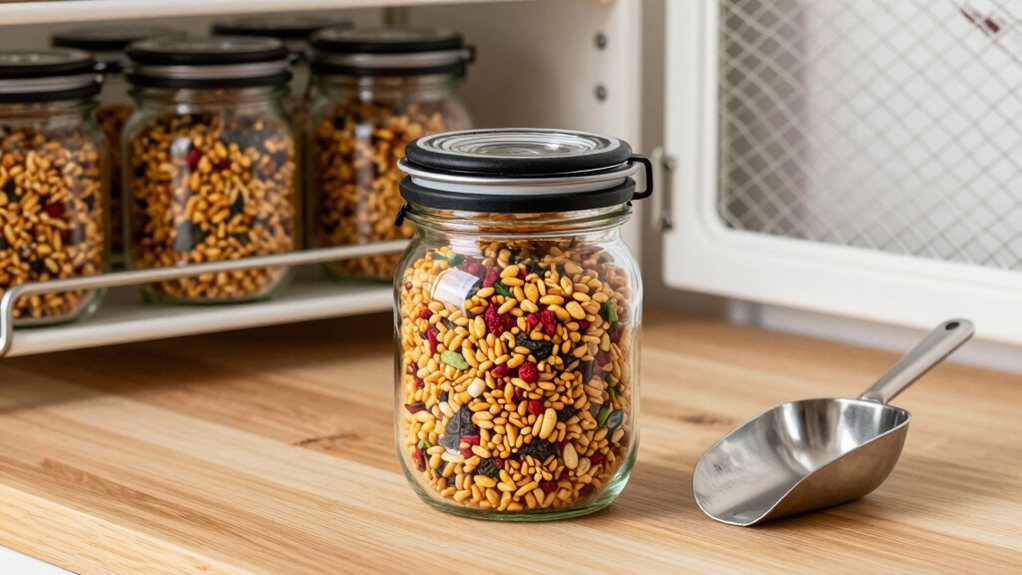
If you thought keeping your hamster’s food fresh was just about nutrition, think again.
Those tiny crumbs and tasty pellets can be a five-star buffet for uninvited guests like ants, mice, or even pantry moths.
Don’t let pests turn snack time into food theft or cause container damage.
Here’s how to keep your hamster’s pantry secure:
- Use airtight glass or hard plastic containers. They lock out bugs and rodents.
- Store food in a cool, dry place, away from baseboards where pests sneak in.
- Wipe down the container weekly to remove lingering crumbs that invite trouble.
- Check seals regularly. Even a tiny crack can lead to container damage and infestations.
A little effort goes a long way.
Your hamster and your kitchen will thank you.
Keep the snacks safe, the pests baffled, and the munchies strictly for your tiny, whiskered friend.
Rotate Stock: Use Older Food First
Just because your hamster can’t read a calendar doesn’t mean you should ignore one when it comes to their food. Practicing good food rotation keeps your pet’s meals fresh and safe.
Always use the older food first, yes, even if the new bag smells slightly better to you, not the hamster. This simple habit is key to smart stock management.
Label each container with the purchase date so you know what’s been lounging in your pantry too long. Think of it like a mini grocery store system, except your tiny customer has zero interest in expired treats.
Over time, stale food loses nutrients and can attract mold or bugs. Nobody wants a crunchy surprise that isn’t supposed to be there.
By rotating your stock, you’re being more than organized. You’re giving your hamster the best bite every time.
It’s a small step that makes a big difference in their health and happiness.
Choose the Best Container for Hamster Food
While your hamster might dream of chewing through cardboard castles, they definitely shouldn’t be snacking on their food storage. So skip the flimsy bags and boxes.
Choosing the right container keeps your hamster’s diet fresh and their food types safe from pests and moisture. Here’s how to pick the best one:
- Airtight: Locks in freshness and keeps out bugs. Your hamster will thank you.
- Opaque: Blocks sunlight, which can spoil nutrients in their food.
- Durable: Glass or thick plastic won’t crack under tiny, determined teeth.
- Easy to clean: Less grime means a healthier snack time.
A good container doesn’t just protect the food. It protects your little buddy. Plus, it makes refilling their bowl way easier.
Think of it as a mini pantry for your furry roomie. Your hamster may not care about style, but you’ll love how neat it looks on the shelf.
Final Thoughts
You’ve got this! Just keep your hamster’s food in a cool, dark spot, sealed tight in a container they’d be jealous of.
Ditch moisture, bugs, and mystery smells. Nobody wants crunchy surprises that *wiggle*.
Rotate older food first, like a pro pantry ninja. Label everything so you don’t play “food roulette”.
Do all this, and your tiny furball stays happy, healthy, and snack-ready. Easy, right? Victory tastes like fresh seeds.