If your hamster’s cage is suddenly too clean and your furry friend is ignoring their favorite snacks, they’re likely constipated. This usually happens from a lack of dietary fiber or not drinking enough water.
Start by encouraging hydration with cucumber slices and try a gentle belly massage. Watch closely, though—if they have a hard, swollen belly or go 24 hours without a dropping, you’ll need to call your vet.
There’s plenty more to know about getting their tiny tummy back on track.
How to Spot Hamster Constipation: Key Signs?
You might be wondering how you can tell if your little furball is dealing with constipation, since hamsters aren’t exactly known for their detailed medical reports.
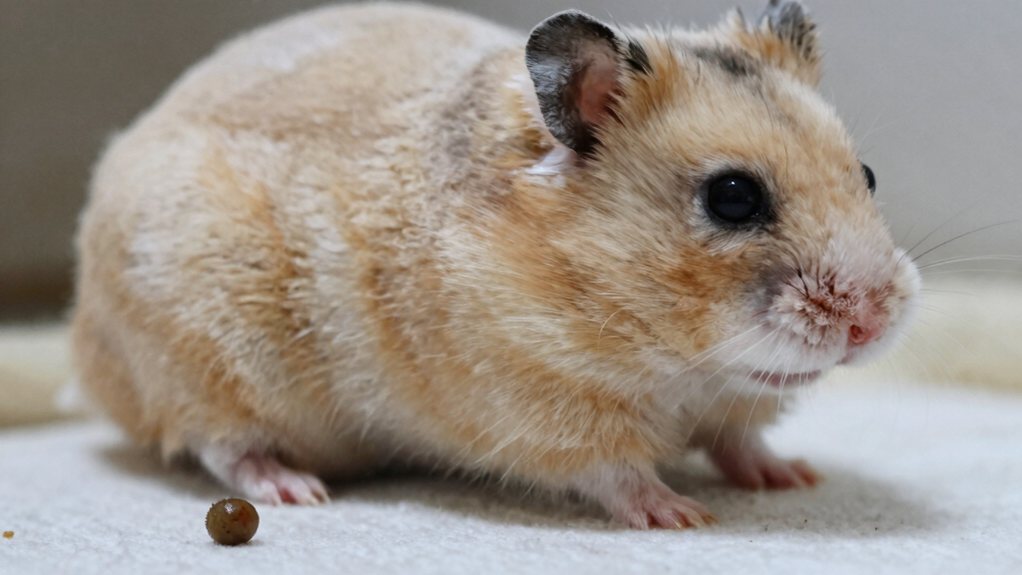
First, you’ll want to check stool frequency. If their cage is suspiciously clean and you can’t find the usual tiny droppings, it’s a major clue.
Next, watch appetite changes****. A constipated hamster often loses interest in their favorite snacks, which is very unlike them.
Notice a sudden disinterest in favorite treats? This change in appetite can be a key sign of hamster constipation.
You might also see them straining in a corner, or their belly may look a bit swollen.
They could seem less active or grumpy, too.
Spotting these signs early means you can help your pet feel better faster, getting them back to their busy, wheel-running selves. A dirty cage environment can worsen health issues, so ensure you’re following a weekly cleaning schedule to prevent bacterial or mold exposure that could complicate their condition.
First Aid for a Constipated Hamster: Immediate Steps
If you think your hamster might be constipated, start by carefully watching its behavior and checking for common symptoms like a bloated belly or a lack of droppings.
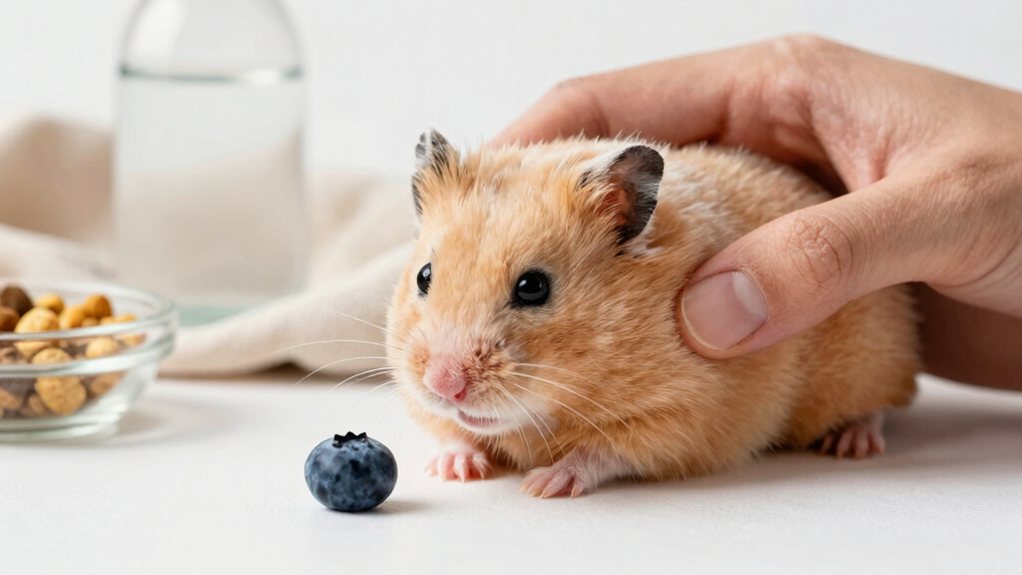
You can offer a little extra hydration by providing cucumber or a water dropper, and then try a very gentle abdominal massage to help get things moving. Remember to stay calm and patient, as these simple steps can often provide some quick relief for your little friend. If you notice any signs of lethargy or other behavioral changes, a veterinary consultation is recommended.
Assess Symptoms And Behavior
- Monitor appetite changes. A constipated hamster often loses interest in food or treats they usually love.
- Note litter abnormalities. Check for fewer, smaller, or oddly dry droppings in their cage.
- Watch for a hunched posture or a bloated-looking belly, which can indicate discomfort.
- Pay attention to their energy. Lethargy and less wheel-running are big red flags.
- Since hamsters normally defecate every 10 to 15 minutes, a sudden drop in poop frequency is a critical symptom to observe.
Increase Hydration Methods
Once you’ve spotted the signs of discomfort, getting more fluids into your hamster is a great first move. Dehydration is a common culprit, so you’ll want to encourage drinking.
First, make sure their water bottle is fresh and working. You can also offer hydrating wet food options like cucumber slices or a bit of plain pumpkin purée. These tasty treats sneak in extra moisture. Remember, fresh vegetables should be offered every few days, not daily, and washed to remove potential pesticides.
For a more direct approach, try gentle warm water soaks. Just soak their lower abdomen in shallow, lukewarm water for a few minutes; it can relax their muscles and stimulate their system. Think of it as a tiny spa treatment!
Always supervise these soaks and dry your pet thoroughly afterward to keep them cozy and safe.
Provide Gentle Abdominal Massage
Moving on from those spa-like soaks, you can offer your hamster a bit of hands-on help with a gentle abdominal massage. This technique promotes movement in their gut and provides wonderful warmth and comfort. It’s a great method for slow stress relief, too, as reducing psychological strain is key to overall hamster wellbeing.
Just follow these simple steps:
- Wash and warm your hands to make sure they’re clean and pleasantly warm, not hot, before you begin.
- Place your hamster on a secure, flat surface while they’re calm, perhaps after a snuggle session.
- Using one finger, stroke very gently in a downward motion from their ribs to their hips, following the digestive tract.
- Keep sessions brief, under two minutes, and stop immediately if your pet seems agitated or tries to get away.
This gentle aid can be very effective when done with patience and care.
When to Call the Vet for Hamster Constipation
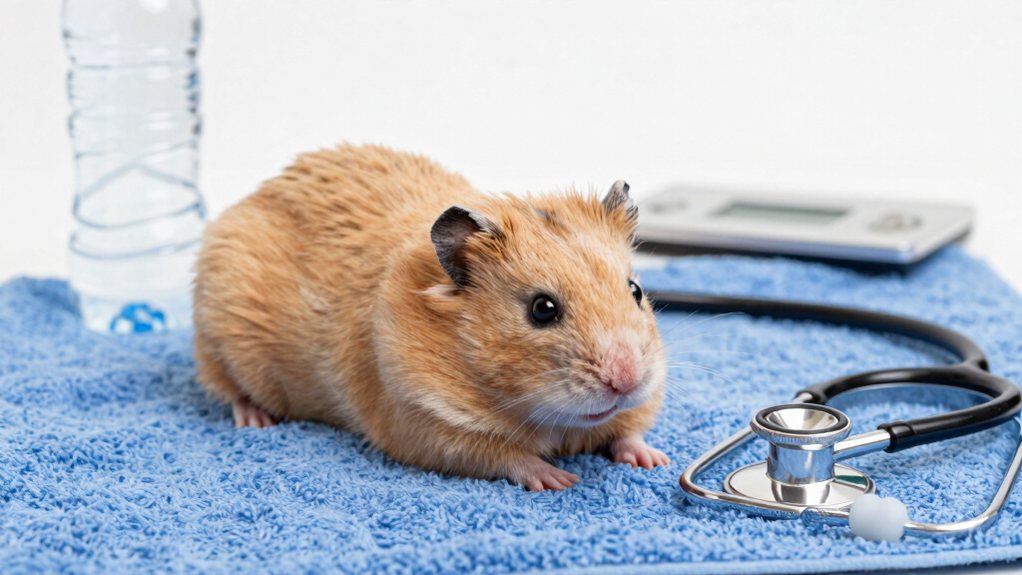
While it’s normal for hamsters to have the occasional slow day, you should definitely call your vet if your little furball hasn’t produced any droppings for a full 24 hours, since constipation can quickly become serious for such tiny pets.
Watch closely for warning symptoms like a hunched posture, loss of appetite, or a hard, swollen belly. A hunched posture can also be a sign of labored breathing, indicating a more serious underlying condition. Dehydration prevention is key, so make sure their water bottle is full, but if they’re refusing fluids, that’s a major red flag.
Don’t wait it out, as small animals can decline fast. Your vet can provide safe treatments, like laxatives or an enema, that you shouldn’t try at home. It’s always better to get a professional opinion and make sure your hamster gets swift, comfortable relief.
Why It Happens: Common Causes of Constipation
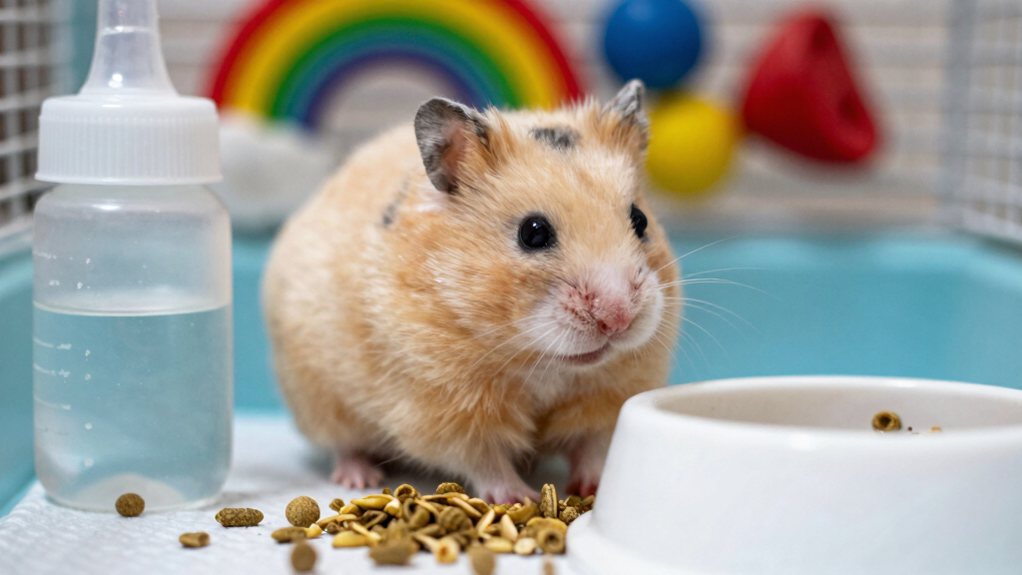
If your hamster’s having trouble in the bathroom, it’s often due to a few common reasons.
Their diet might lack enough fiber from hay and veggies, they mightn’t be drinking sufficient water, or they could be a little too cozy and not moving around enough. Inadequate cage bedding that doesn’t support natural burrowing behavior can also contribute to inactivity and stress.
Let’s take a look at these causes so you can help your furry friend get back to feeling great.
Dietary Fiber Deficiency
- Feeding too many low-fiber treats, like plain seeds or sugary fruits, which fill them up without providing the needed roughage.
- Not offering enough quality hay, which is the cornerstone of good fiber intake for most hamsters.
- Relying solely on commercial pellet mixes without supplementing them with fresh, fiber-rich veggies like broccoli or kale.
- Forgetting that fiber also helps wear down their constantly growing teeth, so a lack of it can cause a double-whammy of health issues.
- Overfeeding high-sugar fruits like bananas or grapes can lead to digestive upset and disrupt normal gut motility, worsening constipation issues.
A simple diet tweak can often get things moving smoothly again!
Inadequate Water Intake
Leaving your hamster’s water bottle empty or not checking it often enough is a surprisingly easy mistake to make, and it’s a fast track to constipation. Just like us, your little friend needs proper fluids to keep everything moving smoothly.
Without enough water, their stool becomes hard, dry, and difficult to pass. Monitoring the habitat temperature and humidity with a reliable gauge helps ensure conditions don’t encourage dehydration.
This is where smart hydration techniques come in. Don’t just rely on a single bottle; consider adding a small, heavy ceramic bowl for water sources variety. It can encourage more drinking!
Check both daily to make sure they’re full and clean. Think of it as a tiny, important pit stop.
A well-hydrated hamster is a happy, regular hamster, and that’s a win for everyone.
Lack Of Physical Activity
- First, make sure their wheel is solid-surfaced, large, and spins freely for nightly runs.
- Next, create a fun playground outside the cage for safe, supervised exploration.
- Then, hide small food portions around their habitat to encourage natural foraging.
- Finally, aim for daily out-of-cage time; even 15 minutes of new scenery works wonders.
- Always ensure their play area is free of hazards like apple seeds or other toxic foods listed in safety guides.
The Best Diet to Prevent Hamster Constipation
Because a happy hamster is an active hamster, keeping their digestive system running effectively starts with what you put in their bowl. A high-quality commercial pellet forms a great base, but you’ll want to add key fiber sources like timothy hay and small amounts of fresh veggies, think broccoli florets or grated carrot. These act like internal scrub brushes!
For safe treat options, skip sugary yoghurt drops and offer a tiny piece of apple or a plain pumpkin seed instead.
Remember, variety is good, but sudden changes can backfire.
Introduce new foods slowly and always have fresh water available. It’s all about balance; a smart diet keeps your little friend’s engine purring and prevents uncomfortable blockages.
Reducing Stress for a Healthy Hamster Gut
Just like us, your hamster’s tummy troubles can sometimes start in their head, or more accurately, from stress. A stressed hamster can have real digestive issues, so creating a calm home is key for their gut health.
It’s easier than you think!
- Provide Hiding Spots: Give them cozy huts and tubes. Having a safe place to retreat makes a world of difference.
- Stick to a Routine: Try to feed, play, and clean around the same times each day. Hamsters thrive on predictability.
- Handle with Care: Always be gentle and calm during interactions. Let them come to you to build trust.
- Optimize Their Home: Think about proper cage placement away from loud noises and use safe bedding changes to avoid startling them.
A peaceful hamster is a regular hamster!
Final Thoughts
If your hamster gets constipated, do not panic! You now know the key signs to spot and the immediate steps you can take.
Remember, a proper diet and a calm environment are your best tools for prevention. While most cases can be handled at home, always trust your gut and call your vet if you are worried.
Here is to happy, healthy hamsters and easy digestion all around!