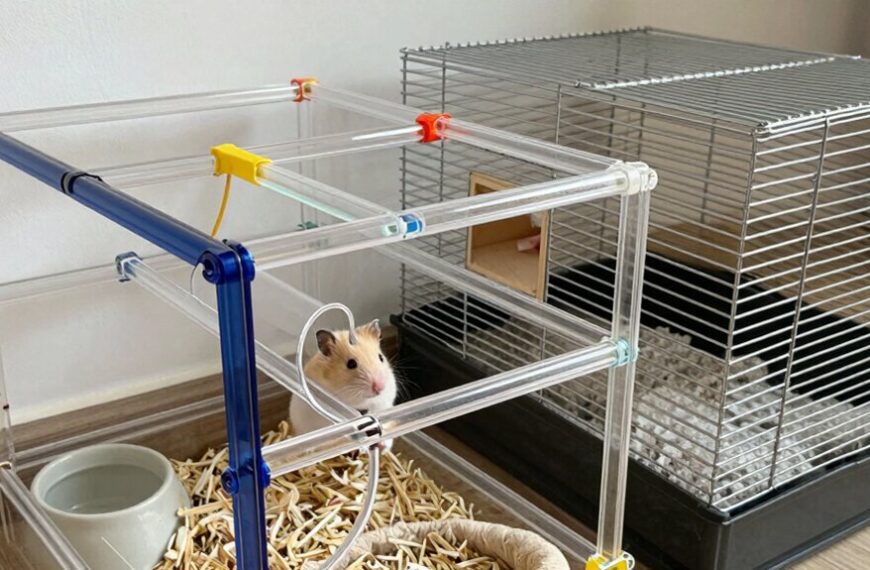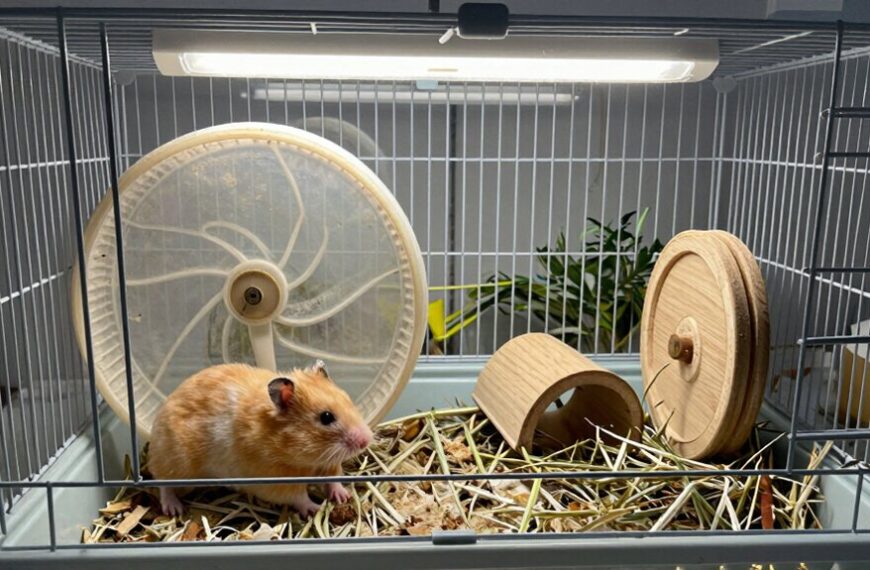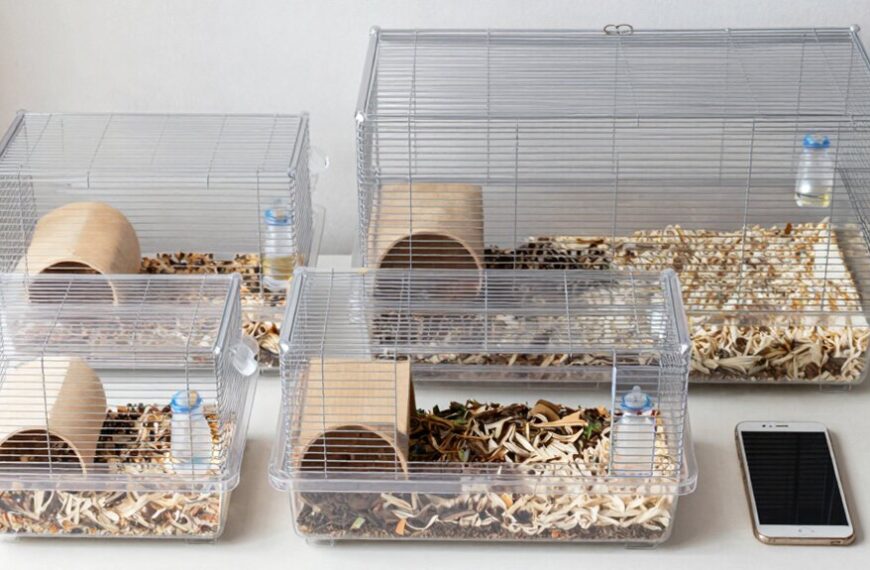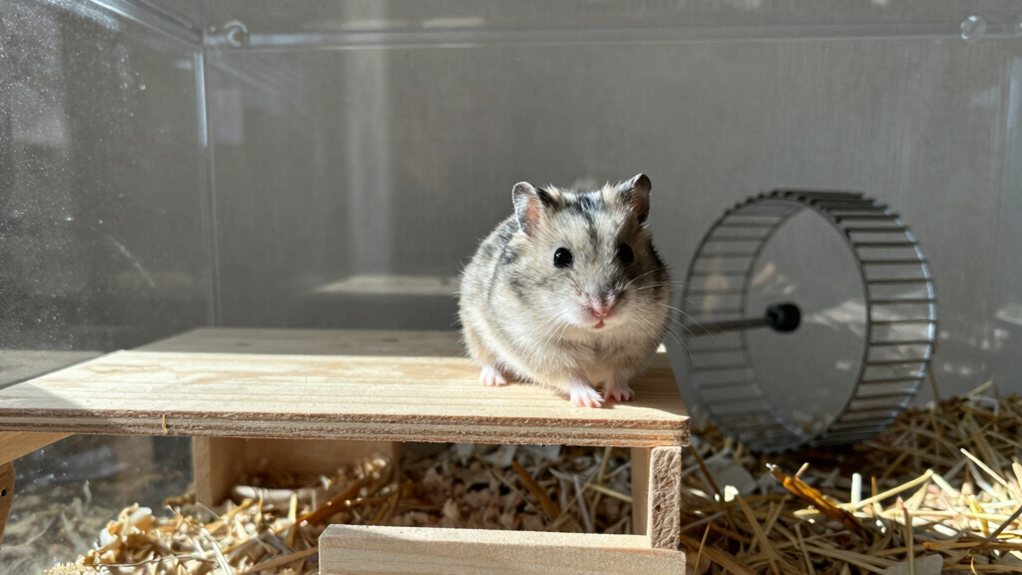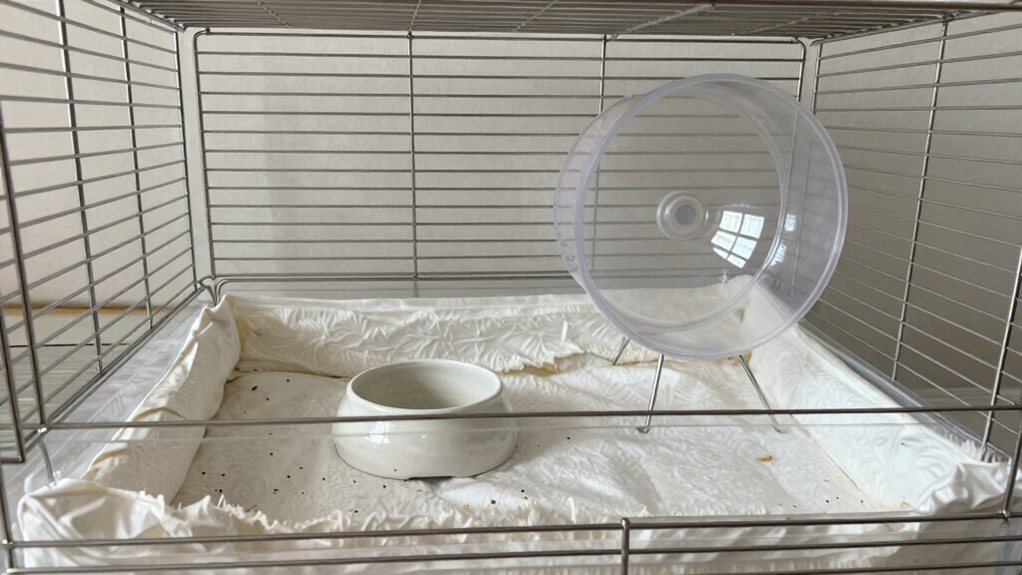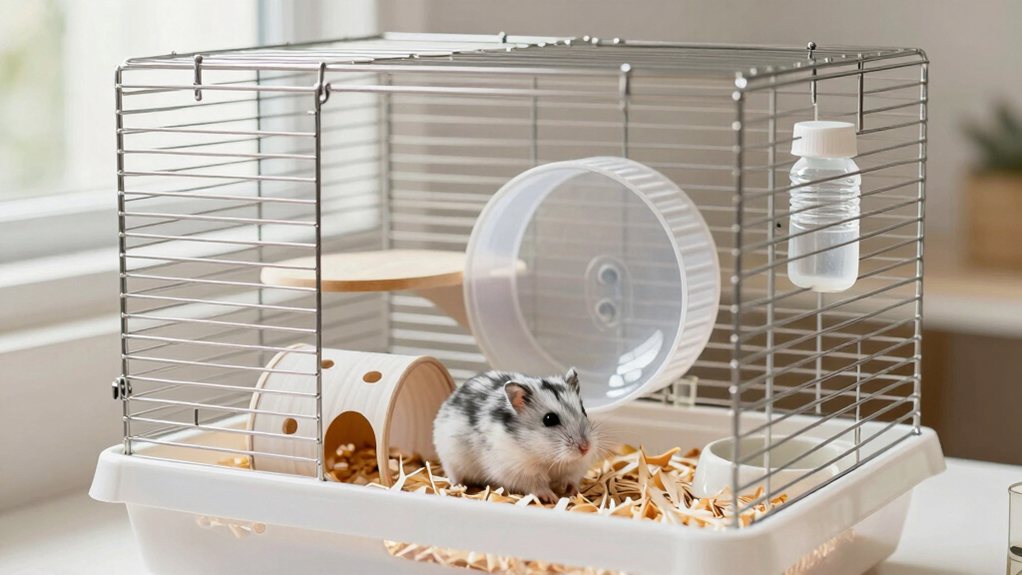
Your Campbell’s dwarf hamster needs a cage that’s at least 24 inches long and 12 inches deep, think 450 square inches of happy space for running, digging, and zooming like a tiny fur tornado. Bigger is always better, it cuts stress and keeps your little buddy healthy.
Skip wire floors, they’re rough on tiny feet, and go for solid, chew-safe materials. Add hiding spots, a wheel, and some tunnels, and you’re golden. Oh, and stick around, there’s a fun tip coming up about toy safety you won’t want to miss.
How Big Should a Campbell’s Dwarf Hamster Cage Be?
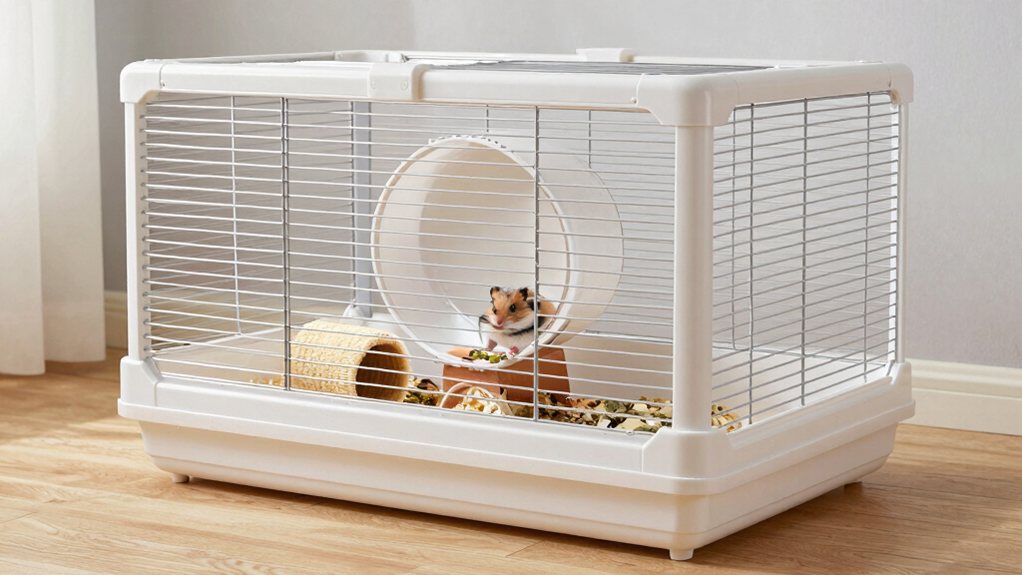
When it comes to your tiny, whiskered buddy, bigger really is better. Think of it this way: even the most energetic dwarf hamster deserves more than a glorified shoebox to call home.
Bigger really is better for your tiny, whiskered friend—every energetic dwarf hamster deserves a home that’s more than just a glorified shoebox
Aim for a cage that’s at least 24 inches long and 12 inches deep. That gives your little escape artist room to run, dig, and nap like a pro.
Good cage materials matter—go for sturdy wire or acrylic with solid flooring to protect those itty-bitty feet.
And don’t forget ventilation needs! Poor airflow can make the habitat damp and smelly, which nobody wants.
Mesh sides or airflow vents help keep the air fresh, so your hamster stays happy and healthy.
Sure, they’re small, but their personality? Huge. Give them space to explore, and you’ll see just how lively and curious they really are.
It’s more than a cage—it’s their whole world.
Aim for a minimum of 450 square inches of floor space to support healthy activity and natural behaviors.
Why a Bigger Cage Keeps Your Campbell’s Hamster Happier
You’ve already picked out a cage that meets the minimum size, good call. But guess what? Going bigger is like giving your Campbell’s hamster a VIP pass to Happy Town.
A roomier cage means more space for cage enrichment. Think tunnels, wheels, and little hideouts that turn bedtime into adventure time.
More room equals more exploring, which gives your tiny buddy serious mental stimulation.
Hamsters aren’t merely fluff with tiny feet. They’re curious little geniuses who get bored fast.
A cramped cage can leave them stressed or grumpy, and nobody wants a grumpy hamster.
With extra space, they can sprint, dig, and zigzag to their heart’s content. It’s like hamster paradise.
Plus, you’ll get to watch them thrive, not merely survive.
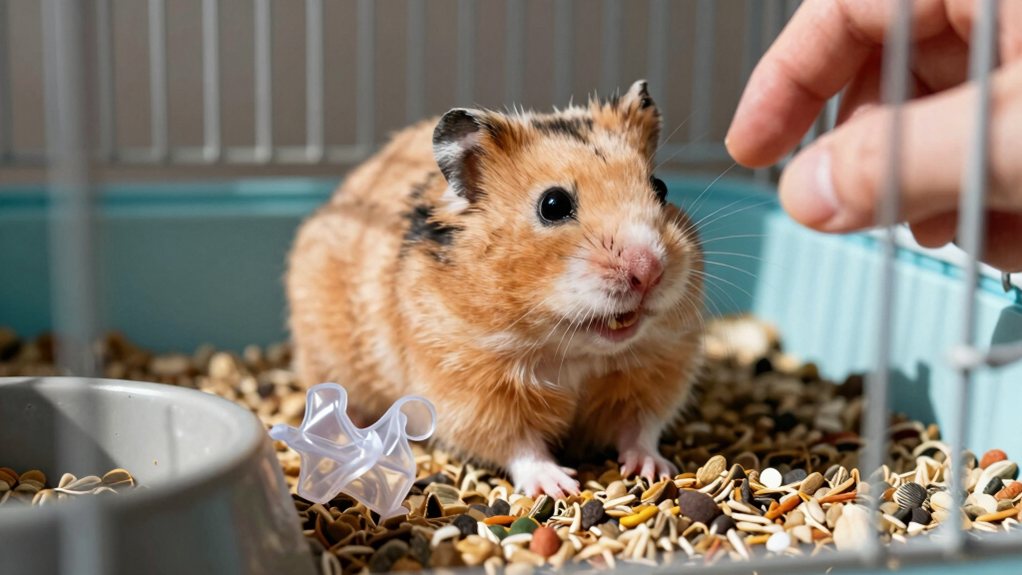
To keep all that activity safe, consider adding chew-proof bar covers to prevent your hamster from gnawing on cage wires and potentially injuring themselves.
Must-Have Features for a Campbell’s Hamster Cage
A well-designed cage isn’t merely a home, it’s your Campbell’s hamster’s whole world, so getting the features right matters.
First, solid flooring is a must, wire bottoms hurt tiny feet.
Make sure your cage has great ventilation, proper airflow keeps the air fresh and prevents respiratory issues, so skip aquariums without mesh lids.
Escape prevention is key, Campbells are Houdinis in fur coats.
Double-check latches and avoid wide bar spacing.
Include hiding spots, a cozy nest, and space for a wheel, your hamster needs to run, hide, and snooze in peace.
Chew-safe materials matter too, since they’ll gnaw on just about anything.
And hey, a fun tunnel or two, always a win.
Get these features right, and you’re merely building a cage, you’re creating a happy little hamster kingdom.
A minimum of 360 square inches of floor space ensures your hamster can engage in natural behaviors like running and digging.
Best Cage Styles for Campbell’s Dwarf Hamsters
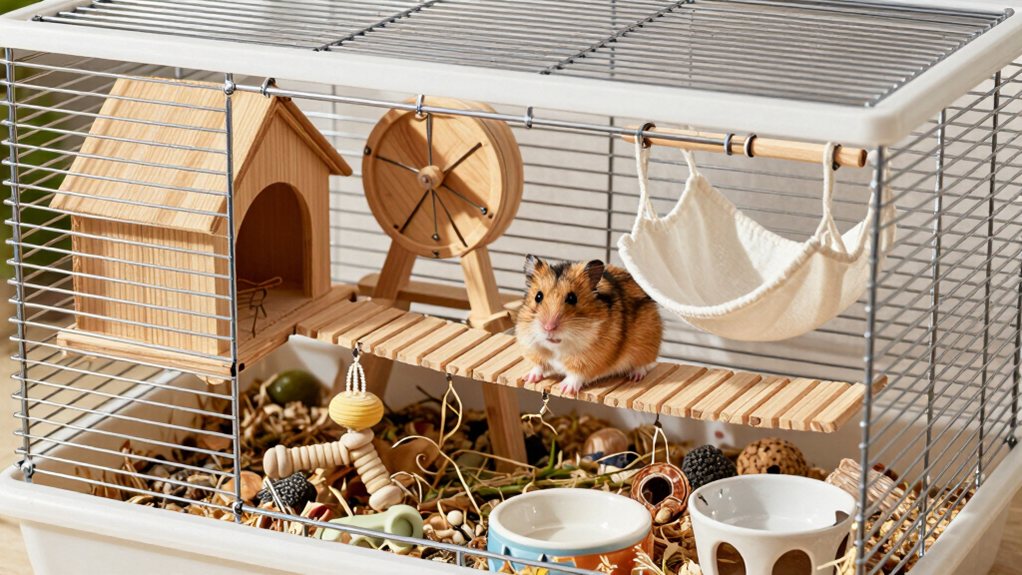
Wondering what kind of home will make your tiny furball do a happy backflip?
You’ve got options! The best cage styles keep your Campbell’s dwarf hamster safe, active, and endlessly entertained.
Here are the top 3 picks:
1. Wire cages with plastic bins, great airflow meets chew-proof space.
Plus, they let you customize cage aesthetics with colorful bins and cozy tunnels.
2. Glass aquariums, super sturdy and perfect for heavy chewers.
You can go wild with toy variety, ramps, and hideouts.
Your little escape artist won’t stand a chance.
3. Modular plastic habitats, easy to clean and packed with built-in fun.
They look sleek, boost cage aesthetics, and let you connect extra pods for adventure.
Whichever style you choose, make sure it’s roomy and escape-proof.
Your hammy’s joy is in the details.
And maybe that tiny spinning wheel.
5 Dangerous Cage Mistakes That Stress Your Hamster
What could possibly go wrong in a hamster’s cozy little home? More than you think! Poor cage placement near loud TVs or drafty windows can stress your tiny buddy. Imagine trying to nap during a rock concert.
Keep their space quiet, warm, and away from direct sunlight.
Keep it calm, cozy, and shaded—your hamster’s perfect day includes zero sunburns and no surprise light shows.
Also, watch your cleaning frequency. Scrubbing the whole cage weekly wipes out their comforting scents and leaves them anxious.
Instead, spot-clean messes and swap part of the bedding every few days. Your hamster will thank you.
Skipping hiding spots or using wire cages is a big no-no. They need privacy and solid floors to stay safe and sane.
Oh, and please, no toy overload. Clutter’s cute, but it’s not a maze challenge.
Keep it simple, clean smart, and place that cage right. Your Campbell will stay happy, healthy, and way less likely to judge your interior design choices.
A lack of mental stimulation can lead to compulsive behaviors like bar chewing, a clear sign of cage rage.
Final Thoughts
You’ve got this! Give your Campbell’s dwarf hamster a roomy cage, bigger really is better, and pack it with fun stuff like tunnels and wheels. A happy hamster zips around, burrows, and explores.
It also stays active and engaged rather than sits around bored. Skip the tiny cages and wire bars that scream “escape artist alert!” Your little buddy deserves comfort, safety, and a chance to be a hamster. Plus, watching him thrive? That’s the real win.