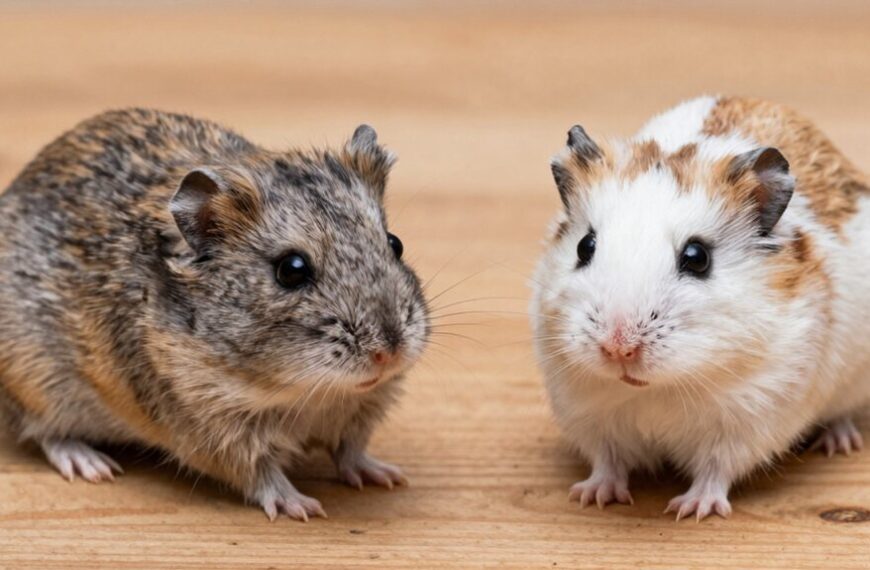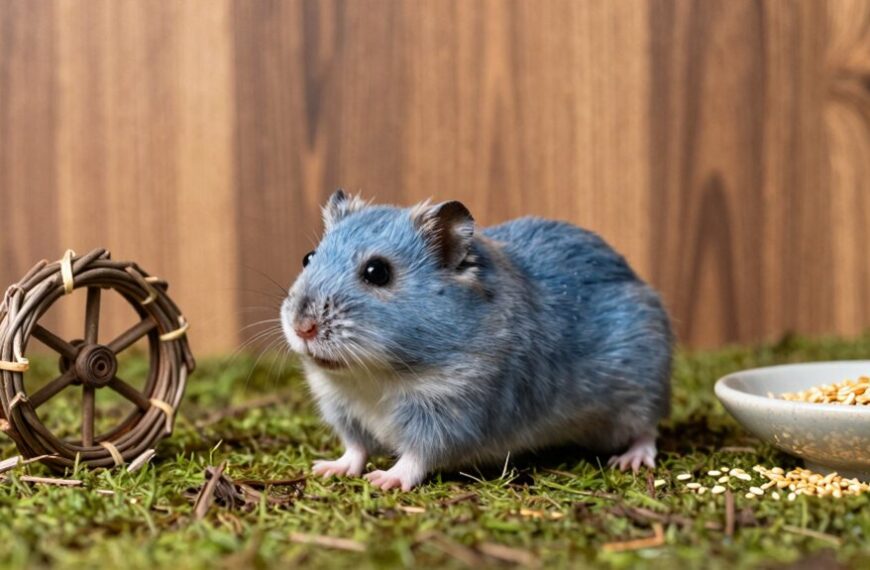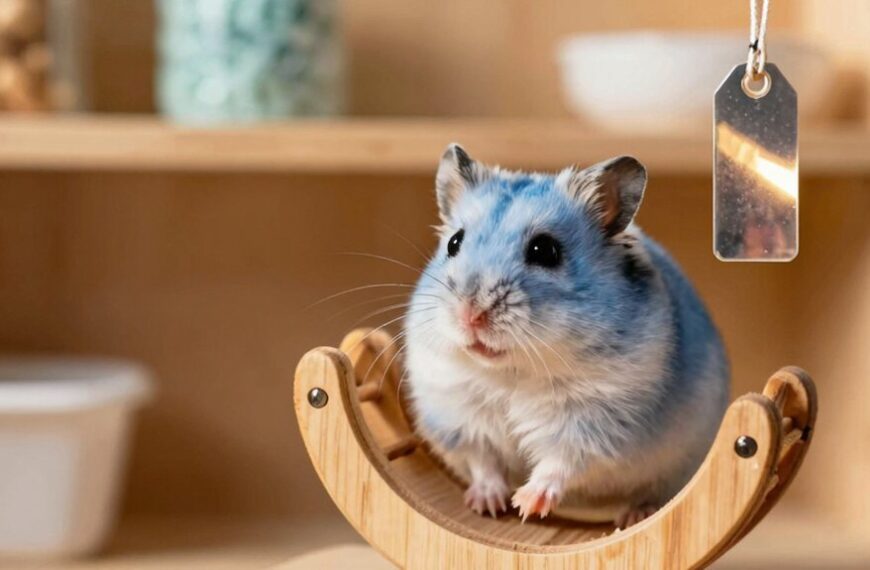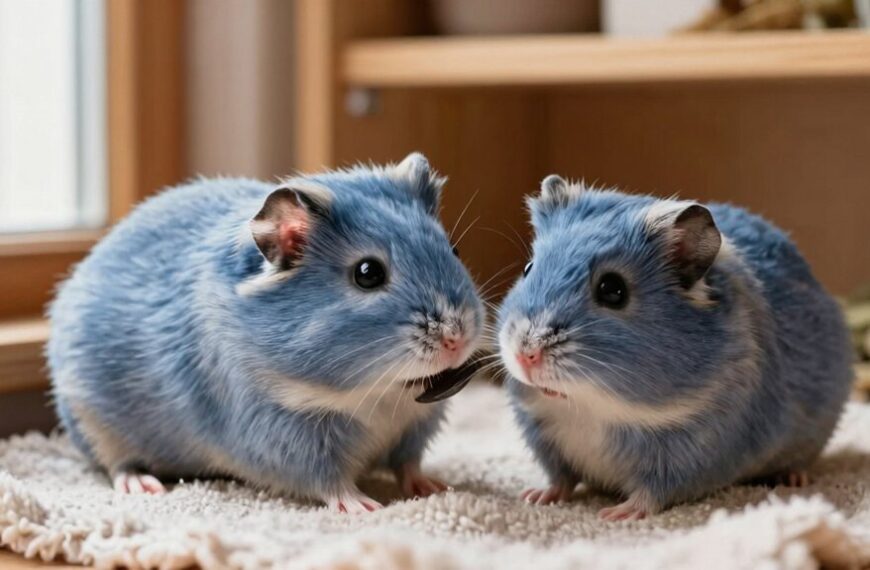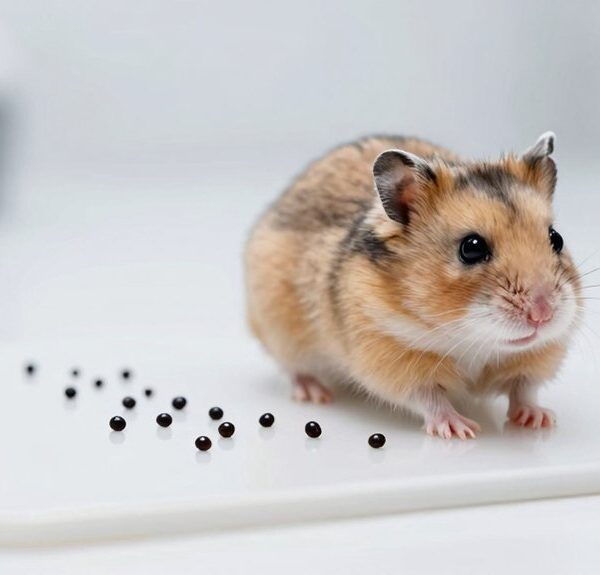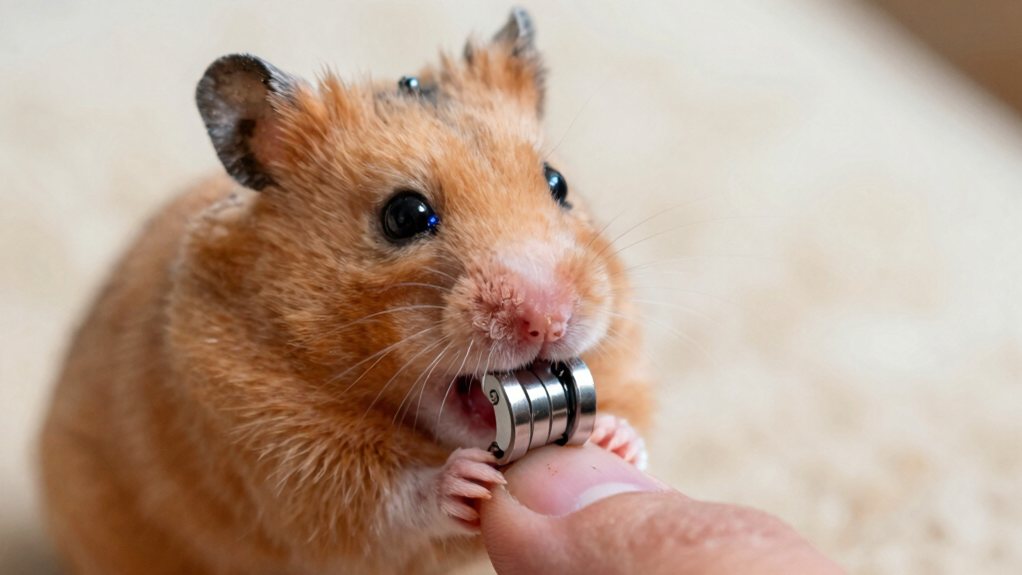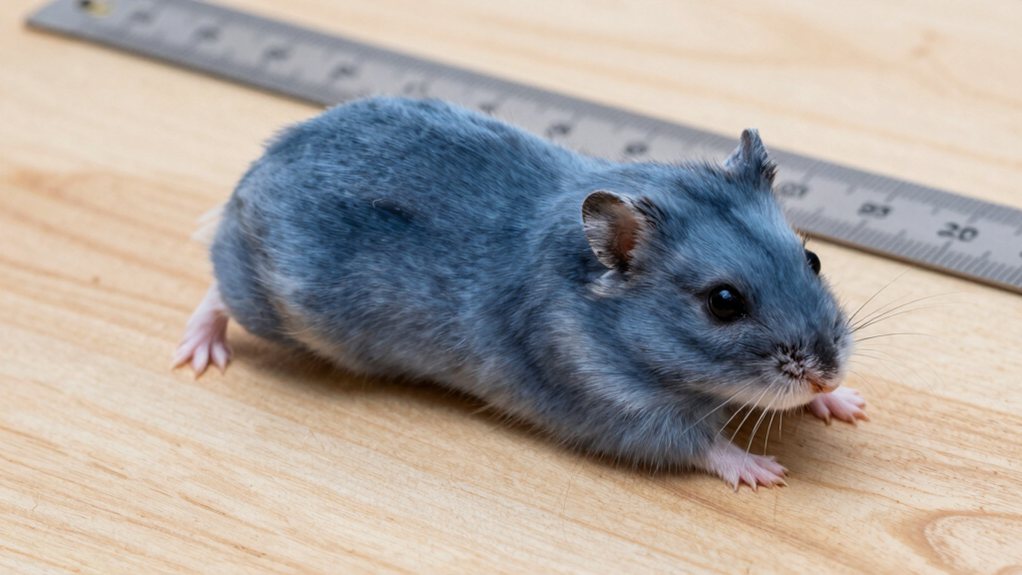
Your Russian dwarf hamster will only grow to about 2–3 inches, roughly the length of your thumb, making them one of the tiniest hamsters around. They reach full size by 3–4 months, so you’ll notice most of their growth in the first few weeks.
Genetics and diet play big roles, but don’t worry, they stay small and mighty. Keep an eye on their energy and coat shine—it’s a good sign they’re thriving. You’ll be surprised what you discover next.
How Big Do Russian Dwarf Hamsters Get?
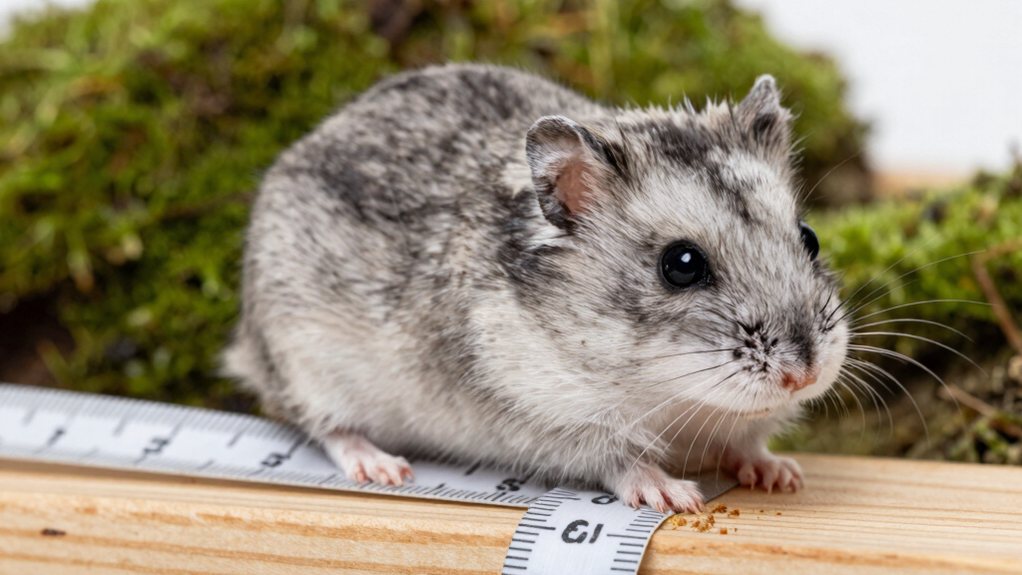
Think of your Russian dwarf hamster as a tiny roommate who never takes up much space, because they really don’t. These little cuties usually grow to just 2 to 3 inches long, about the size of your thumb.
Don’t let their small size fool you, though. They’ve got big personalities packed into that tiny frame. You’ll notice their hamster behavior includes lots of scurrying, burrowing, and cheek-pouch adventures.
Even though they’re small, they’ve got big exercise needs and love a good wheel run. A cramped cage won’t cut it. Give them room to explore and stay active.
Watching them zoom around is half the fun.
Their size makes them easy to care for, but they still need attention and stimulation. So, while your pint-sized pal doesn’t take up much space, they’ll definitely fill your heart and maybe your socks drawer.
What Age Do Russian Dwarf Hamsters Stop Growing?
So, when exactly does your tiny furball hit their full size? Most Russian dwarf hamsters stop growing by 3 to 4 months old, yes, they go from peanut-sized to full-grown in just a few weeks! By then, they’ll measure about 2 to 3 inches, making them one of the tiniest hamster breeds.
Their growth slows fast, so if your little buddy looks like they’re not changing much after a few months, that’s totally normal.
Keep in mind, their breeding habits kick in around this same age, so don’t be surprised if they start acting flirty!
Seasonal changes don’t really affect their size, but they might seem more active or sleepy depending on the time of year.
Just keep them cozy, fed, and loved—you’ve got this! Watching them grow is a quick, adorable ride you won’t want to miss.
Diet, Genetics, and Environment: What Shapes Their Size?
You can’t change your hamster’s genes, but you can give them the good stuff at mealtime to help them reach their full size. Think of genetics as the blueprint and diet as the building materials, skimp on nutrition, and you might end up with a tiny tot who’s smaller than average.
A cozy cage, low stress, and a snack-packed diet all play a part, because even a mini hamster needs a little TLC to grow just right.
Genetics Influence Growth Potential
While you can’t hand your hamster a growth chart and expect him to measure up, genetics play a starring role in how big your tiny furball will actually get.
From the moment he’s born, his size potential is quietly mapped out by inherited traits and even the occasional quirky genetic mutation.
Think of it like this:
Your hamster’s parents set the size blueprint, small parents usually mean a small pup.
Genetic mutations might cause slight surprises, like an extra fluffy coat or a chunkier build.
Inherited traits control bone structure and metabolism, which shape growth over time.
Even within the same litter, siblings can vary, nature loves a little variety!
You can’t rewrite his DNA, but you *can* give him love, good food, and a cozy home.
And hey, no matter his size, he’ll always be giant in your heart, well, maybe not literally.
Nutrition Impacts Size Development
Even if your Russian dwarf hamster comes from a line of pint-sized pups, what you put in his food bowl can make a real difference in how he grows. A balanced diet rich in protein, fiber, and healthy fats helps support proper size development and overall health. Skimp on nutrition, and he might end up smaller or less energetic, kind of like trying to run a marathon on crackers.
Pair good food with plenty of exercise habits, like running in his wheel or exploring tunnels, and you’ve got a happy, well-rounded tiny buddy.
Don’t forget that his social behavior matters too. A stressed hamster won’t eat well, which can stunt growth. Keep his environment calm and consistent.
You’re more than just feeding him. You’re helping him thrive. Think of it as hamster parenting: love, snacks, and a solid bedtime routine.
Signs of Healthy Growth in Russian Dwarf Hamsters
A happy, healthy Russian dwarf hamster is a joy to watch.
Tiny paws scrambling up ramps, bright eyes darting around their cage, and that little round body zipping through tunnels like a fluffball on a mission.
You’ll know your hamster’s growing well when you see these signs:
- Play behavior that’s full of energy: wheel sprinting, burrow digging, and toy tossing like a mini Olympian.
- Social interaction that’s curious, not shy: sniffing your hand, taking treats gently, and exploring your palm.
- A shiny, silky coat with no bald patches: like a well-kept teddy bear, but fluffier.
- Consistent eating and pooping: yes, really! Regular digestion means their insides are on track.
When these signs line up, you’re more than raising a hamster.
You’re raising a tiny, thriving friend.
And honestly, that’s pretty awesome.
How Cage Size Affects Russian Dwarf Hamsters?
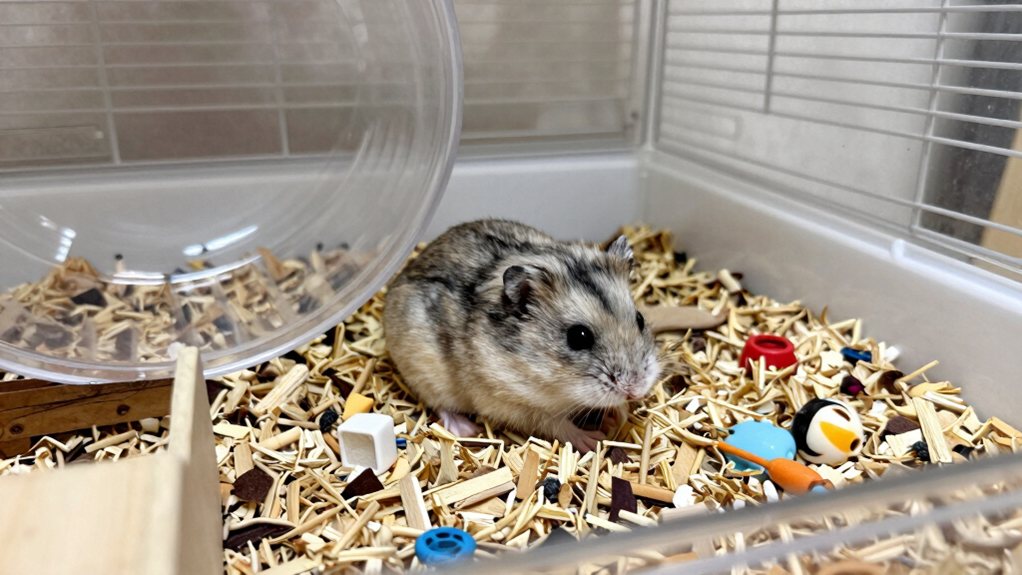
Ever wonder why your Russian dwarf hamster zooms around like it’s training for the tiny animal Olympics? Well, cage size plays a big role! A roomy cage gives your little buddy space to explore, dig, and burn off that endless energy.
Ever wonder why your Russian dwarf hamster zooms like it’s training for the tiny animal Olympics? Cage size matters—bigger space means happier, healthier zoomies!
If the cage is too small, your hamster might get stressed or bored. Nobody wants a grumpy hamster on their hands.
A larger cage also means more room for cage enrichment, like tunnels, wheels, and chew toys, which keep their mind sharp and body happy.
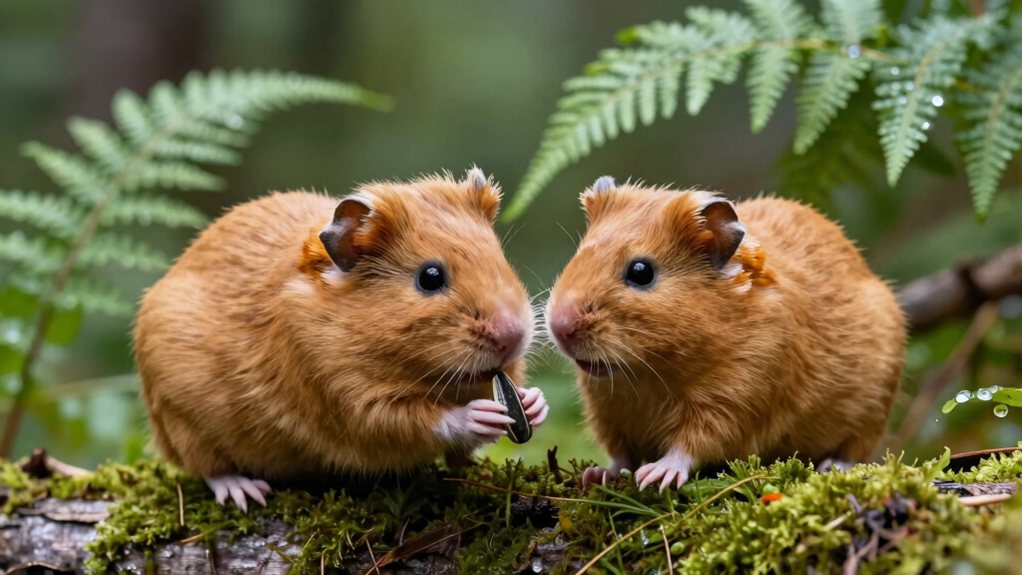
Plus, if you’re considering social interaction, only with same-species pals of course, a bigger space helps prevent squabbles.
Think of it like giving your hamster a cozy apartment instead of a closet. More space equals more zoomies, more naps, and more adorable antics. Trust us, your hamster will thank you with every happy squeak!
To support healthy activity, aim for a minimum of 450 square inches of floor space when selecting a cage.
Russian Dwarf vs. Other Hamsters: How Do They Compare?
Wondering how your pint-sized Russian dwarf hamster stacks up against other hamster breeds? Let’s break it down in a fun, easy way.
- Size: Russian dwarfs are tiny, about 2 to 3 inches, while Syrians can reach up to 6 inches. Your little buddy’s basically the pocket-sized version of hamster royalty.
- Coat color: They come in cool shades like pearl, sapphire, and even mottled patterns, while others, like Chinese hamsters, stick to simpler browns and whites.
- Eye shape: Russian dwarfs have round, alert eyes that pop with curiosity. They’re perfect for midnight cage adventures.
- Temperament: They’re feisty but sweet, while Syrians tend to be calmer and more laid-back.
Each breed has its charm. But your dwarf’s mix of bold spirit, unique coat color, and expressive eye shape makes them one of a kind.
You’ve got a tiny superstar on your hands!
When Should You Worry About Stunted Growth?
You might start worrying if your tiny hamster isn’t growing like it should, especially if it’s still smaller than your thumb by 8 weeks.
Watch for signs like low energy, poor appetite, or a coat that looks more raggedy than cozy.
If your little buddy seems off, it’s totally okay to call the vet.
Better safe than sorry when your pint-sized pal’s health is on the line.
Stunted Growth Warning Signs
How can you tell if your tiny fluffball isn’t growing like they should? Keep an eye out for these stunted growth warning signs:
- Abnormal behavior – If your hammy’s acting sluggish, hiding more than usual, or not playing, something might be off.
- Delayed molting – Baby fuzz should shed on schedule; if they’re still in their fluff phase past 8 weeks, it’s a red flag.
- Noticeably smaller size – Compare them to littermates or growth charts. If they’re way behind, don’t brush it off.
- Poor appetite or weight loss – Even picky eaters should gain steadily. No interest in food? Time to call the vet.
You’re doing great just by paying attention! These little guys rely on you to spot trouble early.
A quick check-up can save stress and snacks down the road.
When To Seek Help
Spotting the warning signs of stunted growth is half the battle, but knowing when to take the next step matters just as much.
If your Russian dwarf hamster isn’t growing like it should, or seems much smaller than its siblings, it’s time to contemplate a veterinary consultation.
Don’t wait if you notice other health concerns like low energy, poor appetite, or a dull coat.
These aren’t just “off days” for hamsters. While they’re tiny, their issues aren’t always small.
Think of it like your phone acting weird: sometimes you need a reboot, but other times, you call tech support.
Your hamster’s vet is their tech support!
Early action can make a big difference.
You’re doing great by paying attention—most pet parents miss these clues.
Final Thoughts
You now know your tiny furball will stay small, around 2 to 3 inches, but pack big personality. They stop growing by 3 months, and with good food, genes, and a roomy cage, they’ll thrive.
Watch for steady energy and shiny fur as growth clues. Compared to other hamsters, they’re pint-sized pros. If your little guy seems too tiny or sluggish, check in with a vet—better safe than sorry!