You might notice your hamster dropping food or pawing at its mouth, classic signs of dental trouble.
Their teeth never stop growing, so without tough chew toys or food, they can overgrow painfully or become misaligned. Worse still, a hidden infection can lead to a dangerous abscess.
That’s why a vet visit is essential. They can trim those tiny teeth or treat an abscess safely. Stick around to learn how to keep that smile healthy!
What Are the Signs of Hamster Dental Disease?
Because you’re not a dentist, you mightn’t think to check your hamster’s teeth, but keeping an eye out for a few key signs can help you spot trouble early.
Even without dental training, spotting a few simple signs can alert you to your hamster’s tooth troubles early.
First, watch for changes in eating habits. If your usually hungry buddy is dropping food, eating slowly, or refusing hard treats, they might be experiencing dental pain.
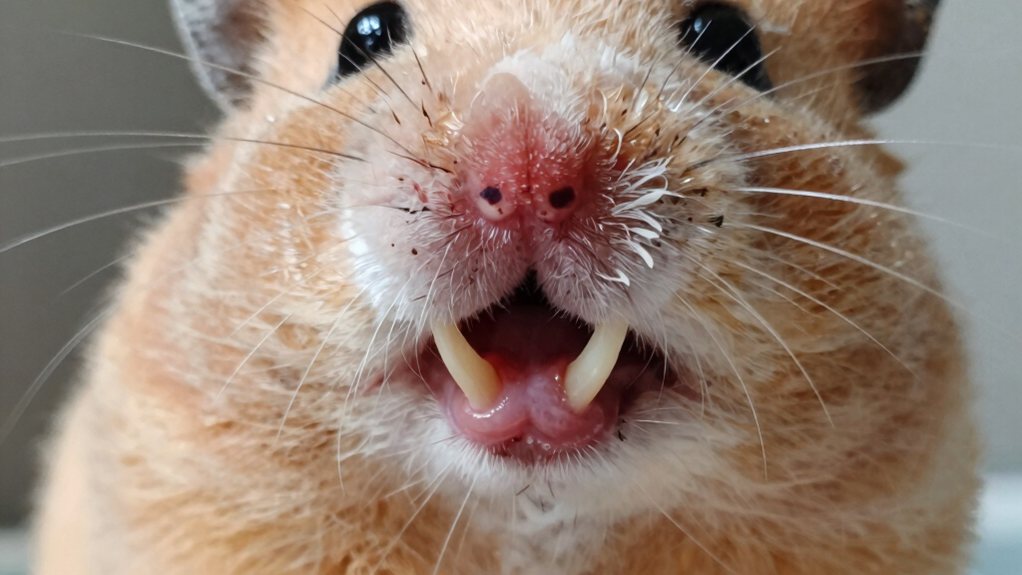
You could also see visible clues like teeth that look crooked or way too long. Check for swollen gums or any lumps around the jaw, which can indicate an abscess.
Sometimes, a hamster with tooth issues will drool or have messy fur around their mouth from pawing at it. Spotting these signs quickly means you can get your tiny friend the vet care they need. Changes in behavior, like increased stress from pain, can also reduce a hamster’s natural burrowing and nesting behaviors, which are essential for their well-being.
Why Do Hamster Teeth Become Overgrown or Misaligned?
You might wonder why your hamster’s teeth sometimes get too long or grow crooked. Their teeth are always growing, which is perfectly normal, but they can become overgrown if your pet doesn’t have the right materials to gnaw on for natural wear. Providing safe, moderately hard materials like untreated apple wood or timothy hay is essential for proper dental wear and to prevent overgrowth.
Genetics can also play a role, meaning some hamsters are just born with a tendency for dental issues, but don’t worry, this is often manageable with the right care.
Continuous Tooth Growth
While a hamster’s teeth never stop growing, which seems like a handy superpower, this can actually lead to some pretty tricky dental problems if things get out of balance. The natural filing action from eating hard foods can get disrupted, and that’s when trouble starts. It’s a surprisingly delicate system.
Here’s how that continuous growth can become a problem:
- Without proper wear, teeth just keep lengthening, like unsharpened pencils.
- Overgrown teeth can prevent your hamster from eating properly, leading to weight loss.
- Misaligned teeth, or malocclusion, won’t wear down evenly at all.
- Watch for emergency symptoms like drooling or pawing at the mouth, which signal treatment urgency.
Left unchecked, those ever-growing teeth can cause painful injuries, so regular checks are your best defense. Providing safe chew toys like applewood sticks or mineral blocks is essential for proper gnawing and dental health.
Genetic Predisposition Factors
Sometimes, even with the best diet and chew toys, a hamster can still develop dental issues. This can be due to genetic predisposition factors, which means they’re simply born with a tendency for certain problems.
For instance, some hamsters inherit weaker inherited enamel, making their teeth more prone to uneven wear. Others might’ve a naturally misaligned jaw, affecting their jaw positioning from the start. Think of it like being born with a wonky smile; it’s not their fault!
While you can’t change their genes, you’re not powerless. Knowing this possibility helps you stay extra vigilant. You’ll watch for early signs, like difficulty eating, and can get professional help faster, ensuring your little friend stays happy and healthy despite their genetic lottery ticket. A calm environment and proper housing are crucial, as chronic stress from loud noises or cramped cages can worsen any existing health condition.
Insufficient Natural Wear
Since hamster teeth never stop growing, they rely on daily chewing to keep them properly filed down. Without enough tough foods and chew toys, their teeth don’t wear down enough, leading to overgrowth or misalignment. This is a common setup for trouble.
You might notice your hamster showing pain related behavior, like pawing at its mouth or dropping food. Here’s how to promote that essential natural wear:
- Provide a constant supply of safe, untreated wooden chew toys.
- Offer a high-quality pellet diet that requires more gnawing than a mushy seed mix.
- Include occasional crunchy veggies, like a small broccoli stem, for a tasty filing session.
- Monitor for tooth abscess symptoms, such as facial swelling or a sudden dislike for handling, which can stem from a tooth puncturing the cheek.
A simple chew stick can prevent a world of hurt! Opt for dense, safe woods like apple or peach wood, as their hard textures and deep grooves are specifically designed to promote effective molar grinding and prevent overgrowth.
How Can a Tooth Abscess Threaten Your Hamster’s Life?
You might think a tiny tooth abscess is just a minor nuisance for your hamster, but it can quickly turn into a life-threatening emergency if left untreated.
The real danger isn’t just the painful lump on the jaw.
The pocket of infection can rupture, allowing harmful bacteria to spread into your pet’s bloodstream.
This can lead to a devastating systemic infection, or sepsis, which overwhelms their little body.
Imagine your hamster feeling so awful it stops eating and becomes lethargic.
Time is critical here.
What starts as a dental issue can rapidly become a full-body crisis, and signs of serious infection like fever or fatigue require urgent attention.
So, if you spot facial swelling or notice your friend isn’t acting right, please see your vet immediately.
That quick action can save their life.
When Should You Take Your Hamster to the Vet for Dental Issues?
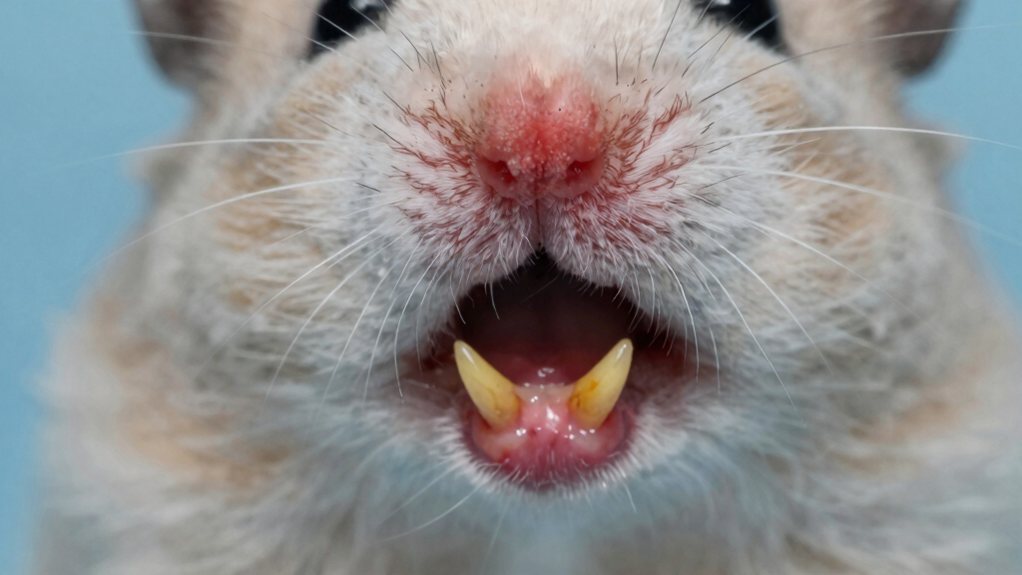
Recognizing that dental trouble can escalate into a serious health threat, it’s smart to know exactly what signs should prompt a vet visit for your hamster.
Don’t wait until your pet is in obvious pain. You should schedule an appointment right away if you notice any of these key red flags:
- Sudden Drooling or Wet Fur: A damp chin or chest isn’t normal grooming; it’s often due to pain or an inability to swallow.
- Squinting or Pawing at the Face: This is a clear sign of considerable mouth discomfort.
- A Visible Lump or Swelling: This could indicate a painful abscess needing immediate care.
- Complete Refusal to Eat: This is the most urgent sign, as hamsters can deteriorate fast.
Your vet can perform a safe oral exam, sometimes under sedation, despite anesthesia risks, to get your furry friend healthy again. Just as with a hamster bite, it’s crucial to monitor for signs of infection like swelling or pus and seek professional help promptly.
What Happens During a Dental Exam for a Hamster?
After you’ve spotted the warning signs and made that all-important vet appointment, you might be wondering what actually goes on during a hamster’s dental check-up.
The vet will gently examine your pet’s mouth, which often requires a brief sedation to keep your wiggly friend still and stress-free. They’ll discuss exam sedation options with you beforehand, so you’re comfortable. This sedation helps prevent any fear-based reactions, which are a common reason for unexpected bites in hamsters.
The real key is the X ray assessment procedures. Since most tooth problems are hidden below the gumline, a small X-ray is crucial to see the tooth roots and check for abscesses or malocclusion. It’s a quick and safe process that gives the vet a complete picture.
You’ll get clear answers and a treatment plan, so you can both breathe a sigh of relief.
How Are Overgrown Teeth and Malocclusion Treated?
If your hamster has overgrown teeth or a misaligned bite, your vet will need to trim or file them down safely.
You can also help by providing plenty of chew toys and a diet full of hay, which naturally wears their teeth down. Look for chew toys made from safe chewing options like bamboo or apple wood to support dental health.
It’s a team effort, and your little friend will be back to happily gnawing in no time!
Trimming And Filing Teeth
Because those continuously growing teeth don’t have an off switch, treatment for overgrown teeth and malocclusion involves carefully trimming or filing them back down to a healthy length. This is always a vet’s job, as trying home care is extremely dangerous.
You’d need special tools and a wriggly patient, which is a recipe for disaster. Watch for emergency symptoms like drooling or not eating, as these mean a trip to the clinic is urgent.
Here’s what the vet does:
- Uses Safe Sedation: A light anesthetic keeps your hamster calm and safe.
- Selects the Right Tool: They’ll use a dental drill or file designed for tiny teeth.
- Trims with Precision: The vet carefully shortens each tooth to its proper length.
- Checks the Bite: They’ll see that the top and bottom teeth align correctly for chewing.
Afterward, your hamster will be back to munching happily in no time! A proper balanced diet is also crucial during recovery to support overall health and healing.
Dietary And Environmental Adjustments
While a vet’s trim gets your hamster’s teeth back in shape, you can help keep them that way with a few smart changes at home.
First, ditch soft, mushy foods and provide a quality hamster mix full of hard seeds and pellets. Chewing these naturally files down teeth.
Next, look at their environment. Offer plenty of safe wooden chew toys and enrichment items to encourage gnawing. Swap out fluffy, cottony bedding for paper-based or aspen shavings, as soft bedding offers nothing to chew.
Make sure fresh water is always available to support overall health and water intake. A calm, engaging cage minimizes boredom and stress reduction, which can prevent destructive habits.
These simple dietary and environmental adjustments make a world of difference for your tiny friend’s dental health.
What’s Involved in Treating a Hamster Tooth Abscess?
- Veterinary Exam: A thorough check to confirm the abscess and plan the procedure.
- Surgery Day: Your hamster receives safe anesthesia, and the vet drains the abscess and removes the infected tooth.
- Home Recovery: You’ll get pain medication and antibiotics to administer, turning you into a tiny nurse.
- Follow-up Care: Soft foods and a clean cage are important while your furry friend heals up nicely.
How Do You Care for a Hamster After Dental Treatment?
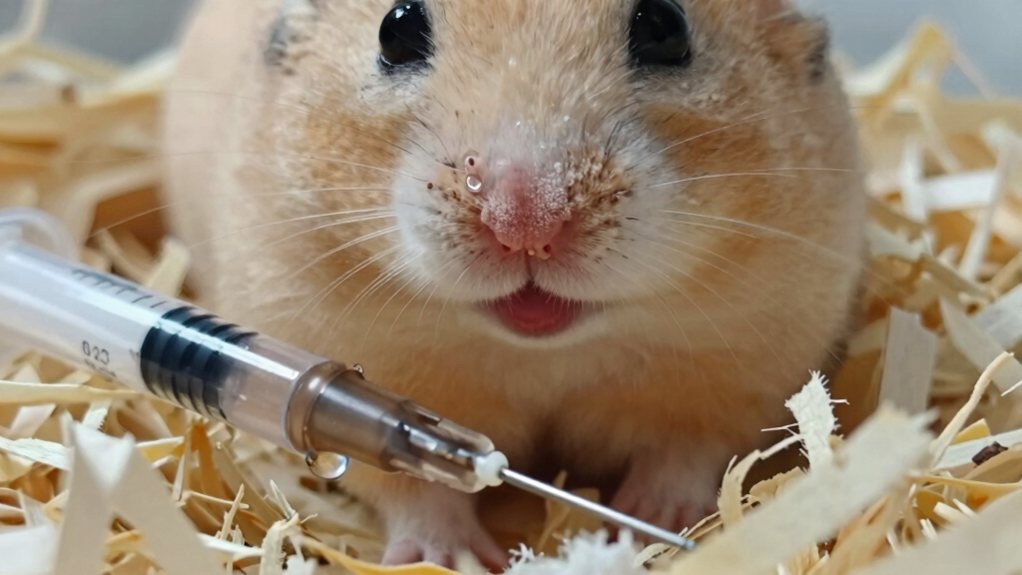
Once your hamster is home from the vet, your main job shifts to being a supportive caregiver, guaranteeing their comfort and an effortless recovery.
Your first priority is pain monitoring; watch for signs like teeth grinding or a hunched posture, and give any prescribed medication exactly as directed.
To encourage post treatment hydration, offer water from a shallow dish if their bottle is tricky.
You’ll also need to manage a soft food transition, providing mashed pellets, baby food, or soaked critical care formula.
Don’t forget infection prevention; keep their cage impeccably clean and check the surgical site.
Your calm presence and these simple steps are the best medicine, turning you into a first-rate hamster nurse overnight.
What’s the Best Diet and Chews to Prevent Dental Disease?
Now that you’ve got the hang of post-treatment care, let’s talk about how you can help your hamster avoid dental troubles in the first place. Prevention is all about the right diet and items to gnaw on.
Prioritize a Hard Pellet Diet: A high-quality lab block or pellet is critical, as the crunchy texture naturally wears down teeth with every bite.
Offer Hay Daily: Timothy hay isn’t just for rabbits! It provides great roughage and encourages long chewing sessions that grind teeth evenly.
Master Your Chew Selection: Provide a variety of safe, untreated wooden chews and pumice stones. Rotate them to keep your hamster interested in grinding.
Don’t Forget Hydration Quality: Fresh, clean water is vital for overall mouth health and helps your pet process all that fibrous food. A happy chewer is a healthy chewer!
Final Thoughts
Keeping an eye on your hamster’s teeth is a big part of being a great pet owner. You’ve learned what signs to watch for and when to call the vet, and that’s the most important step.
By providing the right chew toys and a healthy diet, you’re setting your little friend up for a long, happy life free from dental pain. Remember, a quick peek at those chompers now can save a lot of trouble later!