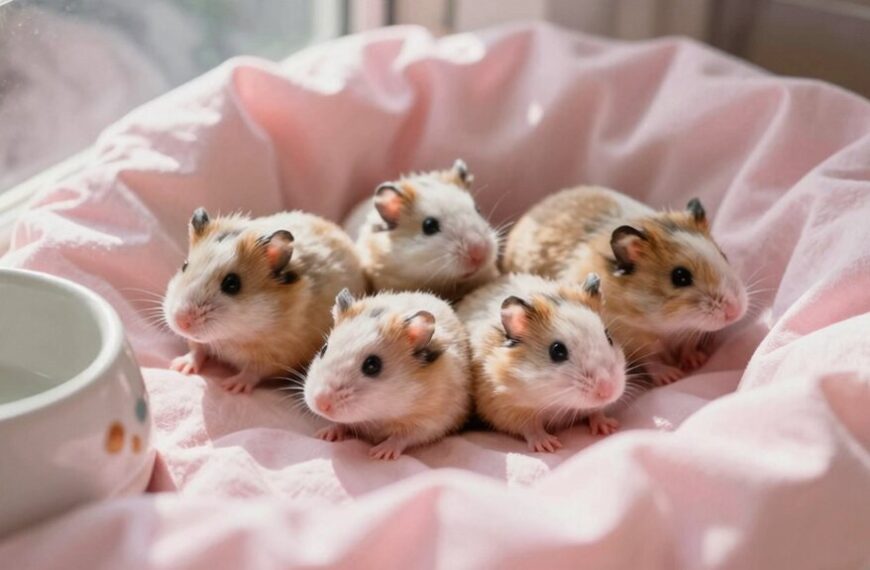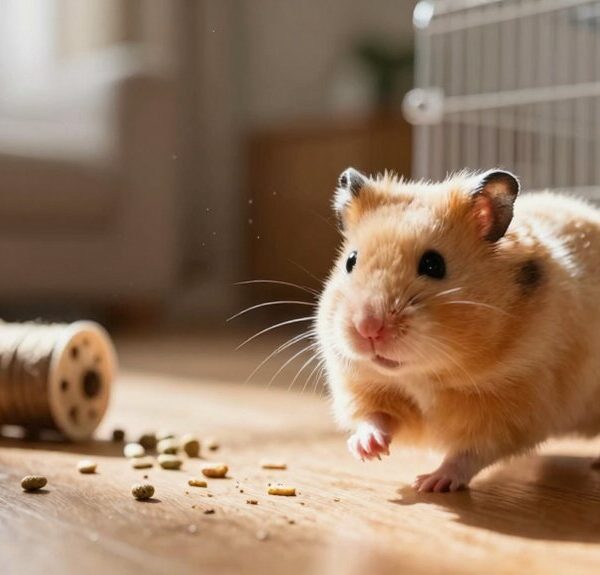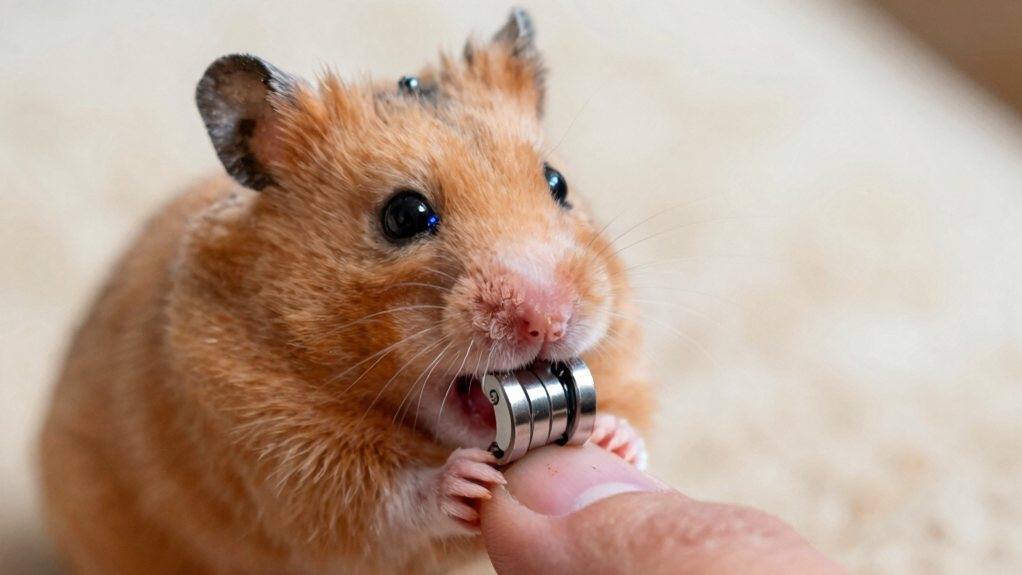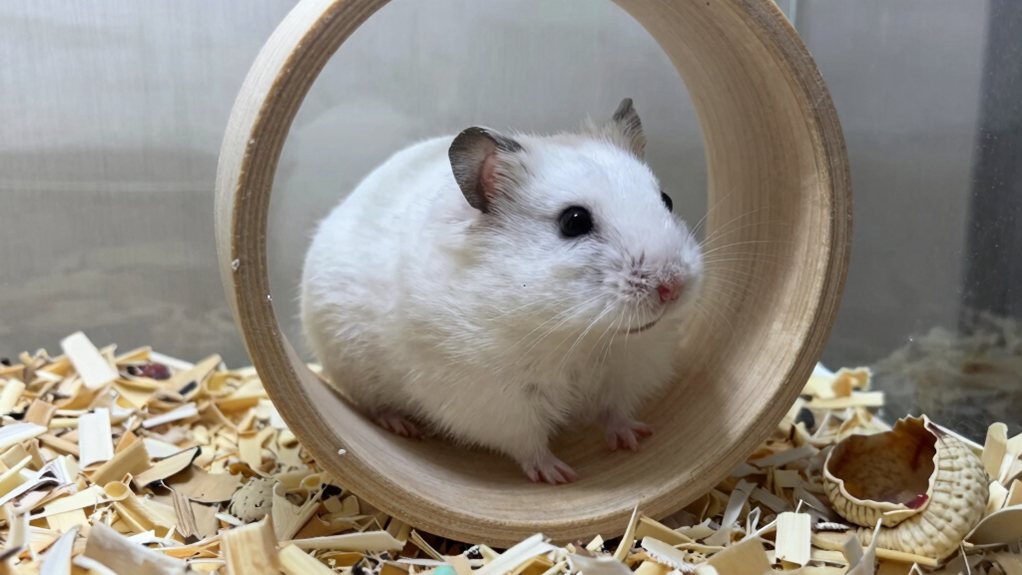
You’ve got tiny paws to care for, congrats! For the first three weeks, let mom handle everything while you stay hands-off and keep things quiet.
Around week four, little furballs start nibbling solids and opening their eyes, cuteness overload! By week six, they’re ready for their own space and some gentle handling. Week eight? They’re grown-up enough for full playtime and bonding adventures. Stick around, and you’ll see just how much joy these small moments can bring.
Week 1: Caring for Newborn Baby Hamsters (Let Mom Lead)
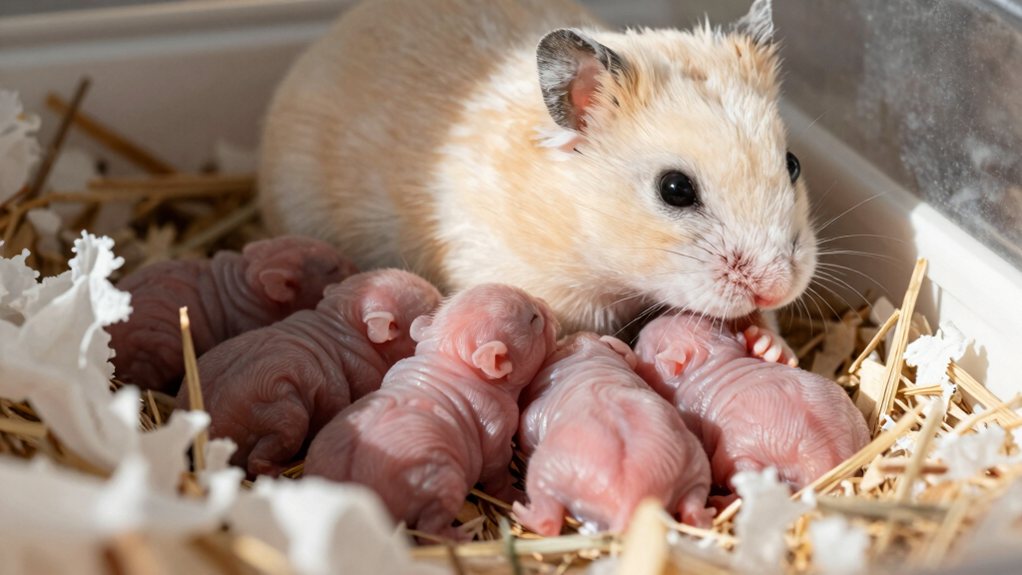
While nature’s already got a solid plan in place, your job during the first week is pretty simple: step back and let mom handle the heavy lifting. She’s got strong maternal instincts kicking in, so trust her to feed, clean, and protect her babies.
Avoid disturbing the nest. Peeking too much can stress her out and even cause her to move the pups or worse.
She’ll show nesting behavior by rearranging bedding to keep the little ones warm and safe.
Keep the environment quiet and cozy, and don’t clean the cage this week. Yes, really. It might feel messy, but you’re not running a five-star hotel.
Just monitor from a distance and make sure mom’s eating and drinking well.
She’s the real MVP here. You’re just the supportive sidekick, and honestly? That’s enough.
Week 2: Baby Hamsters Grow Their First Fur
Now that the first week’s behind you, get ready for some tiny transformations, your baby hamsters are starting to sprout their first soft fuzz!
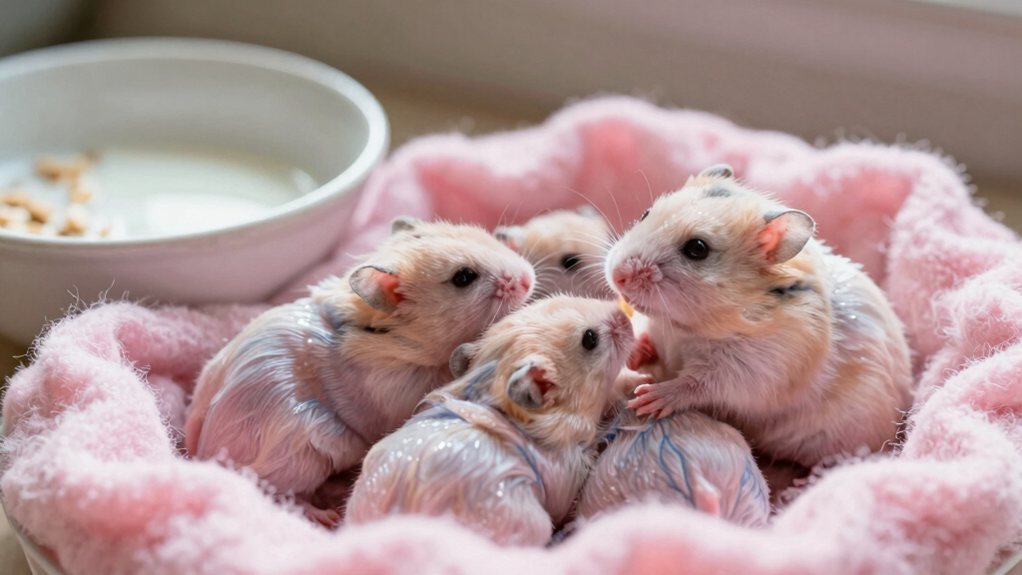
By week two, you’ll notice fine fur peeking through their pink skin, starting on the head and spreading down their bodies. The fur texture begins as wispy and delicate, almost like baby hair, but it’ll thicken soon.
Tiny tufts of fur begin to emerge, soft as whispers, starting at the head and creeping down their tiny bodies—your little bald beans are on their way to becoming fluffy cutie-pots.
Growth patterns vary by breed, so don’t worry if some fluff up faster than others. Nature’s on its own schedule.
You’ll start seeing little personalities emerge as they move more, but still, let mom handle the parenting. Avoid touching them. Your scent can stress her out.
Keep their nest warm and quiet.
It’s amazing how fast these bald little beans turn into fuzzy cutie-pots. Just wait. Next week, their eyes pop open!
Week 3: When Baby Hamsters Open Their Eyes?
You’ll know week 3 is here when those tiny eyes finally pop open around day 14, congrats, your little blind burrito is now a curious critter.
Their vision’s still a bit fuzzy at first, like trying to read a menu in a dark restaurant, but it’ll sharpen fast.
Keep things calm and cozy so they can explore their new view without getting overwhelmed.
Eyes Open Around Day 14
About two weeks after they’re born, your tiny, pink baby hamsters start showing signs they’re ready to see the world, literally.
Around day 14, their eyes begin to open, marking a major leap in eye development and sensory milestones.
One day they’re blindly snuggling in the nest, and the next, surprise! They’re peeking out like, “Wait, this is where we’ve been living?” It’s both adorable and a little dramatic.
This change means their world is expanding fast, and they’ll start exploring more, reacting to light, and recognizing mom (and maybe even you).
Keep the environment calm and dimly lit to avoid overwhelming their sensitive new vision. No flash photography, please. Save the selfies for later.
This stage is exciting but delicate, so resist the urge to handle them too much.
You’re more than a caregiver. You’re a proud hamster parent watching your little ones take their first real look at life.
Vision Development In Early Stages
So, when do baby hamsters finally open their eyes? Around day 14, those tiny eyelids start to part, but their vision is still a work in progress.
In week 3, retinal maturation kicks into high gear, helping their eyes make sense of light and shapes.
Optic nerve growth is racing behind the scenes, connecting their eyes to their brains, kind of like wiring a tiny security system. At first, everything’s blurry, but each day brings sharper sight.
You might catch them squinting at toys or sniffing their way around instead of seeing clearly.
Don’t worry—they’re not missing out, just taking it slow. It’s like they’re living in a soft-focus dream.
By the end of week 3, their world comes into focus, and their curiosity explodes. Just imagine their tiny “aha!” moments.
Watching them explore with new clarity? Pure joy.
Nature’s timeline, not ours. Patience pays off.
Week 4: Weaning Baby Hamsters Onto Solid Food
Now that your baby hamsters are hitting the four-week mark, they’re ready to start exploring solid food like tiny adventurers stepping out into the big world, well, big for their tiny paws, anyway.
This is the perfect time for introducing solids, as their little bodies are shifting from milk to more grown-up meals.
You’ll notice them nibbling at pellets, veggies, and even stealing bites from mom’s dish.
Cute, but it’s part of their natural dietary shifts.
Stick to soft, safe options like plain oats, cooked squash, or alfalfa-based pellets to avoid tummy troubles.
Keep fresh water available, and don’t worry if they play with their food more than eat it—hamsters learn by doing.
By week five, they’ll be eating mostly solids, and mom can finally get a well-deserved break.
You’ve got this—snack time just got a lot more interesting!
Week 5: How to Handle Baby Hamsters Safely
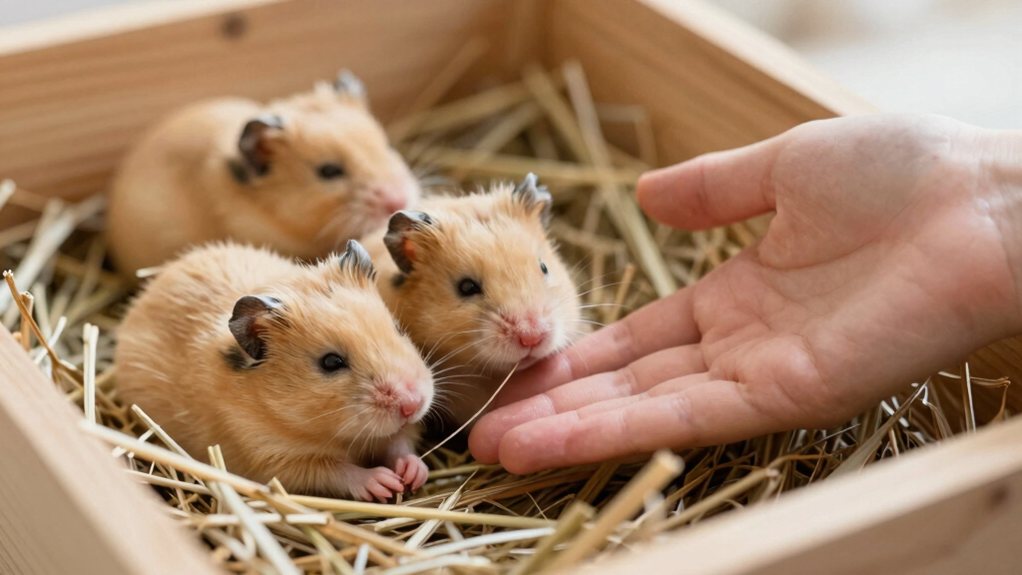
While your baby hamsters are still tiny bundles of fluff with more energy than a wind-up toy, week five is the perfect time to start getting them used to gentle handling, just don’t expect them to sit still for a royal portrait.
Begin with short sessions, letting them sniff your hand first so they learn to trust you.
Start with short sessions—let them sniff your hand first so trust can grow gently and naturally.
Use calm handling techniques, like cupping both hands around them to prevent falls.
Always support their whole body, no dangling legs!
Safety precautions are key. Wash your hands before touching them, no strong scents, and avoid sudden movements.
Keep handling time brief to avoid stress.
And remember, no tossing them into obstacle courses, tempting as it may be.
With patience and soft touches, your little furballs will grow comfortable in your hands, making bonding easier and way more fun, for both of you.
Week 6: Move Your Baby Hamster to Their Own Cage
When those little furballs hit week six, they’re ready to spread their tiny paws and move into their own space, no more bunking with mom and siblings like a hamster dorm room.
It’s time for their big move, and setting up a proper cage setup makes all the difference.
Think cozy bedding, a snug hideout, fresh food, and a water bottle, basically, hamster paradise.
You’ll want to keep the new space quiet and warm so your little one feels safe.
Don’t worry if your baby hamster seems a bit off at first, some separation anxiety is normal.
They’re adjusting to solo life, just like a kid starting school.
Talk softly, offer treats, and give them time.
In a few days, they’ll be zooming around like they’ve always lived there.
A well-ventilated cage with 360° visibility helps reduce stress and supports healthy development during this transition.
You’ve got this, and so do they!
Week 7: Bonding With Your Baby Hamster: Socialization Tips
How’s your tiny explorer settling in?
How’s your little adventurer adjusting to their new world? Every moment is a chance to explore, bond, and build trust.
By week 7, your baby hamster is ready for some fun playtime bonding and serious trust building.
These little furballs are curious and full of energy, so now’s the perfect time to strengthen your connection. Here’s how to make it count:
- Offer treats from your hand to create positive associations
- Let your hamster explore a safe, enclosed space during supervised playtime
- Talk softly and move slowly so they learn your voice and rhythm
- Be patient, even if they dart away, they’re still soaking up your calm energy
You’re more than a caregiver.
You’re becoming their favorite person.
With gentle consistency, your hamster will start seeing you as safe, familiar, and maybe even a snack buddy.
Keep it light, stay present, and enjoy these sweet moments.
Trust develops over time with patience, calm presence, and warmth—a process known as bonding through consistency.
Week 8: What Comes After Week 8?
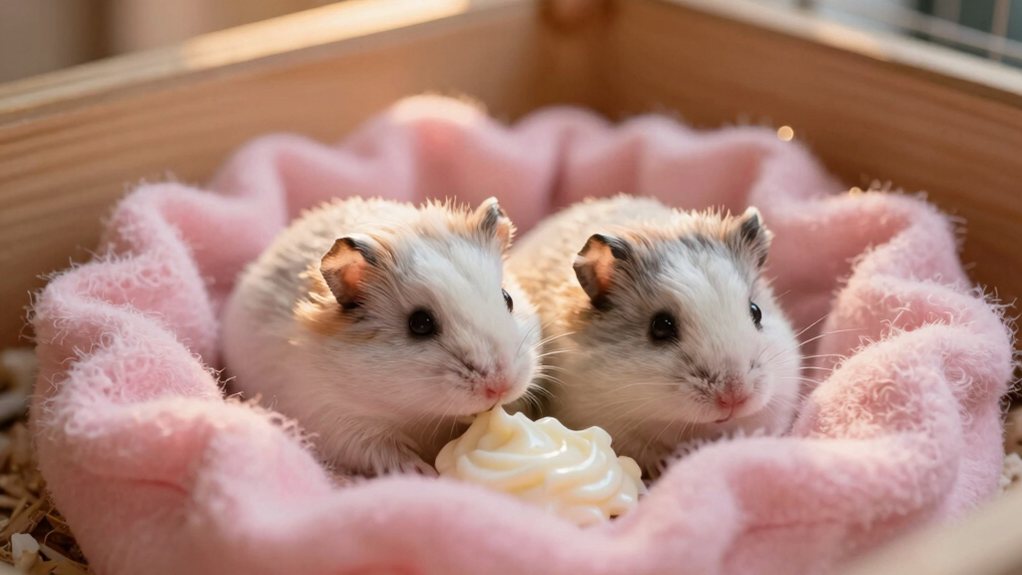
What’s next on the adventure trail for your pint-sized pal?
By week 8, your baby hamster is basically a tiny adult with big personality. They’re fully grown, super active, and ready to enjoy life in their forever home.
If you’re not keeping them, now’s the time to explore adoption options. Make sure they go to a safe, loving space.
Either way, future grooming becomes easier since they’re less wiggly. A quick brush, well, a gentle wipe with a damp cloth, keeps their coat shiny.
Keep playtime fun and bonding strong with treats and tunnels. You’ve built such a sweet connection—don’t stop now.
Sure, they might still toss bedding at you, but hey, that’s hamster humor.
Life after week 8? It’s cozy, joyful, and full of little squeaks of success. You’re doing great—keep going.
Final Thoughts
You’ve made it through the first eight wild, whisker-twitching weeks! From tiny pink blobs to curious little explorers, you’ve seen your baby hamster grow up fast.
Now they’re ready for their own space, some gentle handling, and lots of love. Sure, they might still nibble your fingers, oops, not a chew toy! That’s all part of the charm.
Keep being patient, stay playful, and enjoy this fuzzy friendship.