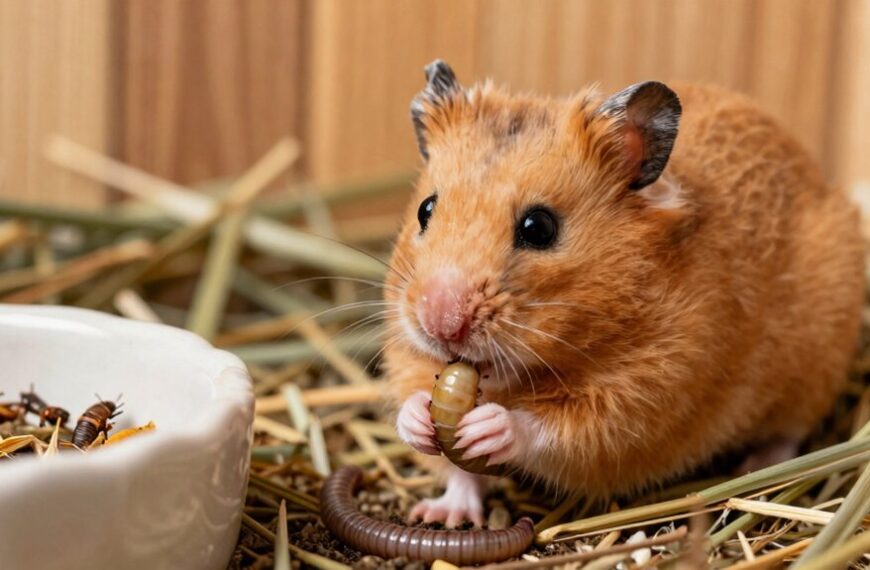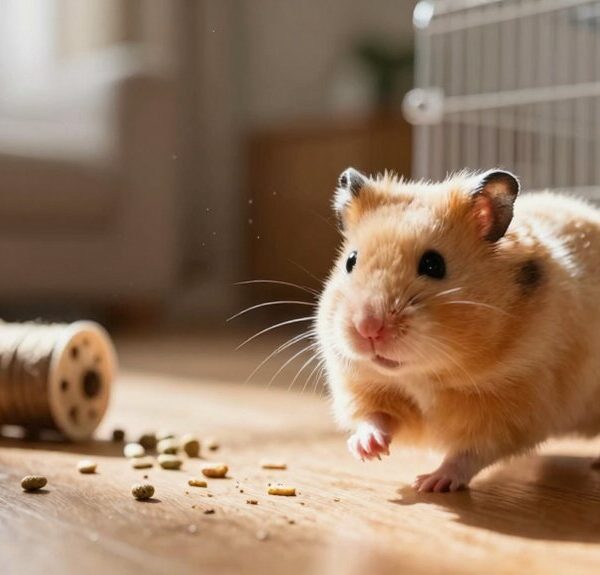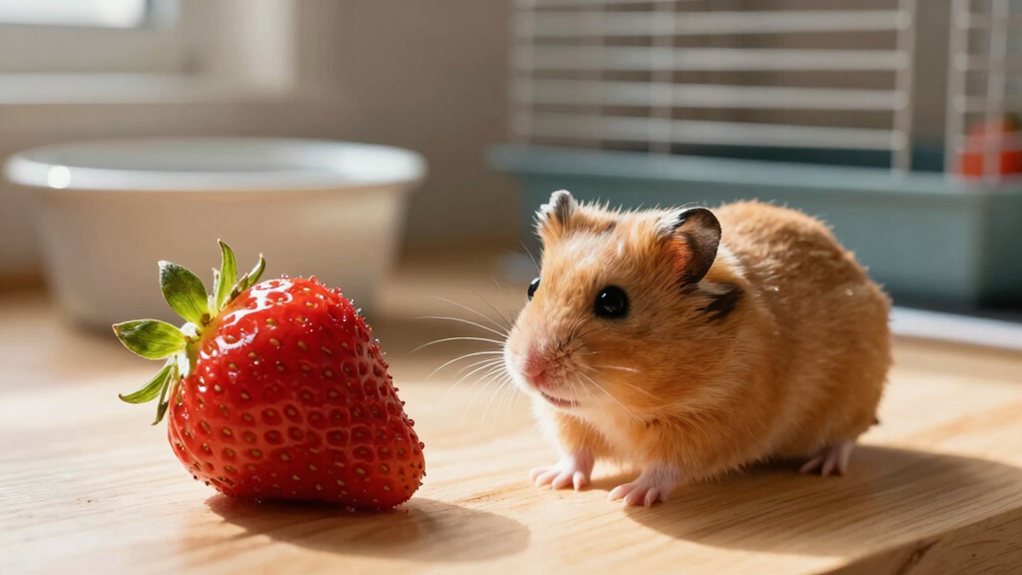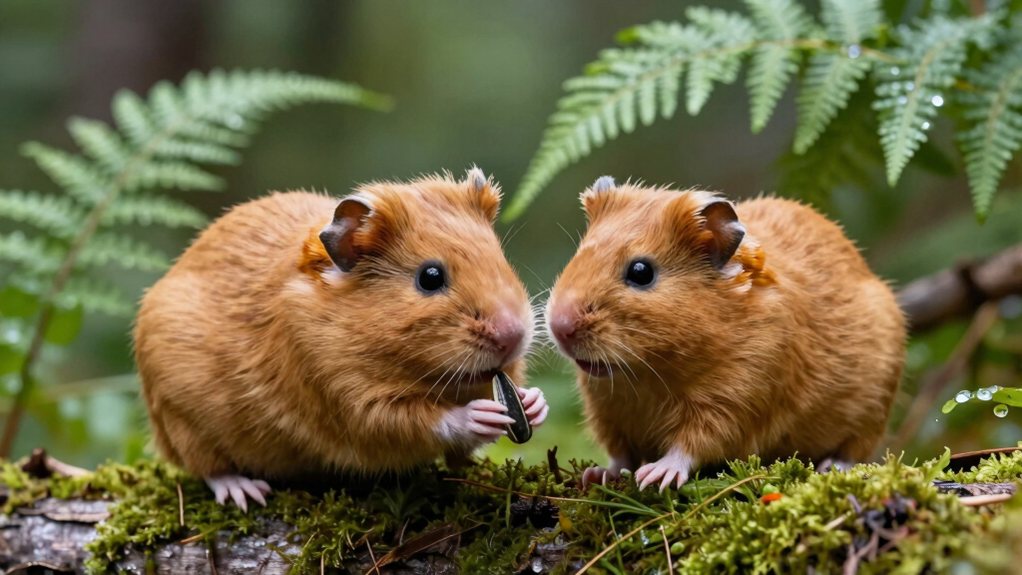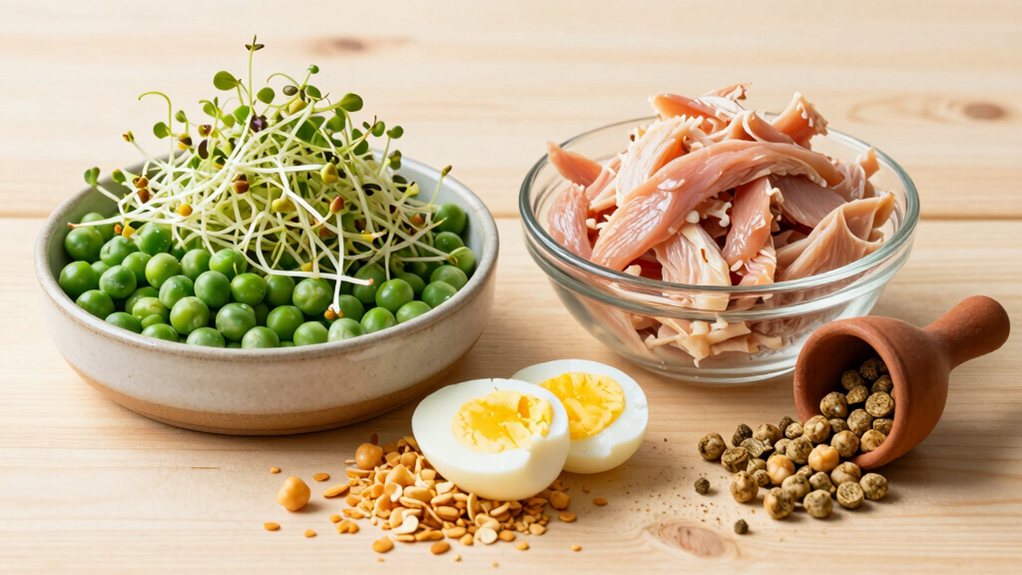
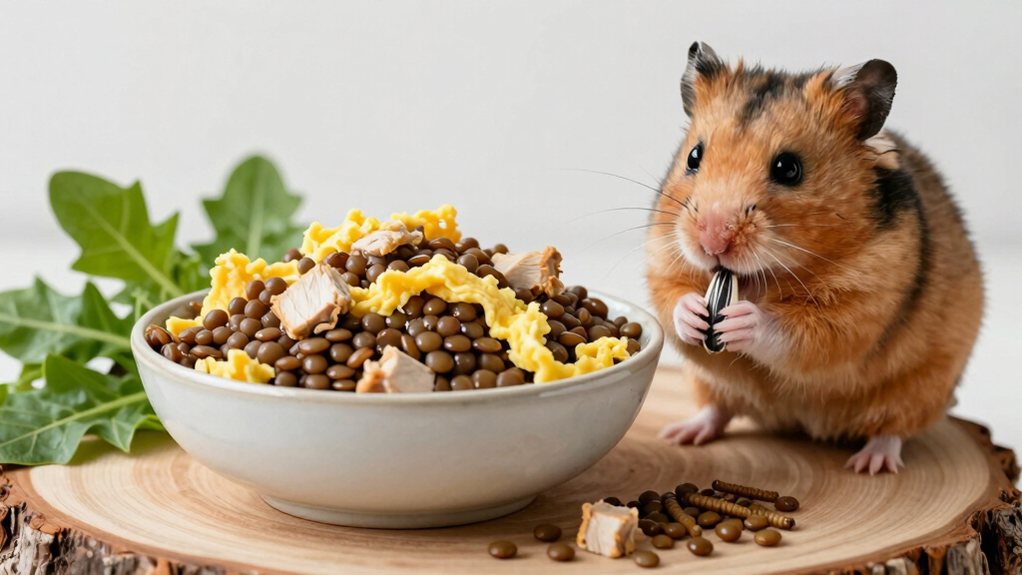
You’re doing great by focusing on protein to help your little buddy bounce back. Try plain boiled egg, lean chicken, or live mealworms a couple times a week. They’re like tiny power snacks.
For plant options, go for cooked soy beans or lentil sprouts, always unseasoned. Stick to pea-sized portions to keep things safe. Your hamster’s strength is coming back, and you’re the coach in this comeback story: keep going, there’s more good stuff ahead.
What to Feed a Weak or Recovering Hamster
While your little hamster mightn’t be giving you play-by-play updates on how they’re feeling, you can still help them bounce back when they’re weak or recovering.
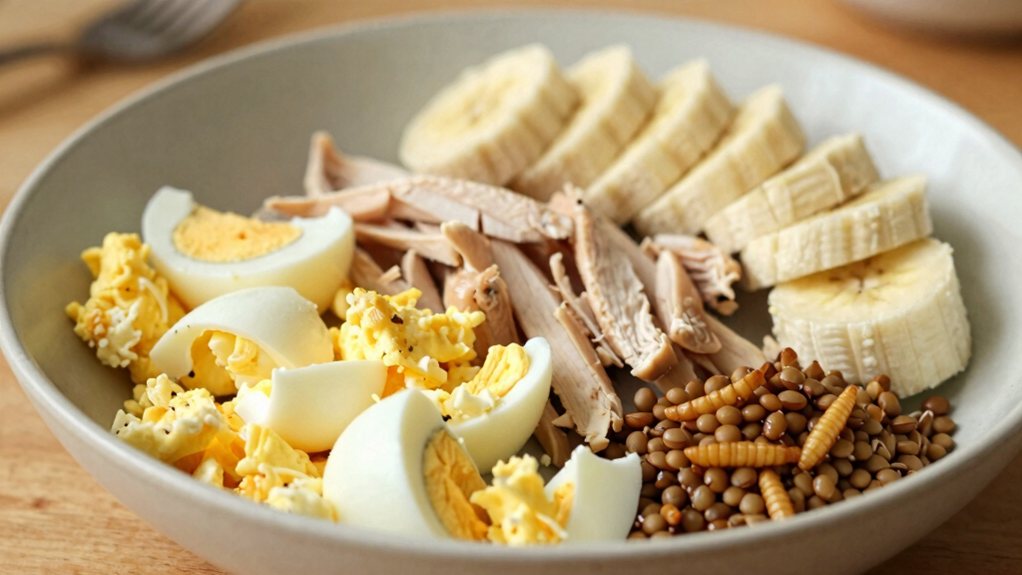
Start by offering easy-to-digest, high-protein foods like plain cooked egg, plain yogurt drops, or a tiny bit of chicken.
These give your pet the fuel they need without stressing their system.
Don’t forget hydration importance. Offer fresh water or even a pinch of unflavored Pedialyte to keep them balanced.
Stress reduction is key, so keep their space quiet, warm, and cozy.
Skip the loud noises and sudden changes.
Talk gently and handle them only when needed.
Think of it like nursing a grumpy toddler back to health.
Patience wins.
With love, the right food, and a calm vibe, your hamster will perk up in no time.
You’ve got this!
Best High-Protein Animal Foods for Hamsters
You mightn’t think of your hamster as a tiny carnivore, but they actually love a little animal protein now and then.
Try offering live insects like mealworms or crickets, they’ll get a kick out of the wiggle.
A small bite of cooked egg works great too, just skip the salt and butter, okay?
If you’re feeling fancy, a tiny piece of plain, cooked chicken or turkey can be a real treat.
As long as it’s lean and unseasoned.
Live Insect Options
Ever wonder what gives wild hamsters that extra burst of energy as they scurry through fields and burrows? It’s bugs! Live insects like mealworms and crickets are packed with protein and mimic your hamster’s natural diet.
Mealworm nutrition is solid. They’re rich in fat and protein, perfect for underweight or recovering hamsters. Just don’t overdo it, or your little buddy might turn into a lazy, full-belly lump.
Crickets are great too, but make sure they’re gut-loaded and pesticide-free for cricket safety. Offer them live or dried, but watch your hamster’s reaction.
Some go full predator, others side-eye the wiggly snack. Either way, it’s entertainment and nutrition.
Just keep portions small and occasional. Your hamster doesn’t need a daily bug buffet, but a treat now and then? Absolutely.
It’s nature’s fast food, crunchy, protein-packed, and oddly satisfying.
Cooked Egg Benefits
What if the best high-protein treat for your hamster was already in your kitchen? Cooked eggs are a simple, safe bet that packs a punch. You don’t need fancy supplements, just a bit of plain, boiled or scrambled egg (no butter or salt, please!).
Egg nutrition is first-rate for tiny tummies, offering complete protein that helps your hamster rebuild strength fast.
Thanks to excellent protein absorption, their little bodies use nearly every bit of it.
Think of it like a mini power-up after a rough patch.
Offer a pea-sized chunk 1–2 times a week.
Your hamster will nibble it like a snack and you’ll feel good knowing you’re helping from your own fridge.
It’s cheap, easy, and honestly? Kind of adorable to watch them munch.
Just another win in hamster parenting!
Lean Meat Choices
Could your hamster’s snack drawer use a little muscle? Lean meats can be a powerhouse addition for underweight or recovering hamsters, think boiled chicken or turkey, plain and unseasoned.
Just keep meat safety top of mind: always cook it thoroughly, skip the salt and spices, and avoid processed meats like deli slices.
Your tiny buddy doesn’t need a feast—just a pea-sized bit once or twice a week does the trick.
That’s where portion frequency matters: too much can upset their tummy or lead to weight gain.
Stick to small, occasional servings and watch your hamster perk up with energy. It’s like a protein power-up in snack form!
Just remember, you’re feeding a hamster, not a bodybuilder—though a little muscle never hurt anyone, right?
Keep it lean, clean, and occasional, and you’ll support recovery without overdoing it.
Best High-Protein Plant Foods for Hamsters
Protein-packed plants aren’t just for bodybuilders, your tiny hamster needs them too.
When your little buddy’s recovering or underweight, adding high-protein plant foods can make a big difference.
Just like us, hamsters thrive on variety and balance.
These plant-based options pack a punch without overwhelming their tiny tummies.
Here are some top picks:
- Soy beans: Soft, digestible, and loaded with protein, just serve them cooked and plain.
- Lentil sprouts: Fresh, crunchy, and full of nutrients your hamster will nibble happily.
- Chickpeas: Mashed or finely chopped, they’re a tasty, protein-rich treat in moderation.
Skip the salt and seasonings, and always introduce new foods slowly.
Your hamster mightn’t lift weights, but with these plant-powered boosts, they’ll be back to wheel-running in no time, stronger than ever!
How Much Protein to Give Daily
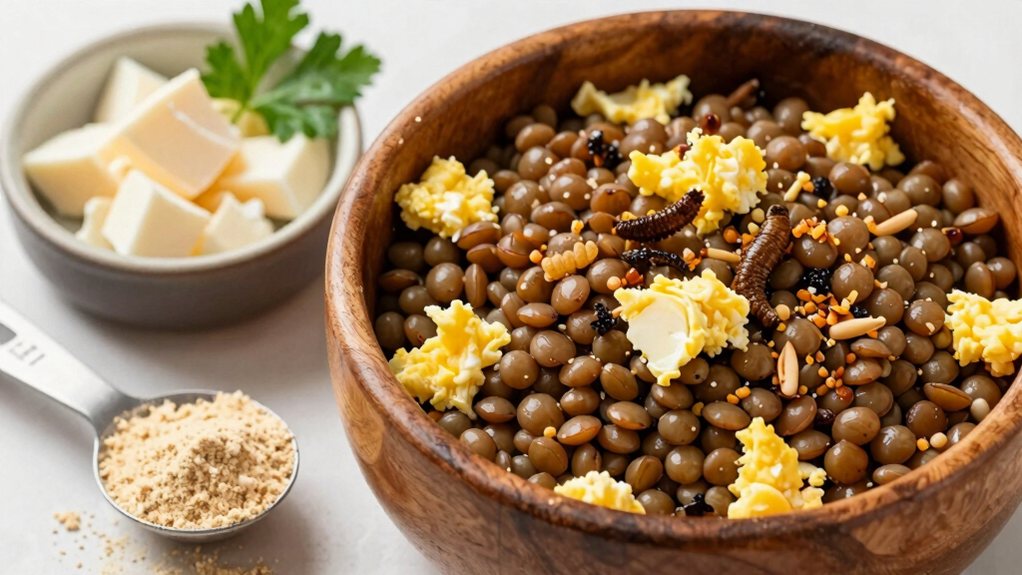
You’ve probably wondered how much protein your little hamster buddy actually needs each day, good news, it’s not as tricky as it seems. Aim for about 12–16% protein in their daily diet.
Don’t forget to mix in some veggies and grains so they don’t turn into picky eaters. We’ve all been there with our own food quirks!
Just keep it balanced, and your hamster will stay happy, healthy, and full of energy for all their late-night wheel runs.
Daily Protein Needs
So, how much protein does your little hamster really need each day? Not too much, not too little. Just the right amount to keep their tiny body thriving.
Too little can lead to protein deficiency, while too much might strain their kidneys. You want a solid amino acid balance without overdoing it.
Here’s what to keep in mind:
- Adult hamsters generally need about 12–16% protein in their daily diet.
- Growing, pregnant, or recovering hamsters may need up to 18% for healing and strength.
- Always pair high-protein foods with fresh veggies and clean water for balance.
Think of it like packing a school lunch. Fun, nutritious, and just enough to power a busy day.
Your hamster isn’t running a marathon, well, not a long one. But they still need quality fuel.
Stick to the sweet spot, and you’ll both be grinning. Cheeks full of food and pride.
Balanced Diet Tips
Now that you’ve got a handle on how much protein your hamster needs, let’s talk about fitting it into their daily meals without turning dinner into a science experiment. Aim for about 15–20% protein in their total diet. Too much can upset their tummy, and you’ll see grumpy hamster behavior like hiding food or ignoring treats.
Balance is key: mix high-protein bites like boiled egg or mealworms with fresh veggies and quality pellets. Watch how your little buddy eats. Hamster behavior tells you a lot. If they’re storing more than eating, maybe scale back.
And don’t forget your cage setup. Place food and water in consistent spots so mealtime feels safe and predictable. A calm hamster eats better!
Keep protein as part of a colorful, varied menu. Your furry pal will thrive, not merely survive.
Signs Your Hamster Is Gaining Strength
A little hamster power surge might be exactly what you’re seeing when your tiny buddy starts tearing through toys like a fur-covered gym rat. Improved mobility and increased activity are early signs your hamster is gaining strength. You’ll notice a spark in their step, literally. They’re more than surviving; they’re thriving.
More zoomies than ever: Late-night wheel sprints? Check. Your hamster’s stamina is clearly on the rise.
Playful paws: They’re shredding tunnels and climbing with confidence, showing off newfound muscle.
Brighter eyes and quicker reactions: Alertness is up, naps are shorter, and curiosity’s back in full swing.
It’s heartwarming to see them bounce around like they’ve got a tiny personal trainer.
Keep up the great work—you’re doing an amazing job fueling their comeback.
Who knew hamster gains could be this adorable?
Toxic Foods to Avoid During Recovery
What’s on the menu when your hamster’s bouncing back from a rough patch? Great question! While you’re boosting their strength with high-protein foods, don’t forget to steer clear of toxic foods that could undo all your hard work.
Things like raw beans, garlic, onions, and citrus fruits might seem harmless, but they’re actually harmful treats for your tiny buddy.
Chocolate is absolutely off-limits, yes, even that crumb you dropped.
Alcohol and caffeine are no-go zones too, good thing hamsters don’t run coffee shops.
Some houseplants, like poinsettias or ivy, are toxic if chewed, so keep them out of reach.
Stick to safe, vet-approved snacks and fresh water.
Your hamster’s recovery is a team effort, and you’re the boss of the snack drawer.
Keep it smart, keep it safe, and watch your little warrior thrive—one safe bite at a time.
Apple seeds are especially dangerous because they contain amygdalin, a compound that releases cyanide when digested.
Final Thoughts
You’ve got this! With the right mix of high-protein foods, like scrambled egg, plain chicken, or lentils, your little buddy’s strength will bounce back in no time. Just keep meals balanced, watch for those happy, wiggly signs of progress, and skip the toxic stuff.
Think of it as hamster rehab, but way cuter. Stay patient, stay kind, and soon you’ll have a tiny, energetic furball back on your hands. Mission accomplished!