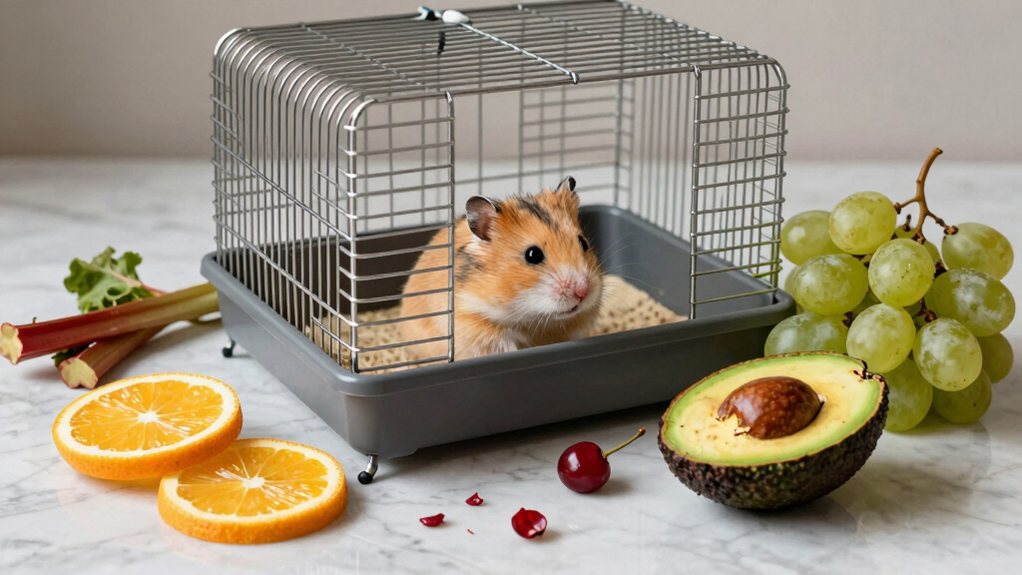
You should never feed your hamster grapes, raisins, or avocados. They’re downright dangerous and can cause serious health issues, even in tiny amounts.
Citrus fruits like oranges and lemons are too sour for their sensitive tummies. Pineapple’s acidity and enzymes can cause mouth irritation.
Cherry pits are super toxic. Always remove them, along with stems. And skip the guacamole. Your hamster definitely won’t be doing any avocado toast.
Play it safe, and you’ll both breathe easier. Stick around to find out which fruity treats are actually safe to share.
Fruits Hamsters Can’t Eat: The Complete List
While you might be tempted to share your favorite fruity snacks with your tiny, whiskered buddy, not all fruits are safe for hamsters. Some can actually cause serious harm.
You’ve probably heard about banana benefits for humans, but for hamsters, even small amounts can lead to tummy troubles due to high sugar. Avoid citrus fruits like oranges and lemons. They’re too acidic and can upset your pet’s delicate digestion.
Grapes and cherries? Big no-nos. They’re choking hazards and can be toxic. Rhubarb is downright dangerous. Never offer it.
While apples are a common go-to, make sure you’re using apple alternatives like pears or blueberries in moderation. Always remove seeds and pits, since they contain cyanide.
Your hamster depends on you to keep snack time safe. Stick to vet-approved treats, and your little friend will stay happy, healthy, and full of zoomies.
Avocado is another fruit that must be avoided entirely due to the presence of persin toxicity, which can be life-threatening to hamsters.
Grapes and Raisins: A Deadly Treat for Hamsters
If you’ve ever tossed a grape into your hamster’s cage thinking you’re serving up a sweet surprise, think again.
Those tiny, juicy orbs might look harmless, but they can be seriously dangerous for your little furball.
Grapes and raisins are a no-go, thanks to grape toxicity and raisin dangers that can lead to kidney failure, even in small amounts.
Yep, that snack you love during movie night? It’s a big risk for your tiny pal.
Even though hamsters are curious and might nibble anything offered, it’s your job to keep them safe.
Curious by nature, hamsters might taste anything you offer—but their safety always depends on your choices.
Skip the grapes, skip the raisins—no exceptions.
There are plenty of safer fruity treats, like apples or pears, that’ll make your hamster just as happy.
So next time you’re snack-sharing, remember: what’s sweet for you isn’t always safe for them.
Your hamster’s health is worth more than a juicy bite.
High sugar content in grapes can overwhelm hamster systems, and this high sugar content is especially harmful due to their small digestive capacity.
Citrus Fruits Like Oranges and Lemons: Too Acidic
You just learned grapes and raisins are a hard pass for your hamster, but what about that orange slice you were going to share?
Sorry, but citrus fruits like oranges and lemons are too acidic for your tiny buddy.
Hamsters have serious digestive sensitivity, and high fruit acidity can upset their delicate stomachs, leading to pain or diarrhea.
Think of their little systems like a quiet library.
Sudden citrus is like someone blasting a trumpet.
While a tiny nibble mightn’t cause disaster, it’s not worth the risk.
Lemons? Even worse, way too sour and harsh.
Your hamster doesn’t need vitamin C the way you do, so skip the citrus altogether.
Stick to safer treats like apples or pears, in small amounts.
Your furry friend will thank you with happy wheel runs, not tummy troubles.
Can Hamsters Eat Cherries?
You can give your hamster a cherry now and then, but skip the pit, it’s toxic and definitely not a snack!
Too many cherries might also upset their little tummy, so just offer a small piece as a treat.
Think of it like dessert: fun in moderation, but not the main course!
Cherry Pits Are Toxic
While cherries might seem like a sweet little treat you’d love to share with your hamster, there’s one part you’ll definitely want to keep far away, the pit.
Cherry toxicity is no joke, and that tiny stone packs a punch thanks to cyanide compounds.
Even a small nibble could make your little buddy seriously sick.
That’s why pit removal is an absolute must before offering any cherry flesh.
Here’s what you need to know:
- Never skip pit removal, it’s a non-negotiable safety step.
- Cherry toxicity affects hamsters fast, so act quickly if you suspect ingestion.
- Only offer the fleshy part, and just a pea-sized bit at a time.
- Watch for signs of distress, like lethargy or breathing issues.
Keep it safe, keep it sweet.
Your hamster will thank you with happy cheek bulges!
Cherries In Moderation Only
So, can your hamster actually enjoy a bite of cherry without any trouble? Yes, but only in moderation. While cherries offer cherry benefits like vitamin C and antioxidants, they’re also high in sugar, which can upset your hamster’s tiny tummy if overfed.
Always remove the pit, stem, and leaves. They’re toxic. Then offer just a small piece once or twice a week. That’s your ideal feeding frequency.
Think of cherries as a sweet treat, not a staple. Your hamster might go nuts for them. Don’t worry, we’ve seen the happy cheek-puffing.
But too much can lead to obesity or diabetes.
Potential Digestive Upset
Cherries can bring a burst of fruity fun to your hamster’s day, but there’s a flip side if you go overboard.
Hamsters have delicate digestive sensitivity, and too much cherry can lead to stomach discomfort or messy surprises in their cage.
To keep your little buddy happy and healthy, watch how much you offer. Here’s what to keep in mind:
- Portion size matters – A tiny piece once a week is plenty.
- Remove pits and stems – They’re choking hazards and can upset digestion.
- Watch for changes – Diarrhea or bloating means it’s time to pause.
- Balance with regular food – Fruits are treats, not meals.
You’re doing great by being mindful!
A little cherry joy is fine, but your hamster’s tummy will thank you for keeping it light.
After all, nobody wants a grumpy, gassy hamster on their hands!
The Danger of Cherry Pits and Stems
You might love snacking on cherries, but your hamster can’t have the pits, those little seeds are actually toxic and could make your tiny buddy seriously sick.
And don’t forget the stems, either. They might seem harmless, but they can be a sneaky choking hazard for your little furball.
Always take a sec to pit and de-stem before sharing a cherry treat. Your hamster will thank you with happy squeaks!
Cherry Pits Are Toxic
While you might be tempted to toss your hamster a whole cherry as a sweet treat, it’s important to remember that the pit and stems are definitely off-limits.
Cherry toxicity is no joke, those tiny pits contain cyanide, which can be deadly even in small amounts.
Pit dangers also include choking hazards and digestive blockages.
To keep your little buddy safe, always remove the pit and stems before offering any cherry flesh. Here’s what you need to know:
- Never feed cherry pits – they release cyanide when chewed.
- Avoid stems and leaves – they’re toxic too.
- Only offer a pea-sized piece of pitted cherry once in a while.
- Watch for signs of distress – lethargy, trouble breathing, or drooling.
A little caution goes a long way.
Your hamster will stay happy, healthy, and out of cherry trouble!
Stems Can Cause Choking
That little cherry stem might look harmless, but it’s more trouble than it’s worth. Your hamster definitely shouldn’t be snacking on it.
Those skinny, woody stems can easily get stuck in your hamster’s throat, especially since their tiny bodies aren’t built to handle tough plant bits.
Think about fruit size. What’s small to us is still a big bite for a hamster, and stems add unnecessary choking risks.
Even if your pet seems curious, it’s better to skip the stems entirely.
When planning feeding frequency, remember: treats like fruit should only be occasional, about once or twice a week.
And when you do offer fruit, always remove stems, pits, and seeds. It’s a small step that keeps snack time safe and fun.
After all, you want your hamster munching happily, not struggling.
Keep it simple, keep it safe, and let your little buddy enjoy the sweet stuff—minus the stem drama.
Always Remove Before Feeding
Since cherry pits and stems might seem like no big deal to you, they’re actually a real hazard for your hamster. Proper fruit preparation isn’t just about slicing—it’s about safety precautions too. Always remove pits and stems before feeding to keep your tiny buddy out of trouble. Here’s what to do every time:
Check the fruit – Even if it looks clean, inspect for hidden stems or seeds.
Remove pits – Cherry pits can be toxic and are a choking risk.
Trim stems – They’re tough and could block little hamster throats.
Wash it well – Say goodbye to pesticides and hello to safe snacking.
A little effort goes a long way in keeping your hamster happy and healthy.
Think of it like prepping a snack for a curious toddler: tiny stomach, big risks.
Stay safe, stay silly, and keep those cheeks stuffing safely!
Why Avocado Is Toxic to Hamsters
You might love avocado on your toast, but your hamster definitely shouldn’t have even a tiny bite. This creamy green fruit packs a hidden danger for small pets.
Love avocado toast? Keep it far from your hamster—this creamy fruit harbors a hidden toxin that can seriously harm small pets.
That’s because avocados contain a toxin called persin, which humans handle just fine but can seriously harm hamsters. Even the ripeness of the avocado doesn’t matter. Ripe or not, it’s still risky.
And if you’re thinking about sharing your guacamole, think again. Guacamole ingredients like garlic, onion, and salt are also toxic to hamsters.
Persin can cause breathing problems, fluid buildup, and even heart damage in small animals.
So while you’re enjoying your avocado toast or taco night, keep that green goodness far from your furry friend’s reach. It’s not worth the risk.
Stick to safe fruits like apples or bananas instead. Your hamster will be just as happy, and much healthier!
Pineapple: Too Acidic for Hamster Digestion
Ever wonder why your hamster turns up its tiny nose at pineapple,
It’s more than picky eating: pineapple is actually too acidic for their delicate systems.
Your little buddy’s digestive sensitivity makes it hard to handle strong flavors and acids.
Pineapple enzymes like bromelain can irritate their tiny tummies.
Even a small bite might lead to discomfort or upset digestion.
While pineapple isn’t deadly, it’s best skipped altogether.
Here’s why pineapple doesn’t make the hamster snack list:
- High acidity stresses their sensitive digestion.
- Pineapple enzymes may cause mouth or stomach irritation.
- Natural sugars are too intense for their system.
- Most hamsters simply don’t enjoy the sharp taste.
Keep it light, keep it safe.
Stick to gentler fruits like apples or pears instead.
Your hamster will thank you with happy wheel runs and cheek pouch stuffing!
5 Safe Fruits Hamsters Can Enjoy in Moderation
While your hamster might act like a tiny food critic eyeing a five-star menu, the truth is they can enjoy real treats, just in small doses. You can safely offer apple slices, but always remove the seeds, they’re toxic. Apples give your hamster fiber and a sweet crunch they’ll love.
Bananas, yes, in tiny amounts. Banana benefits include potassium and a soft texture even picky eaters enjoy. Just a small cube once a week is plenty, too much sugar can lead to health issues.
Think of fruit as a special dessert, not dinner. Other safe picks include blueberries and strawberries, but keep portions mini.
Your hamster’s tiny tummy can’t handle much, so moderation is key.
Watch how they react, some hamsters get picky or gassy. When in doubt, stick to hay, pellets, and fresh water as staples. Fruit’s fun, but balance keeps your little buddy happy and healthy.
Final Thoughts
So, now you know. Skip the grapes, citrus, and avocado, and never share that sneaky cherry pit. Your hamster’s tiny tummy can’t handle the same snacks you love.
But hey, that’s what makes you a great pet parent for checking first. Stick to safe fruits in small bites, and you’ll keep your little buddy happy, healthy, and full of zoomies. After all, nothing says “I care” like a well-researched apple slice!